A budget robot vacuum can keep dust, crumbs, and everyday pet hair under control without the price of a premium dock. The best choice depends less on a headline suction number and more on your floors, home layout, and tolerance for emptying and maintenance. For most shoppers, start with a reliable mapping robot in the $200–$300 range, then spend extra only for a self-emptying dock or better obstacle avoidance if you will use those features.
This guide uses current 2026 buying-guide evidence and manufacturer specifications as a framework. It does not claim hands-on testing or a universal “best” model. Prices and availability change, so confirm the live listing before you buy.
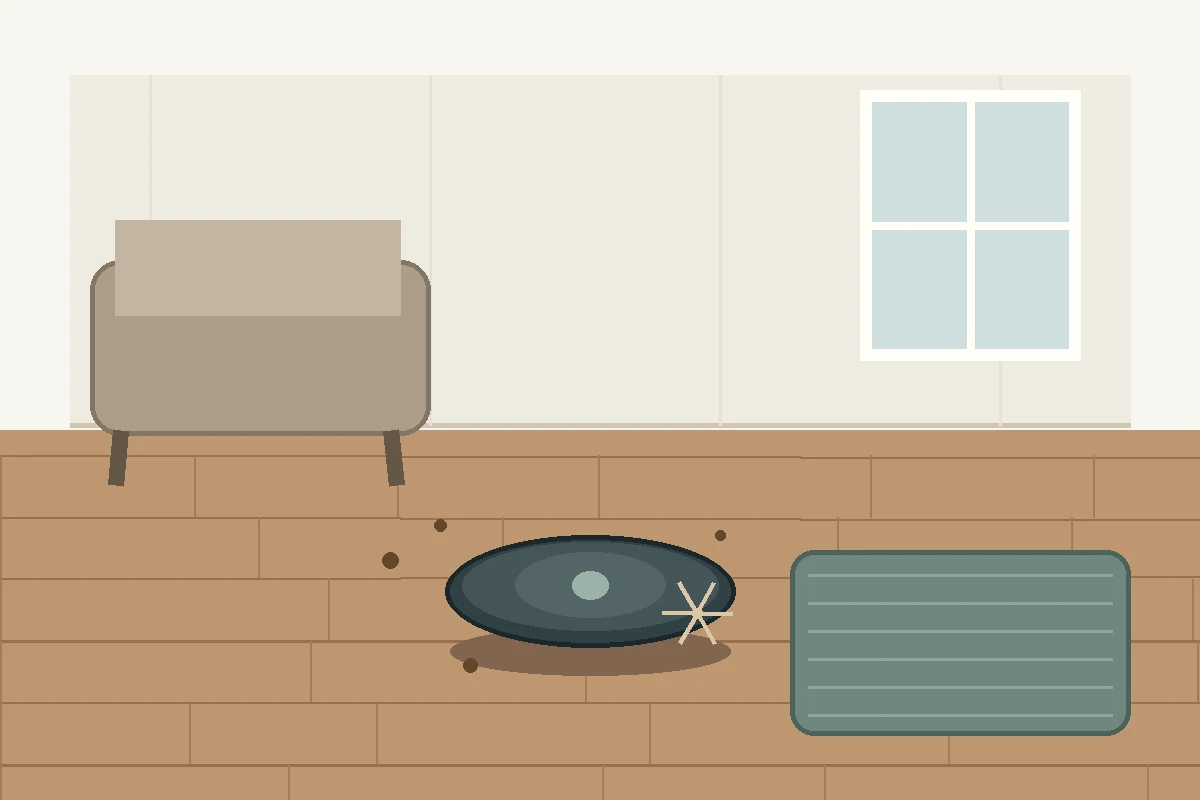
A budget robot is most useful when it runs often for light, routine cleaning.
What counts as a budget robot vacuum?
For this guide, budget means roughly below $300 in the US. That range now includes basic random-navigation robots, entry-level mapping models, and occasional sale prices on robots with a simple auto-empty dock. A cheap robot may still be useful, but it usually gives up one or more premium conveniences: advanced object recognition, strong carpet deep-cleaning, heated mop washing, or hands-off dust disposal.
The features that matter most
Navigation and mapping
Room mapping and no-go zones are usually more valuable than a larger suction figure. A mapped robot can clean in orderly passes, resume after charging, and avoid rooms you have blocked in the app. Random-navigation models can work in small, uncluttered spaces, but they may take longer and miss areas.
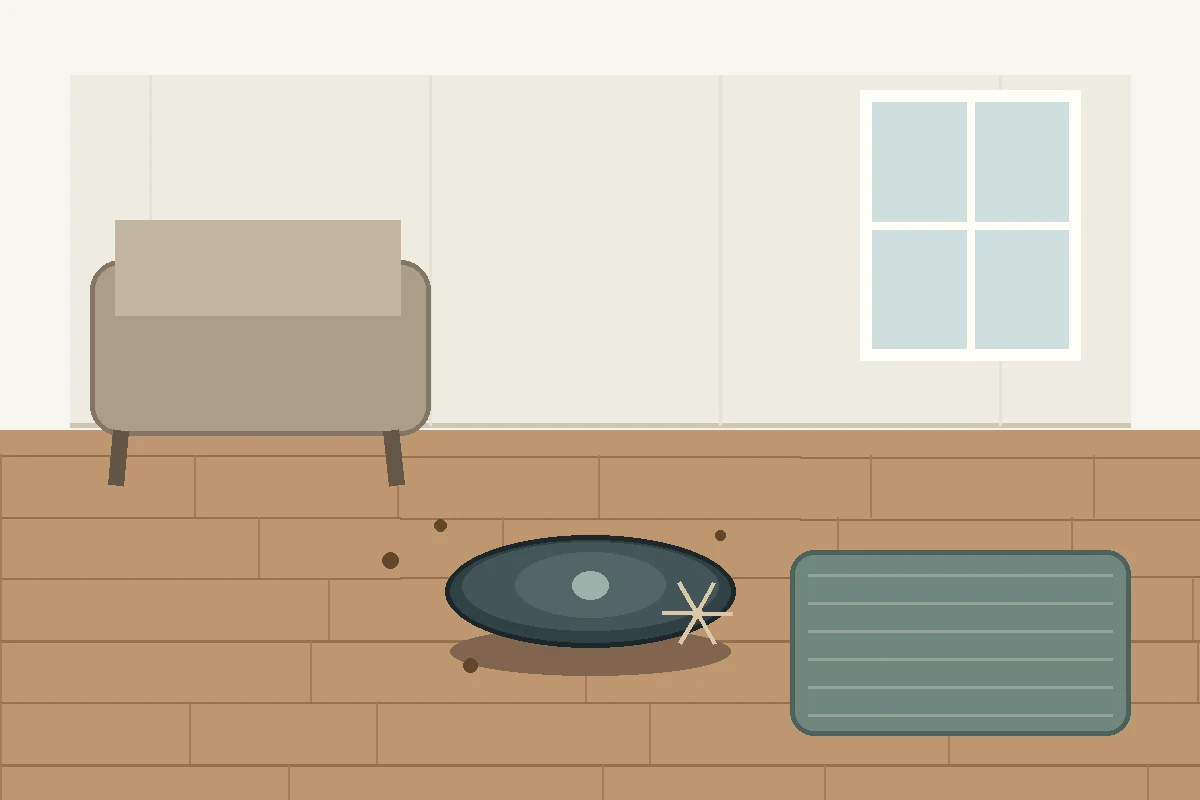
Use a short checklist to compare the features you will actually use.
Brush design and floor fit
Look for a brush that matches your floors and hair load. Rubber or hybrid rollers can be easier to detangle, while a strong edge brush helps with crumbs along baseboards. On thick carpet, low-cost robots often need more than one pass and may struggle with transitions.
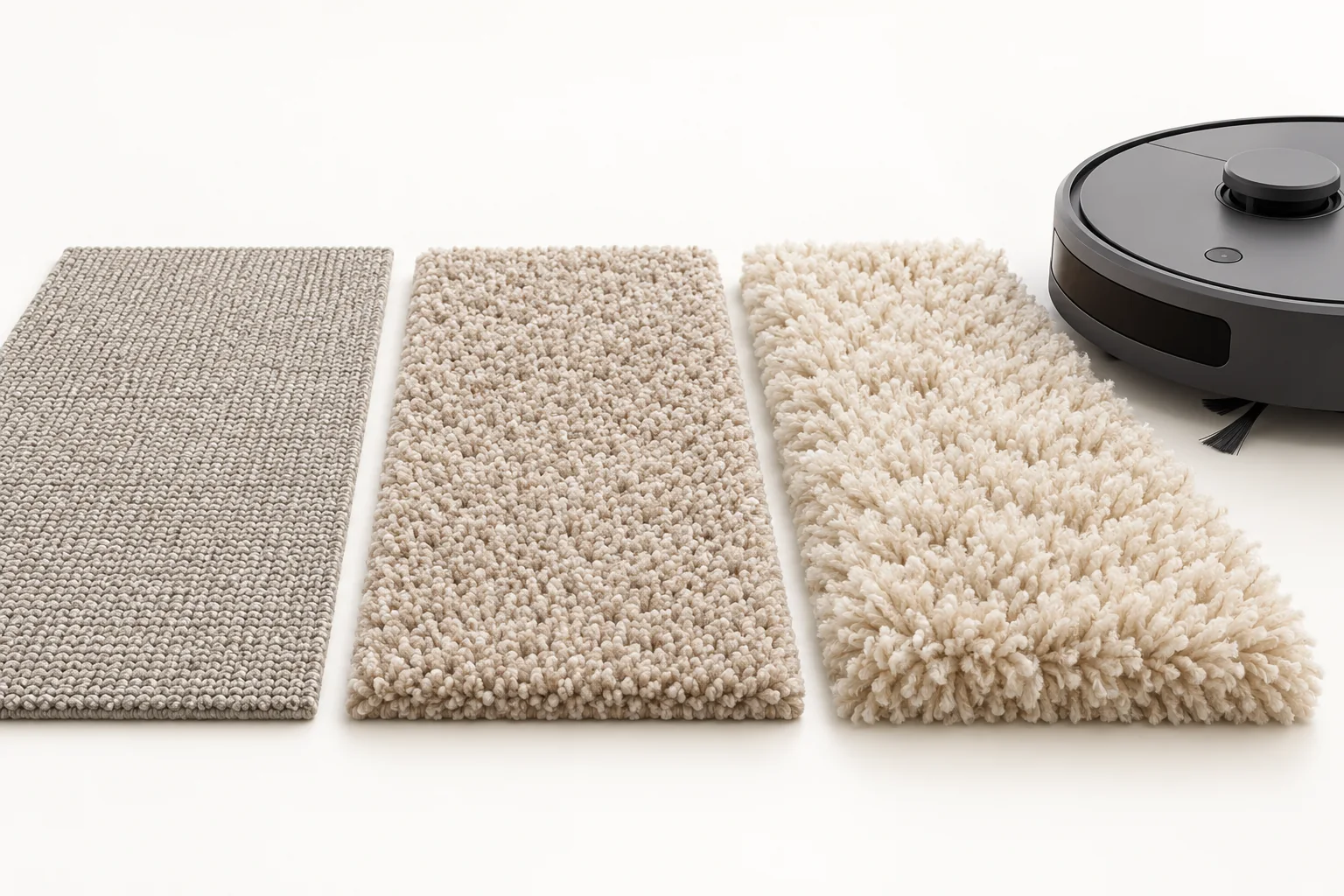
Carpet height and thresholds can matter more than marketing claims.
Battery, bin, and dock
A larger battery helps in multi-room homes, but a robot that returns and resumes can still cover a typical apartment. Check the dustbin size and whether replacement filters, brushes, and bags are easy to source. Self-emptying docks reduce daily work but add cost, floor space, and another set of parts to maintain.
Best budget fit by home type
- Small apartment with hard floors: prioritize quiet operation, mapping, and a slim height that fits under furniture.
- Mixed floors: choose room-by-room scheduling and reliable carpet transitions; treat mopping as light maintenance.
- Pets: prioritize an anti-tangle brush, a washable filter, and a bin you will not have to empty mid-run. See our guide to robot vacuums for pet owners.
- Cluttered rooms: spend more on obstacle avoidance or commit to a quick floor pickup before each run.
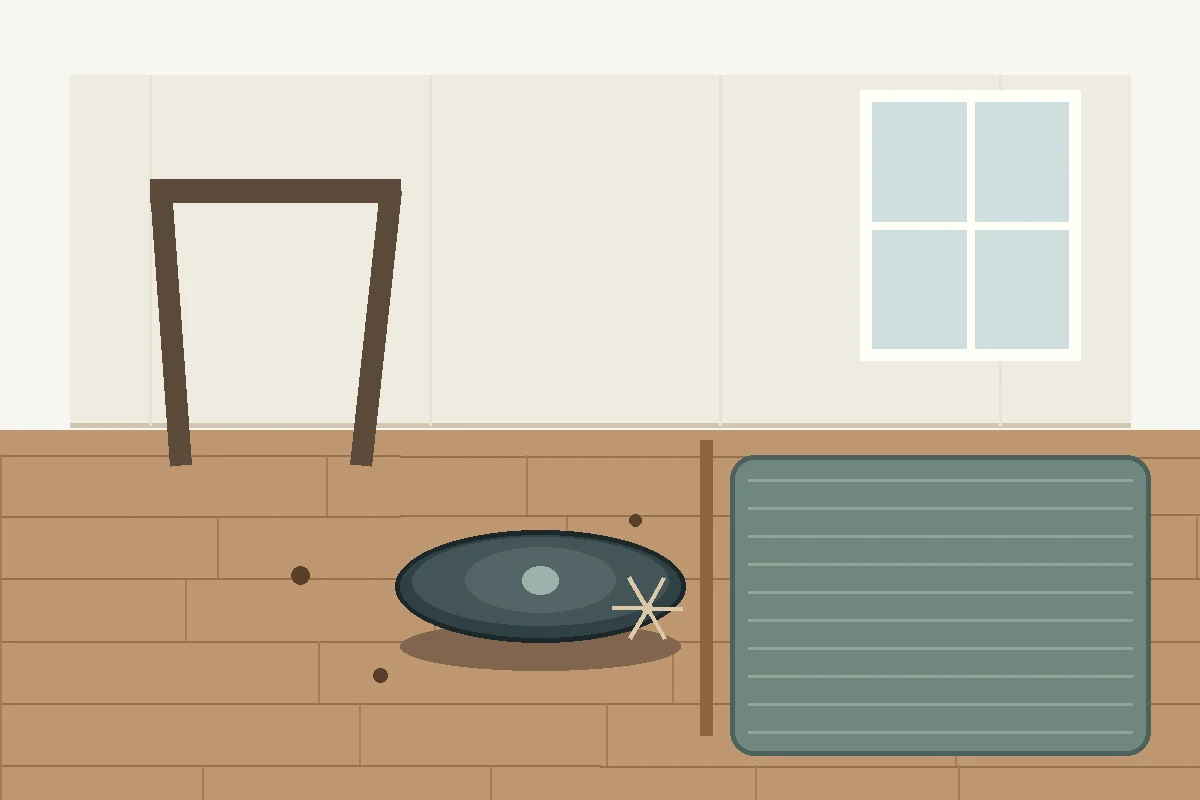
A budget model should match the transitions and surfaces in your home.
What budget models commonly compromise
Expect more manual intervention than with premium robots. You may need to clear cords, remove hair from the roller, refill a small water tank, and empty the bin after each run. Entry-level mops are best for light dust and footprints; they do not replace a dedicated mop for sticky spills. If you are deciding between automated and manual cleaning, compare the roles in our robot vacuum versus traditional vacuum guide.
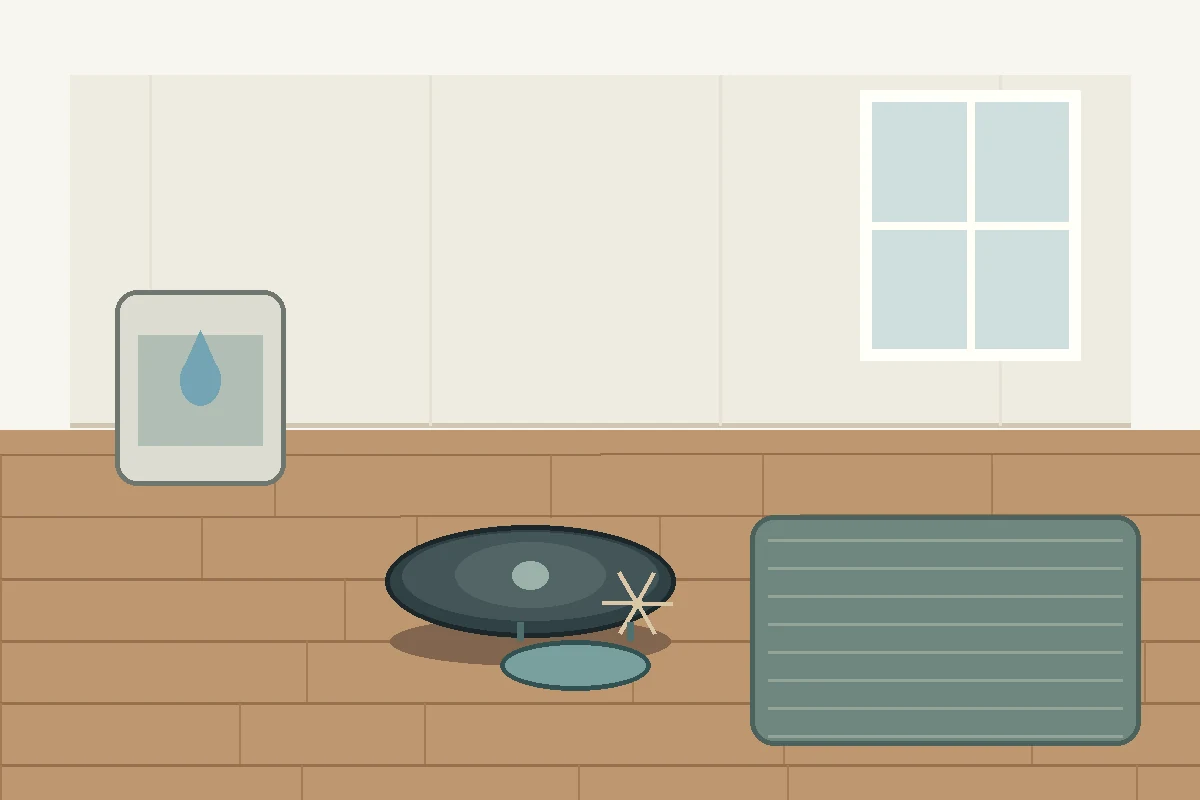
Budget ownership still includes regular brush, filter, and dock care.
A simple buying checklist
- Set a real ceiling, including replacement parts and any dock bags.
- Measure the lowest furniture and the tallest thresholds.
- Choose mapping if you have more than one room or want no-go zones.
- Check independent test results for your dominant floor type; do not rely on suction alone. Current roundups from RTINGS and Vacuum Wars illustrate how picks change with testing and availability.
- Confirm app support, warranty terms, and replacement-part availability.
Bottom line
Budget robot vacuums are worthwhile when you want frequent light cleaning and can accept a little preparation and maintenance. A mapped model under $300 is the sensible starting point for many homes. Choose a self-emptying dock only when reducing daily emptying is worth the added cost and upkeep, and keep a regular vacuum for stairs, upholstery, deep carpet cleaning, and quick spills.

Ethan Miller
Ethan Miller writes about home improvement, interior design, cleaning, and everyday living at Home & Living Daily. He shares practical tips and simple ideas to help readers create more comfortable and functional homes.