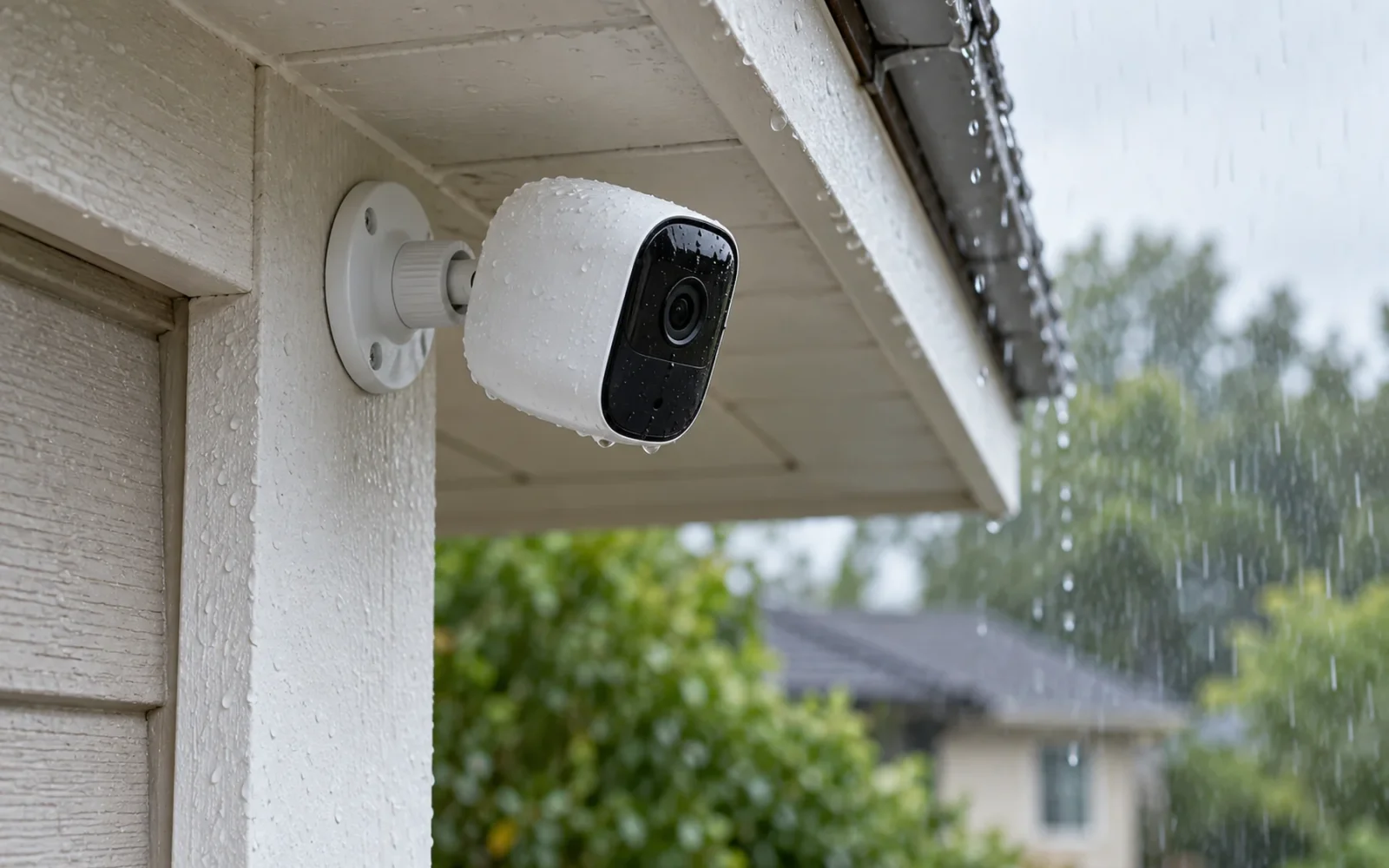
Arlo's outdoor-rated cameras are designed to withstand specified weather exposure, including rain and snow, but they should not be treated as submersible waterproof cameras. Check the exact model, its enclosure rating, temperature limits, and the complete power arrangement before leaving it outside.
The camera body is only one part of that decision. A weather-resistant camera can still have an unsuitable indoor adapter, an exposed connection, or an open battery compartment.
Check whether your particular model is intended for outdoors
Arlo's weather-resistance guidance identifies outdoor-capable families including Ultra, Pro, Go, the listed outdoor Essential models, and specified doorbells and floodlights. Use its exact model list alongside the product manual.
Names matter. An Essential Indoor product should not inherit the outdoor rating of a similarly named Essential Outdoor camera. Nor does a pan-and-tilt mechanism establish outdoor suitability; check whether the listing describes the indoor or outdoor version.
Read the model number from the product information and match the regional documentation. If a seller describes a camera only as “Arlo Essential,” ask which generation and model is being supplied before choosing an exposed location.
What does an IP65 rating cover?
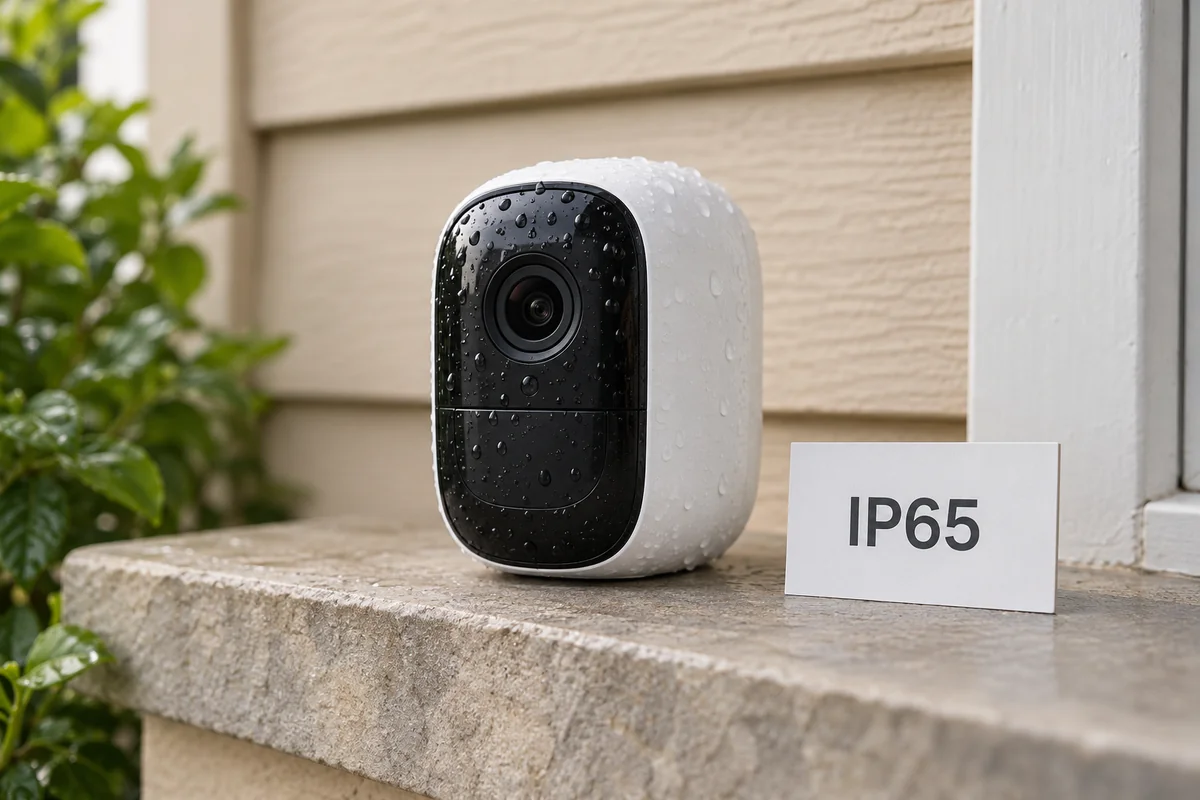
The Arlo Pro 6 specification lists IP65 and an operating range of -20°C to 45°C, equivalent to -4°F to 113°F. Those are specifications for the named model, not universal limits for every Arlo product.
IP65 describes dust-tight protection and protection against water jets under the relevant test conditions. It does not describe an immersion rating or approval to clean the camera with a pressure washer. Real installations still need the closures, seals, and connections arranged as instructed.
| Exposure or condition | Practical interpretation |
|---|---|
| Ordinary rain on an approved outdoor installation | Within the kind of use an outdoor-rated model is designed for, subject to its instructions |
| Floodwater or dropping the camera into a pool | Do not infer submersion protection from IP65 |
| A hose nozzle or pressure-washer cleaning jet | Not an approved maintenance shortcut merely because the device has an IP rating |
| An open battery compartment | The closed enclosure's rating does not protect exposed internal parts |
| Direct sun, ice, or temperatures outside the manual's range | Water resistance alone does not establish suitability |
The important distinction is between a tested enclosure and unlimited exposure. Arlo specifically warns against exposing batteries or the inside of battery compartments to water. Change or charge components using the conditions and procedure in the matching instructions.
Review the entire power route
Identify how the camera will receive power: replaceable or rechargeable batteries, a solar accessory, a continuous-power cable, or a wired supply. Use compatible accessories approved for the intended outdoor setup.
A power adapter supplied for indoor charging should not be left in rain because its camera can remain outside. Check the cable, connector, adapter, receptacle arrangement, and any required protective enclosure independently. A cable reaching the camera is not evidence that the whole route is safe for the location.
Fit connectors and protective caps as directed. Do not trim seals, force a connector that does not fit, or substitute a random extension lead to avoid buying a compatible accessory. Have a qualified professional address outdoor electrical supply work when needed.
For a solar accessory, follow its mounting and cable instructions and check whether seasonal conditions can sustain the intended use. Solar charging does not change the camera body's enclosure rating or turn a damaged connection into a weatherproof one.
Choose a position that protects the installation and preserves the view
Suitable shelter can reduce direct exposure, but do not place the camera where roof runoff, gutter overflow, irrigation, or accumulating snow repeatedly reaches it. Keep the required mounting orientation and accessible maintenance route.
The sheltered spot must also deliver useful video. Deep mounting beneath an eave can introduce reflections or leave important approaches out of view. Nearby walls, hanging decorations, and plants can affect night visibility. Test saved footage in the chosen location during daylight and darkness before finalizing the mount.
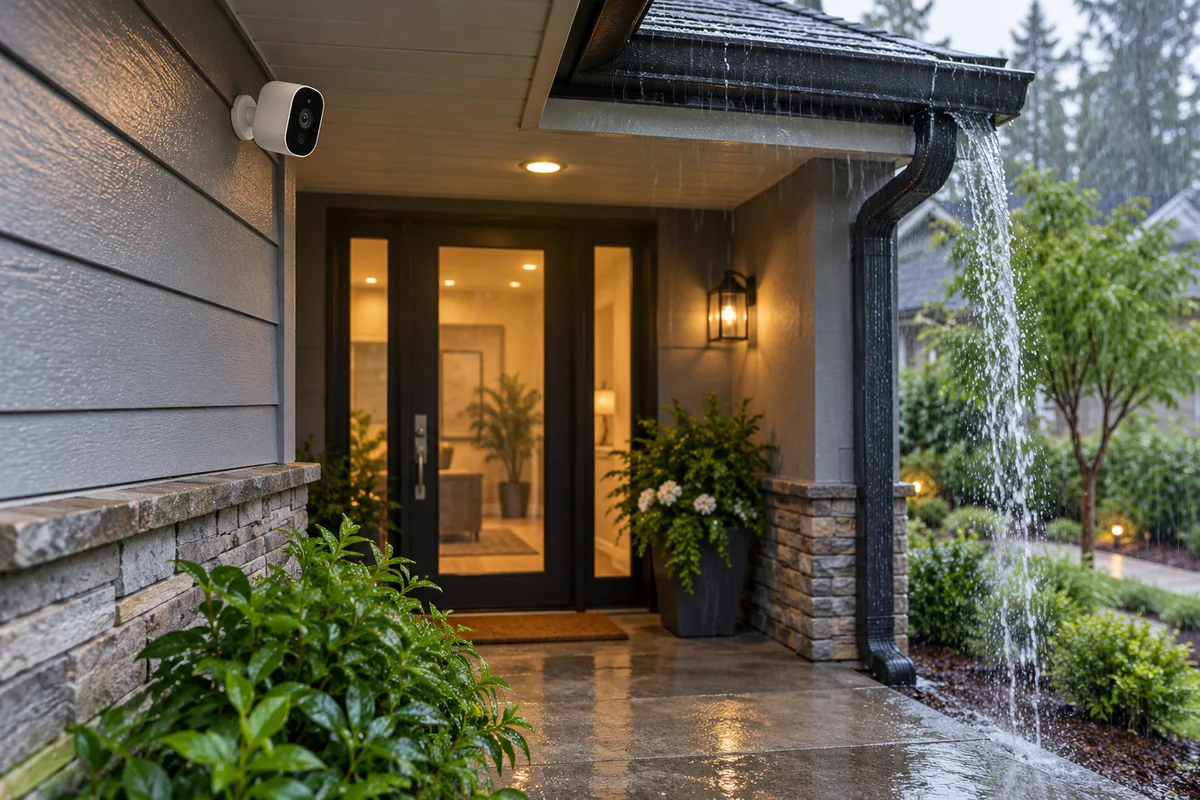
Rain on the lens can obscure the image even when the enclosure remains sound. A water-resistance rating is not a promise of clear identification through droplets, fog, or wind-driven debris. Position and cleaning access matter to the footage you will actually use.
If the issue is connection rather than exposure, our Arlo Wi-Fi and outage guide explains the different paths used by router-connected, SmartHub, and cellular setups. Moving a camera for shelter can change its wireless conditions too.
Inspect after severe weather without creating a new problem
From a safe accessible position, check that the mount is secure, the camera still points where intended, connections remain protected, and recent recordings are usable. Remove surface dirt only by the approved cleaning method; avoid solvents, aggressive scrubbing, and spraying into openings.
Coastal salt and repeated wetting deserve particular attention. Arlo's guidance notes corrosion risks in severe seaside exposure. Use accessory-specific care advice rather than assuming an enclosure rating proves resistance to every corrosive environment.
If you see water inside the housing, a damaged seal, corrosion at a connection, or persistent fogging behind the lens, stop treating it as normal exterior moisture. Follow the manufacturer's power and handling instructions and contact support. Do not open sealed parts, apply heat, or attempt to charge wet components as a drying method.
Conclusion
Choose an outdoor-rated Arlo model for rain exposure and keep its complete installation within the documented limits. A suitable enclosure, protected power route, maintainable mount, and usable view are all necessary; the word “waterproof” does not replace those checks.

Ethan Miller
Ethan Miller writes about home improvement, interior design, cleaning, and everyday living at Home & Living Daily. He shares practical tips and simple ideas to help readers create more comfortable and functional homes.