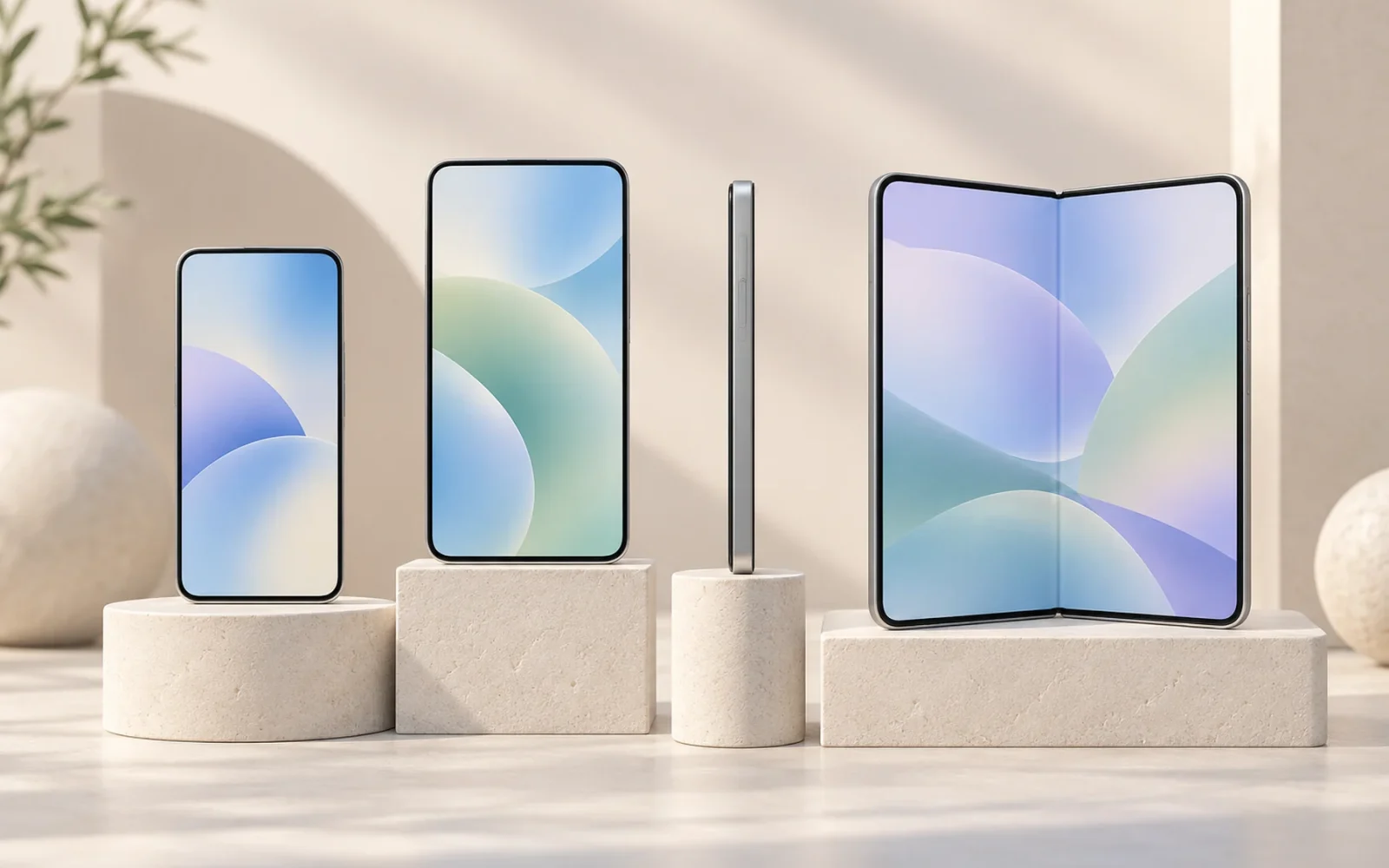
As of October 21, 2026, Apple’s latest conventional iPhones are the iPhone 18 Pro and iPhone 18 Pro Max. The newly announced iPhone Duo is also part of the newest lineup, but it is in preorder status ahead of its October 23 first availability. There is no announced standard iPhone 18 on Apple’s current shopping page.
If you are asking which iPhone to buy, distinguish “newest announced,” “available now,” and “best fit.” They can point to different devices.
The current iPhone lineup
Apple’s U.S. iPhone shopping page lists these model families. Status below was checked on October 21, 2026; a Buy button does not establish local stock or an immediate delivery date.
| Model | Status | Where it fits in the lineup |
|---|---|---|
| iPhone 18 Pro | Buy | New conventional Pro model |
| iPhone 18 Pro Max | Buy | Larger Pro alternative |
| iPhone Duo | Preorder | New folding format; first availability October 23 |
| iPhone Air | Buy | Thin-format alternative |
| iPhone 17 | Buy | Current standard numbered model in Apple’s store |
| iPhone 17e | Buy | Lower-positioned e-series alternative |
| iPhone 16 | Buy | Older generation still listed by Apple |
An older model in the table is not a mistake. “Current” describes what Apple offers now; it does not mean every phone was introduced at the same event. A seller can also have inventory that is outside Apple’s present direct-sales lineup.
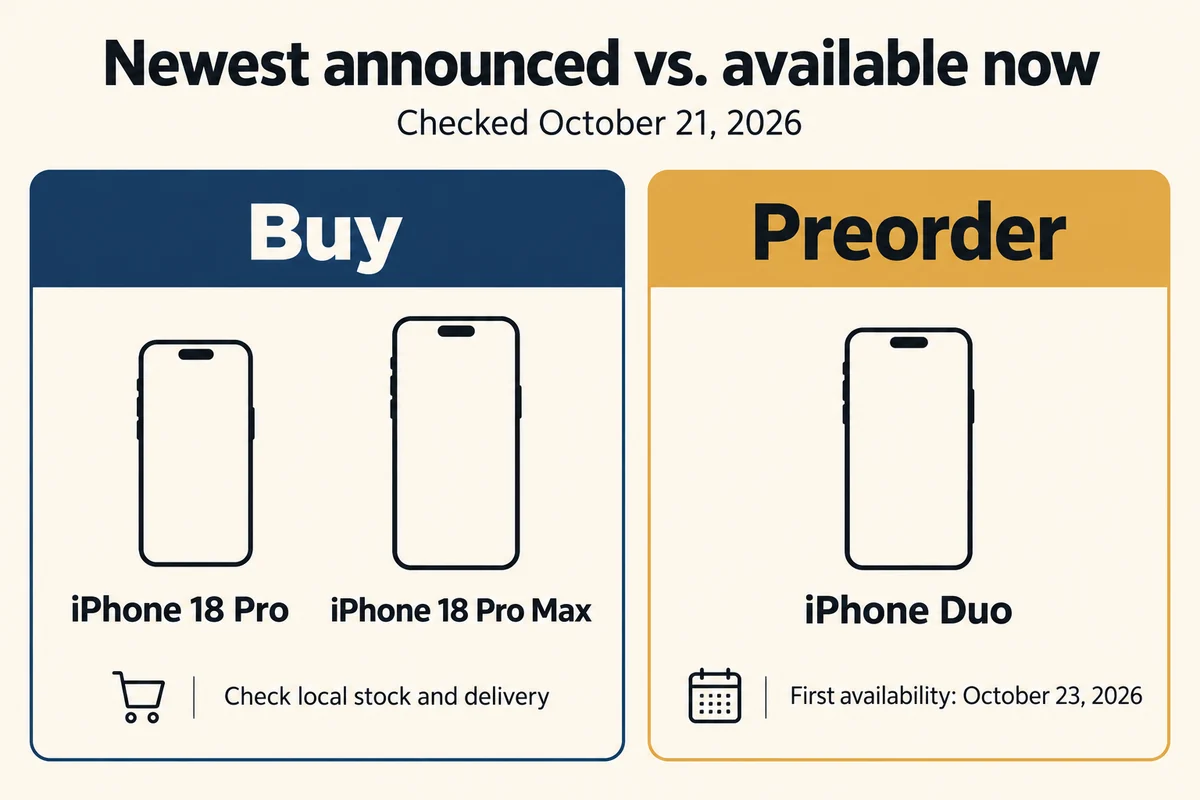
iPhone 18 Pro and Pro Max: the newest conventional models
The iPhone 18 Pro product page identifies the current Pro family. Its main-camera variable aperture and A20 Pro chip are hardware features of that family, not capabilities you should assume every phone in the store shares.
For a buyer, the useful starting question is whether those Pro capabilities solve a real problem. Someone who needs more control over photography has a different reason to investigate the Pro models from someone who mainly wants calls, messages, ordinary photographs, and a comfortable screen.
Compare the two Pro sizes in person if possible. A larger display can be appealing for viewing and editing, but you still need to carry and operate the device. “Max” is a model distinction, not a reason by itself to choose it over the smaller version.
This is a lineup explanation rather than a hands-on review. Camera labels and chip names identify differences worth examining; they do not establish an independently tested advantage for your particular workload.
iPhone Duo: announced and taking orders
Duo changes the form factor by offering a folding display. Apple’s launch announcement names it iPhone Duo, rather than iPhone 18 Fold, and sets October 23 for first availability.
Consider it when the folding screen is a feature you intend to use. Think about the tasks you want on the larger opened display and how you will use it when folded. A new format is a substantive choice, not simply a higher number in the existing Pro range.
At the time of this check, it is a preorder product. Read the estimated delivery for your configuration instead of assuming the first availability date means a new order will arrive that day.
Why iPhone 17, 17e, Air, and 16 are still relevant
Do not dismiss a phone simply because it has an older number or a different suffix. The meaningful comparison is the combination of purchase cost, screen and handling, camera needs, storage, and the features you will actually use.
For example, start with your current storage use before paying for a larger tier. Our article on choosing between 256GB and a larger iPhone capacity explains how retained photos, travel downloads, games, and future growth change that decision.
When comparing offers, match the capacity, condition, and payment terms. A refurbished older phone, a new phone with a carrier commitment, and an outright unlocked purchase are different offers even if the monthly figure looks similar.
Avoid treating a model’s presence in a seller’s catalog as proof that it is the newest generation. Conversely, its absence from Apple’s current lineup does not establish that no other seller has genuine stock. Verify what the listing actually promises.
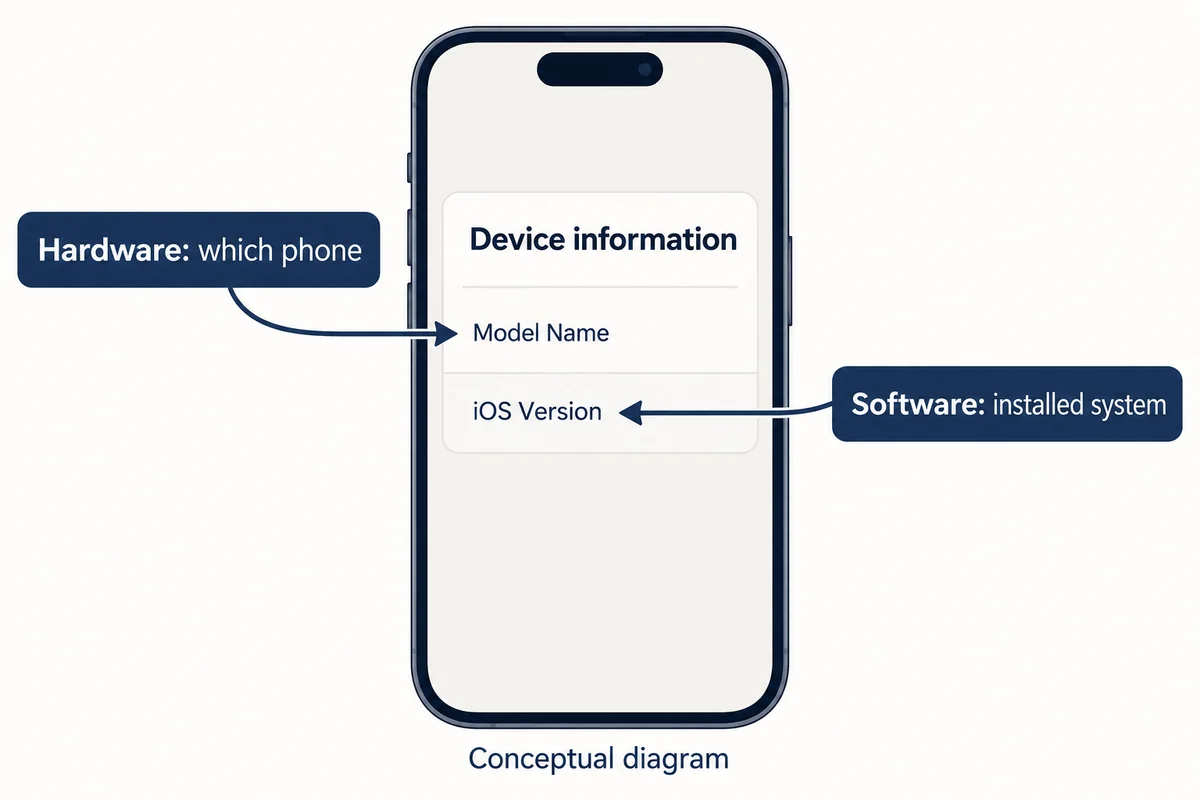
The latest iPhone is not the latest iOS version
iPhone names identify hardware. iOS identifies the operating system installed on that hardware. A software update does not turn an iPhone 17 into an iPhone 18 Pro.
If you are following instructions, check both the model and the software version. A guide can describe a software menu your current installation lacks, or a hardware feature your phone never included. Our explanation of what iOS means shows how those labels differ.
For an upgrade comparison, record the full Model Name of your present phone rather than its custom device Name. That makes it easier to identify which changes would be new to you and which features you already have.
Conclusion
Use iPhone 18 Pro and Pro Max as the answer when “latest” means the newest conventional iPhones currently on sale. Include Duo when you mean the newest announced lineup, while keeping its preorder status clear. Choose among them by a feature you need and an offer you understand, rather than assuming the newest name makes every older option irrelevant.

Ethan Miller
Ethan Miller writes about home improvement, interior design, cleaning, and everyday living at Home & Living Daily. He shares practical tips and simple ideas to help readers create more comfortable and functional homes.