If your home has mostly hardwood, the best robot vacuum is the one that picks up both fine dust and larger crumbs along edges, navigates around everyday obstacles, and suits any rugs or carpet you also own. Start with independent hard-floor pickup results and obstacle handling; suction claims alone do not tell you how much debris a robot leaves behind.
There is no single “best” choice for every wood floor or household. A robot that excels at hard-floor debris may struggle with pet hair embedded in carpet, while a vacuum-mop combo adds convenience but also brings water, pad, and rug-separation questions. Use the checks below to match the machine to your home rather than relying on a universal floor-safe claim.
Quick answer: Prioritize independently measured hard-floor debris pickup, edge cleaning, obstacle handling, and easy-to-clean wheels and brushes. If you have area rugs, check carpet pickup and how the robot handles rugs during mopping. If your wood finish is delicate or its care instructions restrict damp cleaning, use vacuum-only mode unless the flooring maker approves the mop method.
What matters most on hardwood floors
Pickup of fine dust and larger debris
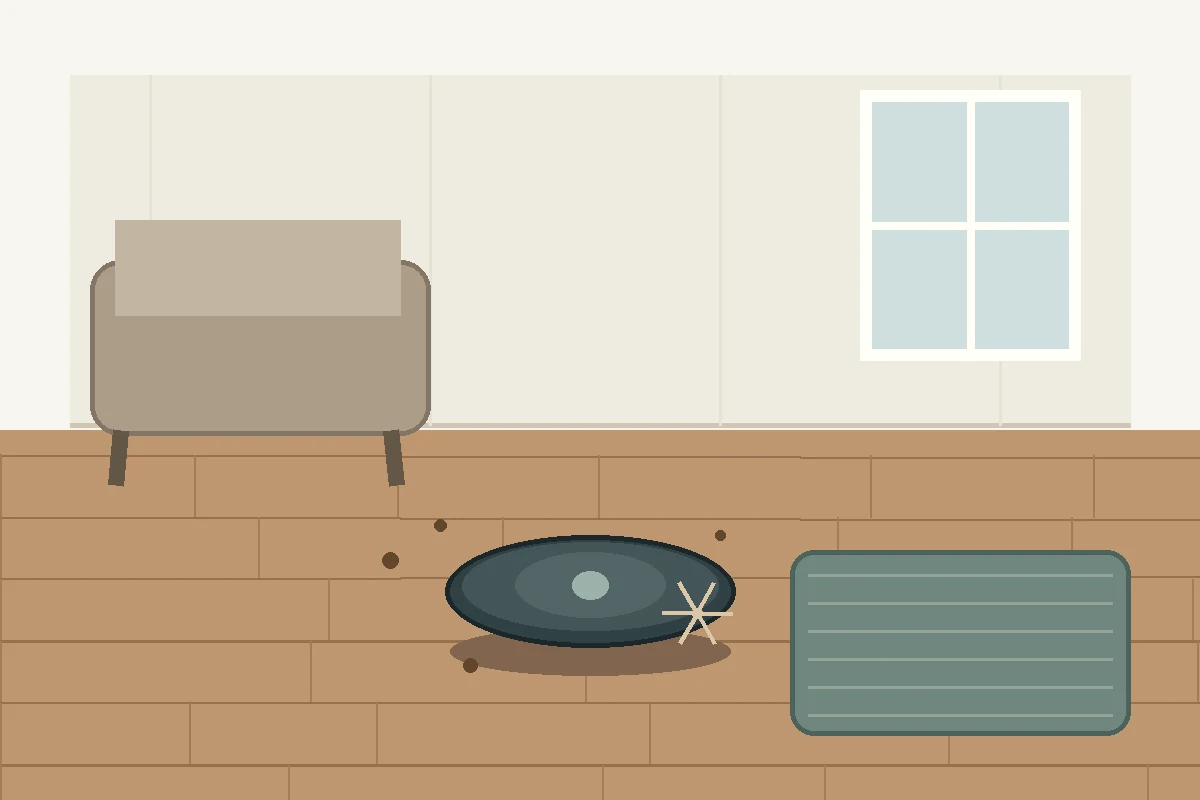
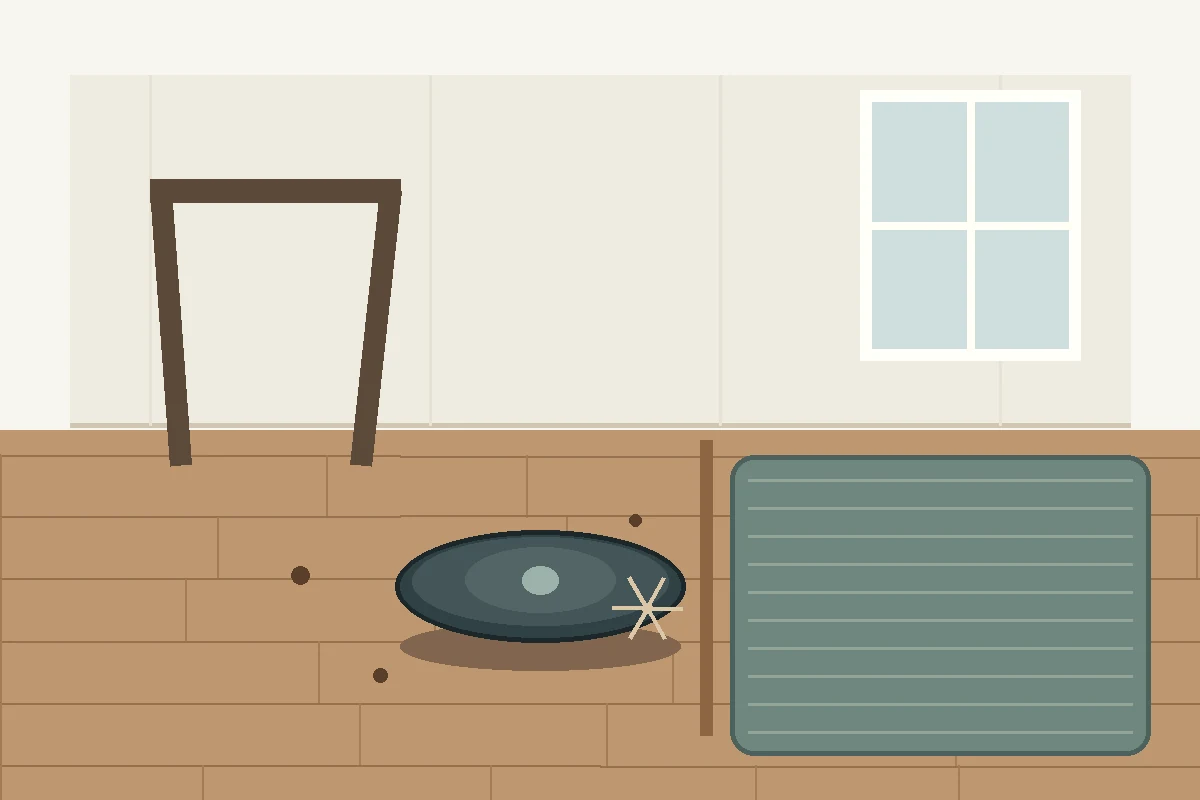
Hard floors expose dust and crumbs instead of letting them settle into a pile, but a robot can still scatter debris or leave particles behind. Look for tests that separate fine material from larger pieces and report results on hard flooring. A single suction number or a manufacturer’s “strong suction” claim is not a substitute for observed pickup.
Consider the messes you actually see: fine dust near baseboards, cereal pieces under a table, or grit tracked in by shoes. A useful comparison explains performance across particle sizes and repeated passes, rather than just naming a winner.
Edges, corners, and obstacles
Side brushes and edge-cleaning features can help collect debris near walls, but furniture legs, cords, and clutter still affect coverage. Check whether a test evaluates edges and corners as well as open floor. If you do not want to pick up every cord before each run, obstacle-avoidance results may matter more than a small difference in advertised suction.
Brushes, wheels, and grit management
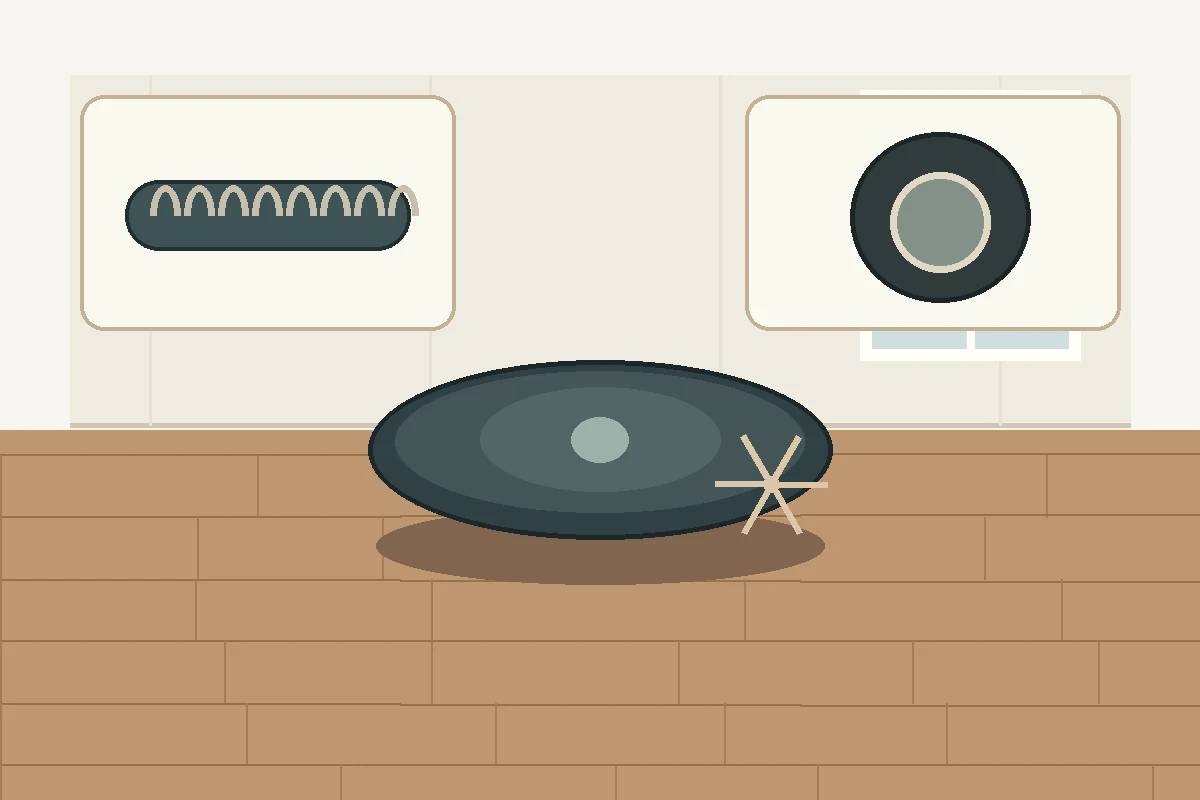
Brush design influences how a robot handles hair and debris, while wheels and the front caster contact the floor as the machine turns. No brush or wheel material makes a robot universally scratch-proof: grit trapped under a wheel or dragged across a finish can mark a surface. Choose a design whose removable brush and wheels are easy to inspect and clean, and follow your flooring maker’s care instructions.
Choose for your home’s floor mix
| Your home | Prioritize | Check before buying |
|---|---|---|
| Mostly hardwood, few rugs | Hard-floor pickup, edge cleaning, low-clearance navigation | Fine-dust results, corners, wheel and brush access |
| Hardwood with several area rugs | Reliable floor transitions and rug handling | Carpet pickup, rug fringe avoidance, mop lifting or no-mop zones |
| Pets and carpeted rooms | Hair pickup on both surfaces and manageable brush maintenance | Independent pet-hair tests on carpet; hard-floor results alone are not enough |
| Mostly hardwood and frequent mopping | A mop system you can maintain and control | Water settings, pad washing, rug avoidance, and flooring-care approval |
When a vacuum-mop combo makes sense
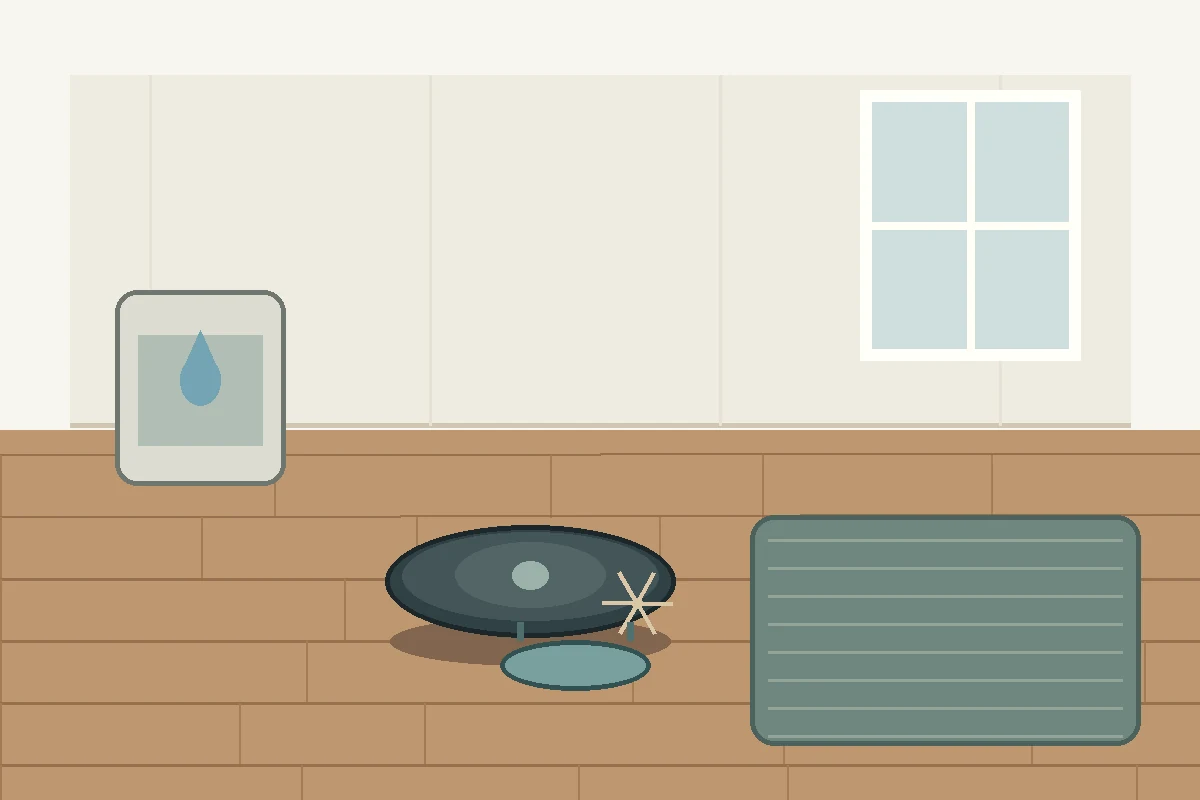
A combo can reduce the number of separate cleaning passes on suitable sealed floors. It does not make wet cleaning appropriate for every wood product, finish, seam, or warranty. Before using the mop, check both the flooring manufacturer’s instructions and the robot manual. Avoid leaving a wet pad parked on the floor, and confirm how the robot keeps rugs dry—through pad lifting, carpet detection, no-mop zones, or removing the mop module.
Think about maintenance as well as convenience. A dock may wash and dry pads or refill water, but you may still need to empty dirty-water tanks, clean the dock, replace pads, and use only approved solutions. If you will not maintain the wet-cleaning parts, a vacuum-only robot may fit better.
How to compare product recommendations
- Read the test method. Prefer named surfaces, repeatable debris types, and clear scoring over a headline ranking with no method.
- Match the test to your home. A hard-floor winner may not be the best fit for thick rugs, long pet hair, high thresholds, or many cords.
- Check ongoing costs and upkeep. Compare replacement brushes, filters, bags, mop pads, and the cleaning work the dock still requires.
- Verify the exact model and instructions. Similar model names can have different brushes, docks, or mop behavior. Confirm current specifications, warranty terms, and the manual for the exact version.
- Plan a cautious first run. Clear grit and cords, inspect the wheels and brush, and watch the robot on a small, low-risk area before scheduling unattended runs.
For example, RTINGS’ 2026 hardwood-floor guide separates recommendations by price tier and discusses hard-floor pickup, edges, obstacles, maintenance, and tradeoffs on carpet. That kind of detail helps you decide whether its top pick matches your rooms; it does not mean the same model is best for every household. Review the testing categories and current model notes before you compare specific products.
If pet hair on rugs is a major part of the job, see our guide to robot vacuums for pet owners for the separate carpet and hair tradeoffs. If your current machine is leaving dirt behind or getting stuck, our robot vacuum troubleshooting guide can help distinguish a maintenance problem from a product-fit issue.
Reduce the chance of floor marks
Before the first scheduled clean, remove sand, small stones, and other gritty debris that could get caught under the robot. Check that wheels turn freely and the brush housing is clear. Start with a supervised run, especially if your floor finish is new, soft, or valuable. If you see marks, stop the robot and inspect the caster, wheels, brush, and anything lodged underneath rather than assuming the finish itself is at fault.
Follow the floor manufacturer’s advice for cleaning methods and warranty conditions. If you cannot confirm that damp mopping is allowed, use vacuum-only mode and ask the flooring maker before adding water or cleaning solution.
Bottom line
For hardwood, compare measured pickup, edge performance, navigation, and maintainability first. Then account for rugs, pet hair, thresholds, and whether a mop system is appropriate for your particular floor. A transparent test method and a good fit for your rooms are more useful than an unsupported “best overall” label.
Frequently asked questions
Are robot vacuums safe for hardwood floors?
Many are designed for hard floors, but no model can be guaranteed safe for every wood species and finish. Grit caught in a wheel or brush can mark a surface. Check the exact robot and floor-care instructions, keep contact parts clean, and supervise early runs.
Do robot vacuums scratch hardwood?
They can if debris becomes trapped under a wheel or is dragged across the floor; the risk depends on the robot, debris, and floor finish. Keep the path clear, inspect wheels and brushes, and stop the robot if you notice a new mark.
Should I get a robot vacuum with a mop for wood floors?
Only if your flooring manufacturer allows the cleaning method and the robot offers enough control over water and rugs for your home. Follow the floor and robot manuals; a vacuum-only model avoids the added wet-cleaning step.
What is more important on hardwood: suction or brush type?
Neither feature alone predicts results. Compare independent pickup tests, edge performance, debris handling, and maintenance. Brush design matters for hair and upkeep, while the whole cleaning system determines what is actually collected.
Can one robot clean hardwood and area rugs?
Many models can move between hard floors and rugs, but performance varies. Check carpet pickup, rug-fringe handling, thresholds, and—if it mops—whether it lifts or avoids the wet pad over rugs.

Ethan Miller
Ethan Miller writes about home improvement, interior design, cleaning, and everyday living at Home & Living Daily. He shares practical tips and simple ideas to help readers create more comfortable and functional homes.