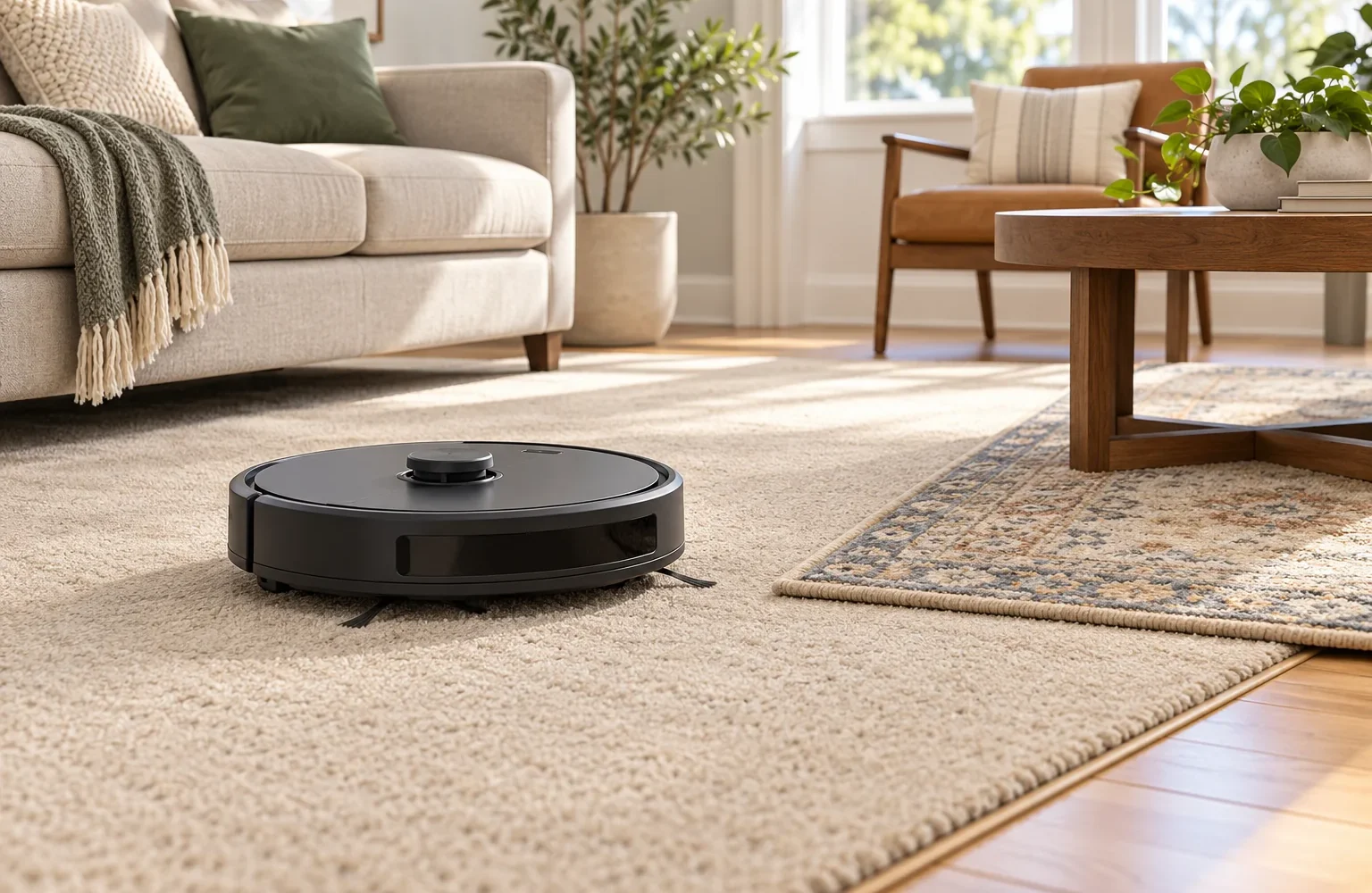
A robot vacuum can help keep low- and medium-pile carpet looking tidier between deeper cleans, but carpet is one of the toughest surfaces for these machines. Before choosing one, check whether the exact model can reach and move across your carpet, how independent tests measure pickup on carpet, and whether its brush, mop system, and maintenance routine fit your home.
Quick answer: Start with carpet access and actual carpet pickup evidence, not the advertised suction number alone. Check your carpet’s pile and fringe against the robot maker’s model-specific guidance. If your home has thick or plush carpet, deeply embedded soil, or a lot of shedding pet hair, plan to keep a full-size vacuum for periodic deeper cleaning.
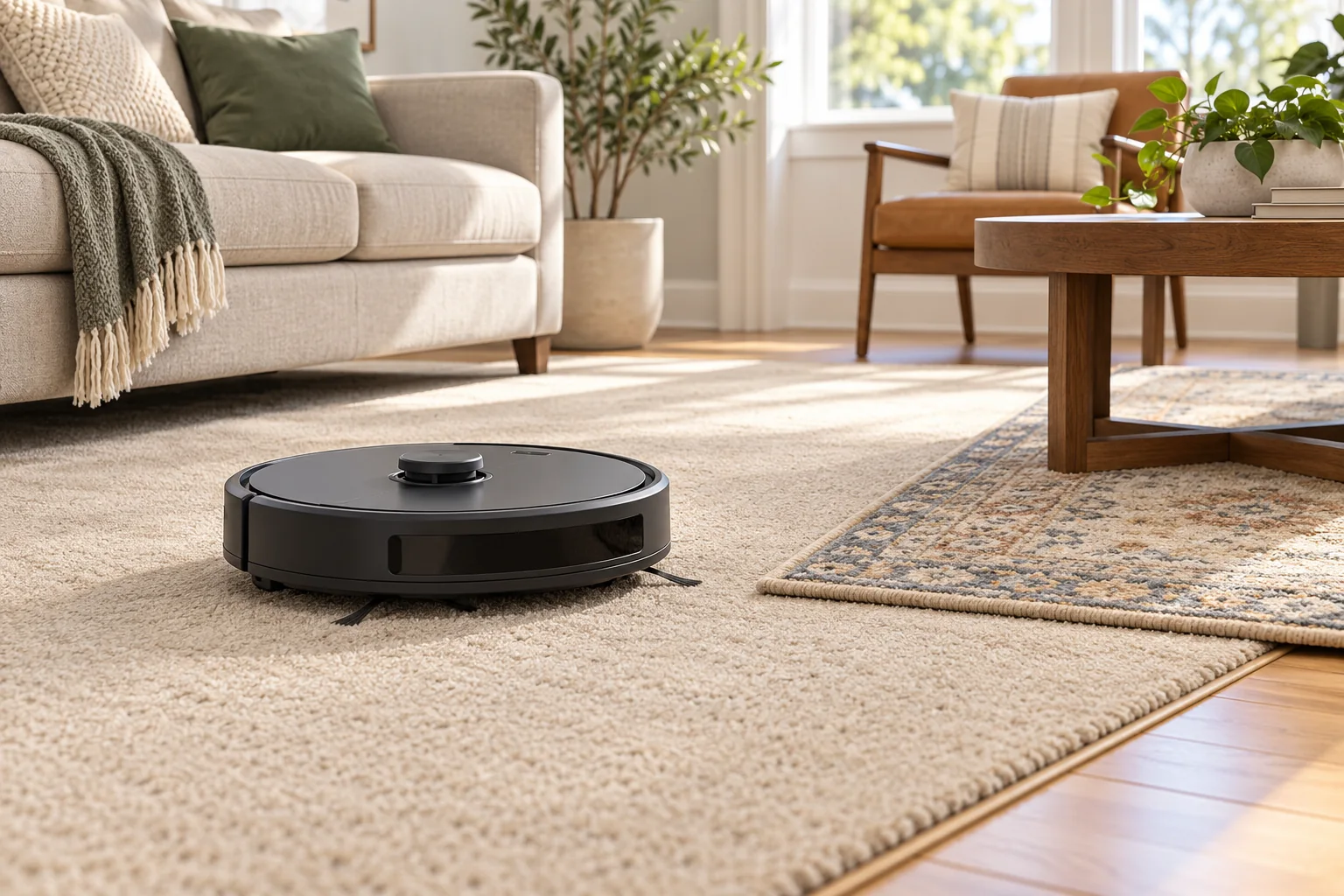
Can a robot vacuum clean carpet?
Many robot vacuums can collect everyday surface debris from some carpets and rugs. Results vary by model and surface: pile height and density affect how easily the robot moves, while crumbs, fine grit, and pet hair can behave differently in testing. Even a model that performs well on one carpet may struggle with a plush rug, fringe, a tall threshold, or material worked deep into the fibers.
Think of a robot vacuum primarily as a routine-maintenance tool. It can make frequent passes without you pushing it, but that does not prove that it will deep-clean every carpet or replace a full-size vacuum. Consumer Reports’ carpet guidance, for example, cautions that a robot may not be the best primary vacuum when most of a home is carpeted; its detailed page could not be accessed for this review, so no product recommendations from it are repeated here.
Check these carpet features before choosing
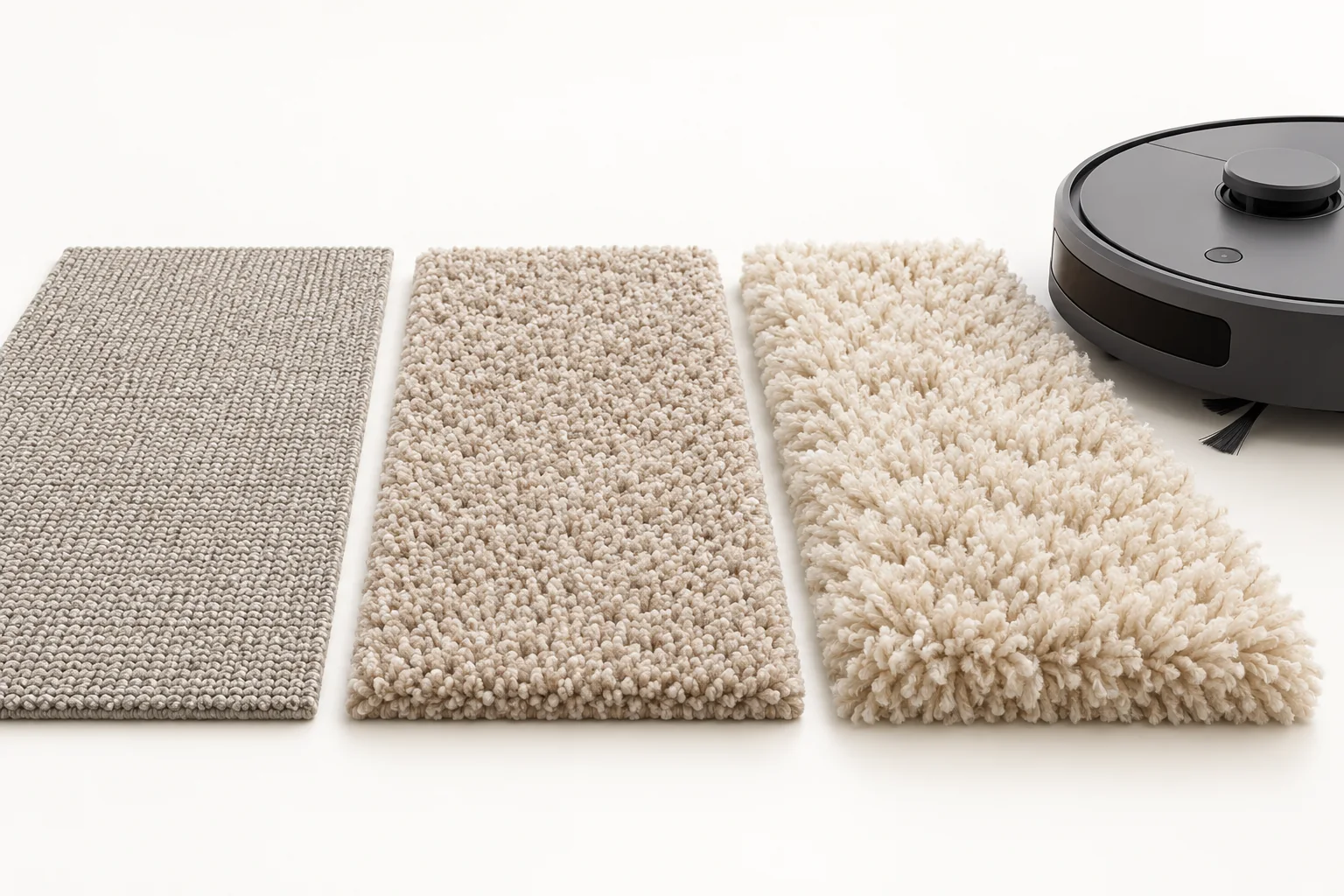
1. Carpet height, density, and edges
Look up the exact robot model’s carpet guidance and compare it with the carpet and rugs in your rooms. Manufacturer limits differ: eufy publishes different guidance across product families, and SwitchBot gives a limit for particular K-series models. Those examples are not universal thresholds. A robot may also need to cross the carpet edge to reach another part of a room, and a thick rug or fringe can catch a wheel or brush even if the center of the rug is cleanable.
Measure the pile from the backing to the top of the fibers if the maker asks for a height, and check whether the manual addresses rug fringe, dark rugs, thresholds, or carpeted transitions. When a manufacturer says a surface is restricted, use the model’s no-go zone or another supported boundary method rather than assuming the robot will adapt.
2. Carpet pickup tests that match your mess
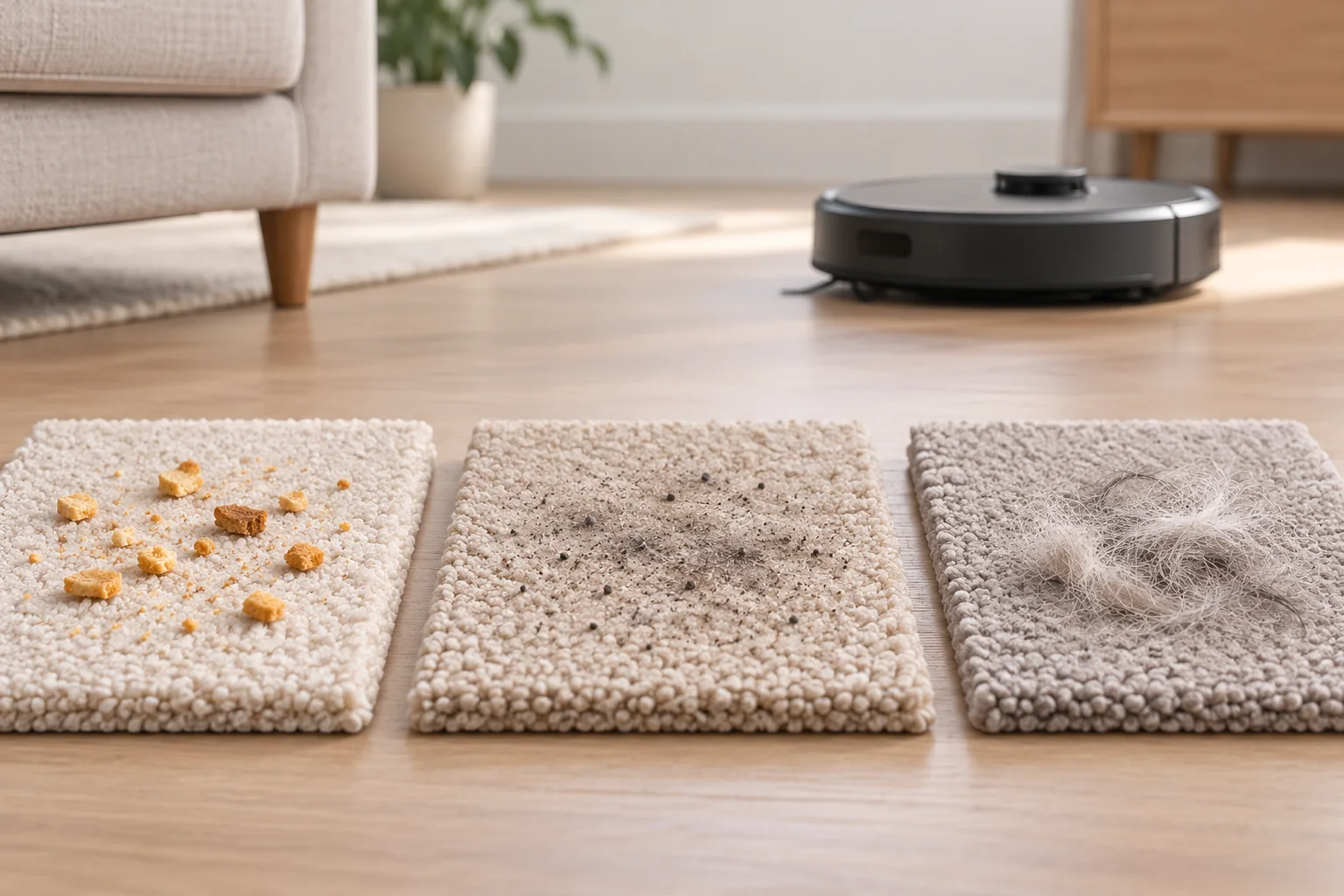
Useful independent reviews separate carpet pickup from hard-floor pickup and explain their method. Look for the type of debris used and whether the test covers low-, medium-, or high-pile carpet. Fine particles worked into a carpet, larger crumbs, and pet hair are different tasks, so one score may not answer every household’s question.
For example, RTINGS’ 2026 carpet guide discusses how models can differ on larger debris, fine material embedded in fibers, and pet hair. Its results are that publisher’s own tests, not tests by Home and Living Daily. Read the test method and the model-specific tradeoffs before treating a ranking as a recommendation for your rooms.
3. Brush design and hair maintenance
If hair is a regular problem, check how the main brush handles it and how easily you can remove wrapped strands. A brush that collects hair still needs cleaning; a brush that resists tangles can have other tradeoffs. Look for independent pet-hair results on carpet rather than relying on a hard-floor demonstration or a suction claim.
Also consider how often you are willing to inspect the brush, wheels, filter, and bin. A self-emptying dock can reduce bin-emptying frequency, but it does not remove hair from the brush or take care of every filter and dock part.
4. Carpet and mop separation in mixed-floor homes
If the robot also mops hard floors, find out exactly how it handles carpet: does it lift the mop, avoid carpeted rooms, or require you to remove a mop module or set no-mop zones? These features vary by model and mode. Confirm the behavior in the manual and app instructions before scheduling a combined run.
Match the robot to your home
| Your floors and routine | What to prioritize | What to verify |
|---|---|---|
| Mostly low-pile carpet with daily crumbs | Carpet debris results, reliable room coverage, easy brush access | Test surface and debris type; clearance at thresholds |
| Thick or plush carpet | Model-specific carpet access and strong evidence on a similar pile | Manual’s restrictions, whether the robot gets stuck, and a backup deep-cleaning plan |
| Carpet plus shedding pets | Pet-hair results on carpet and manageable brush maintenance | Hair type, tangles, filter care, and obstacle handling |
| Area rugs with fringe or curled edges | Rug-edge handling and supported boundary controls | Fringe, carpet movement, no-go zones, and whether it can cross the rug edge |
| Hard floors plus carpet, with a mop | Clear separation between wet and carpeted zones | Mop lifting/removal, carpet detection, app settings, and model-specific limits |
How to compare recommendations without relying on a headline
- Confirm the exact model. Similar names can have different brushes, docks, or carpet settings. Check the model number and current manual.
- Read the test method. Prefer clear carpet types and debris categories over a list that gives no method.
- Match the evidence to your floors. A low-pile result does not establish performance on shag, plush, or densely woven carpet.
- Check the limitation notes. Read about pet hair, fine debris, thresholds, fringe, dark rugs, obstacle avoidance, and mop behavior.
- Account for upkeep and backup cleaning. Compare brush and filter care, bags and dock work, plus the full-size vacuum you may still need for periodic deep cleaning.
The carpet-specific RTINGS guide is one example of a review that separates carpet recommendations and discusses performance tradeoffs. It is an external publisher’s evaluation, not an HLD test. For broader ownership pros and cons, see our guide to whether a robot vacuum is worth it; that page addresses general household value rather than carpet-specific pickup.
When a robot vacuum may not be enough
Keep another vacuum in the plan if your carpet is thick or plush, if dirt is deeply embedded, or if your household needs occasional intensive cleaning. A robot can maintain floors between manual sessions, but a single result or manufacturer’s claim cannot guarantee deep cleaning across all carpet constructions. If a robot repeatedly gets stuck, leaves debris, or strains its brush on a particular rug, mark that area as restricted and use a suitable alternative.
To reduce disruptions, clear loose cords and fabric, secure light rugs if they move, fold or restrict fringe when the manual recommends it, and supervise early runs. If the robot reports brush or navigation errors, consult our robot vacuum troubleshooting guide and the manufacturer’s instructions for the exact model.
The takeaway
The best robot vacuum for carpet is the one whose supported carpet range, independently documented pickup, hair handling, and maintenance fit your actual rooms. Check carpet access and test methods first; treat model features and pile limits as model-specific. Use a robot for frequent upkeep where it performs well, and keep a full-size vacuum for the jobs it cannot reliably handle.
Research reviewed October 14, 2026. This guide summarizes external testing and manufacturer guidance; Home and Living Daily did not conduct comparative product tests. Product models and compatibility guidance change, so check current manuals and test pages before buying.

Ethan Miller
Ethan Miller writes about home improvement, interior design, cleaning, and everyday living at Home & Living Daily. He shares practical tips and simple ideas to help readers create more comfortable and functional homes.