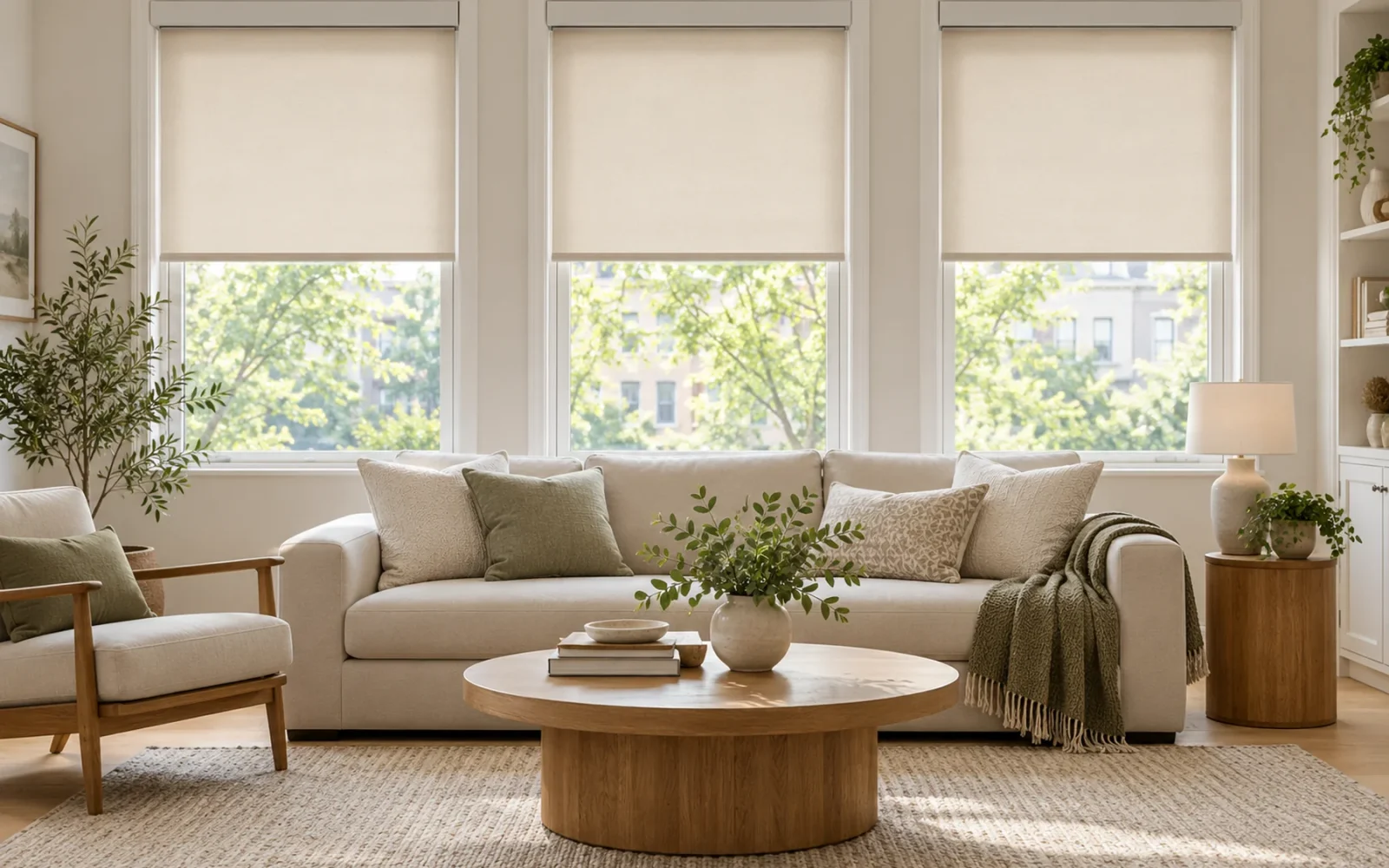
Motorized blinds and shades are most worthwhile on windows you adjust every day, cannot reach comfortably, or leave uncovered because operating them is a nuisance. They are harder to justify on an easy-to-reach window whose covering rarely moves.
Start with the difficult windows rather than motorizing the whole house. The value comes from solving a repeated problem—glare, privacy, access, or coordinated opening—not from putting another device in an app.
Decide which windows deserve a motor
Watch how you use each room for several days. Note when sunlight reaches a screen, when privacy becomes necessary, and which shades stay in the wrong position because moving them is inconvenient.
| Window or situation | Likely value of motorization | Check before ordering |
|---|---|---|
| Tall window or one behind furniture | Easier everyday operation | How the motor will be charged or serviced |
| Several windows adjusted together | One action instead of repeated trips | Group controls and consistent stopping positions |
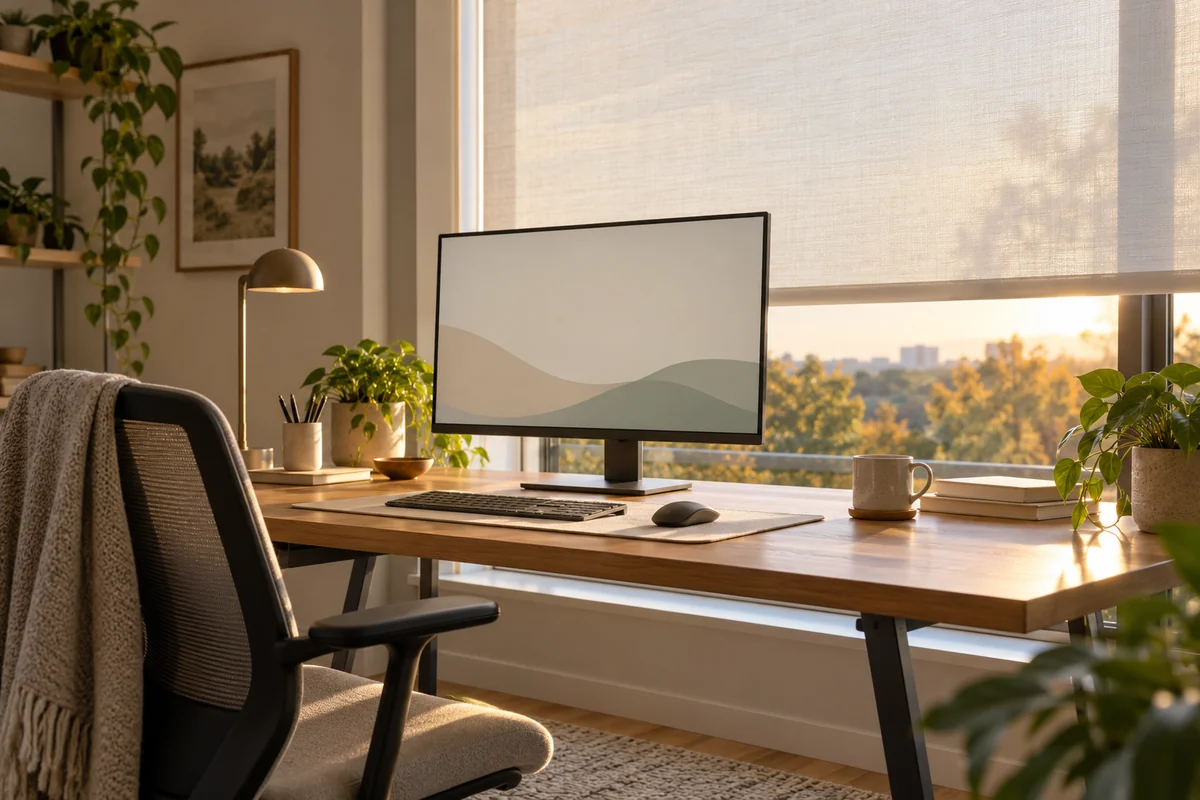
| Home-office window with afternoon glare | A repeatable adjustment while working | Fabric, coverage, and the timing you need |
| Accessible guest-room window rarely adjusted | Limited everyday benefit | Whether a manual shade already does the job |
Think about the person operating the room. A convenient remote may matter more than voice control for someone who has difficulty reaching a window. A bedside button can be more useful than a schedule that wakes someone at the wrong time.
In a Reddit discussion about home-office motorized shades, individual owners described using schedules to lower shades when afternoon sun reached their monitors. Another reply questioned whether the built-in scheduling was sufficient. Those are personal experiences, but they identify a useful buying test: ask the supplier to demonstrate the actual timing and override you want.
Separate motorized operation from smart control
A motor can move a covering using a remote without offering app control, voice commands, or household automations. Those additional functions depend on the motor, controller, and platform.
Also check what moves. A motorized blind may tilt its slats without raising the blind. A roller shade raises and lowers fabric. A product described as an “automation upgrade” may control one function rather than both.
Ask for the exact motor and control system on the quote. Confirm whether a bridge is included, which platform receives the shade, and whether it exposes the position or commands your routine requires. A broad compatibility badge does not establish that all advanced functions transfer between apps.
For example, Lutron's Serena support information specifies a Smart Bridge for app control from anywhere. That is a requirement of that arrangement, not evidence that every motorized covering needs an internet bridge. If controller terminology is making the quote unclear, separate those roles with the smart-home hub guide.
Choose power you can maintain comfortably
Battery power avoids a new cable route, but the battery or charging connection must remain accessible. A rechargeable motor high above a stairwell still needs a practical maintenance plan. Count the difficulty of reaching it, not just the advertised interval between charges.
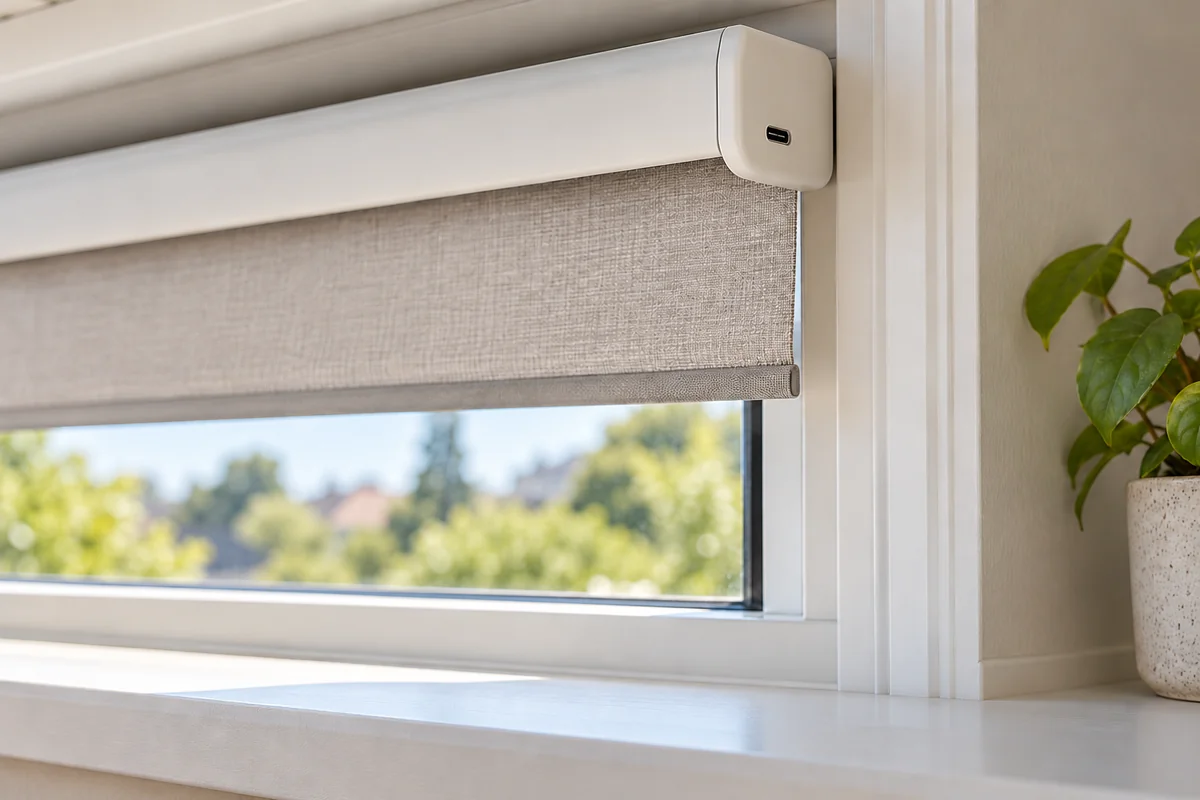
Ask where the charging port is, whether the motor stays installed while charging, and how the supplier expects you to reach it. For replaceable batteries, check the required type and access to the battery compartment. Do not assume every rechargeable product uses the same connector or charging equipment.
Wired power can suit a renovation or a difficult window, but the selected system determines the supply and cable requirements. Coordinate the motor side, trim, outlet or power-supply location, and future access before the work is finished. The remodel wiring guide explains how to include shade points in that wider plan.
Power choices may be fixed at purchase. Lutron's Serena information, for instance, says its battery and wired shades are different models and cannot simply be converted afterward. Confirm the same point for your shortlisted product before choosing a cheaper temporary arrangement.
Evaluate the covering before the automation
Motorization cannot correct fabric that lets through too much light, a poor fit, or a mounting choice that leaves unacceptable side gaps. Decide first whether you need privacy, glare control, light filtering, or a dark sleeping room.
Request fabric samples and view them in the room at the relevant time of day. For a bedroom, discuss the complete blackout arrangement, including side gaps and mounting depth. A fabric described as blackout does not automatically create a fully dark room around an open-sided installation.
Do not treat energy savings as a guaranteed payback for the motor. The fabric, fit, window, climate, and when the covering is used determine the result. Motorization can make a useful adjustment happen consistently; it does not by itself establish a household energy-saving percentage.
Measure using the supplier's instructions, especially for inside mounts and shallow frames. Check handles, tilt-in windows, ventilation openings, and doors that could hit the covering. Custom products can have restrictive return terms, making measurement and fabric approval more valuable than a fast order.
Compare a complete installed quote
Compare equivalent fabric, size, mounting, motor, and controls. A manual shade in a premium fabric is not a fair baseline for the cheapest motorized roller. Request the motorization premium separately where possible.
Include the remote or wall control, required bridge, power accessories, measurement, installation, and any electrical work. Ask who sets the travel limits, groups windows, configures schedules, and demonstrates operation. A product that moves during installation is not necessarily ready for your household's routines.
Check warranty coverage for the fabric, motor, battery, controls, and labor separately. Also ask how a failed motor is replaced: can the shade be serviced, who removes it, and are replacement parts available? A single lifespan number conceals these differences.
Listen to a demonstration of the relevant motor if quiet operation matters. A recording or generic decibel claim is less informative than the actual product moving a comparable shade. Morning operation beside a bed creates a different expectation from a shade in a busy kitchen.
Try one useful routine first
Begin with a repeated action, such as closing a street-facing room at dusk or lowering an office shade before glare becomes distracting. Provide a physical override and make it clear how scheduled operation resumes afterward.
Test the remote, app, and any routine separately. Check what still works if the internet is unavailable and what happens after power is restored. Do not assume manual operation means pulling on the fabric; some motors have a supported manual method, while others should not be moved that way.
For a larger project, pilot one room or one representative window before committing to every opening. Use that trial to assess noise, fit, charging access, and whether people actually like the controls.
Conclusion
Motorize the windows where effort or access prevents the covering from doing its job. Spend first on the right fabric, fit, and maintainable power arrangement, then buy only the controls your routine needs. A few well-chosen automated shades can provide more daily value than an entire house of inconvenient ones.

Ethan Miller
Ethan Miller writes about home improvement, interior design, cleaning, and everyday living at Home & Living Daily. He shares practical tips and simple ideas to help readers create more comfortable and functional homes.