A bathroom remodel can mean a few cosmetic replacements or a full renovation with a rebuilt shower, new finishes, and several trades. Price the scope first. As one published reference point, Home Depot’s cost guide places a quick bath update at $3,000 to $8,000. That is not a budget for every full bathroom renovation.
A useful budget separates installed work, selected finish materials, project services, and money reserved for unresolved conditions. Your location and existing bathroom can change the result substantially, so use published figures to frame the conversation and local written proposals to make the decision.
Define what you are buying before comparing totals
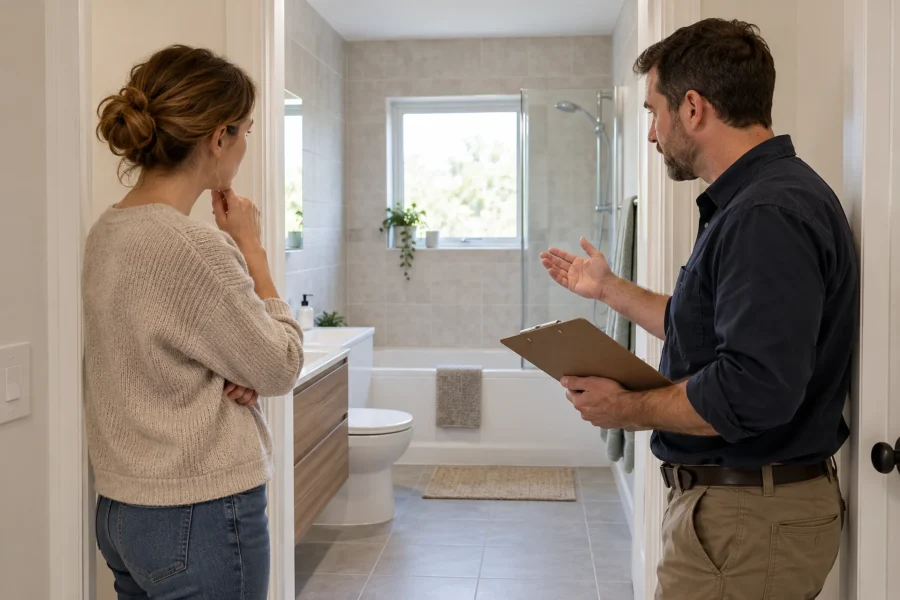
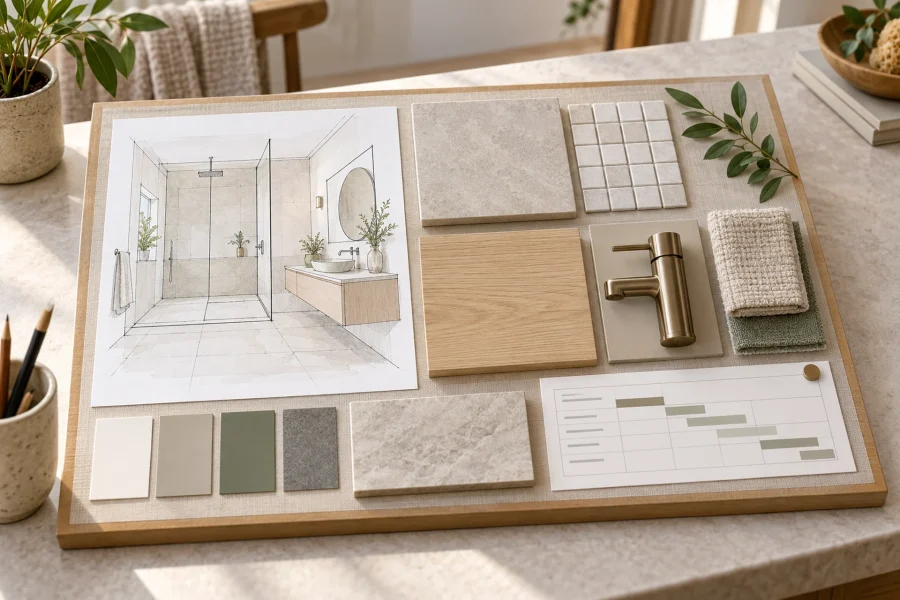
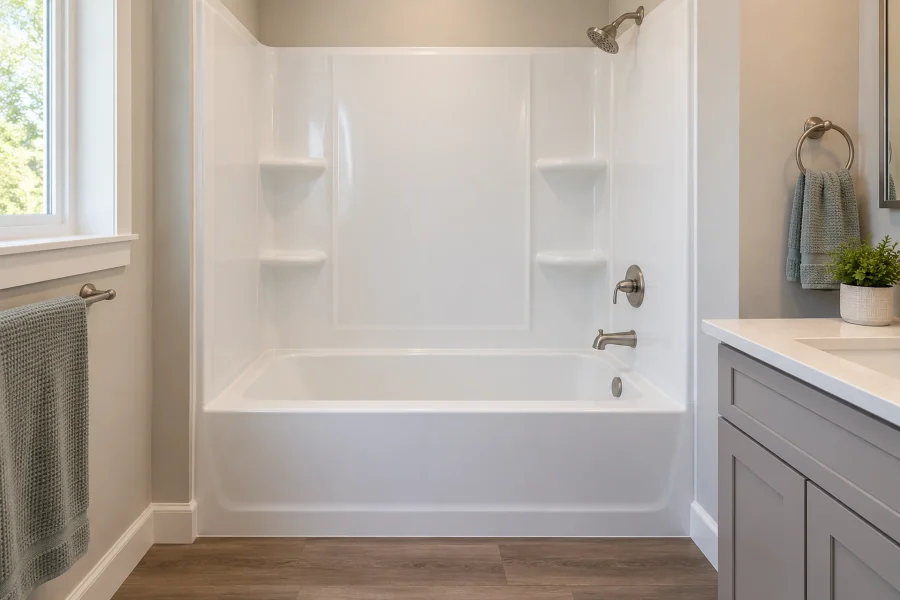
Write a short scope describing what stays, what comes out, and whether fixture locations change. Specify whether the shower or tub assembly is retained, refinished, replaced with a manufactured system, or rebuilt with tile. “New bathroom” is not a sufficiently precise description.
| Project scope | Typical work to clarify | Budget question |
|---|---|---|
| Cosmetic refresh | Paint, mirror, hardware, selected fixture replacements | Are the existing wet area and hidden services sound enough to retain? |
| Same-layout renovation | Replacement fixtures and finishes, often with wet-area reconstruction | Does the quote include preparation, waterproofing, connections, and disposal? |
| Reconfiguration | Moved fixtures, altered walls, changed shower footprint or access | What additional design, trade, permit, and repair work follows from the layout? |
Square footage alone does not settle these questions. Two bathrooms of the same size can require very different work if one retains a sound tub and the other needs a custom shower and relocated drain.
Budget for installed assemblies, not a shopping cart
The wet area includes work you cannot see
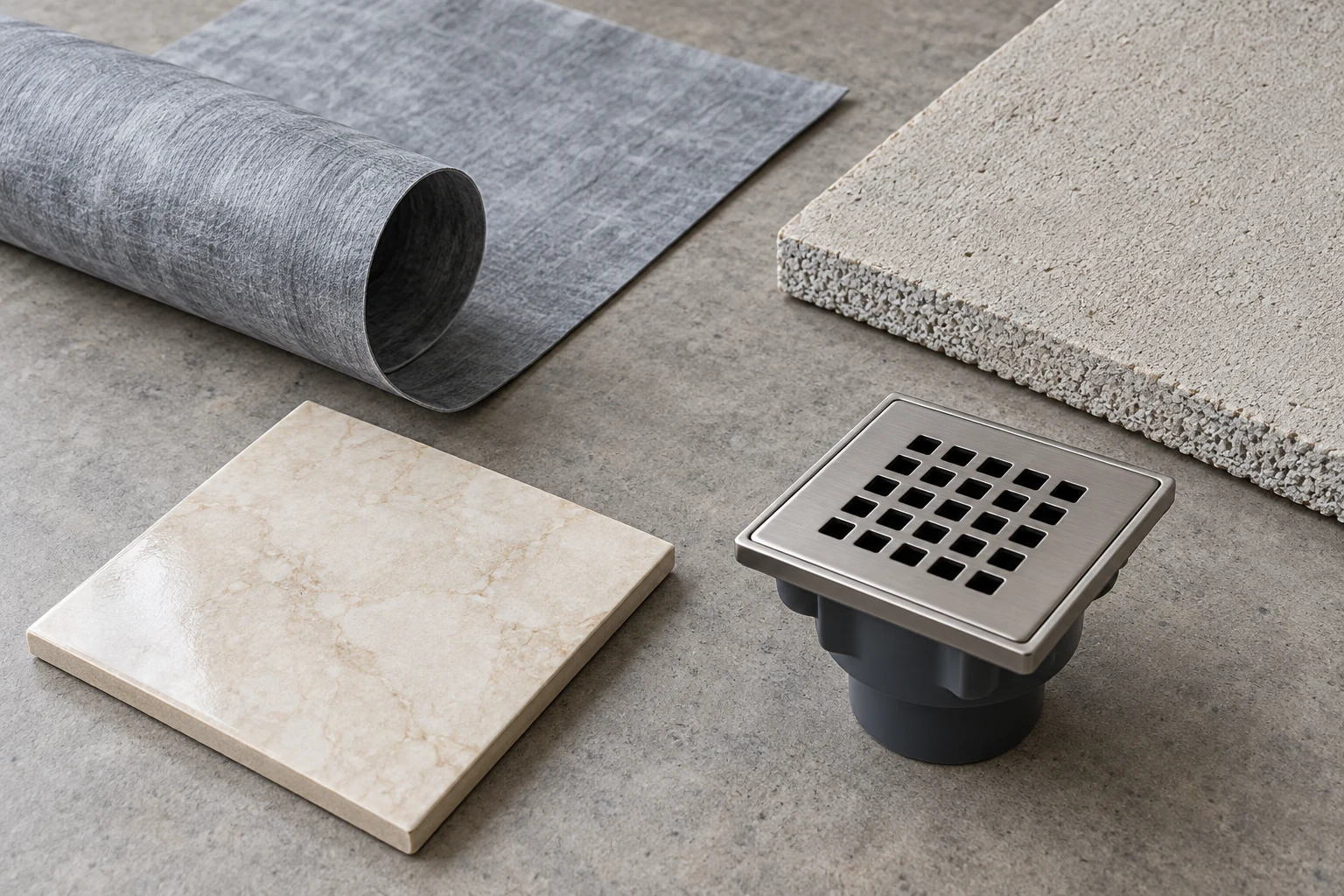
Tile and shower fittings are visible purchases. The supporting work may include demolition, substrate repairs, waterproofing, a compatible drain and base, plumbing connections, edge details, and an enclosure. Ask whether the shower price includes the entire assembly or only the finish installation. Our tile shower cost guide separates tile-setting, retiling, and a new shower assembly.
Fixtures bring connection and fit costs
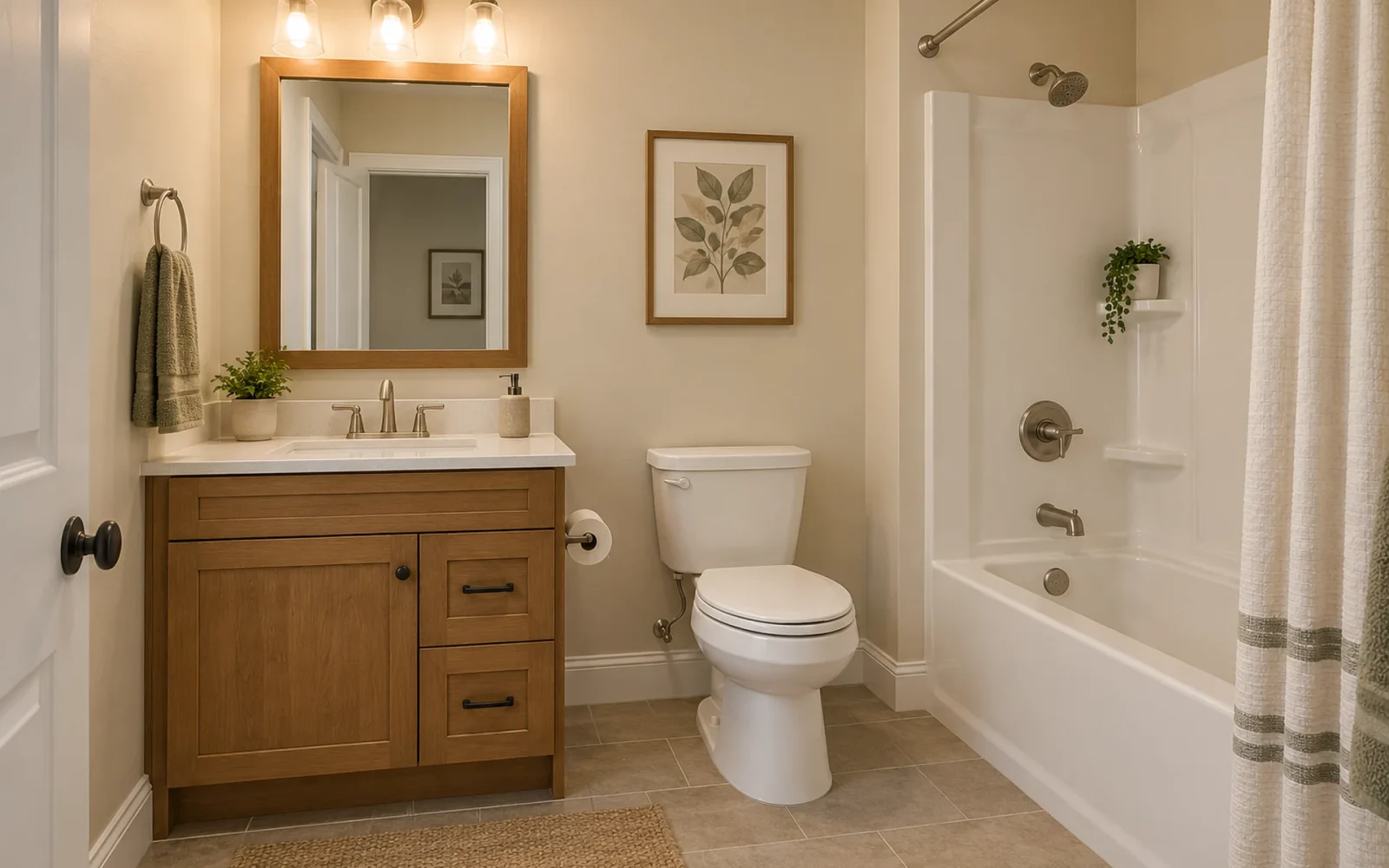
A vanity allowance may cover the cabinet but exclude the top, sink, faucet, delivery, installation, and plumbing. A new toilet may also require work at the flange or floor. Identify who supplies each component and who checks that it fits before ordering.
For electrical and ventilation work, describe the intended result: lighting locations, receptacles, controls, fan, and exhaust route. Have the relevant trades identify applicable local requirements. Do not assume that keeping the same layout eliminates all necessary updates.
Project services belong in the total
Clarify design, permits, site protection, debris removal, delivery charges, tax, contractor overhead, and final cleanup. Some are bundled into a fixed price; others are separate. Adding a generic labor percentage to an already installed quote double-counts costs.
A worked budget shows the arithmetic, not your local price
Suppose a homeowner receives a $19,000 fixed construction proposal, has $3,500 of owner-supplied fixtures and finishes outside that proposal, and expects $1,000 in separately priced design and permit services. The planned commitment is $23,500. Holding another $3,000 for unresolved conditions brings the available project funds to $26,500.
Those numbers are an illustrative calculation, not a national average, contractor estimate, or recommended contingency for every home. The important step is to check that the $3,500 purchases are genuinely excluded from the $19,000 proposal and that the reserve remains unspent unless needed.
An allowance is different from a reserve. An allowance covers a planned item whose final selection or price is not settled. A reserve is money you retain for uncertainty. Spending both on upgraded tile before demolition leaves no room for a hidden repair.
Read published prices with their geography and date attached
A regional example shows why a single headline figure can mislead. Sweeten’s Los Angeles guide, dated October 2025, includes a 2024 example with a $22,000 starting cost for a budget-finish standard full bathroom renovation without layout changes. It states that its example includes materials, labor, overhead, and a standard contractor margin. That is a dated local starting point, not a current quote for another city.
Use the same discipline with online calculators and friends’ completed projects. Ask when the work occurred, where it was, whether it included the shower assembly, and what the homeowner supplied separately. An inexpensive update and a full gut renovation should not compete in the same price column.
Choose the next scope decision before chasing a lower total
If proposals exceed the available funds, request a priced alternative that changes a real decision: retain the layout, simplify the enclosure, choose a stock vanity, or reduce decorative tile complexity. Keep necessary substrate repair and waterproofing in the scope.
Before signing, resolve large allowances and establish how concealed damage will be documented and priced. A bathroom budget becomes useful when it describes a complete, buildable result. A low total with essential work missing is still an incomplete budget.

Ethan Miller
Ethan Miller writes about home improvement, interior design, cleaning, and everyday living at Home & Living Daily. He shares practical tips and simple ideas to help readers create more comfortable and functional homes.