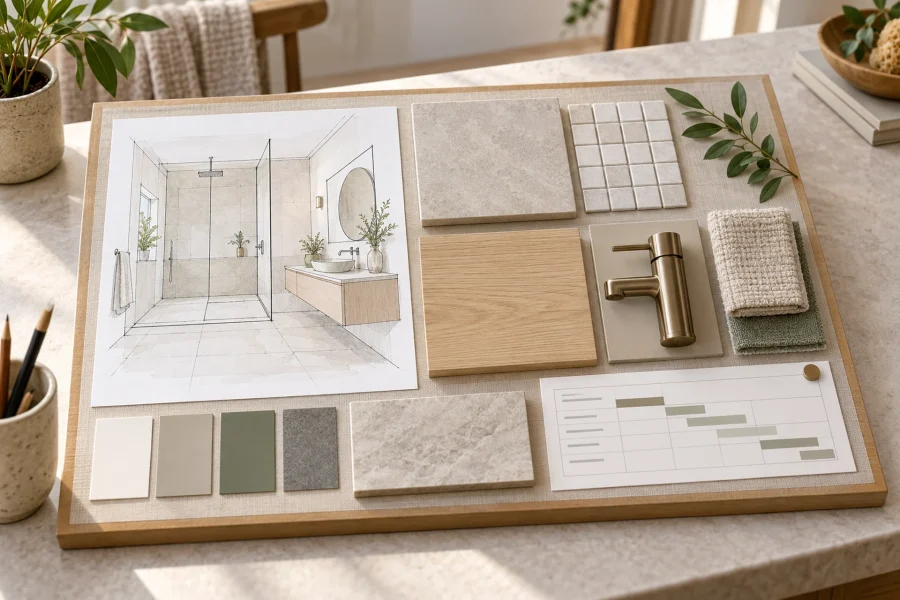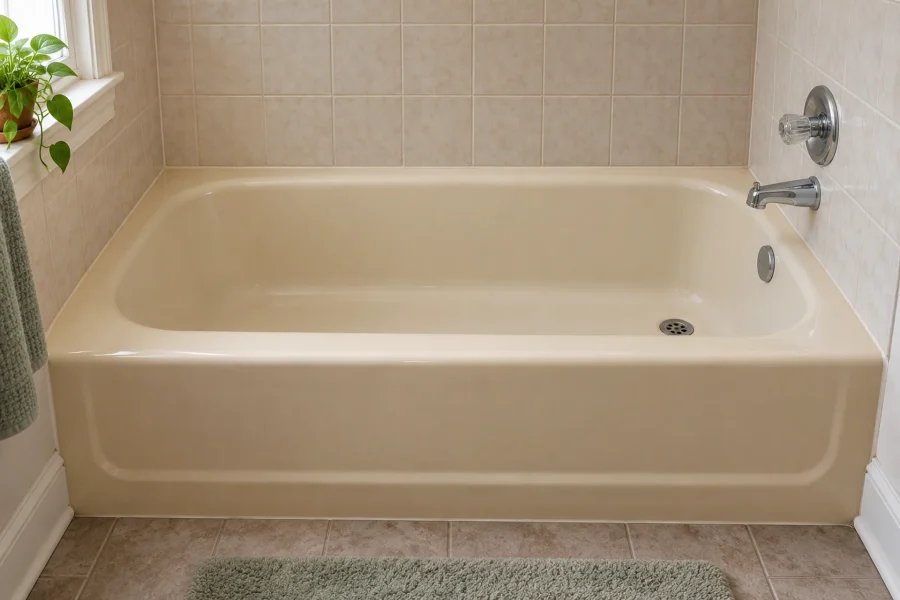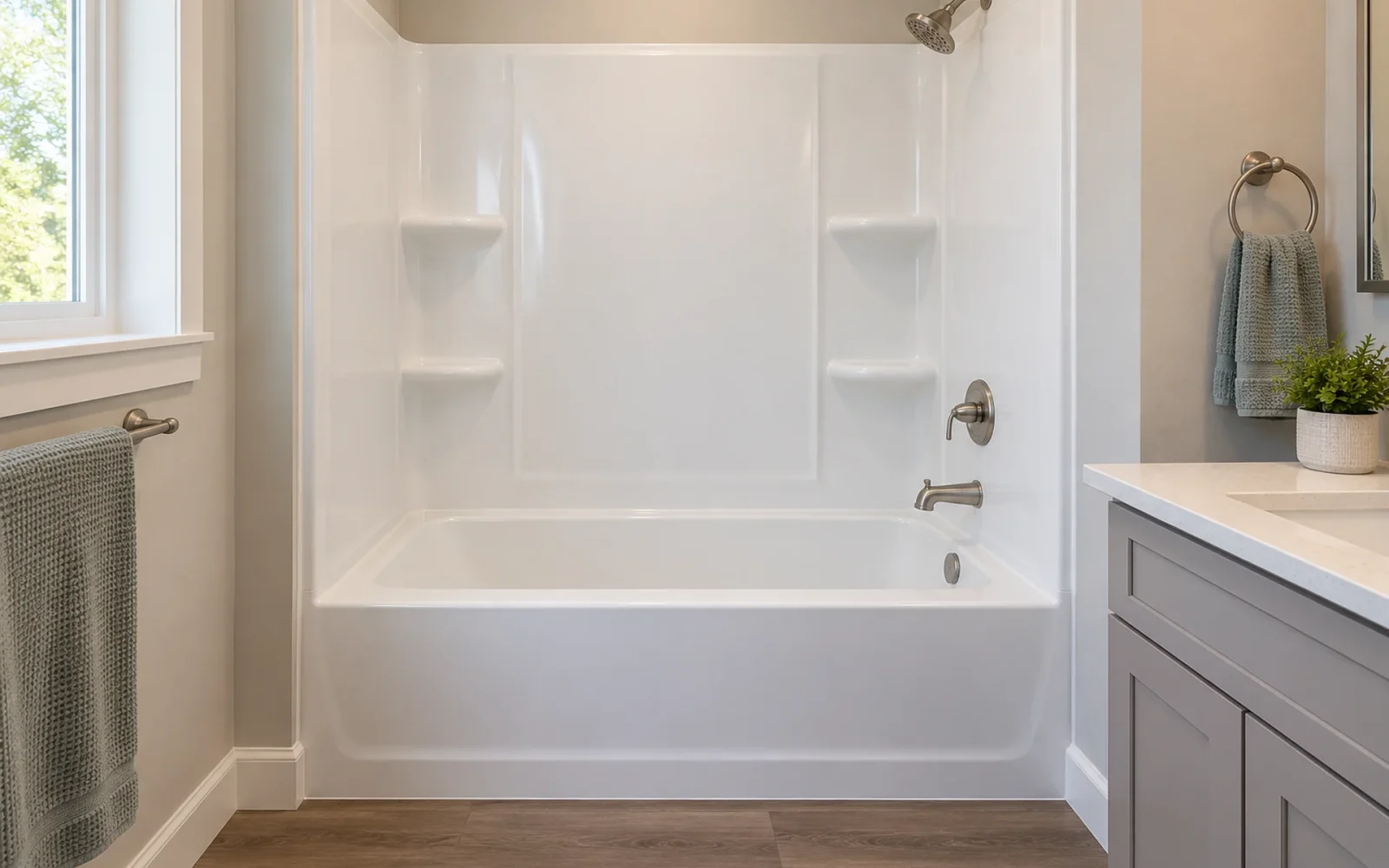
A one-day bathroom remodel can be worthwhile when you need a focused tub or shower update, the existing conditions suit the proposed system, and the written scope covers the result you want. It is less suitable when you need a new layout, extensive concealed repairs, or coordinated changes across the whole room.
The advertised day tells you little without the scope. Ask what is being removed or covered, what preparation happens beforehand, and when the bathing area can actually be used.
Find out which service the advertisement describes
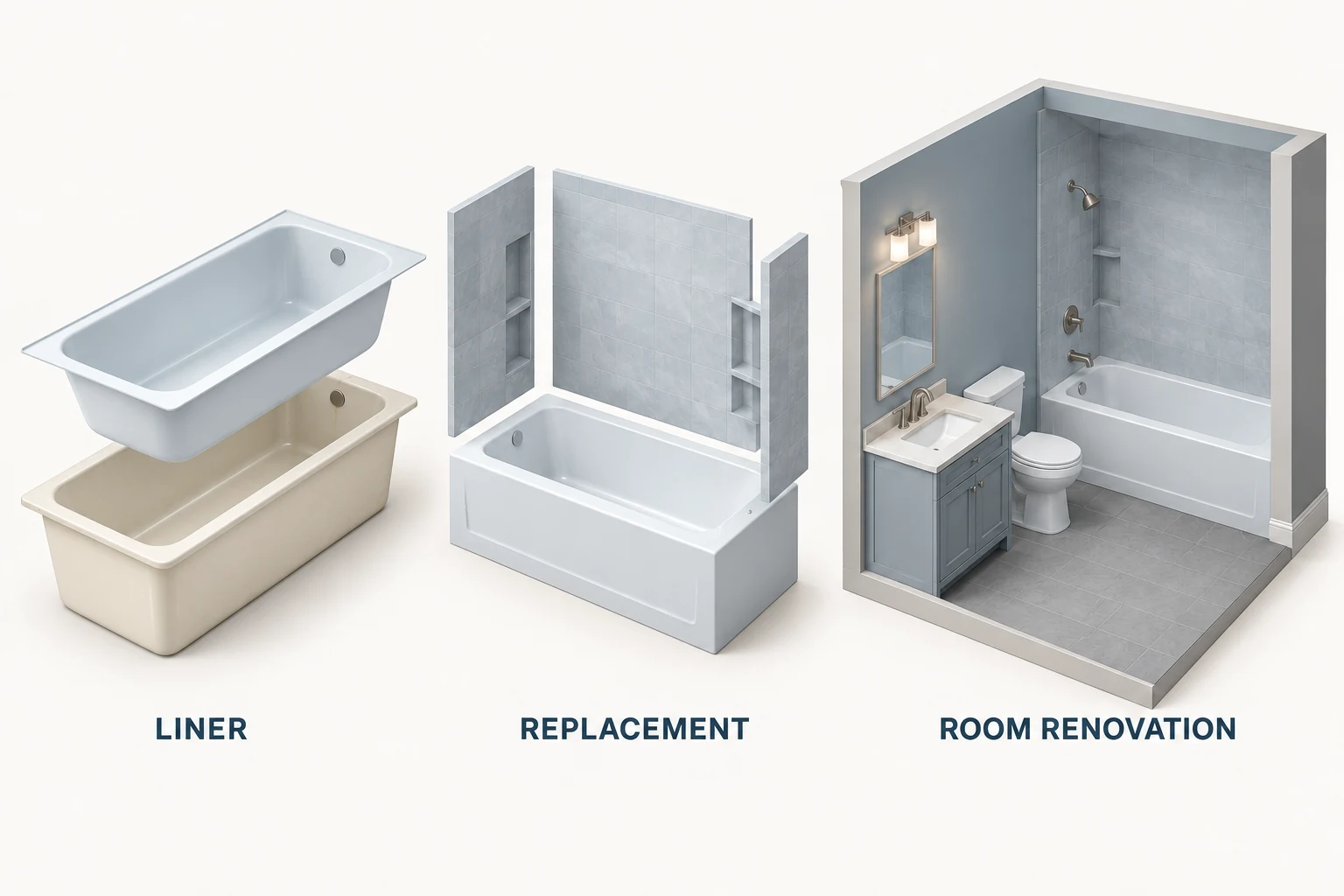
“One-day bathroom remodel” is not a single construction method. One company may install a liner over an existing tub. Another may remove and replace a bathing unit with a manufactured base and wall system. Neither description automatically includes the vanity, floor, lighting, ventilation, or moving fixtures.
| Service | What changes | Question to settle |
|---|---|---|
| Liner or overlay | A fitted surface is installed over an existing fixture or wall finish | Is the underlying assembly suitable, and what condition assessment is included? |
| Replacement tub or shower system | The specified bathing components are removed and replaced | Which demolition, plumbing, substrate repairs, and connections are included? |
| Whole-room renovation | Several fixtures, finishes, services, or layout features change | How are the additional trades, inspections, and dependencies scheduled? |
For a specific example, Bath Fitter describes a custom-fitted liner and wall approach and says its process includes measurements and necessary cleaning or repairs. Its one-day claim concerns the installation service it describes. It should not be read as a promise that every bathroom renovation, or every provider’s system, has the same scope.
Separate the three clocks
The first clock is the time from consultation to a ready-to-install project. Measurement, product selection, fabrication or ordering, and booking happen before the installation crew arrives. Ask for that expected lead time as well as the site-work duration.
The second clock is the installation itself. Clarify whether “one day” includes removal, waste disposal, plumbing connections, accessories, cleanup, and any necessary inspection. Ask what conditions would extend the work.
The third clock is return to use. A finished-looking installation may still need product-specific curing or other checks. Obtain the provider’s written instruction for when the shower or tub can get wet. Do not replace it with a generic waiting period from another product.

Make the hidden-damage policy part of the decision
Tell the provider about previous leaks, soft surfaces, movement, recurring sealant failure, and repairs. Ask what can be assessed before work and what cannot be confirmed until components are removed. An unexplained problem should not be dismissed because the replacement surface will cover it.
If damage is discovered, who assesses it, what repair capability is available, and how are price and timing changes approved? A realistic answer may include stopping work or extending the schedule. A fixed installation target should not prevent necessary investigation.
Speed alone does not establish poor quality. A limited scope, prepared materials, and a practiced crew can reduce site time. Equally, tile or a longer schedule does not guarantee a sound assembly. Evaluate the proposed system, substrate requirements, workmanship, and checks rather than ranking materials by prestige.
Compare total scope and ownership costs
Request the installed price for the exact base, walls, fittings, enclosure, accessories, disposal, and repairs included. Compare it with another proposal for the same outcome. A wet-area-only price and a complete room price do not establish which method is cheaper for your needs.
Review cleaning instructions and service access. Ask how joints and seals are maintained, which cleaners are permitted, and who handles a future issue. Read product and workmanship warranty terms separately, including exclusions and whether coverage transfers when the home is sold. A headline lifetime warranty does not explain every condition.
Match the service to the problem you need solved
A focused installation may be attractive when the bathing area is the main issue and the rest of the room works. A fuller renovation makes more sense when access, storage, layout, ventilation, or concealed conditions require coordinated changes.
Before committing, ask the provider to describe the bathroom you will have afterward and the problems that will remain. If the fast service resolves your priorities with a complete, suitable scope, the limited disruption can have real value. If it leaves the main problem untouched, the calendar promise is not a sufficient reason to buy it.

Ethan Miller
Ethan Miller writes about home improvement, interior design, cleaning, and everyday living at Home & Living Daily. He shares practical tips and simple ideas to help readers create more comfortable and functional homes.