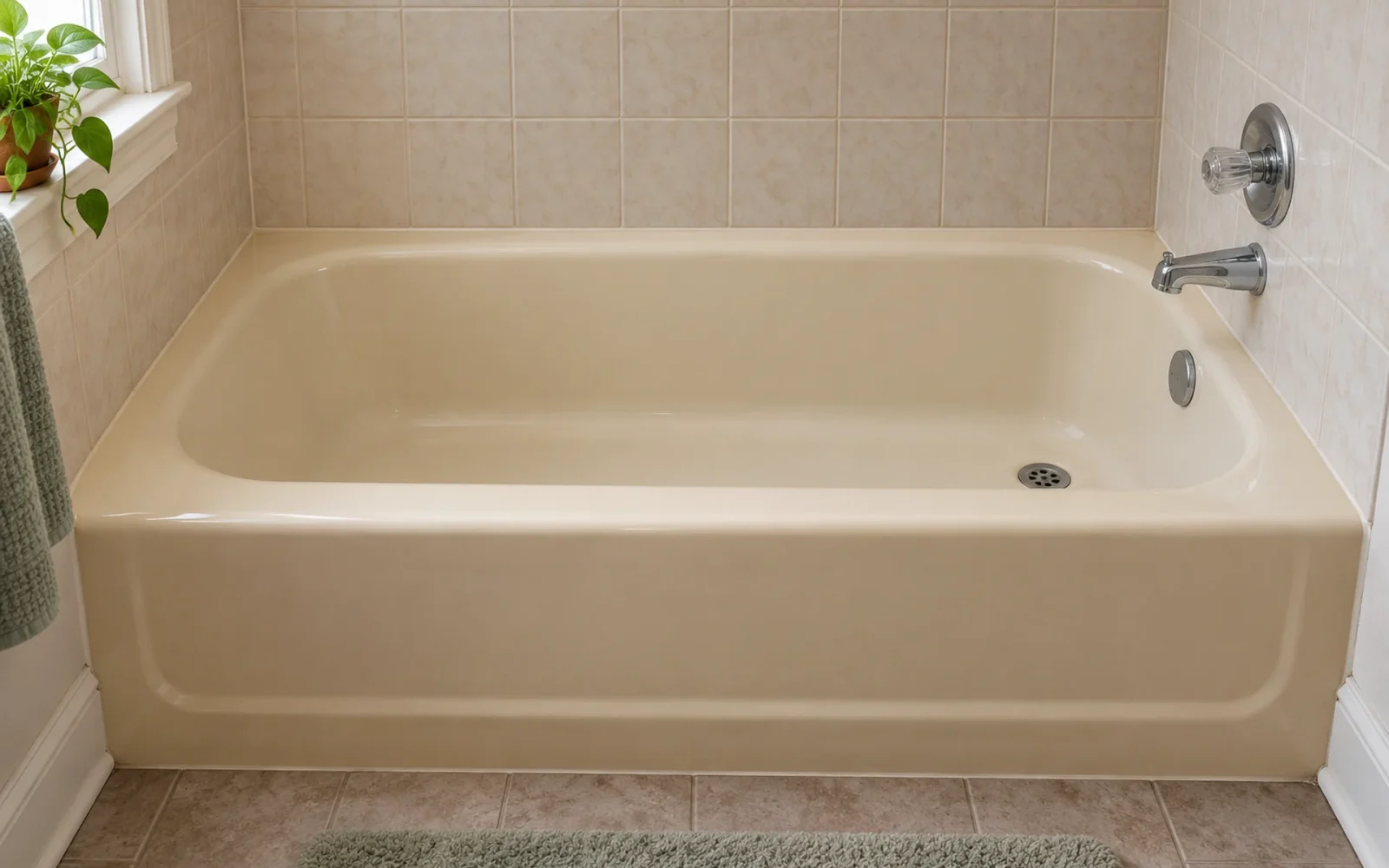
Refinish a bathtub when the main problem is its surface and the tub remains a suitable, sound fixture. Consider a fitted liner when the existing tub qualifies for that system and you want a new surface with limited removal. Replace the tub when its condition, shape, access, or surrounding work makes keeping it a poor choice.
Start with the reason you dislike the tub. A dull finish, a leaking connection, a flexible or damaged shell, and an uncomfortable bathing entry are different problems. The least disruptive surface option may leave the most important one unchanged.
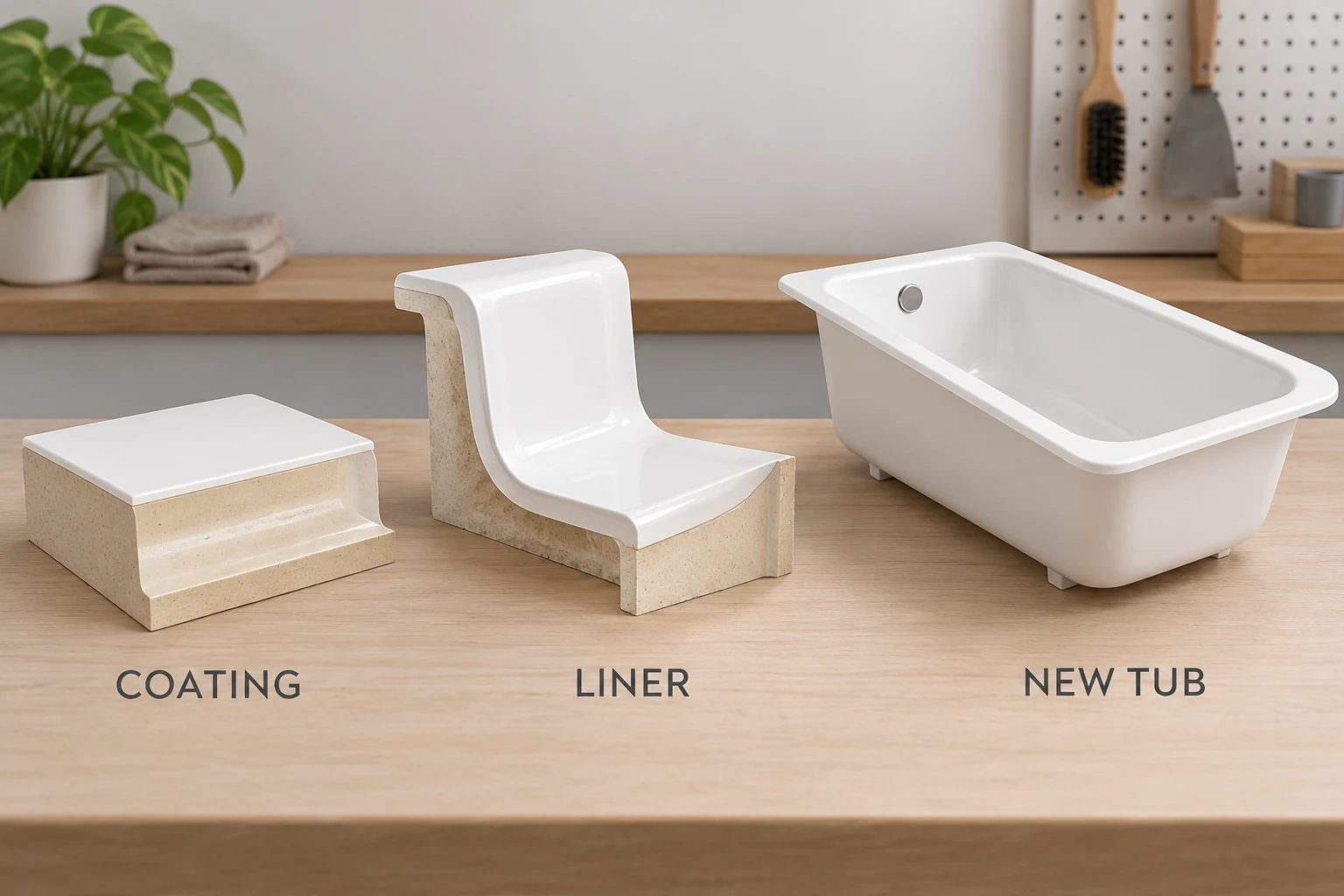
Compare what remains after each option
| Option | What changes | What normally remains | First question |
|---|---|---|---|
| Refinishing | Prepared surface receives a new coating | The existing tub and its basic geometry | Is the substrate a suitable candidate for the proposed coating? |
| Fitted liner | A formed insert covers a qualifying existing tub | The original tub beneath the new surface | Can the provider establish sound condition and an appropriate fit? |
| Replacement | The existing tub is removed and another installed | Only the surrounding elements the plan deliberately retains | What removal, connection, support, and finish restoration does the change require? |
Refinishing suits a surface problem better than a fit problem
A qualified refinisher should identify the tub material, existing coating, surface defects, and preparation requirements. Ask which repairs are included and whether any condition makes the tub unsuitable. A new coating is not evidence that a structural or plumbing problem has been corrected.
Refinishing preserves the tub’s familiar shape and location. That can be useful for a fixture you like, particularly when removing it would disturb surrounding finishes. It cannot make the bath longer, deepen it meaningfully, or change the height of the entry.
Get product-specific care and cure instructions. Ask about permitted cleaners, bathmats, suction accessories, repair procedures, and warranty exclusions. Previous refinishing may affect preparation, so tell the contractor if you know the tub has been coated before.
Preparation also deserves a safety discussion. NIOSH has documented fatal exposures involving methylene-chloride stripping agents in bathtub refinishing. Do not treat chemical stripping or spray coating as an ordinary bathroom-painting task. Ask the provider about the materials, exposure controls, household separation, and return-to-use instructions for the actual process.
A liner needs a suitable original tub, not just a matching color
A liner is a fitted covering, not a universal insert for every bathtub. The provider must establish whether your model, material, geometry, and condition are eligible. Unusual shapes, previous alterations, and certain materials may limit the choices.
Ask what happens at the drain, overflow, wall junction, and rim. Clarify whether the proposal includes a wall system or only the tub liner. The original tub remains underneath, so explain any history of movement or water intrusion and ask how it will be evaluated.
A failed connection or seal can allow water where it should not be. Learn how the provider investigates that problem and what the warranty covers. Do not assume the liner eliminates inspection or maintenance simply because the finished surface is smooth.
Replacement can address geometry and broader renovation needs
Replacing the tub lets you choose a different bathing fixture, subject to the room and building conditions. It also provides an opportunity to address exposed connections and supporting construction. Those possibilities need to be part of the written scope rather than assumed from the word “replacement.”

Check the delivery and removal route, weight and support requirements, drain position, wall interfaces, and which finishes will be disturbed. A low-priced tub on its own may represent only a small part of the installed job.
If the entry itself is the problem, compare the intended bathing arrangement rather than replacing one tub with another by default. A different fixture or shower conversion has its own drainage, water-containment, and access requirements.
Compare the complete result and the real downtime
Request written proposals that identify repairs, preparation, materials, connections, surrounding restoration, disposal, and warranty responsibilities. Separate lead time, site work, and curing or return to use. A one-day installation claim does not necessarily describe the whole period from measurement to bathing.
There is no useful universal lifespan ranking without knowing the product, installation, and care. Choose the option that solves the condition and use problem you actually have. Keeping a suitable tub can save disruption; keeping an unsuitable one merely postpones the replacement decision.

Ethan Miller
Ethan Miller writes about home improvement, interior design, cleaning, and everyday living at Home & Living Daily. He shares practical tips and simple ideas to help readers create more comfortable and functional homes.