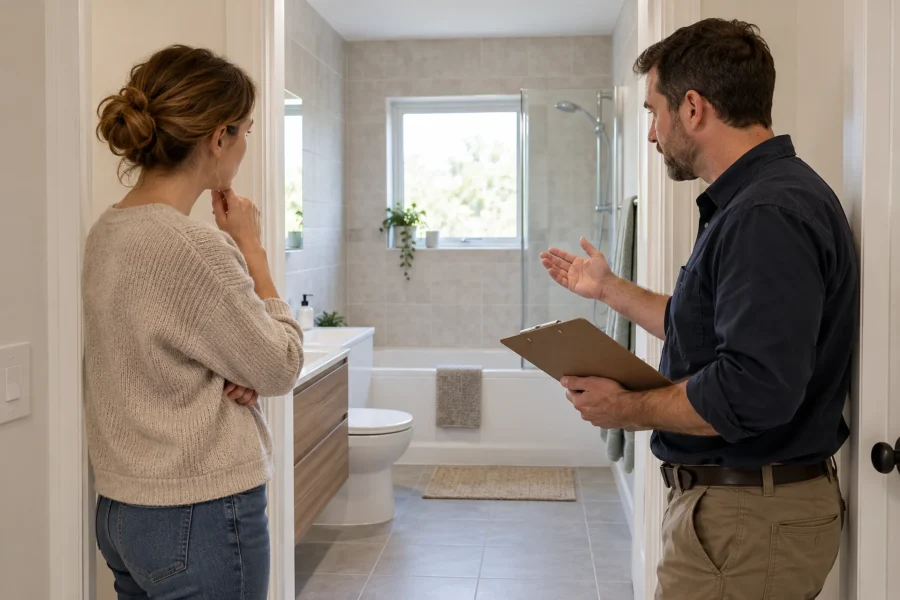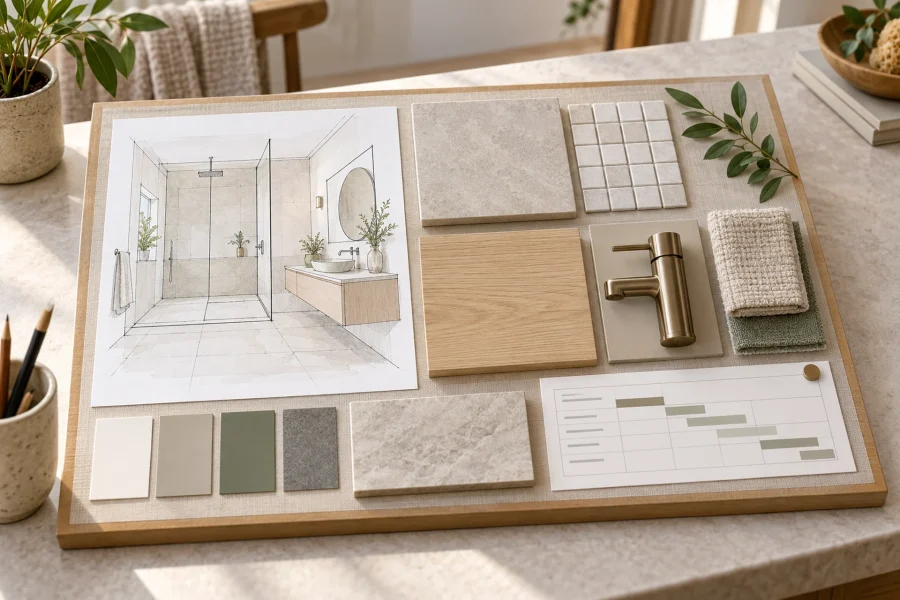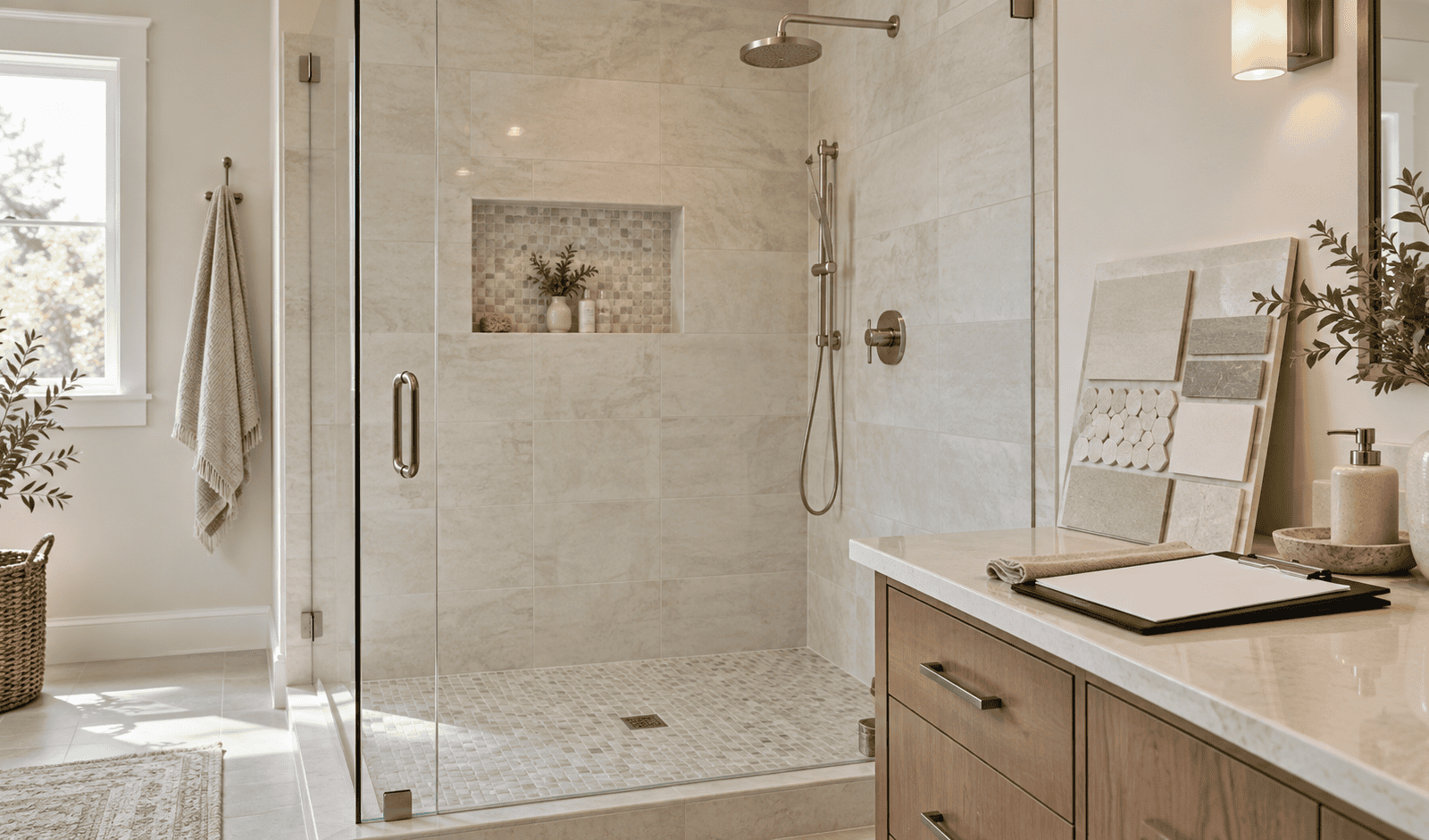
Tiling an existing shower — setting new tile over a substrate and waterproofing that are already sound — typically costs $1,000–$3,500 nationally. Retiling a shower that needs demolition and new waterproofing more commonly runs $2,500–$9,000. Building a complete custom tile shower from scratch — new pan, full waterproofing membrane, and wall-to-ceiling tile — often costs $6,500–$15,000 or more. Glass enclosures, fixtures, and plumbing relocation are generally priced separately from all three of these.
These three ranges are editorial planning bands synthesized from multiple published cost guides and the scope assumptions described throughout this article. They are not quoted verbatim from a single national database — see the Source Ledger at the end for exactly what each figure below is, and isn’t, drawn from.
The reason cost guides seem to disagree with each other isn’t sloppiness — it’s that “tile shower cost” describes several different projects. Before you can budget accurately, you need to know which one you’re pricing.
Tile Shower Cost at a Glance
| Project scope | What it includes | Planning range | Usually excluded |
|---|---|---|---|
| Tile-setting only | Setting tile/grout over an already-prepped, waterproofed surface | $1,000 – $3,500 | New pan, new waterproofing, plumbing, glass |
| Retile an existing shower | Demo of old tile, substrate repair as needed, new waterproofing, new tile | $2,500 – $9,000+ | Plumbing relocation, glass, major structural repair |
| New custom tile shower | New shower pan, full waterproofing membrane, wall and floor tile, drain | $6,500 – $15,000 | Glass enclosure, fixtures, plumbing relocation |
| Complete shower remodel | Tile plus glass, fixtures, and possibly plumbing | $7,000 – $20,000+ | Varies by project — treat as its own budget line, not a tiling line |
These are editorial planning ranges assembled from several published cost-guide sources (see Source Ledger), not one vendor’s quote. Your ZIP code, existing plumbing, and tile choice can move any of these numbers substantially. No row above should be assumed to include everything — check the “usually excluded” column and confirm scope directly with your contractor.
What Is Included in the Cost of a Tile Shower?
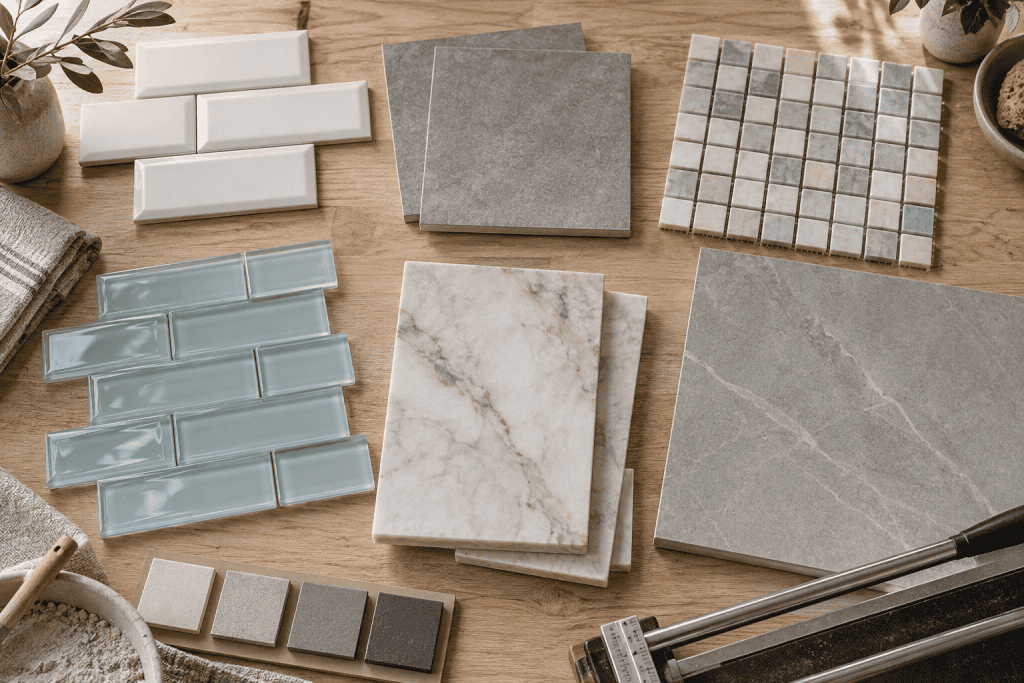
Tile and setting materials
A complete materials list typically includes the tile itself, an appropriate thinset mortar or setting material specified for the tile type and the waterproofing system in use, grout (sanded or unsanded depending on joint width), silicone sealant at corners and transitions, tile spacers, edge or trim pieces, and enough overage — generally 10%–15% extra — to cover cuts, breakage, and future repairs.
Labor
Labor covers measuring and layout, cutting tile (which rises sharply with mosaics, niches, and diagonal patterns), setting, grouting, sealing, and cleanup. Shower walls and floors typically cost more per square foot to tile than an open floor, because the work happens in a tight space with more cuts around fixtures, corners, curbs, and niches, and because mistakes in a wet area cause more damage than mistakes elsewhere.
Surface preparation and waterproofing
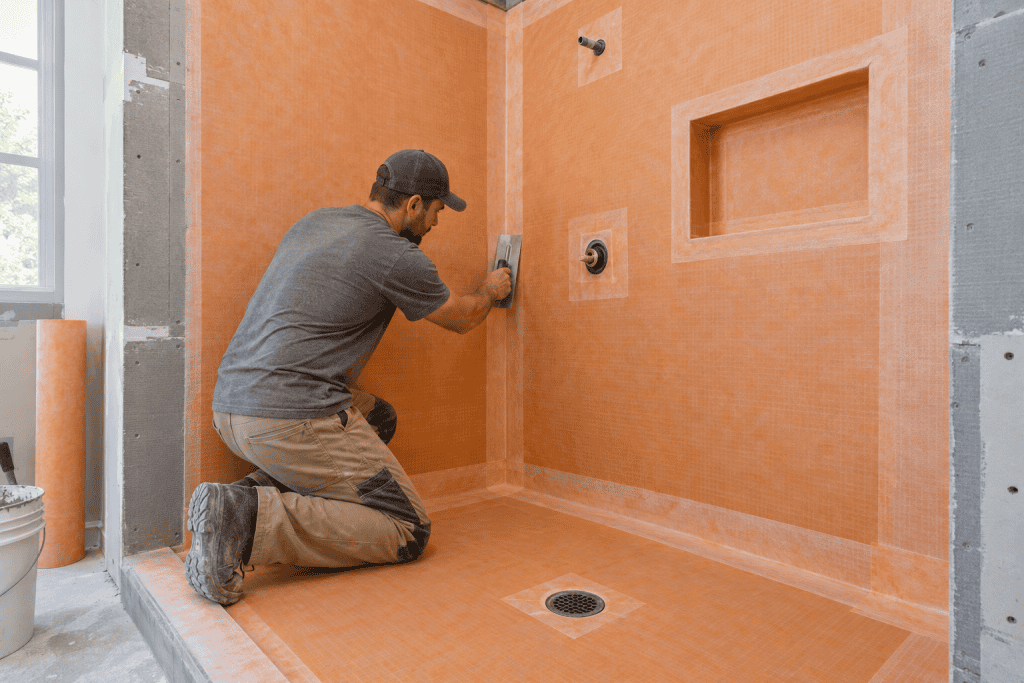
Before tile goes up, a shower needs cement backer board or a comparable substrate, a waterproofing membrane (liquid-applied or sheet), a level base, and repair of any rot or water damage found once old material comes down. Tile and grout are not, on their own, a complete waterproofing system — grout is porous, and the actual water barrier lives in the membrane and pan behind it. Follow the installation instructions for the specific waterproofing system being used; requirements for seams, corners, penetrations, cure times, and compatible setting materials vary by manufacturer, so treat the system’s own instructions — not a generic description — as the standard to build to.
Commonly excluded costs
Ask about these explicitly before assuming a quote covers your whole project:
- Demolition and debris disposal
- Plumbing relocation (moving a shower valve or drain)
- Framing or subfloor repair behind old tile
- Mold or water-damage remediation
- Permit and inspection fees
- Glass shower enclosure or doors
- Fixtures (shower valve, head, niche shelves)
- General contractor markup on top of the trade cost when a GC is supervising subcontractors
Tile Shower Cost by Size
A shower’s footprint (the floor space it occupies) is not the same as its tile area (the total surface being tiled). To estimate tile area:
- Measure the width of each wall that will be tiled.
- Multiply each wall’s width by the tile height (floor to ceiling, or to a set tile-height line).
- Add up all wall areas.
- Add the shower floor area.
- Subtract large openings (the entry).
- Add 10%–15% for waste and future repairs.
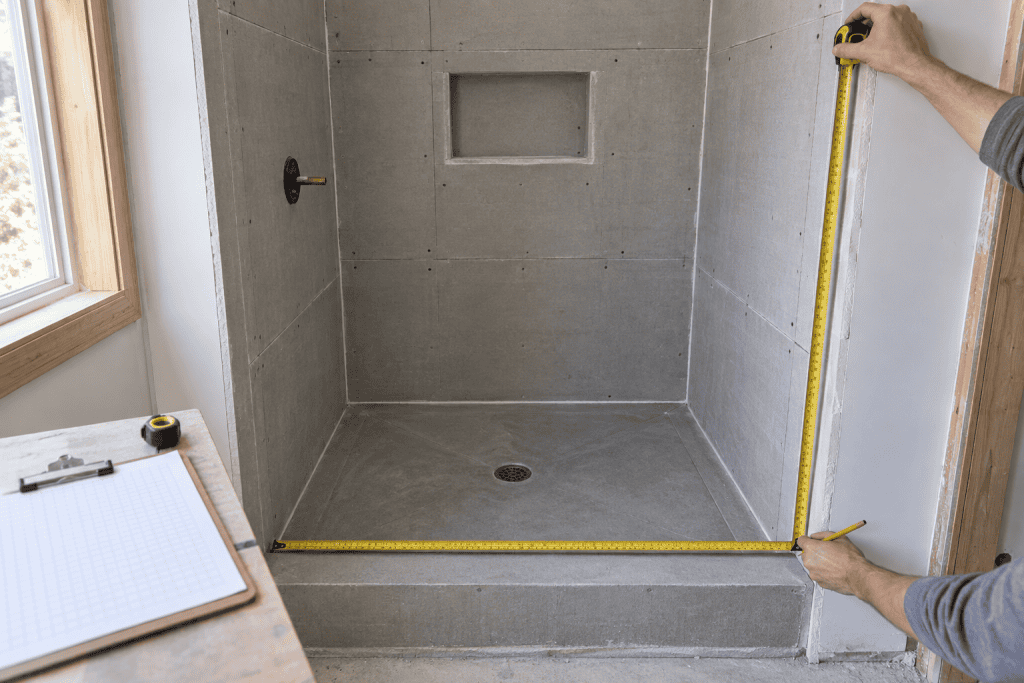
Worked example — a 3×4 shower tiled to 7 feet high, assuming three tiled walls and one open entry: Two walls at 4 ft wide × 7 ft = 28 sq ft each (56 sq ft total); one wall at 3 ft × 7 ft = 21 sq ft. Wall total: 77 sq ft. Floor: 3 ft × 4 ft = 12 sq ft. Combined: 89 sq ft. Add 12% waste: roughly 100 sq ft of tile — nearly nine times the 12-square-foot footprint. A niche, bench, curb, or tiled ceiling adds further area and, more significantly, adds cutting time that a flat-wall estimate doesn’t capture.
| Shower footprint | Approx. tile area (walls + floor, 7-ft walls) |
|---|---|
| 3×3 | ~75–85 sq ft |
| 3×4 | ~90–105 sq ft |
| 4×4 | ~110–125 sq ft |
| 4×6 | ~140–160 sq ft |
| Large walk-in (5×8+) | 180+ sq ft |
Cost by Tile Material

Rather than pin a single national material price to each tile type — figures that vary enormously by grade and that different publishers measure differently (some as raw material only, some as installed) — this table shows where each tile type generally sits on cost and what drives its labor impact.
| Tile type | Typical cost position | Labor impact | Why |
|---|---|---|---|
| Ceramic | Budget to premium | Low to moderate | Widely available; handmade or artisan products cost far more than mass-produced lines |
| Porcelain | Mid-range | Moderate | Denser and often harder to cut than ceramic |
| Mosaic | Mid-range to premium | High | More individual pieces, more grout joints, more layout time |
| Glass | Premium | High | Careful cutting and setting required; unforgiving of substrate flaws |
| Natural stone | Premium | High | Sealing, natural variation, and layout requirements add time |
| Large-format tile | Varies | Moderate to high | Needs a flatter substrate and careful handling; fewer grout lines can offset some labor |
Subway tile isn’t a separate material — it’s a shape — but it’s included in most searches because homeowners look for it that way. Its narrow, repeated joints add grouting time relative to a large-format tile in the same material.
Labor Cost to Install Shower Tile
It’s worth separating two different numbers that often get blurred together: what a tile setter earns, and what a homeowner pays a contractor.
A tile setter’s wage is not the same as the rate a contractor charges a homeowner. A contractor’s quote may also cover insurance, supervision, business overhead, warranty obligations, and profit. When comparing quotes, check the project scope and what each price includes.
Published installed-cost data (material and labor combined) is more consistently available than isolated labor-only rates. Angi’s shower-tiling data, for example, centers on an installed cost per tile type rather than a separate labor line. Other cost guides commonly cite labor alone, excluding material, somewhere in the $5–$15 per square foot range — treat that figure as directional rather than as a single audited number, since it’s less consistently sourced than the installed-cost figures above.
Labor is typically quoted one of three ways: by the square foot (common for straightforward wall/floor tiling), by the hour (more common for repair or unpredictable scope), or as a flat project price (most common for full custom showers, where a per-square-foot number doesn’t capture pan and niche work). Substrate condition, tile size, and pattern complexity are the biggest swing factors on any of these.
Additional Costs and Optional Features
| Item | Why it adds cost | How it’s usually priced | Often excluded from base quotes? |
|---|---|---|---|
| Old tile removal | Demolition labor + disposal | $1.50 – $4.50/sq ft (Angi) | Yes |
| Backer board replacement | Extra material + labor if substrate is compromised | Per sq ft or flat fee | Often, until demo reveals need |
| Waterproof membrane | Core to a functioning shower | Several hundred dollars and up, system-dependent | Sometimes bundled, sometimes separate |
| Custom-built shower pan (mud bed) | Skilled labor, cure time | Flat labor fee | Yes, in tile-only quotes |
| Prefabricated shower pan | Faster install than a mud bed | Unit cost + labor | Sometimes included |
| Niche | Extra framing/waterproofing detail, more cuts | Flat fee | Often extra |
| Bench | Added framing, waterproofing, and tile cuts | Flat fee | Often extra |
| Curb / curbless entry | A curbless shower may require floor recessing, structural modifications, and more complex slope and waterproofing work; it can use either a point drain or a linear drain depending on the design | Varies widely | Often extra |
| Linear drain | Premium hardware + precise slope work | Unit cost | Extra |
| Ceiling tile | Overhead work, more waterproofing detail | Per sq ft, higher labor rate | Extra |
| Complex pattern (herringbone, mosaic) | Significantly more cutting and layout time | Added labor hours | Extra |
| Plumbing relocation | Work by a plumbing professional, licensed where required by state or local law; possible wall opening | Flat fee | Always extra |
| Glass enclosure | Separate trade (glass installer) | $900 – $4,000+ | Always extra |
| Mold or water-damage repair | Remediation before any new work can start | Highly variable | Always extra, usually discovered mid-project |
Three Tile Shower Cost Examples
These are illustrative planning breakdowns, not contractor quotes. Line items sourced directly from a published cost guide are labeled as such; every other line is an editorial planning allowance — a reasonable illustrative assumption, not a reported national average. Tile material is priced on the purchase area (including waste); labor is priced on the actual installed area — the two are never combined into one “installed” rate and then added again.
Example 1 — Small 3×3 shower, tile-setting only The shower has already been demolished, prepared, and waterproofed by others. This estimate covers tile material, setting materials, and tile-setting labor only.
| Line item | Basis | Estimated cost |
|---|---|---|
| Tile material (economy ceramic, ~90 sq ft purchase incl. 15% waste) | Editorial planning allowance | $180 – $450 |
| Setting materials (thinset, grout, sealant, spacers) | Editorial planning allowance, ~78 sq ft install area | $150 – $300 |
| Tile-setting labor | Editorial planning allowance, $8–$14/sq ft × 78 sq ft | $620 – $1,090 |
| Total | $950 – $1,840 |
Excludes: demolition, new pan, new waterproofing membrane, plumbing, glass — this scenario assumes those were already done by others.
Example 2 — Mid-range 3×4 porcelain shower with a niche, new prefabricated pan (retile scope)
| Line item | Basis | Estimated cost |
|---|---|---|
| Tile material (mid-grade porcelain, ~107 sq ft purchase incl. 12% waste) | Editorial planning allowance | $430 – $960 |
| Setting materials | Editorial planning allowance, ~95 sq ft install area | $250 – $400 |
| Old tile removal & disposal | Angi: $1.50–$4.50/sq ft × 95 sq ft | $140 – $430 |
| New waterproofing membrane (whole enclosure) | Editorial planning allowance | $400 – $700 |
| Prefabricated shower pan + install labor | Editorial planning allowance | $600 – $1,400 |
| Niche (framing, waterproofing, extra cuts) | Editorial planning allowance | $200 – $450 |
| Tile-setting labor | Editorial planning allowance, $10–$16/sq ft × 95 sq ft | $950 – $1,520 |
| Total | $2,970 – $5,860 |
Excludes: plumbing relocation, glass enclosure.
Example 3 — Large custom walk-in shower with a bench, curbless entry, and premium accent tile (new custom shower scope)
| Line item | Basis | Estimated cost |
|---|---|---|
| Tile material (porcelain field + stone accent, ~195 sq ft purchase incl. 15% waste) | Editorial planning allowance | $1,560 – $3,510 |
| Setting materials (large-format mortar, trim) | Editorial planning allowance, ~170 sq ft install area | $500 – $900 |
| Full waterproofing membrane (whole enclosure + curbless detailing) | Editorial planning allowance | $900 – $1,800 |
| Custom mud-bed pan, drain, and slope work | Editorial planning allowance | $1,200 – $2,400 |
| Bench (framing, waterproofing, tiling) | Editorial planning allowance | $300 – $700 |
| Tile-setting labor (reflects large-format/pattern complexity) | Editorial planning allowance, $14–$22/sq ft × 170 sq ft | $2,380 – $3,740 |
| Total (shower shell only) | $6,840 – $13,050 |
Excludes: glass enclosure (commonly $900–$4,000+ separately, per published glass-installer pricing), fixtures, plumbing relocation. This range sits below Fixr’s published national range for a fully installed shower including plumbing, walls, and base ($7,000–$12,000, up to $20,000 for a luxury build) because that figure bundles basic fixtures and a door that this example excludes — see Source Ledger.
Get a More Personalized Estimate
The ranges in this guide are national planning estimates, not a quote for your specific bathroom. To narrow the result:
- Calculate your total wall and floor tile area using the measurement steps above.
- Choose the project scope that matches your shower (tile-setting only, retile, new custom shower, or full remodel).
- Compare that against a ZIP-code-based third-party tool such as the Homewyse Shower Tile calculator, which lets you enter your ZIP code, project quantity, material grade, and labor assumptions for a region-adjusted reference number.
- Confirm exactly what the tool’s estimate includes and excludes before comparing it against contractor quotes — third-party calculators use their own scope and pricing assumptions, which may not match the categories in this guide.
A calculator result is still not a contractor quote. It may not account for hidden water damage, structural repairs, minimum job charges, permit costs, or local contractor demand.
DIY vs. Professional Tile Shower Installation
| Factor | DIY | Professional |
|---|---|---|
| Upfront cost | Lower — mainly materials | Higher — includes labor and warranty |
| Tools | Wet saw, notched trowels, level, membrane tools — added cost if you don’t own them | Contractor supplies tools |
| Timeline | Often longer, done around a work schedule | Active tile-setting is often a few days; total calendar time (demolition, inspections, membrane cure time, and any glass fabrication) commonly runs longer — ask your contractor for both numbers |
| Waterproofing risk | Higher if the installer isn’t closely following a specific membrane system’s instructions | Lower, provided the installer follows the waterproofing manufacturer’s instructions and applicable code |
| Workmanship warranty | None | May include a workmanship warranty; coverage and duration vary by contractor — get it in writing |
| Best suited for | Experienced DIYers doing tile-setting only, over an already-sound, waterproofed substrate | New builds, retiles involving demolition, and any waterproofing work |
DIY mainly saves labor cost, not material cost — tool rental, material waste from inexperience, and redoing a section rarely covered by any warranty can erode that savings quickly. Proper installation, including a correctly executed waterproofing system, can materially extend a shower’s service life; a poorly installed one can fail within a few years regardless of how the tile looks. Whether to DIY should come down to your specific experience with wet-area waterproofing, not general home-improvement confidence.
How to Compare Tile Shower Quotes
Two contractors bidding on “the same” shower can produce very different numbers because they’re pricing different scopes. Before comparing totals, check that each quote answers:
- Is demolition of the old shower included?
- Who handles debris disposal?
- Is substrate repair (rot, damaged backer board) included, or billed as a change order if found?
- What specific waterproofing system will be used?
- Are the shower pan and drain included, and is the pan custom-built or prefabricated?
- Who supplies the tile — you or the contractor?
- Is material overage included in the tile quantity?
- Are niches, benches, and edge trim included?
- Is any plumbing work included?
- Are permit fees included?
- Is the glass enclosure included?
- What is the workmanship warranty, and for how long, in writing?
- How are unforeseen repairs (like discovered water damage) priced — hourly, or a pre-agreed change-order rate?
A few red flags worth watching for: a quote that never mentions waterproofing by name; a price noticeably lower than others with no explanation of what’s different about the scope; a request for a large cash payment upfront; no written, itemized scope of work; or a contractor who can’t clearly explain how change orders or warranty claims are handled.
Look for a qualified contractor who is appropriately licensed and insured where required in your state — licensing rules, deposit limits, and contract requirements vary by state, so check your state’s contractor licensing board for the specific rules that apply where you live.
How to Save Money on a Tile Shower
- Keep the shower’s existing footprint — resizing or relocating it adds framing and plumbing cost.
- Avoid moving the shower valve or drain if you can help it; plumbing relocation is one of the more expensive line items above.
- Choose standard-size tile over large-format or intricate mosaic where you can.
- Limit complex patterns (herringbone, diagonal running bond) to a small accent area rather than the whole shower.
- Use premium tile as an accent — a niche or a single feature wall — rather than covering every surface in it.
- Decide on niches and benches before tile-setting begins; adding them mid-project usually costs more than planning for them.
- Order the recommended 10%–15% overage upfront; buying matching tile later, after a dye-lot change, is often impossible.
- Get multiple itemized quotes for the same defined scope, using the comparison checklist above.
- Don’t cut costs on waterproofing or substrate repair — this is the one category where a cheaper choice can cost far more later.
Is a Tile Shower Worth the Cost?
A tiled shower generally suits homeowners who want a specific look, a durable wet-area surface, and the ability to customize size, layout, and material — and who accept somewhat higher upfront cost and grout maintenance than a prefabricated acrylic or fiberglass surround. Whether it’s “worth it” depends on your budget, how long you plan to stay in the home, your tolerance for grout upkeep, and installation quality. There’s no fixed resale-value or return figure that applies across every home or market, so treat any specific resale claim you see elsewhere with some skepticism.
Frequently Asked Questions
How much does it cost to install a 3×4 tile shower? Based on the size and scope breakdowns above, a 3×4 shower typically runs $2,970–$5,860 if it needs demolition and a new pan (a typical retile scenario), or less if it’s tile-setting only over an already-prepped surface.
How much does shower tile labor cost? Shower tile labor costs depend on the location, tile type, layout, surface preparation, and waterproofing work involved. Ask contractors for an itemized quote that separates tile-setting labor from demolition, preparation, waterproofing, and materials.
How much does it cost to retile a shower? Retiling — removing old tile, repairing the substrate as needed, and installing new waterproofing and tile — typically runs $2,500–$9,000+, with the range driven mainly by whether water damage is found behind the old tile.
How long does it take to tile a shower? Active tile-setting work is often just a few days, but total calendar time — including demolition, waterproofing cure time, inspections, and any glass fabrication lead time — commonly runs longer. Ask your contractor for both the active-work estimate and the total calendar estimate.
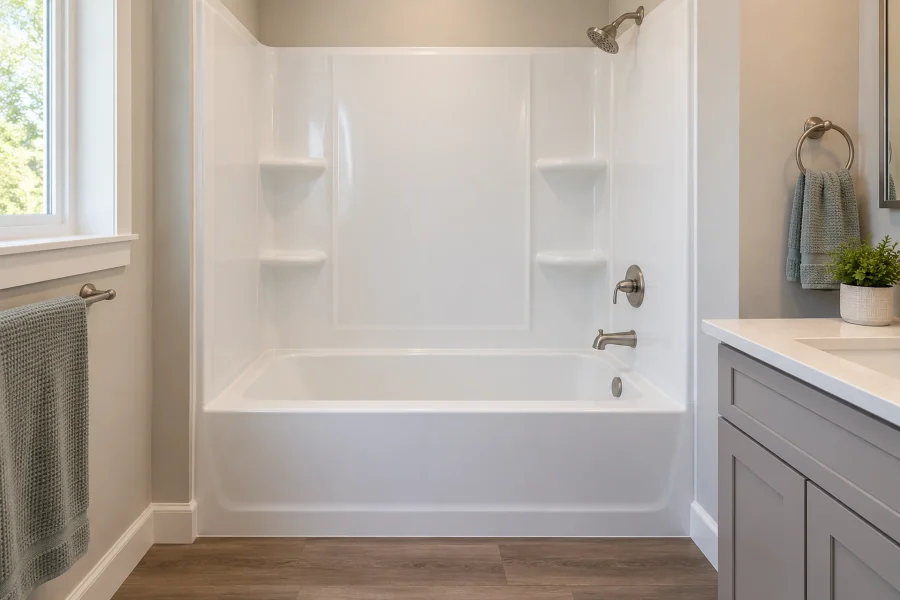
Is it cheaper to use a shower surround or tile? A prefabricated acrylic or fiberglass surround is generally cheaper upfront than tile, though tile offers more design flexibility and can outlast a surround if properly maintained.
Does tile shower installation include waterproofing? Not always. A “tile installation” quote can assume waterproofing is already in place. Always confirm in writing whether a specific waterproofing membrane system is part of your quote.
How much extra tile should I order? Plan for 10%–15% over your calculated tile area to cover cuts, breakage, and future repairs from the same dye lot.
Does a tile shower increase home value? An updated, well-built shower can be attractive to buyers, but there’s no universal return figure — impact depends on your local market and the rest of the bathroom’s condition.
Can you tile over existing shower tile? Sometimes, but only under specific conditions: the existing tile must be sound, flat, and well-bonded, with no moisture damage behind it, and the added layer needs to be compatible with the drainage slope and the waterproofing system in place. Because those conditions are hard to confirm without opening the wall, most installers avoid it in wet areas even when it’s technically possible.
What is the most expensive part of a tile shower? Labor is typically the largest single line item, followed by any custom shower pan and waterproofing system — especially when demolition uncovers hidden water damage.
Our Cost Research Methodology
Cost figures in this guide were checked against publicly available U.S. cost data as of September 2026, drawn from Angi, Fixr, Homewyse, and the U.S. Bureau of Labor Statistics (see Source Ledger below). Because these published sources define “tile shower installation” differently — some price tile-setting alone, others include demolition, a pan, and full waterproofing — every table and worked example above states what it includes and excludes, and marks which line items come from a named source versus which are editorial planning allowances. No single range in this guide should be assumed to cover every component; check the specific table or example you’re using.
This is a research-based editorial guide, not a report from a licensed contractor or a survey of our own completed projects, and it is reviewed and updated at least once a year to keep pricing current.
This is general cost information, not a professional estimate, engineering assessment, or legal advice regarding contractor agreements in your state.
Source Ledger
| Claim / figure | Source | Updated | Scope covered | Used for |
|---|---|---|---|---|
| Professional shower tile installation: $1,800–$5,000, avg. ~$2,700, up to $10,000+; ceramic tile installed $10–$25/sq ft; old tile removal $1.50–$4.50/sq ft | Angi – Cost to Tile a Shower | July 9, 2026 | Tile-setting-focused shower tiling project (material + labor combined) | Hero range anchor, removal cost line, at-a-glance table |
| National average, fully installed shower including plumbing, walls, and base: $7,000–$12,000, avg. $8,000 (48″×36″, tile walls, valve, standard door); low $3,000 (36″×36″ acrylic, no door); high $20,000 (60″×60″ stone slab, bench, performance system) | Fixr – Cost to Install a Shower | Accessed Sept. 2026 | Full shower / remodel scope — bundles tile, pan, and basic plumbing/door, not tile-only | Complete shower remodel band; upper-bound reference cited in Example 3 |
| Shower Tile calculator — dynamic, ZIP code / quantity / material grade / labor type dependent | Homewyse – Shower Tile Estimates | Accessed Sept. 2026 | Location-adjusted third-party estimator, not a fixed national baseline | “Get a More Personalized Estimate” tool recommendation only — not used as a cited cost figure elsewhere in this guide |
| Scope-based planning bands (tile-setting only / retile / new custom shower / full remodel) and all worked-example line items not individually cited above | Synthesized by this guide from the sources above, cross-checked for internal consistency | — | Cross-scope editorial synthesis | At-a-glance table; three cost examples — explicitly labeled as editorial planning allowances, not single-database figures |

Ethan Miller
Ethan Miller writes about home improvement, interior design, cleaning, and everyday living at Home & Living Daily. He shares practical tips and simple ideas to help readers create more comfortable and functional homes.