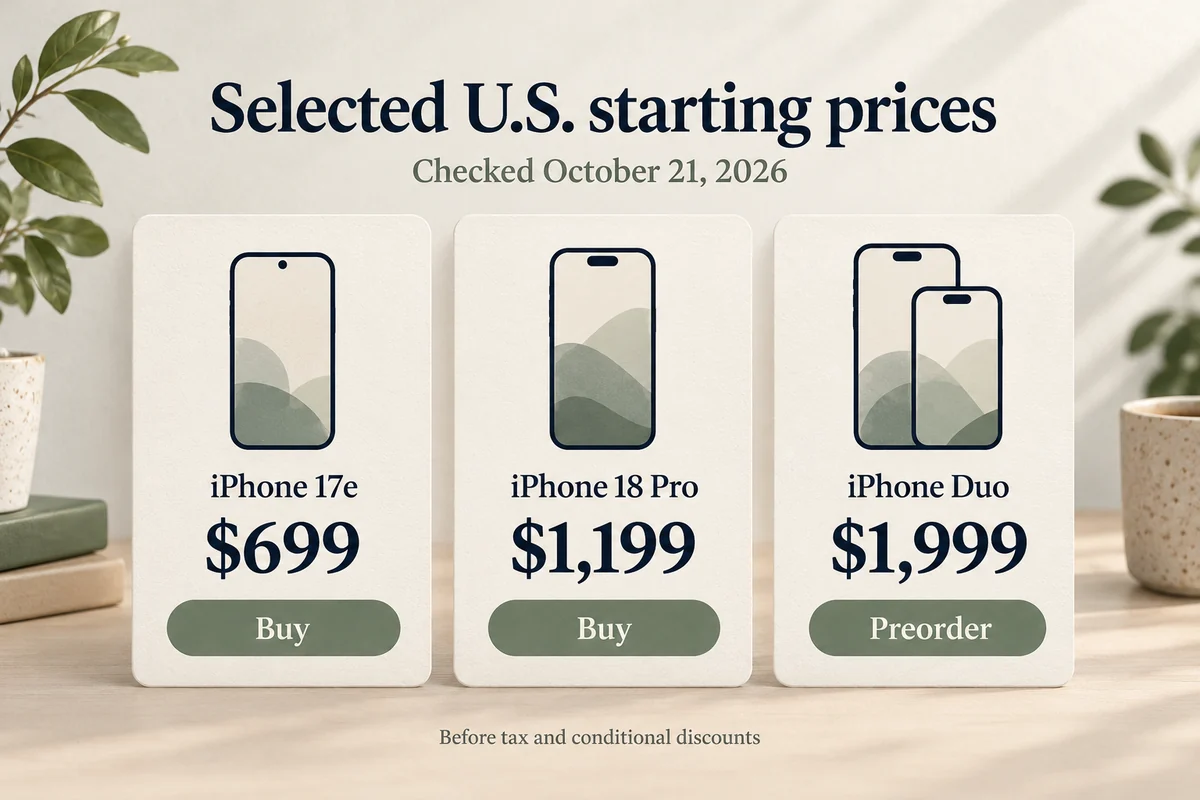
A new iPhone bought directly from Apple in the United States starts at $699 as of October 21, 2026. Current model-family starting prices run from $699 for iPhone 17e to $1,999 for the folding iPhone Duo, with higher storage configurations costing more. Taxes, service, accessories, and optional protection can increase what you actually spend.
For a useful comparison, start with the full price of the exact phone, then work out discounts and ongoing commitments separately. A small monthly payment or “free phone” headline is not the same thing as a low total cost.
Current U.S. starting prices
The table uses Apple’s current U.S. iPhone store and Pro model ordering page, checked October 21, 2026. These are advertised starting device prices before tax and before subtracting a trade-in or conditional carrier promotion.
| Model | Starting device price | Ordering status at the time checked |
|---|---|---|
| iPhone 17e | $699 | Buy |
| iPhone 16 | $799 | Buy |
| iPhone 17 | $899 | Buy |
| iPhone Air | $1,099 | Buy |
| iPhone 18 Pro | $1,199 | Buy |
| iPhone 18 Pro Max | $1,299 | Buy |
| iPhone Duo | $1,999 | Preorder |
The last column describes the store’s ordering status, not a promise of immediate stock. Select your configuration to see its actual price and delivery estimate. Duo’s preorder price should not be read as confirmation that a new order can be collected today.
Also check what a historical price refers to. An announcement from a previous year can show a launch price that differs from the current store. A carrier or retailer can have a different offer again. Compare the seller, date, condition, capacity, and eligibility before deciding that two numbers contradict each other.
What raises the price above “from”?
Storage is an important variable within a model. Select the capacity before comparing offers. A price for an entry configuration cannot be applied to a higher-capacity version just because the model name matches.
Start with the storage you use now and the content you expect to retain. Our explanation of whether 256GB is enough for an iPhone shows how games, offline downloads, photos, and video change that decision. Paying for unused capacity and buying too little capacity are different ways to waste money.
Taxes and one-time charges need their own check. Use the actual checkout total for your location rather than adding a nationwide tax percentage. If a carrier is involved, check whether activation, upgrade, or other one-time charges apply to that offer.
Accessories and protection belong in the budget only if you need or choose them. Check whether your existing charging equipment and case are compatible before adding replacements. If you choose an insurance or protection plan, include its recurring charge and understand any applicable claim costs.
Buying outright, installments, and leasing
Buying outright makes the device price easiest to see, although it still leaves tax and service to account for. An installment offer spreads payments, so compare the total of those payments with the upfront device price and check whether interest or fees apply.
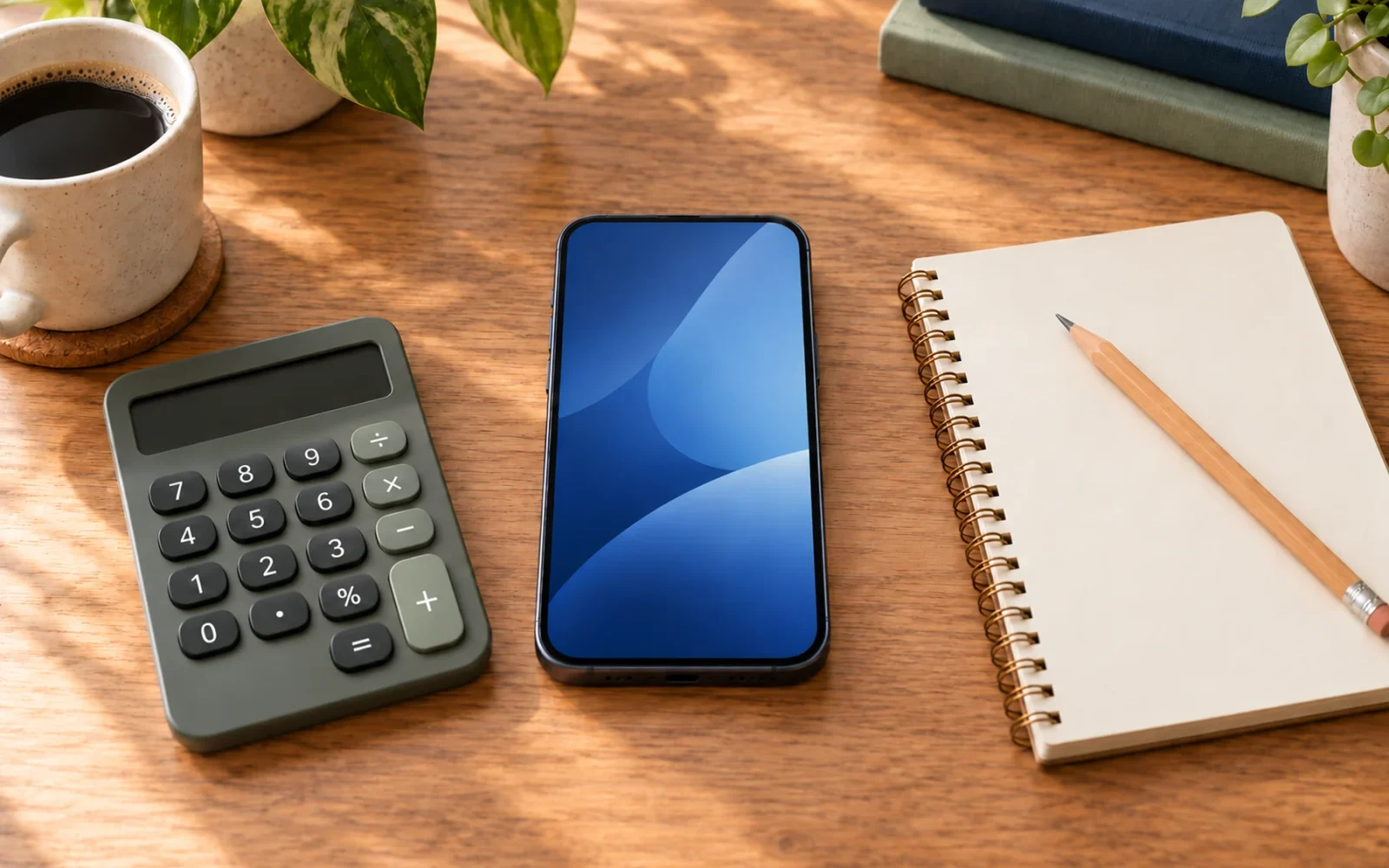
For an illustrative calculation, a $900 device divided into 24 equal, interest-free payments is $37.50 per month for the hardware. That arithmetic does not include a mobile plan, tax, fees, or insurance, and it is not a quoted offer for a particular iPhone.
A lease is another arrangement. Apple’s current store advertises a separate Apple Upgrade leasing option. Before choosing any lease, read what happens at the end: whether the phone must be returned, whether a purchase option exists, and which conditions or charges apply. Do not compare a temporary-use payment with an ownership price without accounting for the different outcome.
Is a “free” carrier iPhone cheaper?
It can be, but compare the complete offer with the service you would otherwise buy. Check the eligible model, required plan, trade-in condition, credit timing, and what happens if you leave or change the arrangement. Apple’s carrier-offer information is a starting point; the terms attached to your chosen offer determine eligibility.
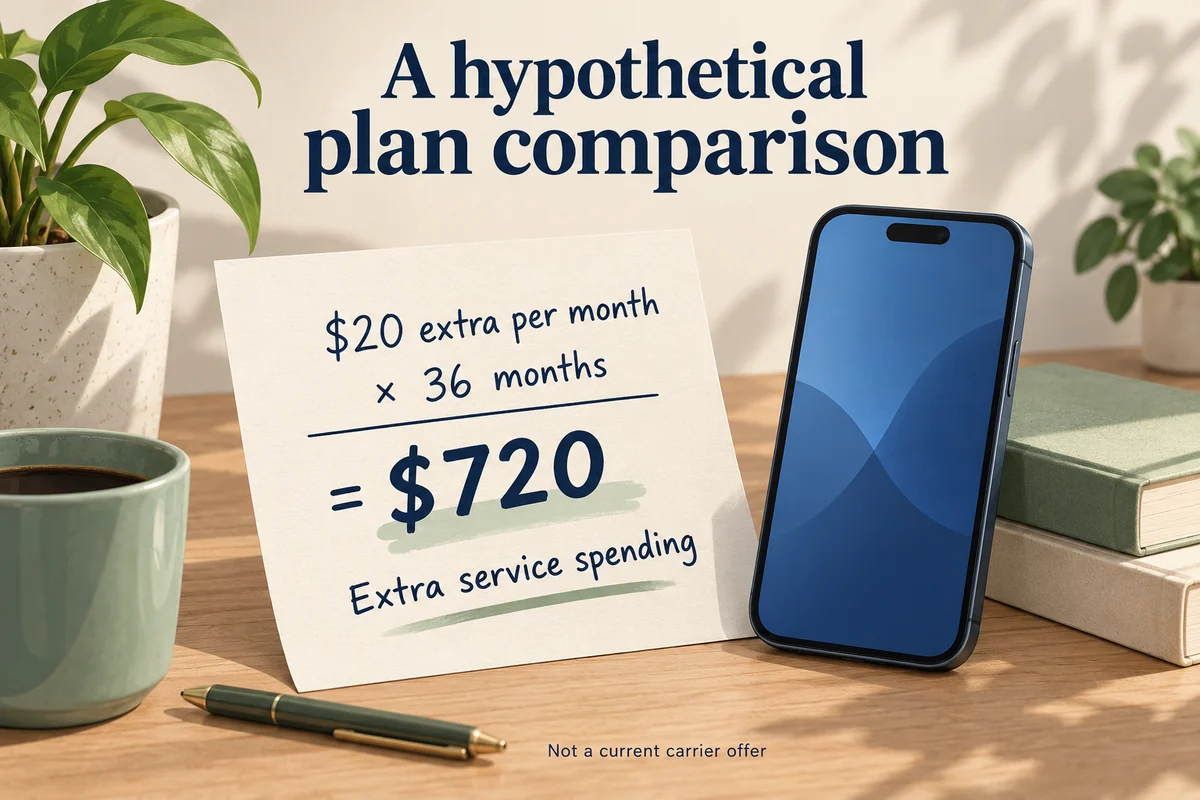
Consider this hypothetical comparison, not a current carrier promotion:
| Item | Assumed amount |
|---|---|
| Phone price | $900 |
| Device credits received over the full example term | $900 |
| Extra plan cost compared with the service you would otherwise buy | $20 per month |
| Example term | 36 months |
| Extra plan spending | $20 × 36 = $720 |
In this example, the credits offset the phone’s price, but the plan still costs $720 more over the comparison period. That does not automatically make the offer poor: the more expensive service might be useful to you. It does show why the hardware headline alone cannot answer the cost question.
Use the actual credit schedule and service prices from your offer. Count only credits you reasonably expect to receive, and avoid subtracting a maximum advertised trade-in value before your device has been evaluated.
Compare offers using one complete budget
Write down the device price after applicable discounts, tax, one-time charges, necessary accessories, and the service or protection charges over the period you intend to compare. Subtract a trade-in once, and keep its timing clear so a future credit is not mistaken for cash saved today.
Then compare like with like: the same capacity and condition, the same ownership outcome, and service that meets your needs. If you are hoping Apple will match another seller’s offer, check our explanation of Apple Store price matching before assuming a retailer discount will transfer to Apple’s checkout.
Conclusion
Budget from the exact configuration and the complete agreement. The $699 entry price answers where Apple’s current U.S. lineup begins; it does not tell you which offer will cost you least. Storage, service commitments, and the terms behind a discount often matter more than the advertised monthly hardware figure.

Ethan Miller
Ethan Miller writes about home improvement, interior design, cleaning, and everyday living at Home & Living Daily. He shares practical tips and simple ideas to help readers create more comfortable and functional homes.