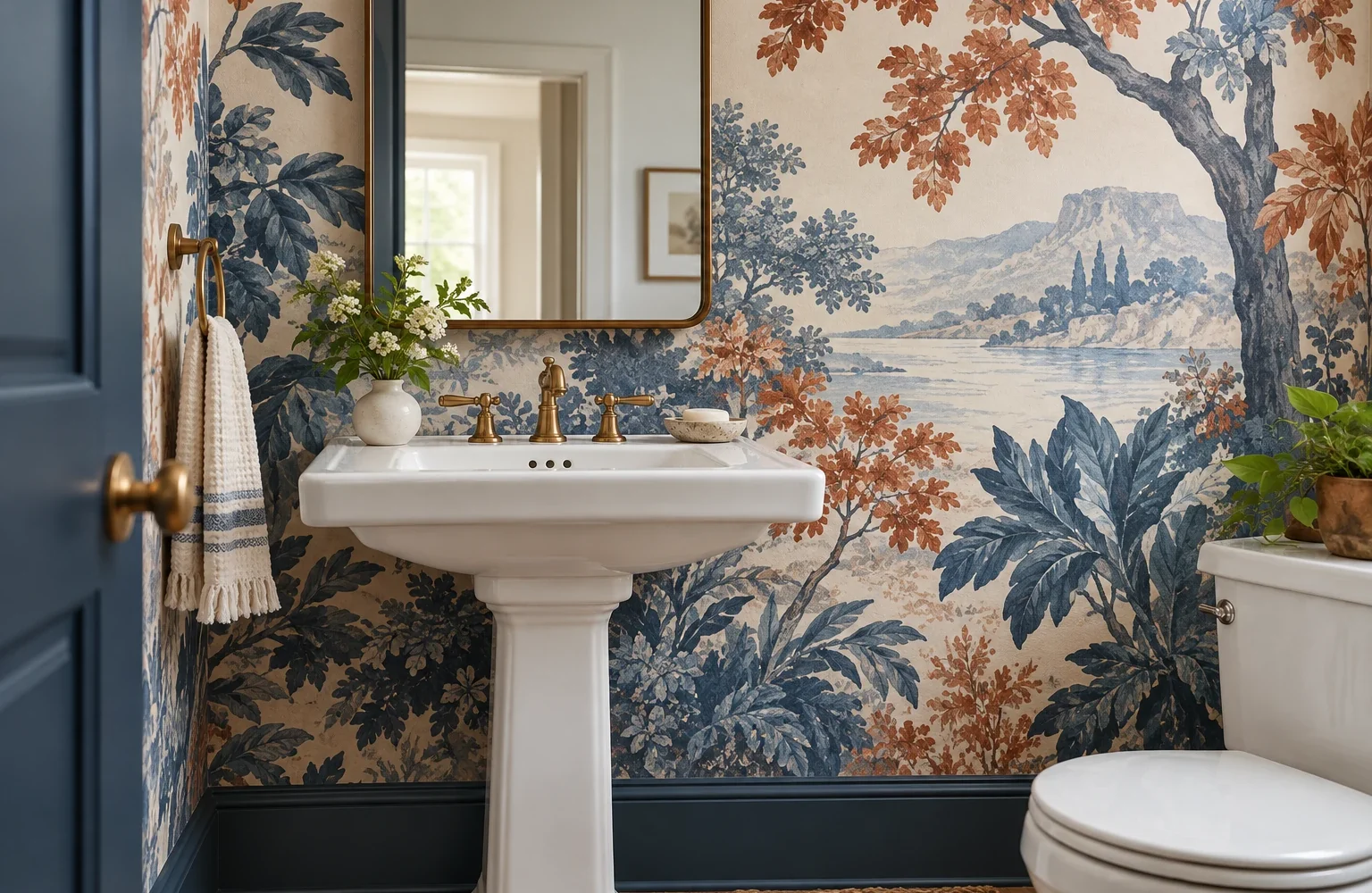
A powder room is one of the easiest places to use wallpaper with personality. The room is small, usually separated from bathing areas, and seen in short visits, so a pattern that would feel too intense in a large living room can become a deliberate focal point here. The useful choice depends on more than the print: check scale, lighting, vanity finishes, ventilation, and how the walls will be protected.
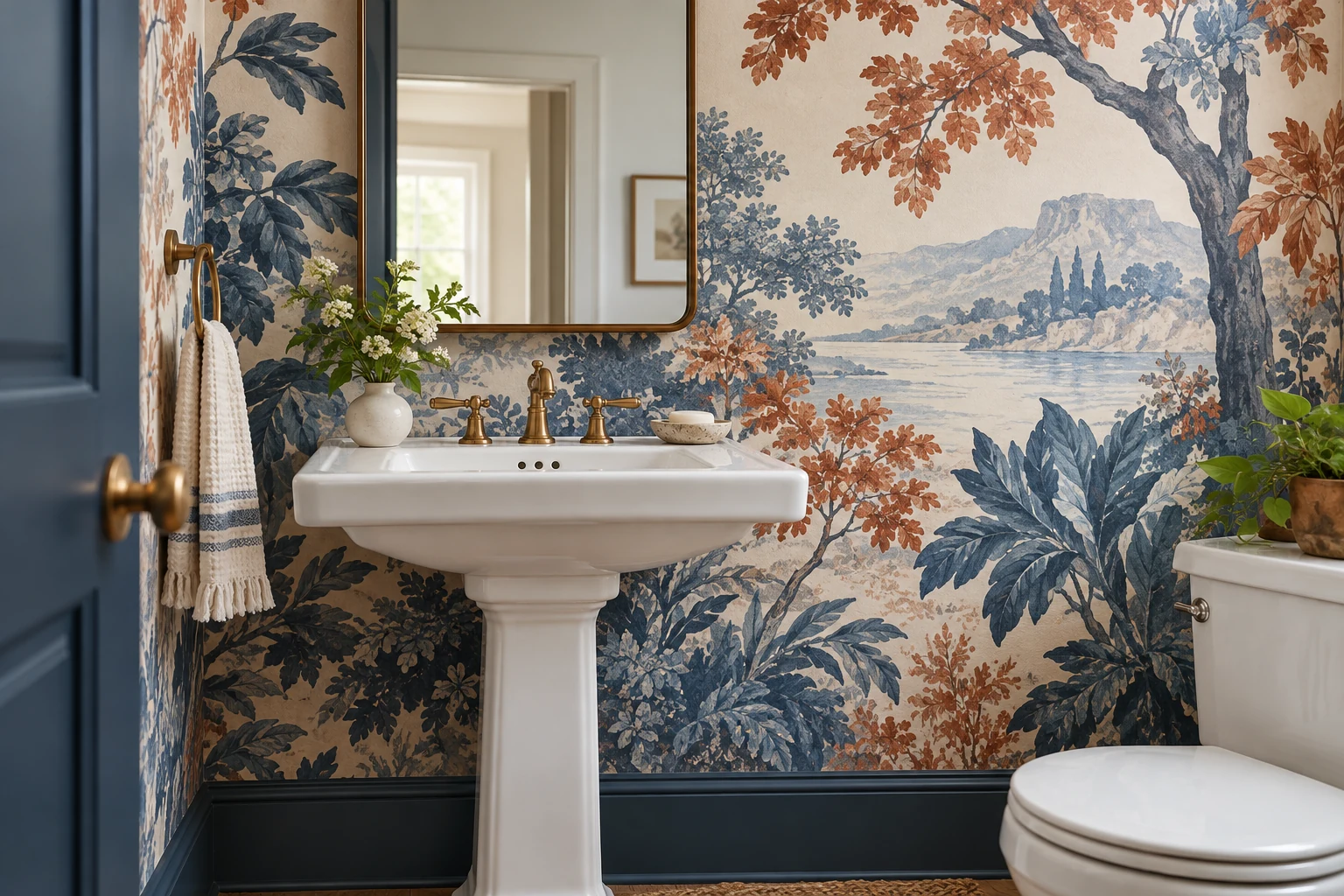
Editorial note: These images are AI-generated decorating concepts, not photographs of completed projects. Always follow the wallpaper maker’s installation and care instructions.
Start with the room’s fixed elements
Before collecting samples, photograph the floor, vanity, countertop, mirror, trim, and light fixtures in the room’s usual lighting. A wallpaper can look calm in a store and fight with a warm stone top or a busy floor at home. Choose two or three colors already present in the room, then look for paper that repeats one of them or supplies a controlled contrast.
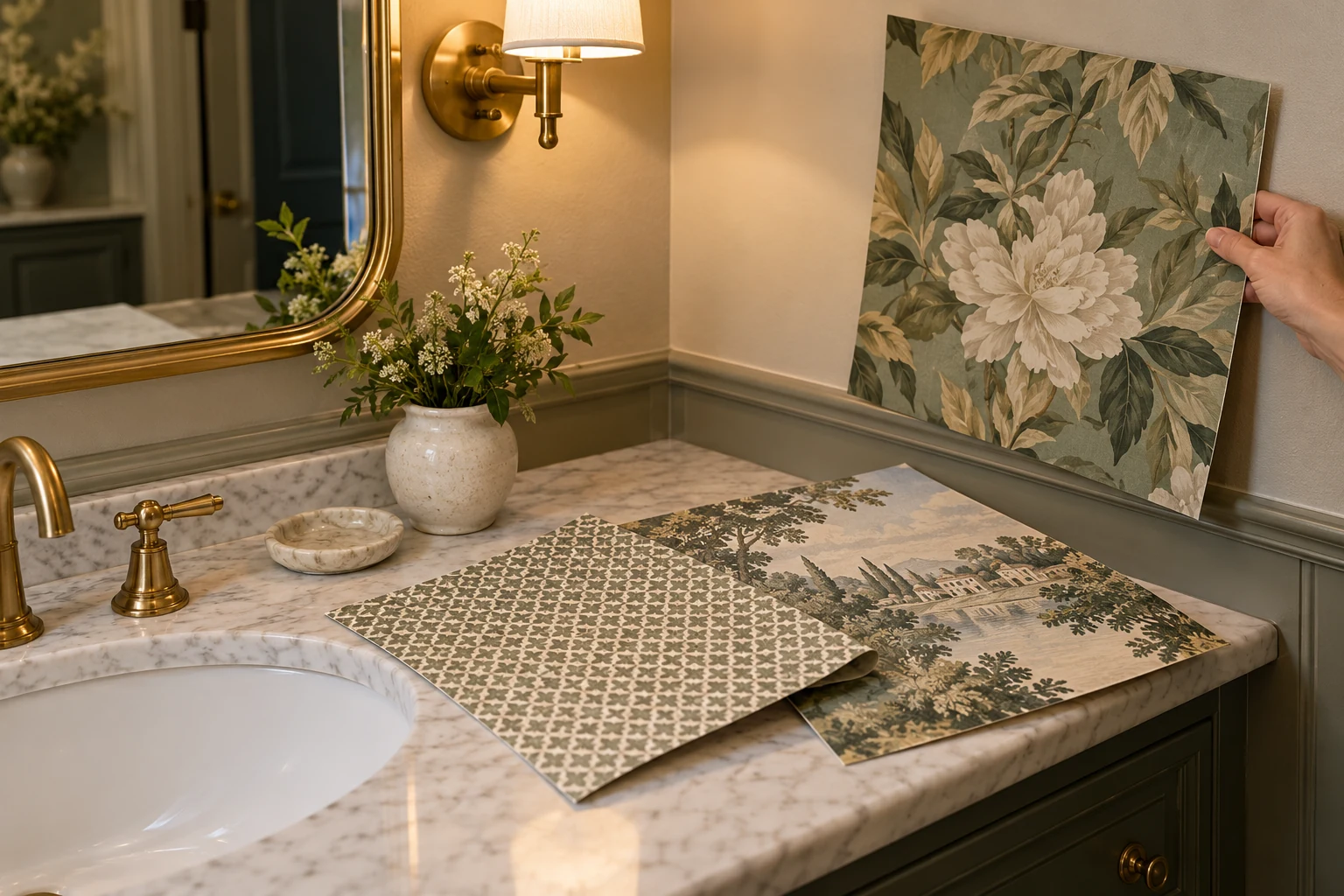
Powder rooms often have limited daylight. Hold samples beside the mirror in the morning and at night with the sconces on. If the room is windowless, a mid-value background may keep the pattern legible without making the walls feel like a black box. A dark paper can still work when the vanity, mirror, and lighting provide enough contrast.
1. Choose a pattern scale that stays readable
Small rooms do not automatically need small prints. A dense micro-pattern can blur into visual noise when it repeats across four walls. A larger motif gives the eye a few clear shapes to read and can make corners less obvious. Lay the sample flat, step back to the doorway, and check how much of one motif you see at normal viewing distance.
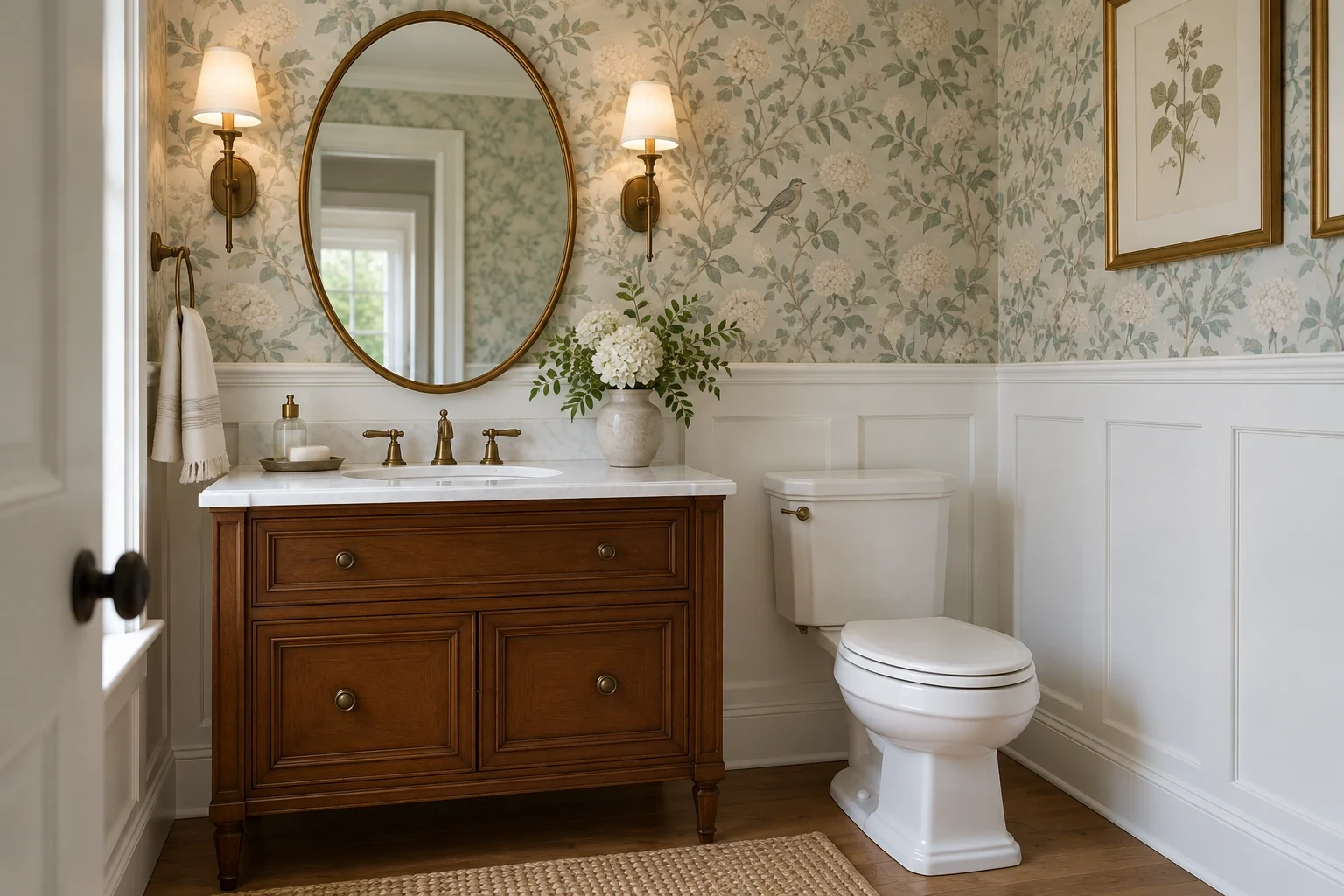
2. Use a mural when you want a scene
A scenic mural creates a focal point instead of a regular repeat. It works especially well on the wall behind the vanity or on the longest uninterrupted wall. Measure the wall and confirm how the mural is divided into panels before ordering; doors, mirrors, and outlets can interrupt the composition.
3. Let wainscoting give the paper a stopping point
Wallpaper above a chair rail or beadboard can be a useful compromise when full-height pattern feels too busy. Keep the lower section quiet enough that the paper remains the visual lead. Match the paint to a calm color in the wallpaper, and check the rail height against the mirror and faucet so the horizontal line does not land awkwardly.
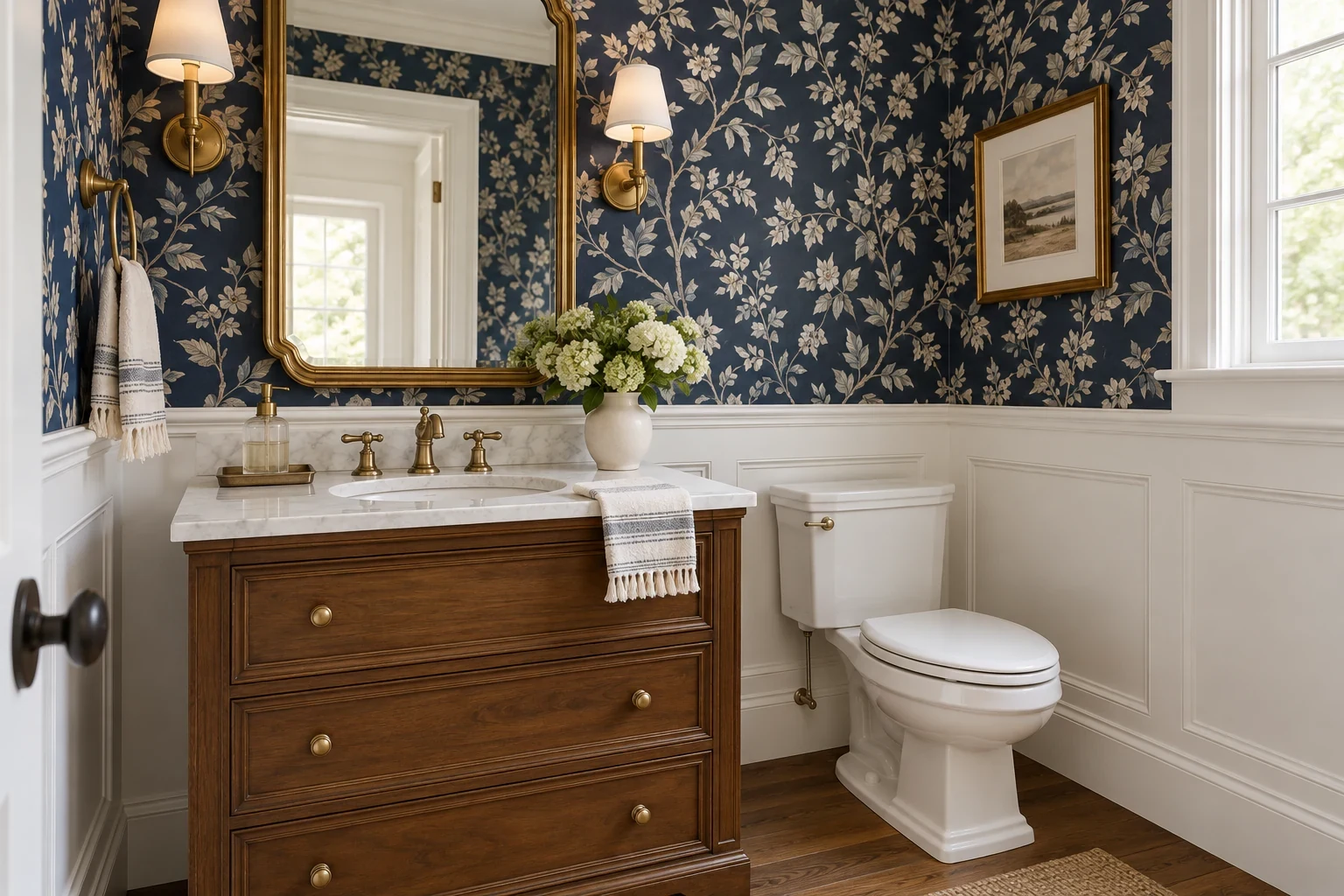
4. Try botanical, floral, or bird patterns for a collected look
Botanical and floral papers suit a powder room because they bring softness to hard surfaces such as porcelain, stone, and metal. Look at the background color as carefully as the leaves or flowers. A warm cream background can connect to ivory trim; a blue or green background can make brass or wood details feel intentional. Keep the rest of the accessories quieter so the pattern has room to work.
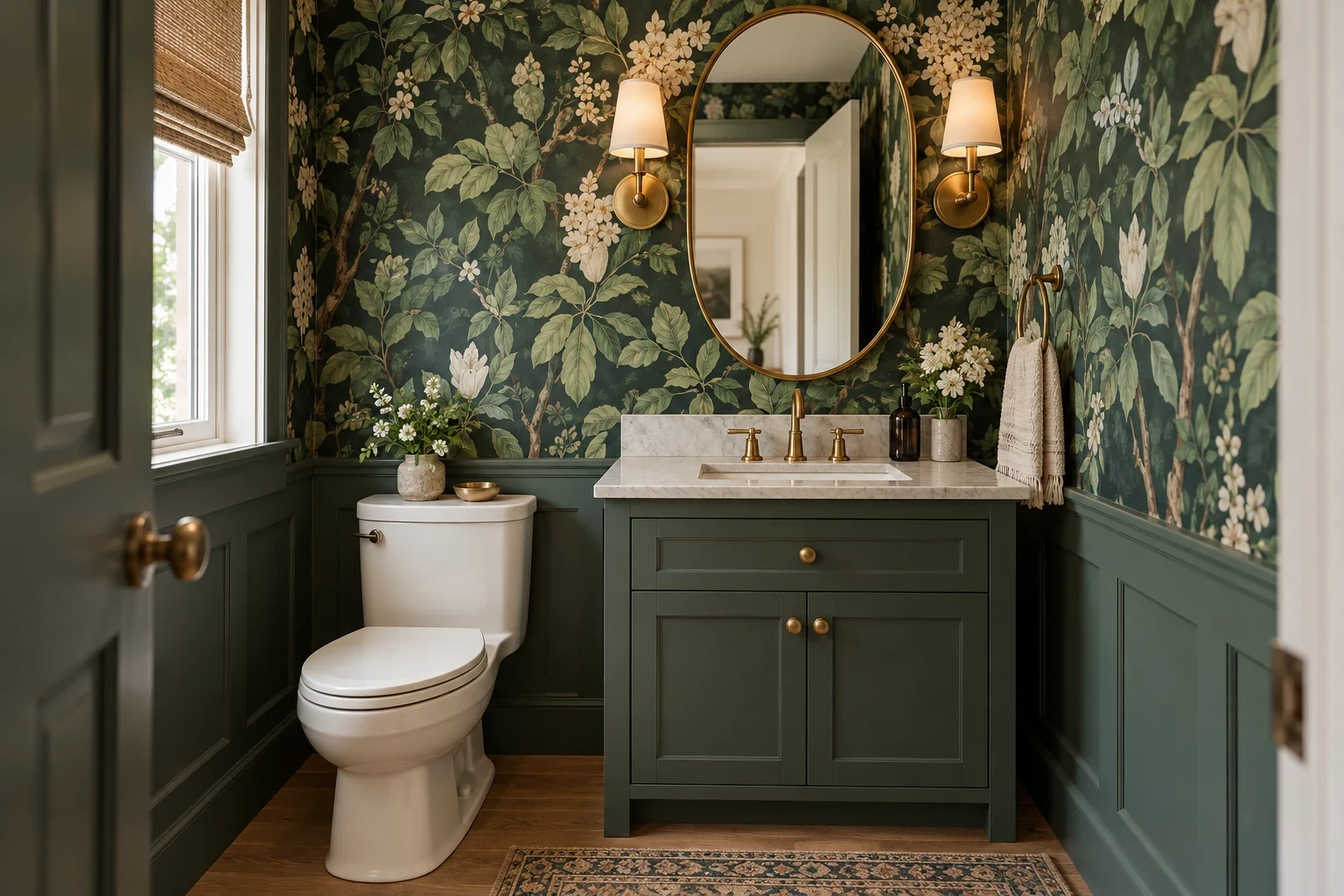
5. Use geometric paper with a simple vanity
Geometric wallpaper gives a small room structure and can echo a rectangular mirror, square tile, or linear sconce. Pair a busier print with a restrained vanity front and one dominant metal finish. If the room already has patterned floor tile, bring home a larger sample and view both patterns together before committing.
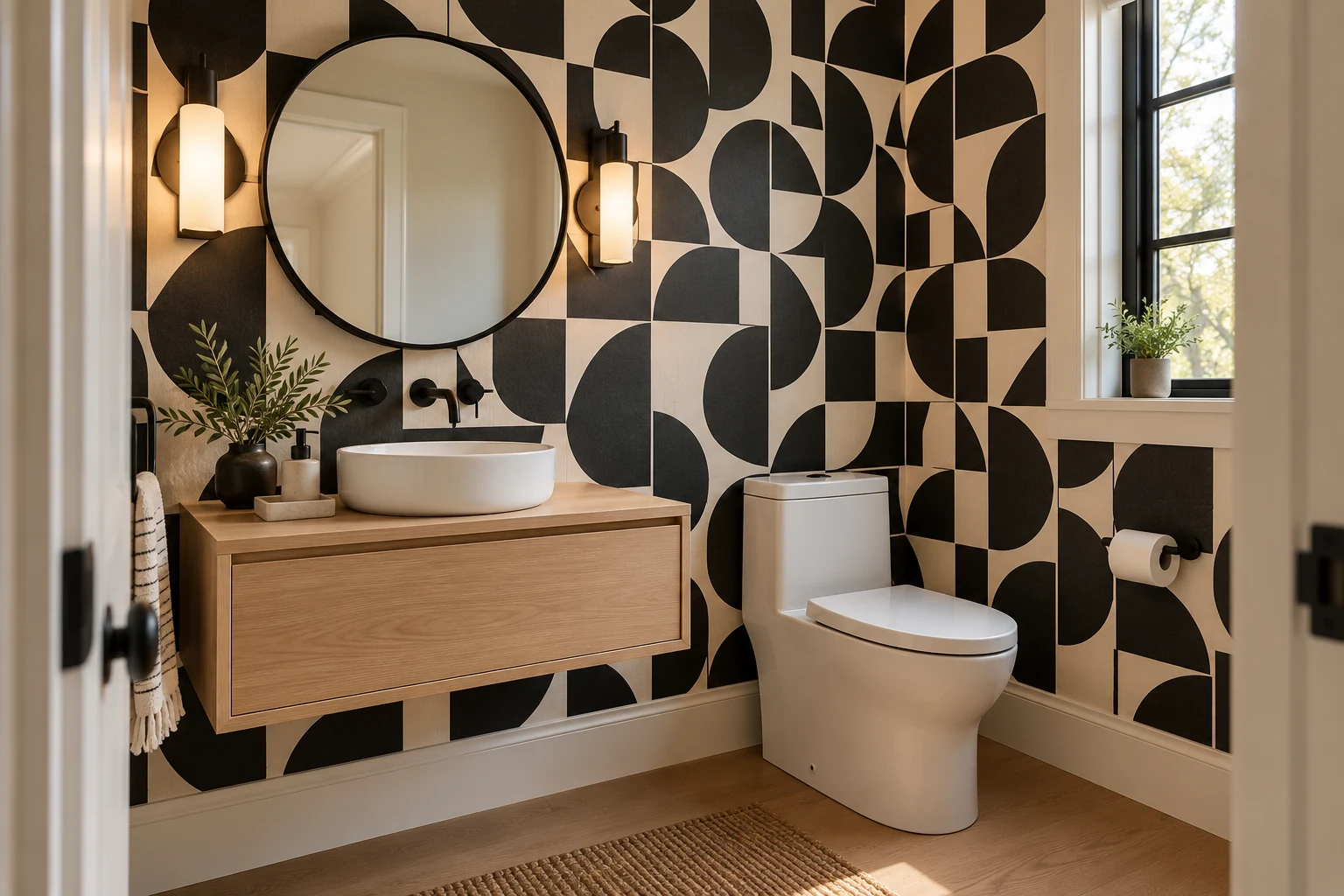
6. Decide between all four walls and one feature wall
Wrapping every wall can make a tiny room feel like a jewel box and can disguise awkward corners. A feature wall leaves more breathing room and may simplify installation around doors or plumbing. Choose based on the room’s interruptions and the pattern’s repeat, rather than assuming one approach always makes a small space look larger.
7. Check bathroom conditions before buying
A powder room has less steam than a full bathroom, but it still has splashes, cleaning, and changes in humidity. Do not place ordinary wallpaper where water regularly hits the wall. Ask the manufacturer about the substrate, paste, surface preparation, and cleaning method. Graham & Brown’s bathroom guidance recommends keeping paper away from direct water and maintaining good ventilation. Improve ventilation and repair leaks before installation; no pattern can compensate for a damp wall.
Peel-and-stick paper can be useful for a reversible update, but product behavior varies with paint sheen, wall texture, temperature, and removal technique. York Wallcoverings notes that its peel-and-stick paper can bubble or separate in humid areas and should stay on dry bathroom walls away from direct water. Product behavior varies, so follow the instructions for the exact paper and test a small hidden area if recommended. Renters should also confirm what the lease allows.
8. Coordinate the wallpaper with the mirror and metals
Use the mirror to control how much of the print remains visible. A large ornate mirror may need a quieter pattern, while a plain oval mirror can sit comfortably against something more expressive. Repeat one visible wallpaper color in the faucet, sconces, artwork, or towels. Two metal finishes can work together when one is clearly secondary and the colors remain consistent.
9. Sample the paper in the actual room
Order enough sample material to see the repeat and tape it at eye level near the vanity, toilet, and doorway. Look at it with the door open and closed, in daylight and with the lights on. Check the edge against trim and the countertop. The goal is to find one that still feels considered after the first visual excitement fades.
A simple decision guide
| Room condition | Good starting point | Check before ordering |
|---|---|---|
| Plain vanity and quiet floor | Large botanical, mural, or geometric print | Pattern scale from the doorway |
| Busy floor or countertop | Small to medium repeat with a calm background | Sample beside the busiest surface |
| Low light | Mid-value background with clear contrast | Nighttime appearance under sconces |
| Rental or uncertain commitment | Tested removable paper or a framed panel | Wall condition and removal instructions |
Useful next steps
For broader decorating direction, see our home decor ideas guide and our practical interior design styles guide.
Pick the paper after you understand the room’s fixed colors, light, and wall conditions. A confident powder room scheme comes from matching the pattern to those constraints, then giving the rest of the room enough quiet space to support it.

Ethan Miller
Ethan Miller writes about home improvement, interior design, cleaning, and everyday living at Home & Living Daily. He shares practical tips and simple ideas to help readers create more comfortable and functional homes.