The most useful Florida room ideas start with one everyday purpose: a comfortable sitting area, a sunny dining spot, or a quiet place to read or work. Choose that purpose first, keep a clear route through the room, and deal with glare before buying decorative pieces. A beautiful room that is too hot or awkward to walk through rarely becomes a favorite place to spend time.
Use the ideas below to furnish an existing room around its windows, doors, and real conditions. A coastal palette can work beautifully, but the layout and materials matter just as much as the look.
First, identify what kind of Florida room you have
“Florida room” is a flexible name, often used for a sunroom or enclosed porch with generous daylight and garden views. Pulte’s Florida room guide describes an enclosed porch and suggests entertaining, working, and gardening uses. The name alone does not tell you whether a room is insulated, air-conditioned, or protected from wind-driven rain.
- Conditioned, enclosed room: Consider indoor furniture if temperature and humidity stay within the manufacturer’s requirements. Strong sun still calls for thoughtful fabric and window-treatment choices.
- Glazed but unconditioned room: Check seasonal temperature swings and condensation before choosing upholstery, wood furniture, flooring, or electronics.
- Screened space: Treat it as exposed to outdoor conditions. Choose furniture and textiles rated for that exposure, and plan where cushions will dry and be stored.
Spend time in the room in the morning and late afternoon. Note which seats get direct sun, where reflections appear, and whether the room feels damp after rain. Those observations are more useful than decorating from a photograph alone.
Choose a layout around the way you will use it
Create a conversational lounge with a garden view
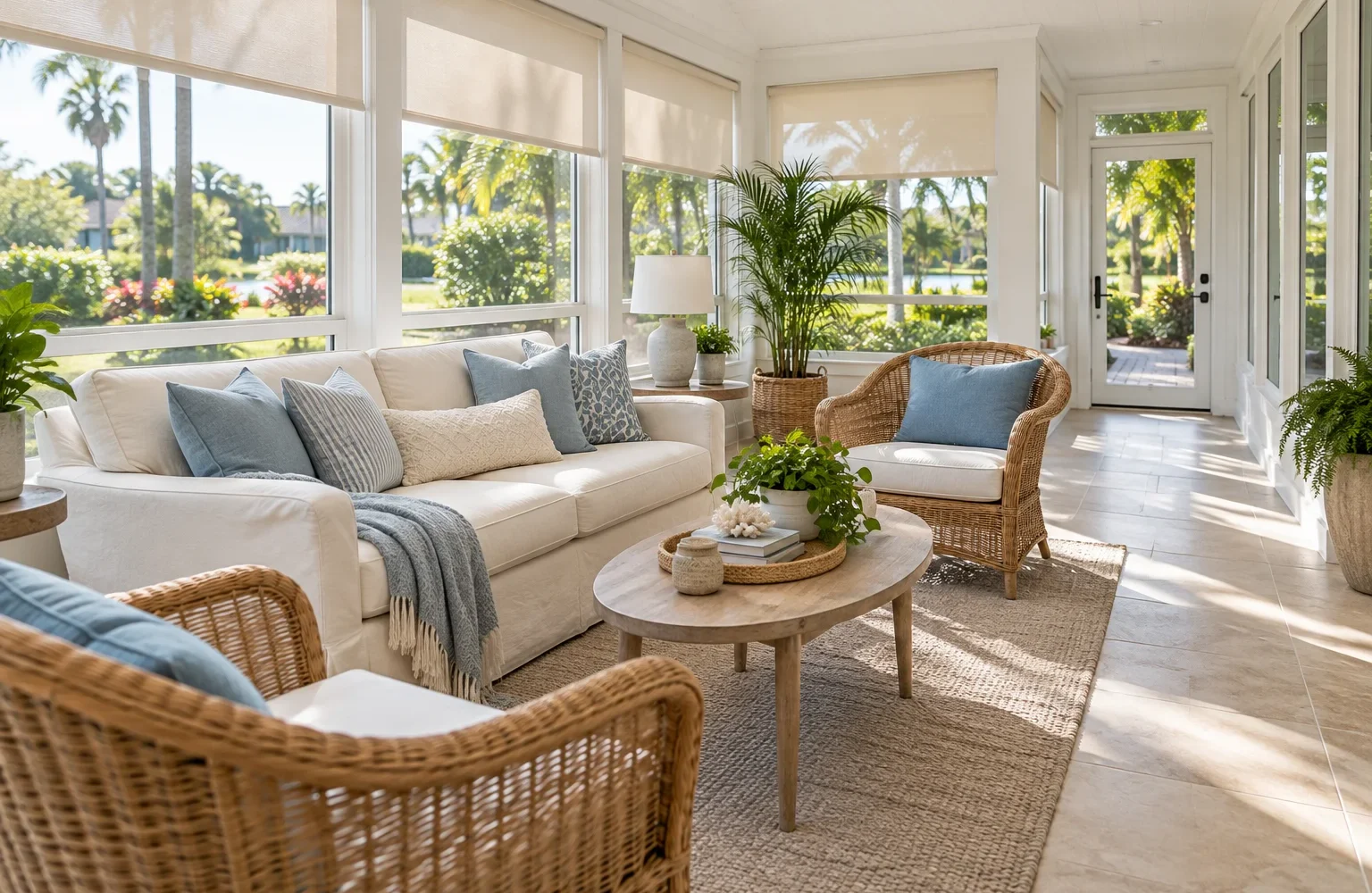
Use a compact sofa on the longest practical wall and one or two chairs facing it at a slight angle. An oval or round coffee table can soften the circulation route. Keep taller furniture against solid walls so the windows remain the room’s main feature.
Before ordering, mark the sofa, chairs, and table on the floor with painter’s tape. Walk from the house door to the garden door, then repeat while someone sits in each chair. If the path only works when everyone stands up, reduce the furniture footprint. Two comfortable seats can be more useful than a crowded arrangement for six.
Make a narrow room a two-chair reading retreat
In a long, slim room, place two compact chairs and a shared side table at one end, leaving a continuous passage along the other side. Swivel chairs can let you turn between conversation and the view, provided their full turning space fits.
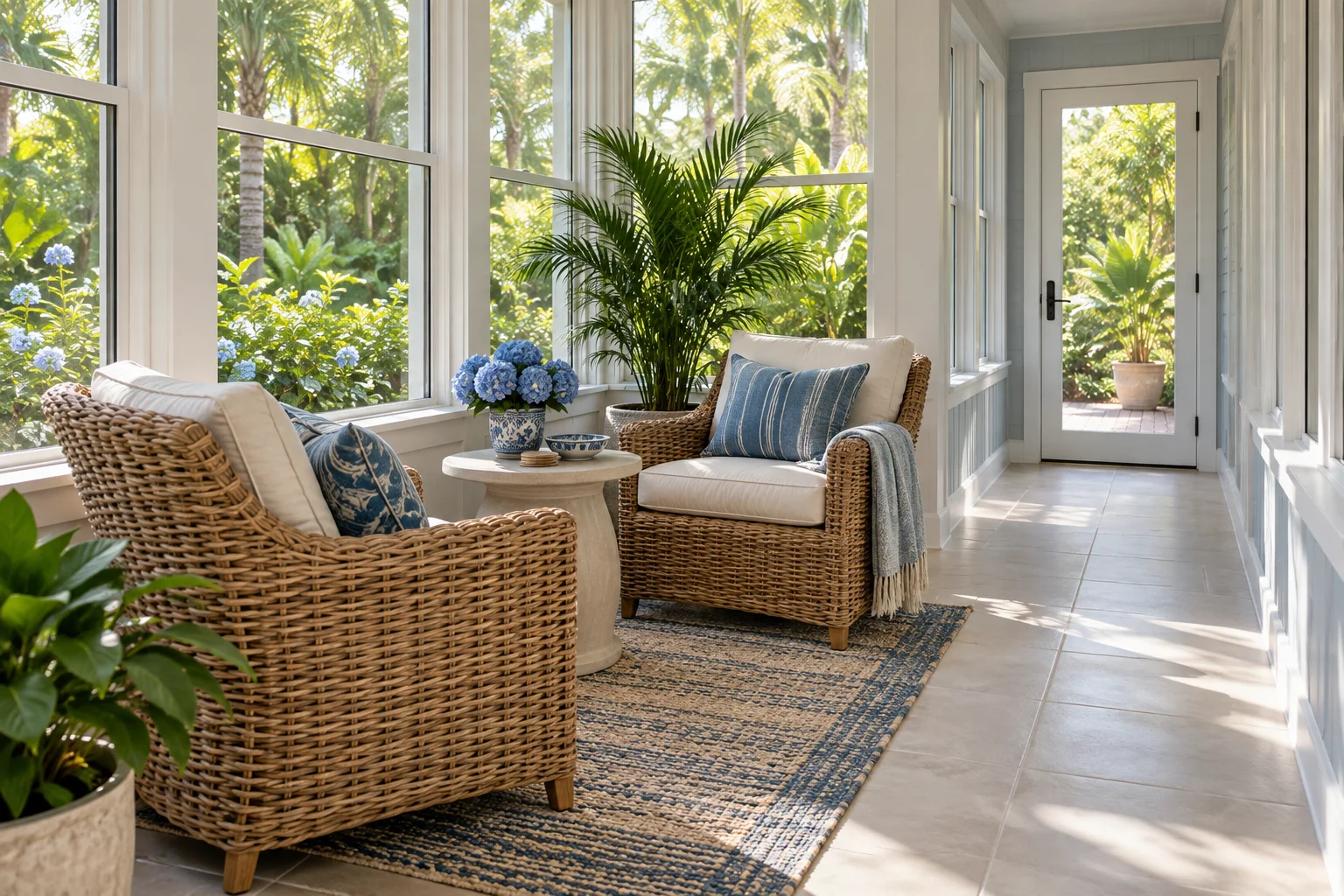
Add a reading lamp near a suitable outlet rather than running a cord across the passage. A small closed cabinet on a solid wall can hold books and spare throws without covering the glass. Keep paper and delicate objects away from persistent moisture and direct sun.
Use a compact table for breakfast or games
A small dining table makes an inviting center for coffee, cards, or a casual meal. Start with the number of people who actually use it most days. A table that seats four comfortably is a better choice than an expandable table whose chairs block both doors.
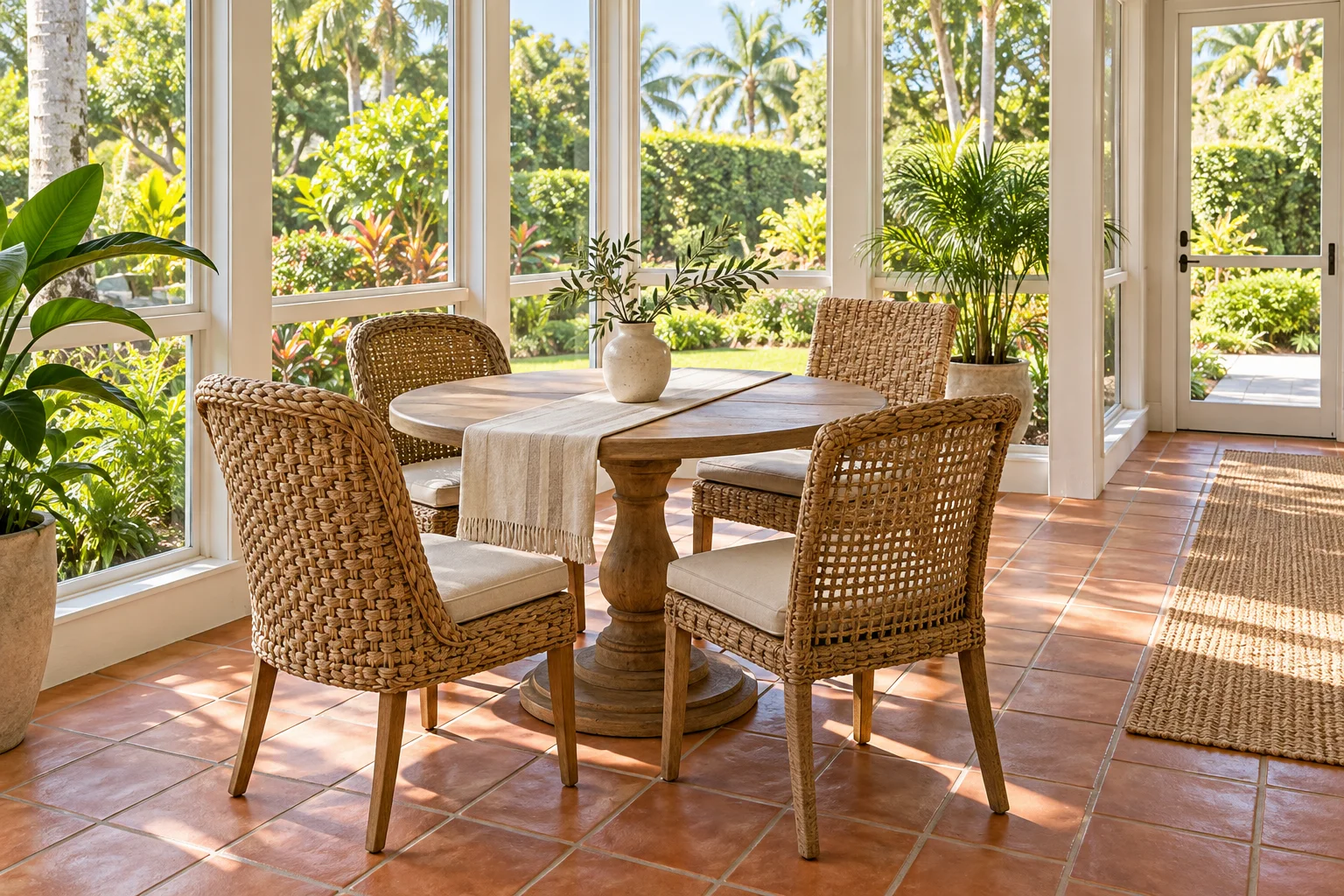
A round pedestal table can ease movement around corners; a compact square table can sit neatly within a more angular room. Check chair pull-out space as well as the tabletop dimensions. If the room connects to a pool or patio, keep the travel route beside the dining area rather than through the occupied chairs. A wall-mounted shelf or small tray table may provide enough serving space without a full sideboard.
Combine a quiet desk with a small sitting corner
For occasional work, try a shallow desk beside a window with the screen at an angle to the glass. Test reflections at the hours you work before settling the arrangement. A desk directly facing a bright window can be uncomfortable even when it looks appealing in a photo.
Keep the work zone compact: one task chair, a lamp, and contained cable storage. Add a lounge chair only if the circulation still works. In an unconditioned room, confirm that temperatures and humidity suit your equipment; a sunny corner is not automatically a suitable full-time office.
Give the room a style that connects to the house
Coastal: pale upholstery, blue accents, and woven texture
Start with warm white or sand-colored upholstery, then repeat a muted blue in cushions and one other detail. Woven chairs and a wood table add texture without requiring shell motifs on every surface. Use the garden and sky as part of the color palette.
For help carrying that approach into neighboring rooms, see our guide to coastal interior design. In the Florida room itself, leave enough visual space for the windows to feel restful.
Old Florida: painted pieces and a restrained botanical pattern
Try a painted side table, a small-scale leafy cushion fabric, and warm woven seating. Choose one botanical pattern as the focal point and let the other textiles stay quieter. A secondhand cabinet can give the room character, but inspect its condition and make sure its materials suit the enclosure before bringing it home.
Modern garden room: simple lines and grouped plants
Pair slim furniture frames with solid-colored cushions and a few larger plant groupings instead of scattering pots across every surface. A restrained scheme of olive, cream, and warm wood can keep the view prominent.
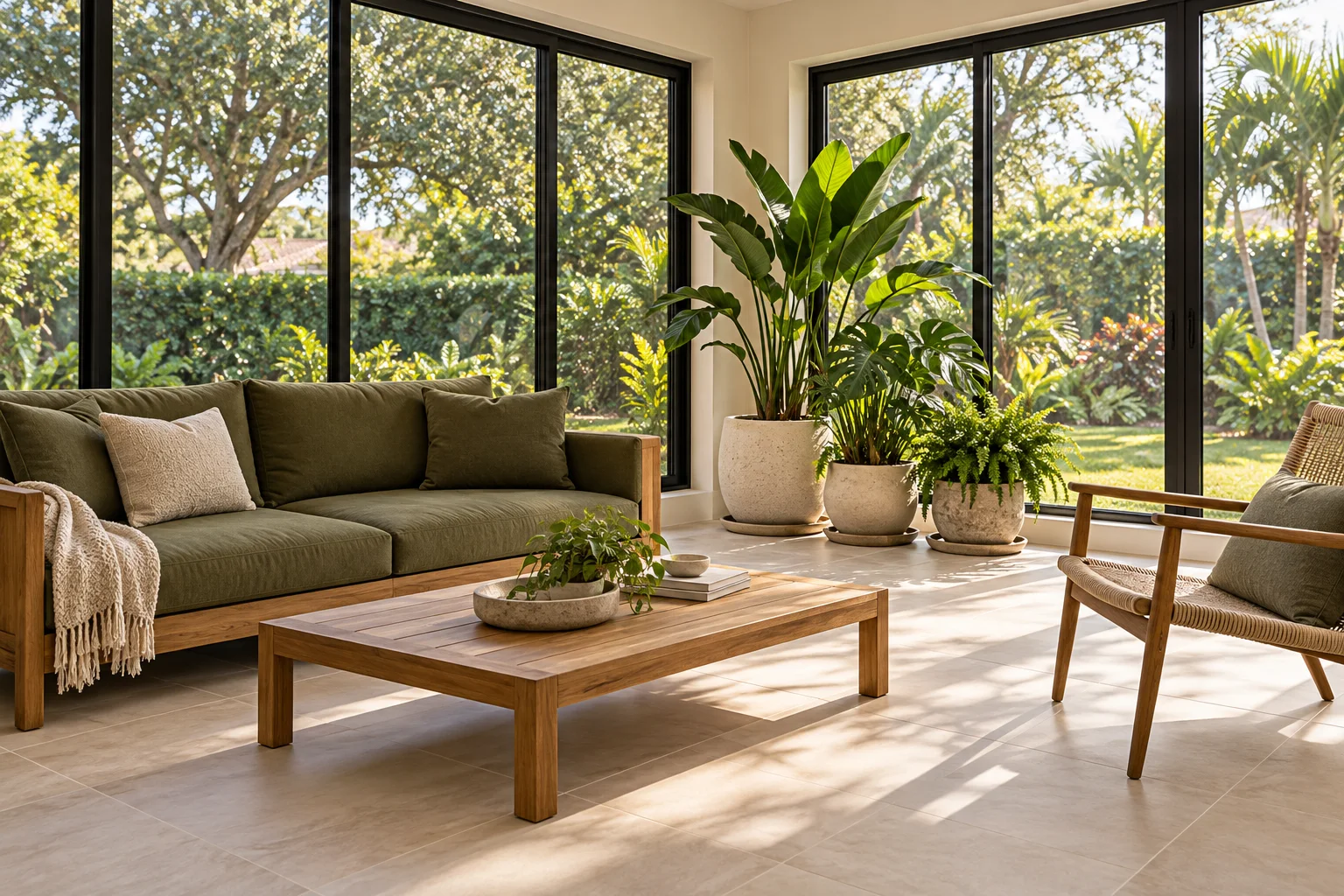
Choose plants for the actual light and temperature range rather than assuming every plant likes a glass room. Protect floors with appropriate trays, keep drainage water contained, and leave access for watering and window cleaning. The room should work as a place to sit as well as a display.
Make bright windows comfortable to sit beside
Fit adjustable shades where direct sunlight interrupts reading, dining, or screen use. Individual window shades let you cover the strongest exposure while keeping other views open. A sheer curtain can soften light and add texture, but do not assume it will solve a room’s heat problem.
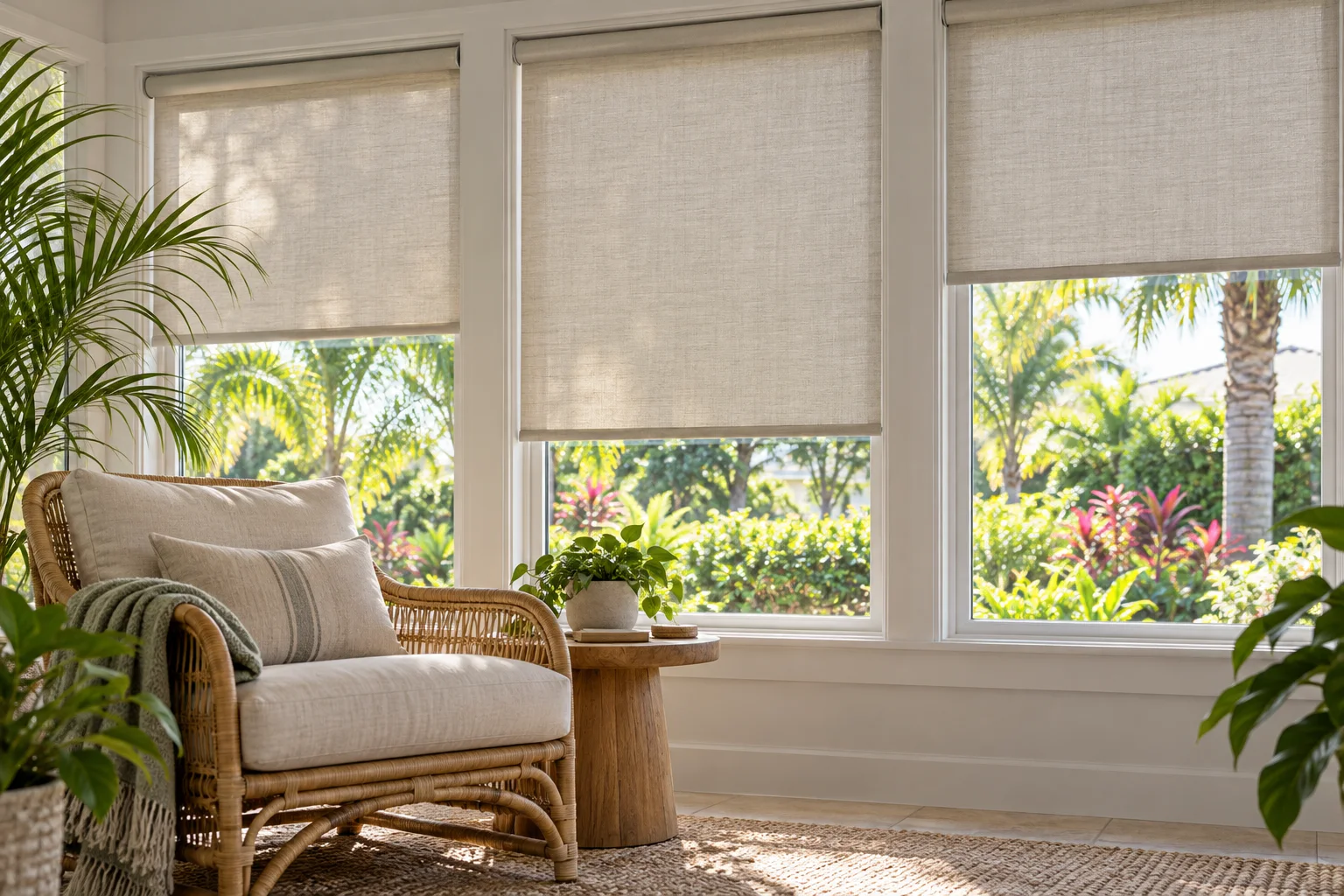
The U.S. Department of Energy’s residential window efficiency guide explains that glazing and low-emissivity coatings affect heat transfer and solar heat gain. If you are replacing windows, discuss climate-appropriate performance with the supplier; “more glass” is a design choice, not a comfort specification.
For existing windows, compare attachment options rather than relying on decorative fabric alone. DOE’s cellular shade factsheet describes their potential to reduce unwanted heat gain and improve comfort. Results depend on the product, installation, and use. Window coverings cannot turn every seasonal enclosure into a year-round conditioned room.
Choose materials for the room’s exposure
- Seating: Use outdoor-rated frames and cushions where rain or persistent humidity can reach them. Natural woven furniture and outdoor-look furniture are not interchangeable; check the product’s intended use.
- Fabric: Ask about lightfastness, cleaning instructions, and exposure limits. “Performance” covers different properties, so look for the one your room needs. Rotate removable cushions when practical and use shade to limit harsh exposure.
- Flooring: Keep a sound existing floor when possible. For replacement, confirm the product’s temperature, moisture, and installation requirements. Consider how the surface feels and performs when wet if the room leads to a pool.
- Rugs: Use a low-profile rug only where it lies flat and does not catch a door. Check both rug and backing compatibility with the floor. In damp spaces, make sure the floor underneath can dry.
- Storage: Prefer a small closed piece on a solid wall. Avoid covering vents or putting furniture where it prevents windows and shades from operating.
Refresh the room in a practical order
- Fix the obstacles to use. Investigate leaks, persistent condensation, uncomfortable temperatures, or damaged surfaces before concealing them with furnishings. Building or enclosure changes need project-specific professional advice.
- Rearrange what you own. Clear the room, mark a route between doors, and test one main seating or dining arrangement.
- Add light control where needed. Try the layout at the brightest time of day before choosing window treatments.
- Buy the missing anchor piece. That might be two comfortable chairs, a smaller table, or a sofa that actually fits—not a complete matching set.
- Finish with a short palette. Repeat two or three colors, add a lamp and a few plants if conditions suit them, and stop before the surfaces feel crowded.
This sequence helps you spend on the changes that make the room usable. Construction costs are a separate question: enclosure type, structure, utilities, and local requirements make a generic decorating budget a poor estimate for an addition.
Questions to settle before you buy
Is a Florida room different from a sunroom?
The names overlap in everyday use. Check the actual enclosure, insulation, glazing, and conditioning rather than assuming the label guarantees a particular construction or season of use.
Can you put regular indoor furniture in it?
Often, in a properly enclosed and consistently conditioned room, if the manufacturer’s conditions are met. For a screened or seasonally damp space, select furniture suited to that exposure. Even indoors, strong sunlight can affect finishes and fabrics.
What works in a small Florida room?
Choose one main activity. Two chairs with a shared table, a compact breakfast table, or a modest desk can each work. Trying to include all three usually sacrifices the clear walkway that makes a small room comfortable.
Start with the seat or table you will use tomorrow. Test its position, protect it from the harshest light, and keep the doors easy to reach. Once those decisions work, the decorative details have a clear purpose.

Ethan Miller
Ethan Miller writes about home improvement, interior design, cleaning, and everyday living at Home & Living Daily. He shares practical tips and simple ideas to help readers create more comfortable and functional homes.