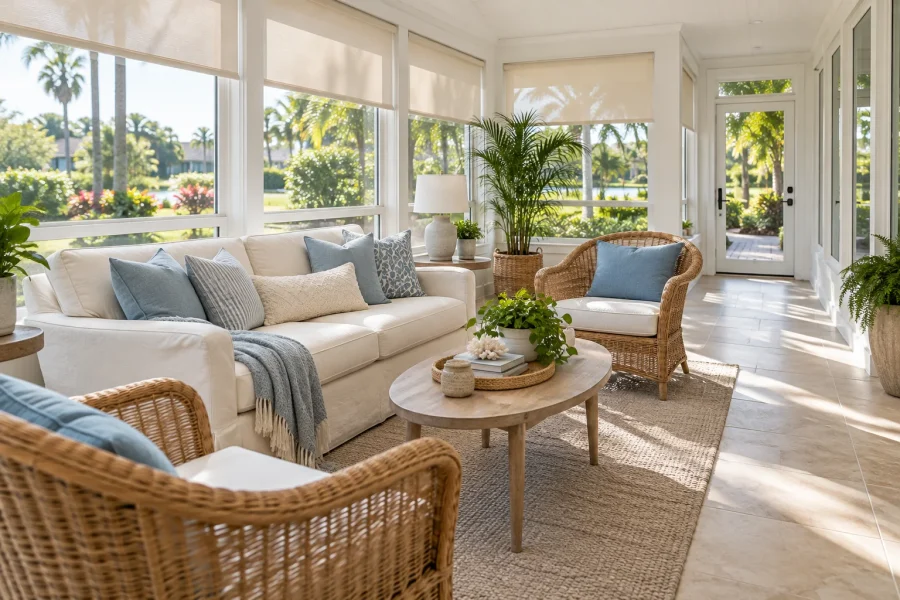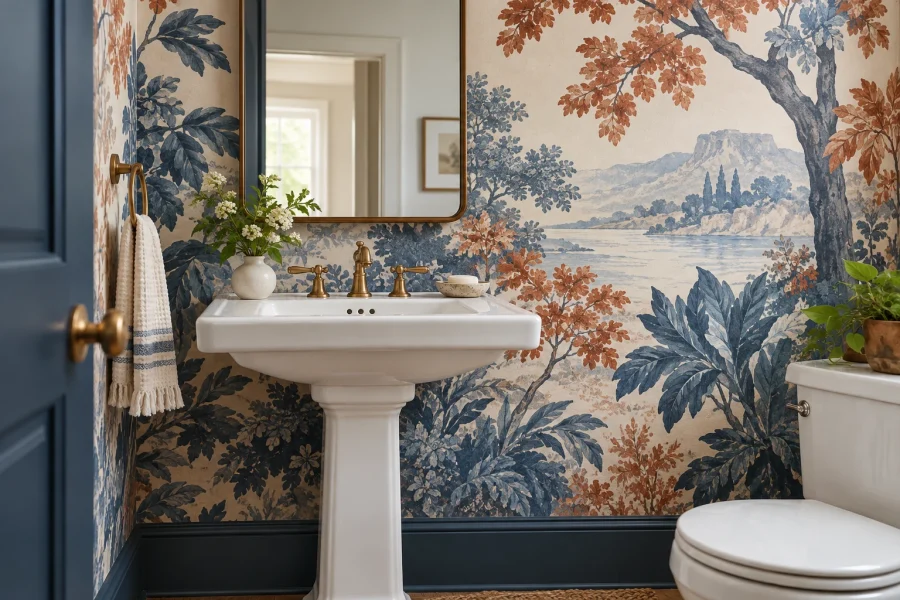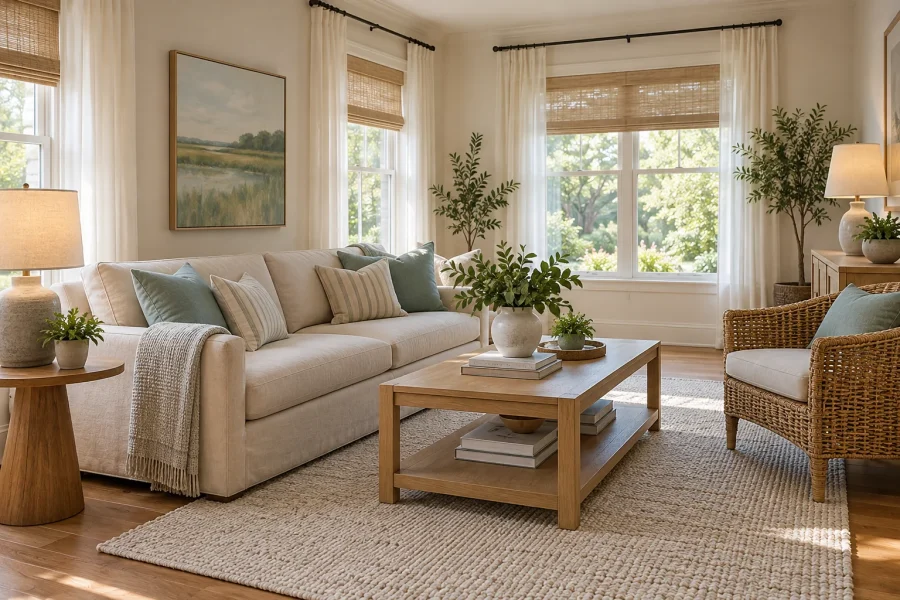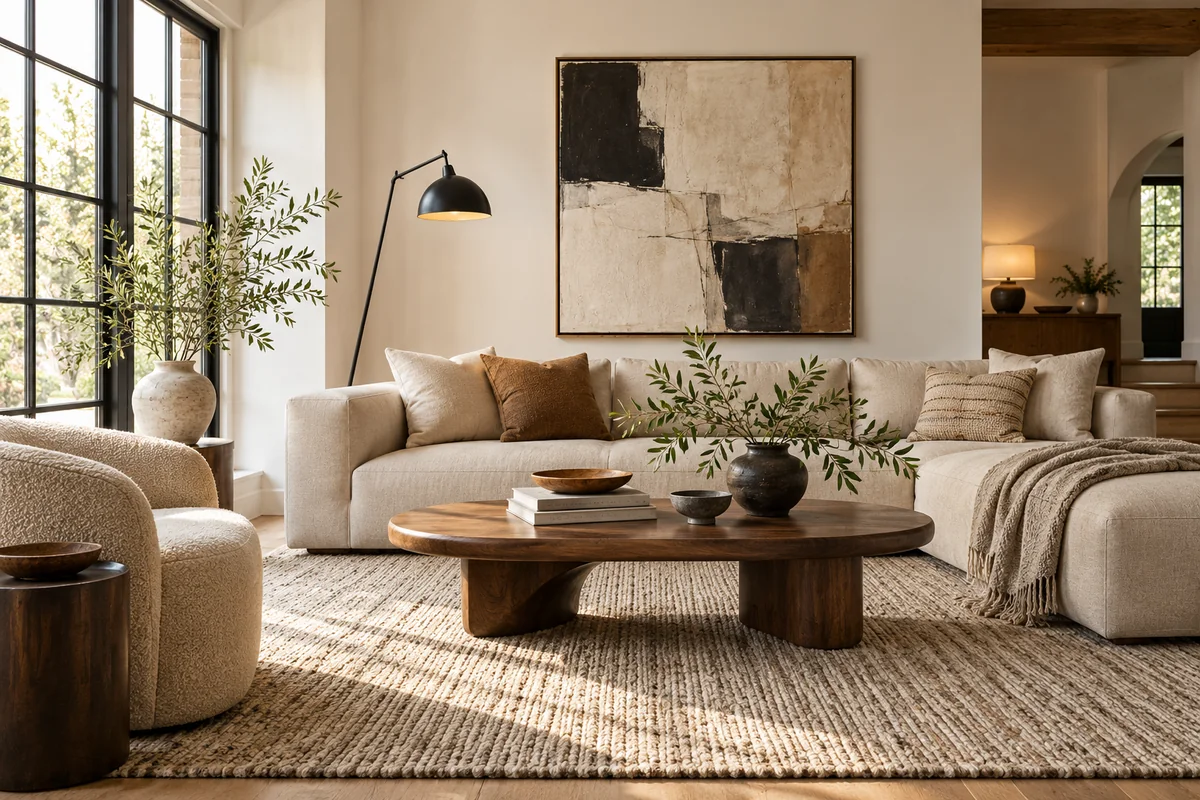
Modern decor is easiest to recognize by its clear forms, useful furnishings, and edited details. It is rooted in modernist design, but a modern home does not have to feel like a museum or an all-white showroom. Warm wood, tactile fabrics, layered light, and a few personal objects can make clean-lined rooms comfortable and individual.
Use the guide below to choose a palette, materials, furniture, and lighting that work together. Then apply the same simple framework to a living room, bedroom, or open-plan space without replacing everything at once.
What Does Modern Decor Mean?
Modern decor takes its cues from the modernist design movement, which favored practical forms, clear geometry, and less applied ornament. In a home, that often translates into streamlined furniture, uncluttered surfaces, intentional materials, and rooms arranged around how people use them. Modern describes a design lineage; it does not simply mean newly purchased or currently fashionable.
There is no single checklist every modern room must follow. Some lean toward mid-century furniture and warm wood, while others use more sculptural shapes, stone, glass, or metal. The shared idea is that each major choice has a purpose and the overall composition feels considered.
Modern vs. Contemporary vs. Minimalist
- Modern refers to a design movement and its lasting principles, including function, clean lines, and restrained ornament.
- Contemporary describes what feels current. It can borrow from many periods and change as tastes change.
- Minimalist describes an approach that reduces visual elements. A room can be modern without being sparse, and minimalist without following modernist forms.
These labels overlap in everyday decorating conversations. If you want a broader comparison of styles, see our guide to interior design styles. This article focuses on how to make modern cues work in an actual home.
Key Elements of Modern Decor
Clean lines and readable shapes
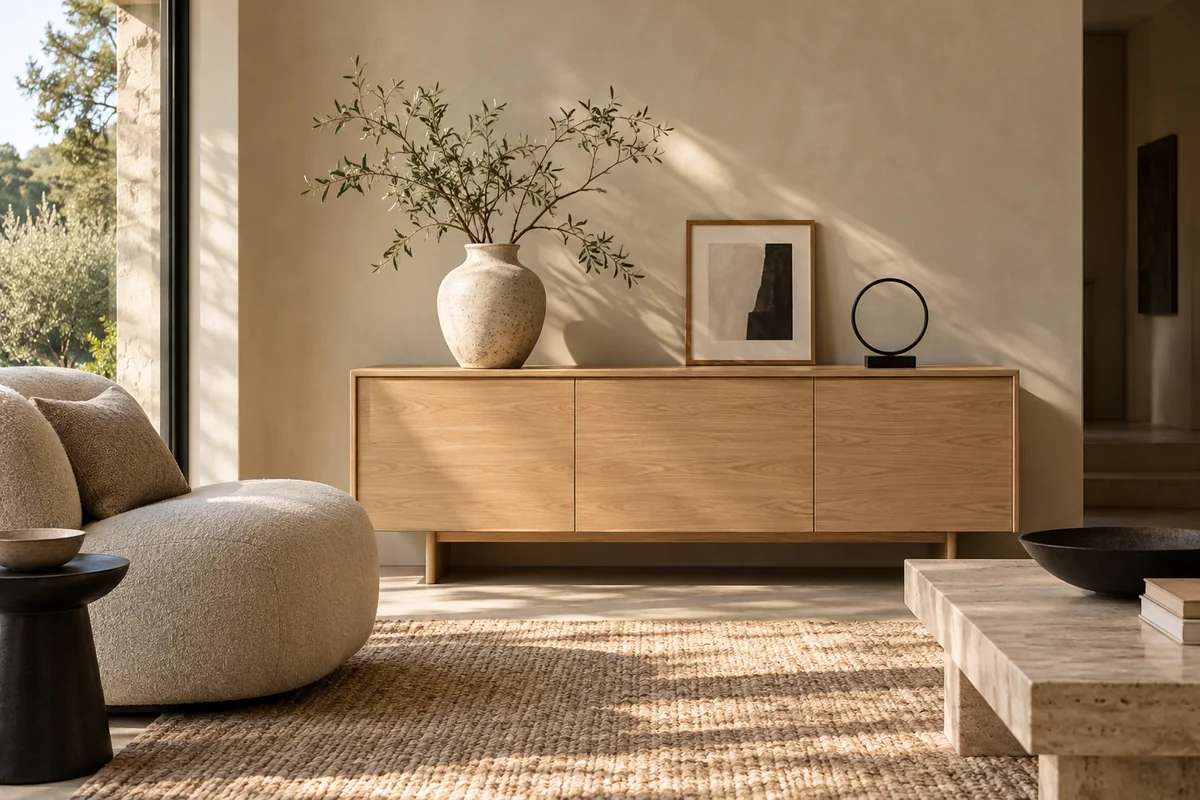
Look for furniture with a clear outline: a simple sofa, an uncluttered sideboard, or a table whose base is visible rather than heavily carved. Straight lines are common, but modern rooms can also include a rounded chair or curved table. A single softer shape can balance a room full of rectangles.
Function that is visible in the layout
Furniture should support the way a room is used. Keep walking routes clear, put reading light near a chair, and give frequently used items a sensible home. A layout that works well will feel more modern than a collection of matching accessories arranged around an awkward path.
Material contrast
Modern spaces often combine a small set of materials with different visual qualities: smooth wood with soft upholstery, glass beside a matte surface, or dark metal against a pale wall. Repeating two or three finishes helps a room feel connected. Texture adds depth without requiring a busy pattern.
A restrained but not empty palette
White, cream, gray, charcoal, and natural wood are common foundations, but color can provide personality. Try a muted green, rust, blue, or ochre through a rug, artwork, accent chair, or pillows. Choose a base color, a supporting neutral, and one or two accents, then repeat them in more than one place.
Lighting at more than one height
A ceiling fixture can provide general light, while a floor lamp, table lamp, or wall light makes specific activities more comfortable. Choose fixtures with forms that suit the room, then consider the quality and direction of the light. A softer lamp near seating can keep a streamlined room from feeling harsh after dark.
Edited accessories and meaningful art
Modern decor leaves objects room to be noticed. Group a few books or ceramics rather than covering every surface, and give artwork enough surrounding space. Personal items belong in a modern room; editing means choosing what to display and where, not removing every sign of life.
How to Create a Modern Look Without Starting Over
- Begin with the room’s job. Name the activity the room should support and identify what currently gets in the way.
- Clear the visual noise. Put away items that do not need to stay out, then keep the objects that are useful, meaningful, or visually strong.
- Choose a simple color relationship. Keep existing fixed finishes in mind. Add one accent color through portable pieces before committing to paint or a large upholstered item.
- Improve the layout. Arrange seating around conversation or a focal point, leave comfortable routes through the room, and make sure tables are within reach.
- Repeat materials selectively. Carry a wood tone or metal finish through a couple of pieces so the room feels intentional. Avoid making every finish identical.
- Layer light. Add or reposition a lamp where you read, work, or relax. Check glare and shadows from the places where you actually sit.
- Finish with one focal point. Choose a piece of art, a sculptural light, or an interesting furniture form. Let the rest of the room support it.
Before buying a large item, measure its footprint and tape the outline on the floor. Check door swings, paths, and the relationship to nearby furniture. If you are planning broader layout and material decisions, our interior design planning guide covers the process in more detail.
Modern Decor Ideas by Room
Living room
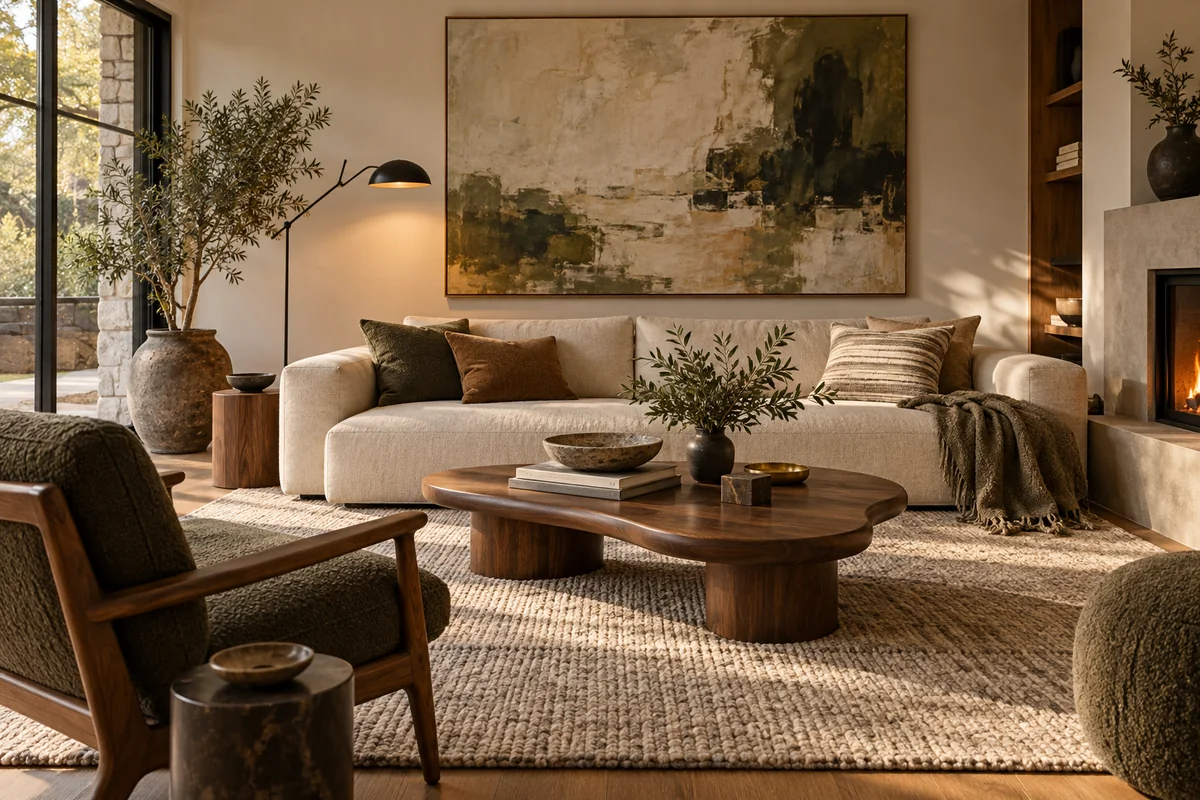
Start with comfortable seating and a layout that makes conversation easy. A low-profile sofa can pair with a wood coffee table, a textured rug, and a floor lamp. Choose one strong artwork or a considered group of smaller pieces, then leave some wall and tabletop space open. If you are adding color, repeat it in a small detail such as a pillow and a book cover rather than scattering unrelated accents.
Bedroom
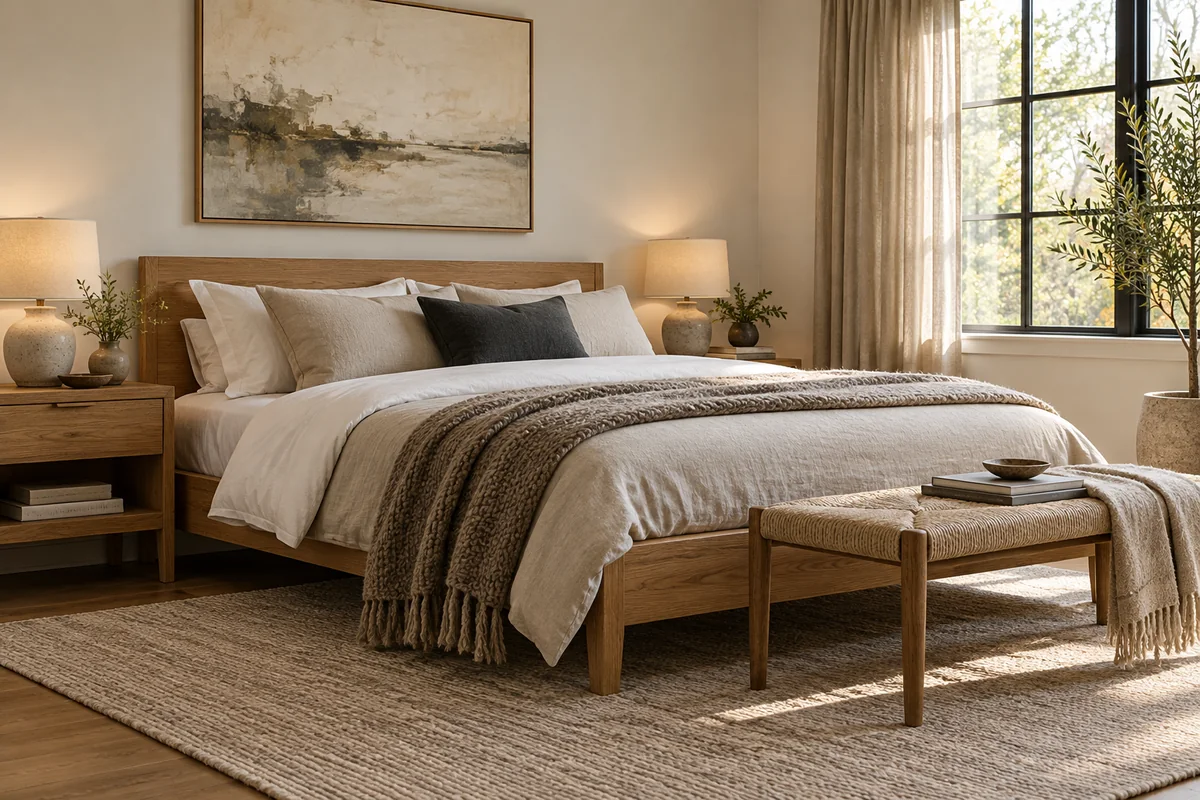
Let the bed and lighting do most of the work. Use a simple bed frame, soft bedding in a limited palette, and a bedside surface with room for the items you use. Add a reading lamp and one piece of art or a tactile throw. Avoid filling the room with small decor that complicates cleaning or interrupts the restful feeling.
Open-plan living and dining
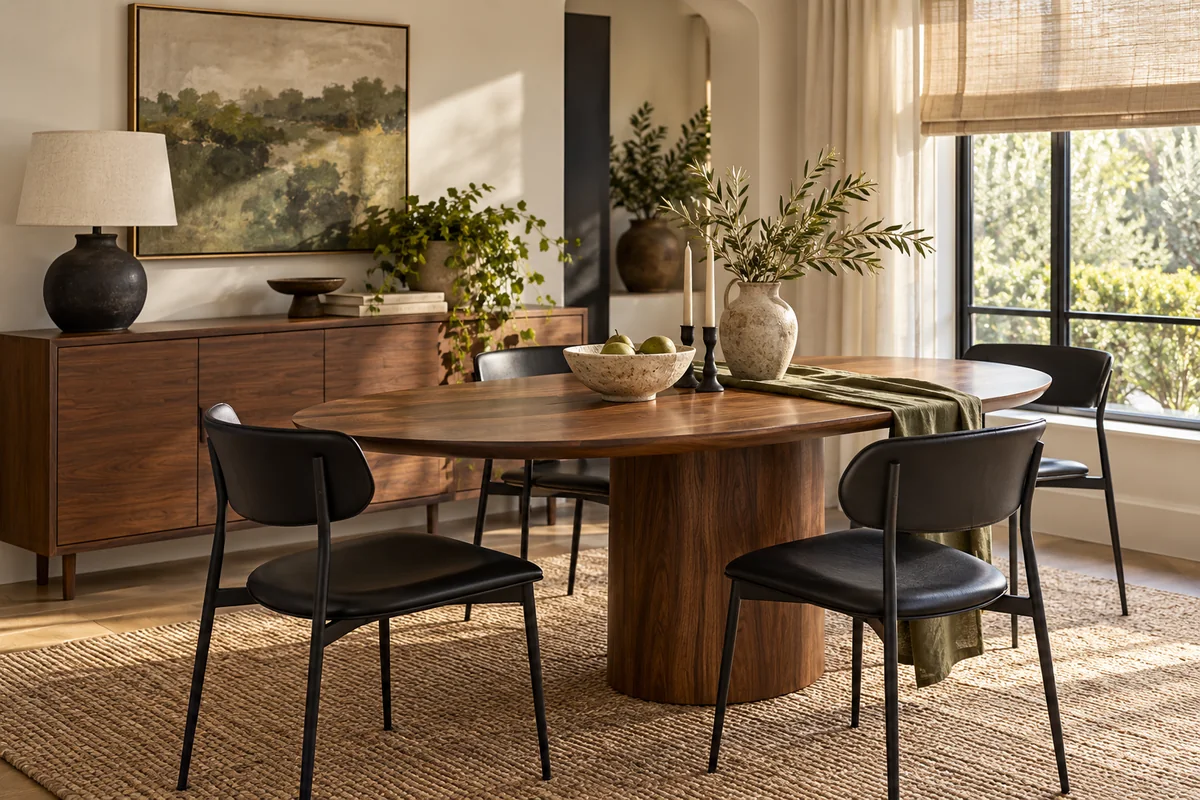
Use rugs, lighting, and furniture placement to show where one activity ends and another begins. Keep a repeated finish or color across both zones, such as oak, black metal, or a shared accent hue. The pieces do not need to match; repeating a few visual cues is enough to connect them.
Modern Decor Mistakes to Avoid
- Making the room too cold: Balance hard surfaces and sharp geometry with fabric, wood, plants, or warm light.
- Confusing modern with empty: Keep useful and personal objects, then edit the number and placement so each can be seen.
- Buying a matching set by default: A room can feel more natural when pieces share a palette or material but differ in shape and origin.
- Following every current trend: Use changeable accents for experiments. Let larger purchases suit your needs, dimensions, and budget.
- Ignoring scale: A small accent table can disappear beside a large sofa, while oversized decor can crowd a compact room. Measure before purchasing.
Frequently Asked Questions
What colors are used in modern decor?
Modern rooms often use neutrals such as white, cream, gray, charcoal, and wood tones. Muted or saturated accent colors can work as well when they are repeated deliberately and balanced with the rest of the room.
Can modern decor feel cozy?
Yes. Add tactile textiles, natural wood, warm or dimmable light, and a few meaningful objects. Clean lines do not require hard surfaces everywhere or an empty room.
Is modern decor the same as mid-century modern?
No. Mid-century modern is a distinct style associated with design from the middle decades of the twentieth century, including recognizable furniture forms and materials. It is one influence that can appear in a broader modern interior.
How do I make my home look modern on a budget?
Start with rearranging, editing, and improving light. Reuse furniture where it works, update small hardware or textiles if needed, and add one well-scaled focal piece over time. A coherent layout often matters more than buying a full matching set.
Can modern decor work in a small home?
Yes. Prioritize pieces that fit the room, useful storage, and clear paths. A limited palette can connect the space, but do not choose furniture solely because it looks minimal; comfort and function still matter.
Make the Room Feel Like Yours
Modern decor works best when its simplicity supports everyday life. Begin with function, choose a few shapes and materials to repeat, and add warmth through light, texture, and objects that matter to you. Make one change at a time and keep the pieces that improve how the room looks and works.
Sources and Editorial Note
- Architectural Digest: 15 Essential Interior Design Styles to Know Now
- Architectural Digest: Modern Architecture—Everything You Need to Know
- Designed | Curated Interiors: Modern Decor for Homes
The room images are AI-generated illustrative scenes. They do not depict documented homes or completed design projects.

Ethan Miller
Ethan Miller writes about home improvement, interior design, cleaning, and everyday living at Home & Living Daily. He shares practical tips and simple ideas to help readers create more comfortable and functional homes.