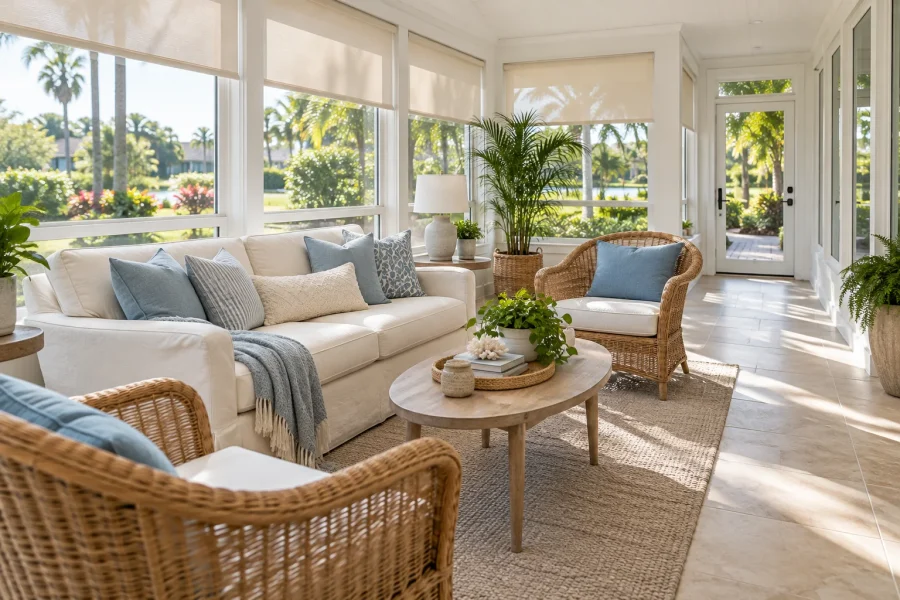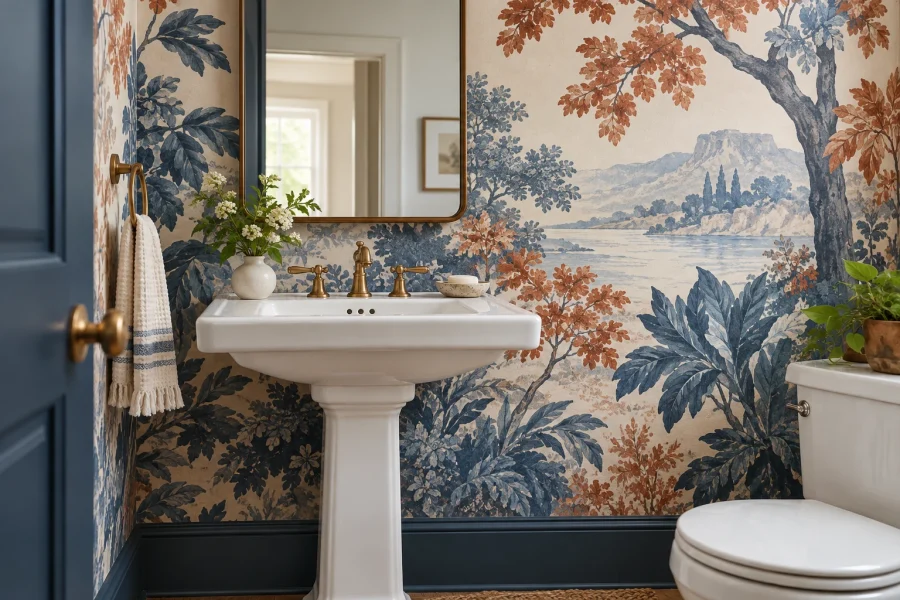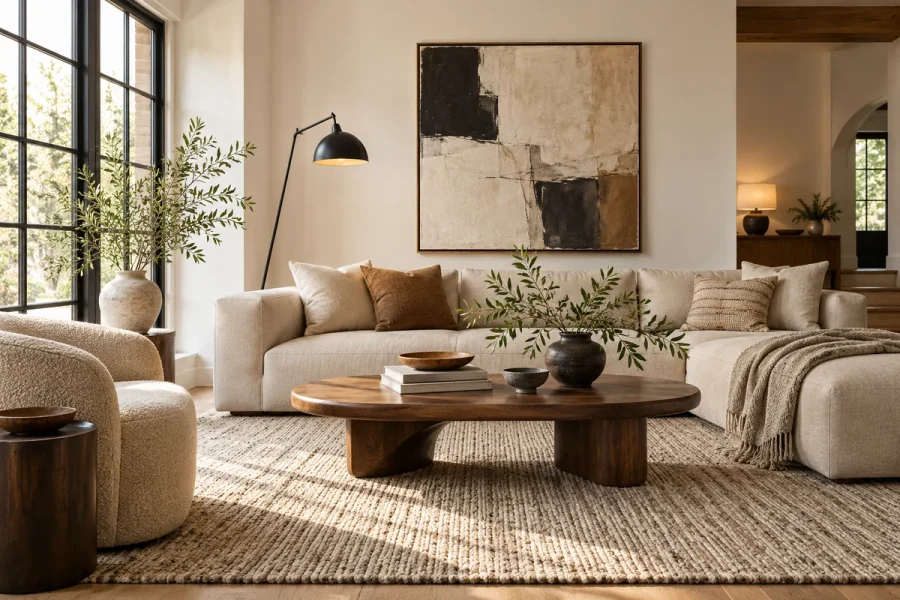
Coastal interior design is a relaxed decorating style inspired by shoreline colors, natural textures, and a sense of openness. Think comfortable seating, wood, woven details, and a palette drawn from sand, water, grasses, or weathered stone. You can use those cues in an inland apartment just as readily as in a beach house.
The useful question is how to translate that inspiration into a room you actually live in. This guide explains what makes a space feel coastal, where the style overlaps with nautical and modern decor, and what to change when you want the look without replacing everything.
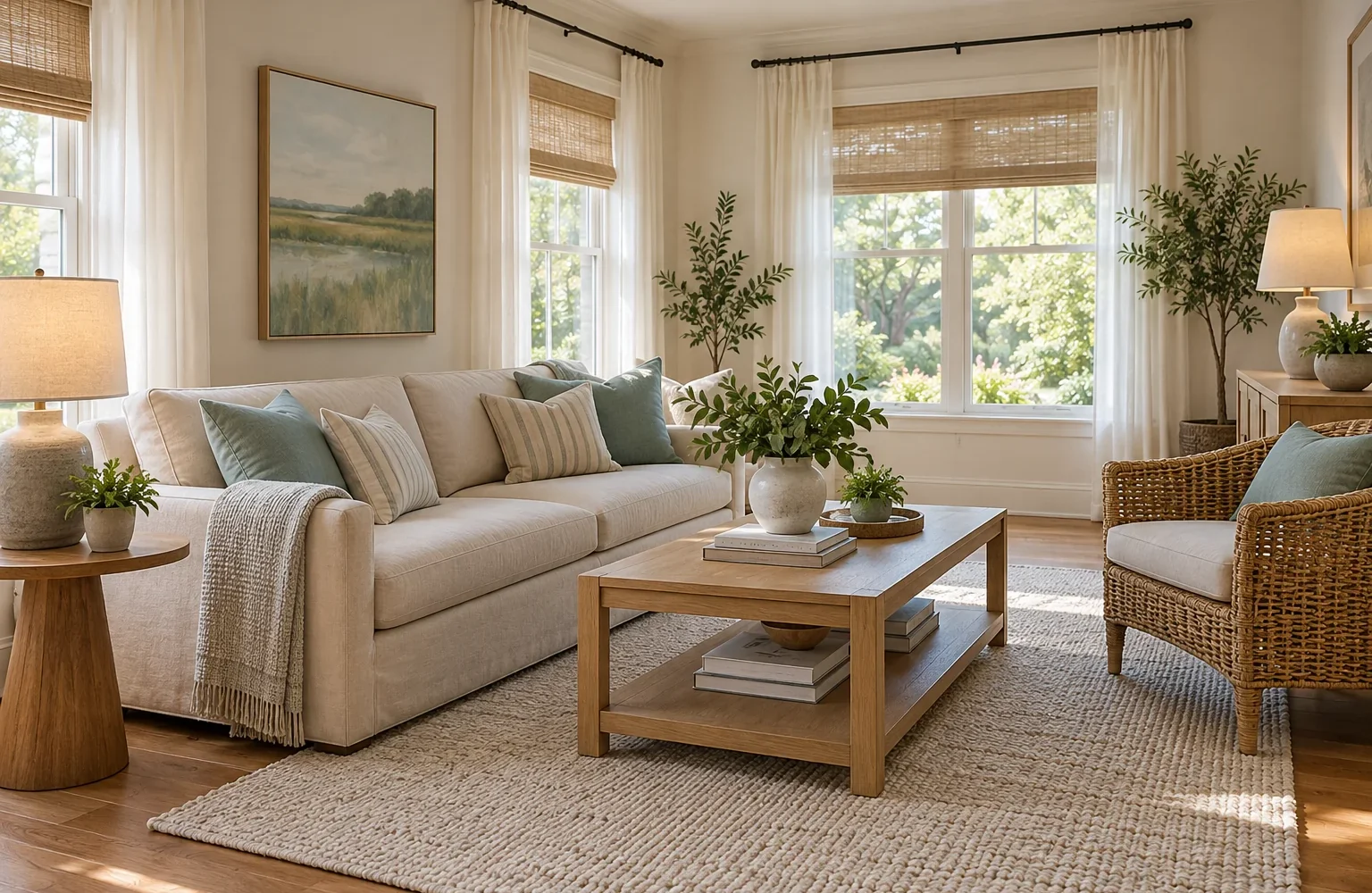
Images in this guide are AI-generated design illustrations, not photographs of completed homes or tested makeovers.
What Makes a Room Feel Coastal?
In Architectural Digest’s coastal design explainer, designers describe an approach rooted in the surrounding landscape, with natural textures, soft tones, and attention to light and views. This gives you a more flexible starting point than a fixed blue-and-white shopping list.
Look at the room as a combination of choices. One wicker basket does not establish a style, and a dark table does not disqualify it. The overall impression comes from how the colors, furniture, and surfaces work together.
- A connected palette: choose colors that feel related, such as ivory, sand, and muted green, rather than adding a separate accent color to every surface.
- Visible texture: let a woven seat, fabric shade, or wood grain provide interest where you might otherwise add more ornaments.
- Comfortable furniture: choose seats you want to use, with somewhere convenient to put a book or drink.
- Breathing room: leave usable surfaces and a clear route through the furniture. An open floor plan is optional.
- Personal details: display a landscape, pottery, or a favorite collection in a way that leaves each piece visible.
If you are still choosing between aesthetics, the broader guide to interior design styles helps place coastal alongside other approaches.
Coastal Colors and Materials: Two Directions to Try
Begin with the finishes that will stay: flooring, a sofa, kitchen cabinets, or a large rug. Collect fabric and paint samples next to those pieces before buying. A white that looks gentle on a screen may look stark beside a warm floor; assess it in your own room during the day and under your evening lighting.
Soft sea-glass coastal
Try warm white, pale sand, muted blue-green, and light wood. For a living room, keep the sofa neutral and repeat the blue-green in a cushion and one element of the art. Add a woven shade or chair if the space needs texture. You do not need to repeat every color in every object.
Earthy coastal without blue
Combine cream, flax, warm brown wood, and olive, with a little charcoal for definition. This is a useful direction when your home already has brown furniture or darker flooring. A shoreline includes grasses and rocks as well as water; blue is an option, not a requirement.
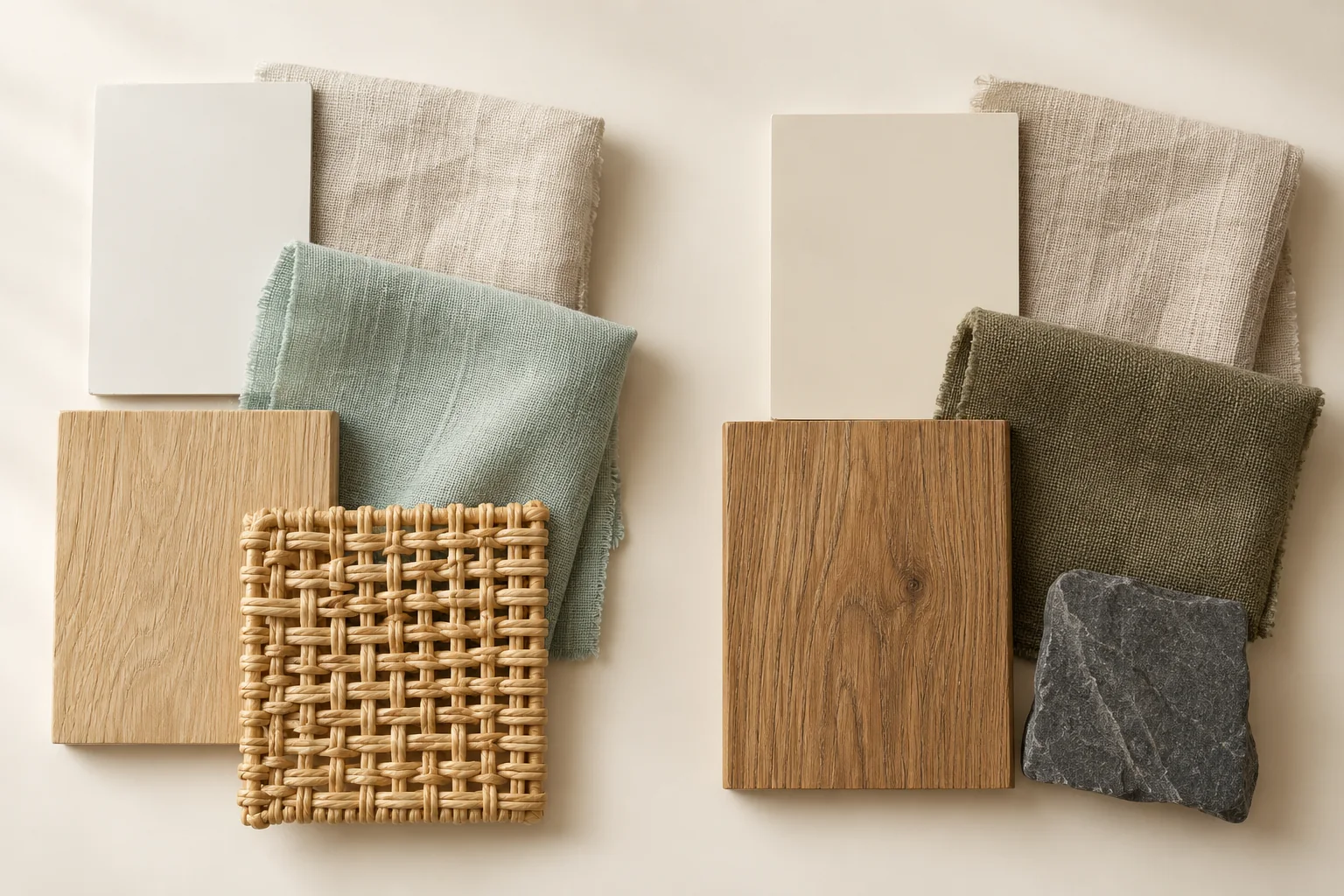
For materials, select a few contrasting surfaces instead of making everything woven. For example, pair a smooth wood table with textured upholstery and a ceramic lamp. Three slightly different wicker finishes competing in one small corner may be harder to coordinate than one clearly chosen woven piece.
Coastal vs. Nautical: What Is the Difference?
Coastal describes a broader relationship to the shore. Nautical refers more directly to boats and maritime life. Planner 5D’s coastal style guide makes this distinction through nautical motifs such as anchors and navy stripes, while describing coastal through lighter colors and natural textures. The categories overlap, and neither label is a rulebook.
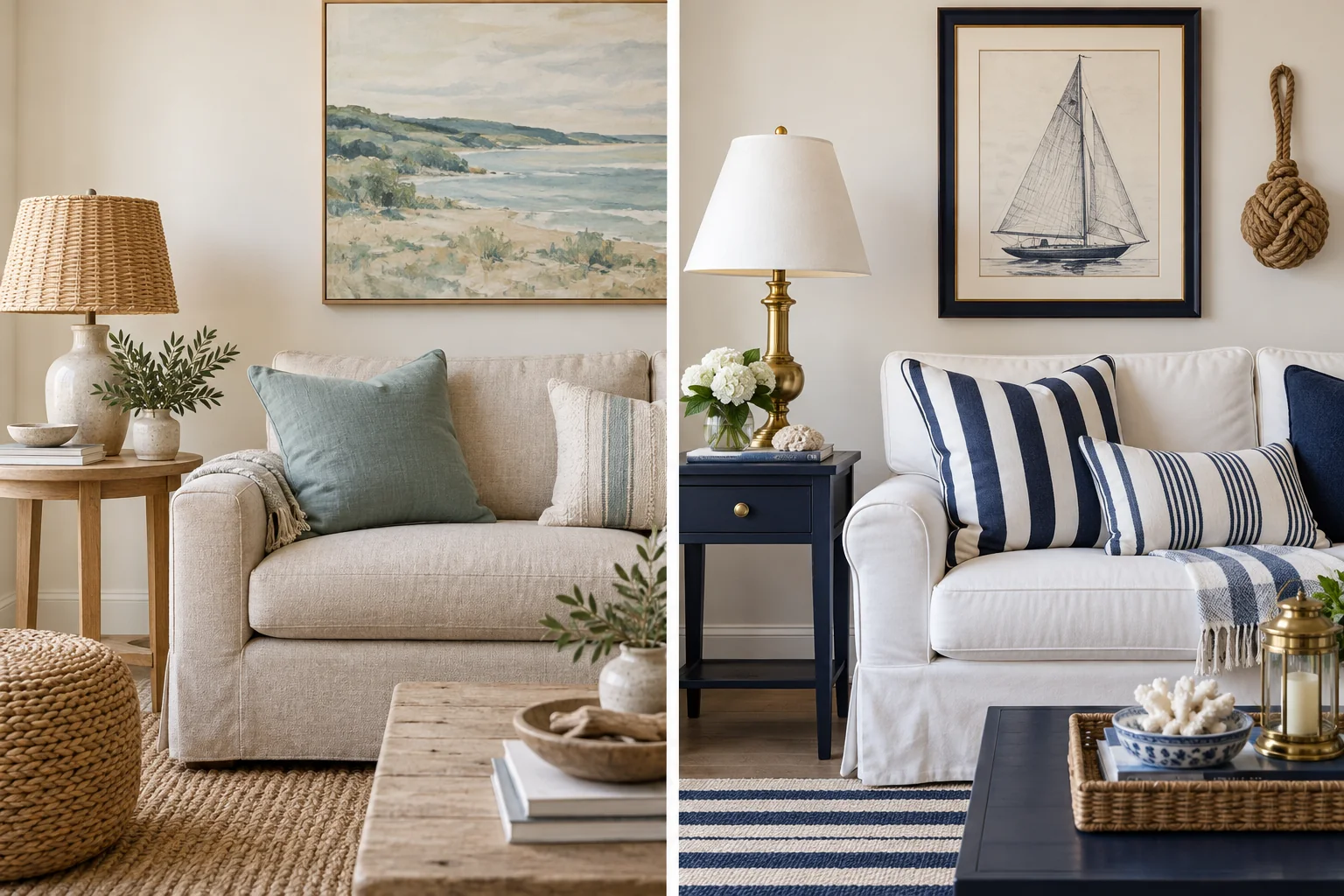
- Choose a coastal direction if you want the color and ease of a seaside setting, with few literal references.
- Choose a nautical direction if you enjoy sailboats, rope details, maritime art, and stronger navy-and-white contrast.
- Combine them selectively if a sailing print or inherited ship model matters to you. Give that object a place to stand out instead of building a matching theme around every surface.
A striped cushion alone can work in either room. To judge the direction, look at the whole arrangement: the art, furniture shapes, materials, and repeated motifs.
What Is Modern Coastal Interior Design?
Modern coastal brings a more streamlined approach to coastal colors and textures. In the example below, the tailored sofa and simple block-shaped table establish the silhouette; the wood grain, rug, and blue-gray artwork supply warmth and a connection to the shore.
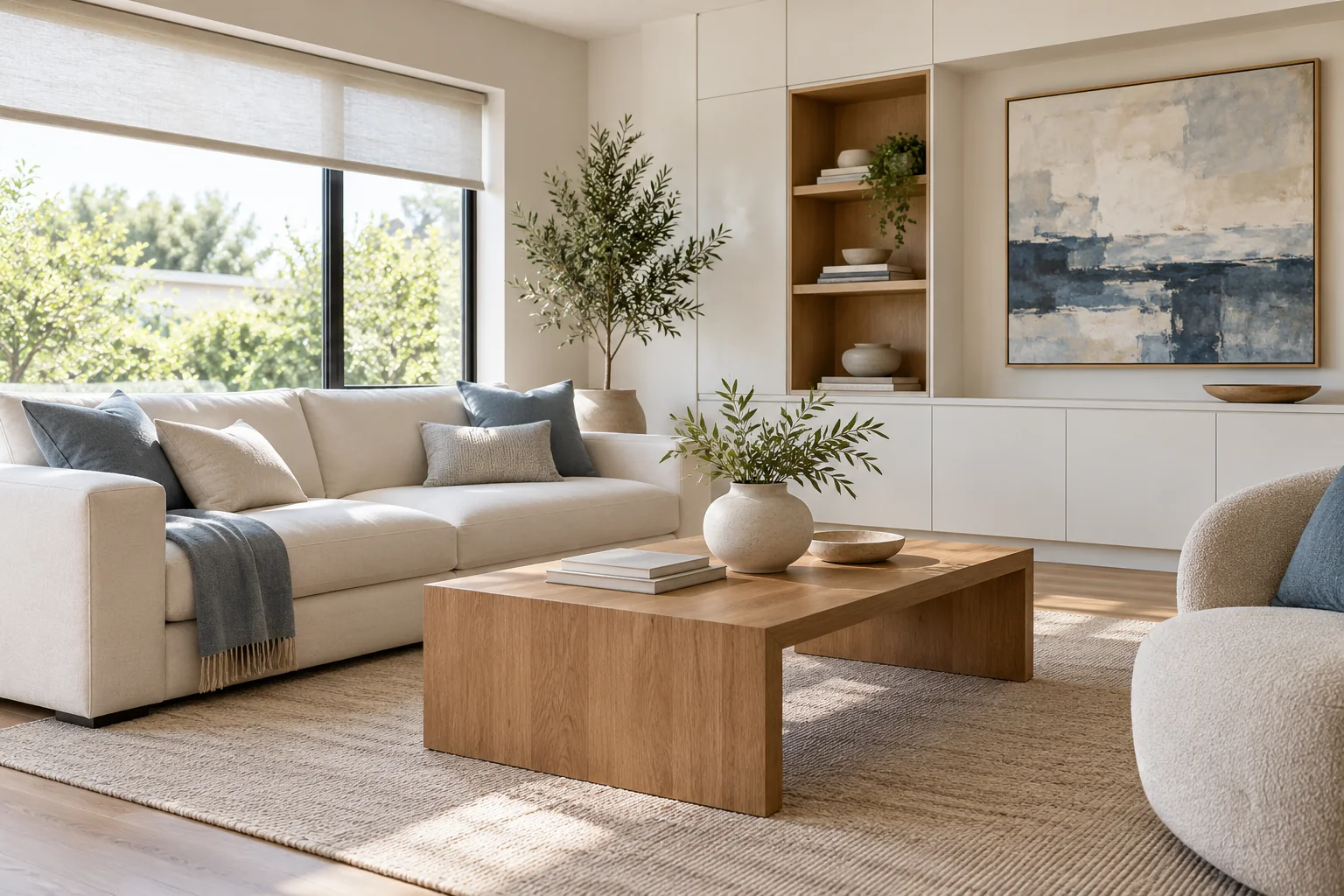
To try this direction, edit the number of small objects before buying new furniture. A substantial lamp and one piece of art can create a clearer focal point than several tiny accessories. Keep a little contrast so pale walls, upholstery, and flooring do not all blend together.
A more traditional coastal room might use curved furniture, patterned fabrics, or an older wood chest alongside the same relaxed palette. Keep those pieces if you like them. If cleaner shapes appeal to you, see our practical guide to modern decor for help balancing simple forms with warmth.
Make Coastal Style Work With What You Already Own
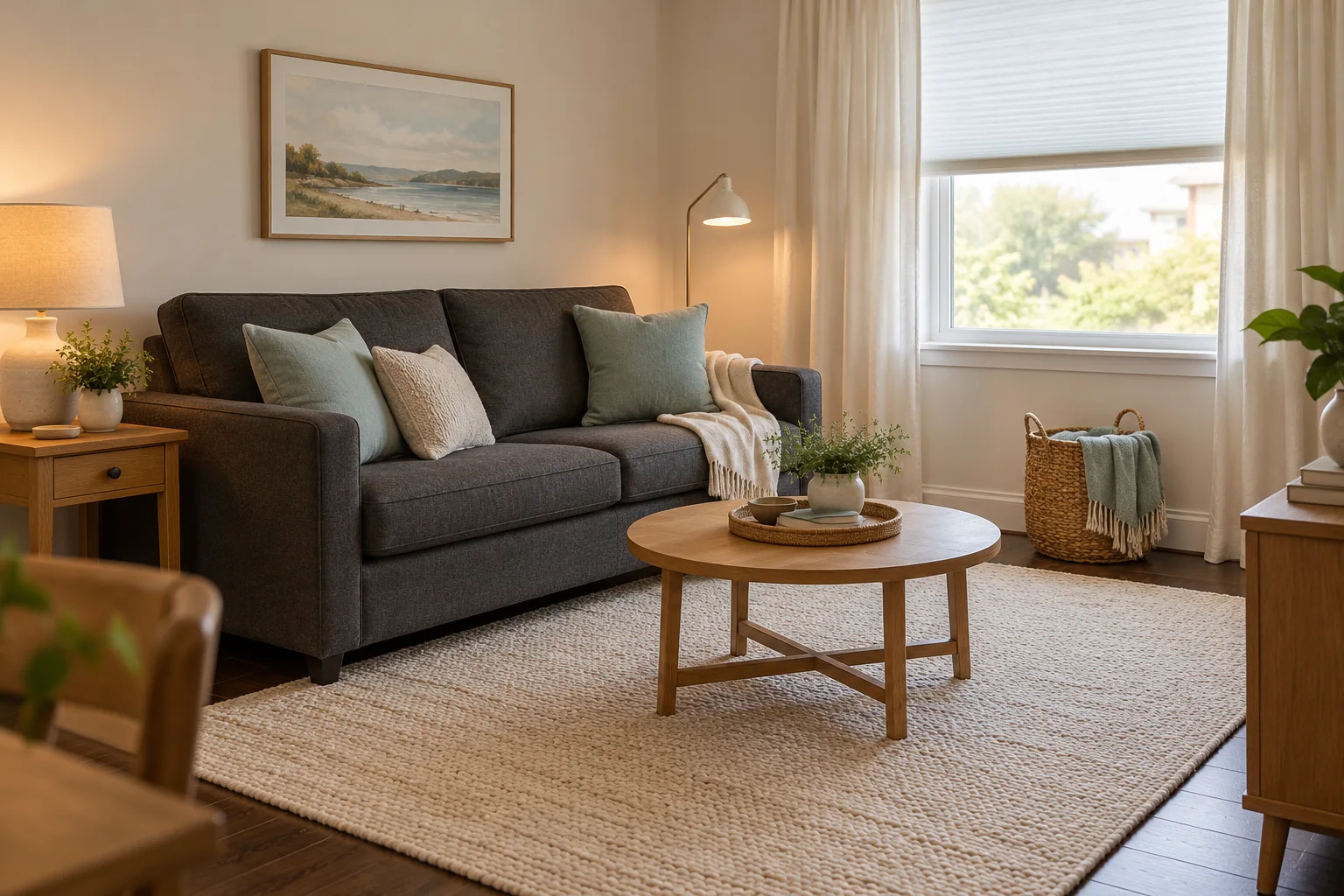
Imagine a small inland living room with a charcoal sofa, dark flooring, cream walls, and an oak side table. Those are workable foundations. The following is a decorating proposal, not a claim about a completed renovation.
Keep the useful foundations
Keep the sofa if it is comfortable and fits. Keep the floor and the wood table. Remove unused furniture from the walking route, then decide where you actually need light and storage. A style update should make the room easier to use.
Change the parts that connect the palette
Try oatmeal and muted green cushion covers against the sofa before ordering a full set. If the floor needs softening, consider a light textured rug appropriate to the room’s traffic and care needs. Repeat a warm neutral at the window and add a landscape you like. One basket can hold throws or everyday clutter.
Skip purchases that solve no problem
You do not need a white sofa, shiplap, or a set of beach-themed accessories to complete the idea. If you rent, begin with removable textiles, freestanding lighting, and art installed using methods your lease permits. For a wider choice of starting points, explore these home decor updates by room and need.
Choose the Look Around Daily Life
Photographs can help with color and proportion, but they cannot tell you whether a fabric feels comfortable or whether a rug is easy to maintain. Resolve those questions before committing.
- Upholstery: request a sample and read the manufacturer’s care instructions. A removable cover is not automatically machine-washable, and a linen appearance does not establish stain resistance. Choose a color and cleaning routine you can live with.
- Rugs: feel the texture underfoot and check the product’s intended use and care requirements. If a coarse natural-fiber rug is uncomfortable for your household, use texture elsewhere rather than buying it for the label.
- Window treatments: pair a light decorative layer with the privacy or room-darkening treatment you need. Test the view from outside after dark; a breezy appearance alone does not guarantee privacy.
- Lighting: keep a reading light where you sit and usable light beside the bed. The room should still function when daylight is gone.
Carry the palette into another room through one or two elements. In a bedroom, that might mean a muted green coverlet and wood nightstand while retaining effective blackout curtains. In a dining space, try a linen-look runner and simple pottery with the table you already own. A coordinated home does not need identical furniture in every room.
Common Questions About Coastal Style
Can coastal decor work far from the beach?
Yes. Use the colors, textures, and relaxed arrangement as inspiration. An ordinary garden view, apartment window, or room with limited daylight can still support the style. Adapt the lighting and layout to the actual space.
Does coastal design have to be white and blue?
No. Cream, sand, brown, olive, and stone gray can support an earthy version. If you enjoy stronger color, introduce it in a few deliberate places and assess the balance from the room’s entrance.
Can I keep dark furniture?
Yes. A dark sofa or wood chest can provide contrast. Connect it to lighter surroundings with a rug, fabric, or artwork that includes both light and dark tones before deciding it needs replacement.
Start With One Corner
Choose a corner you use every day. Keep its useful furniture, test a small palette beside it, add one texture, and check the light after sunset. Once that corner feels comfortable and coherent, repeat a few of those choices across the room. That gives coastal style a practical place in your home.

Ethan Miller
Ethan Miller writes about home improvement, interior design, cleaning, and everyday living at Home & Living Daily. He shares practical tips and simple ideas to help readers create more comfortable and functional homes.