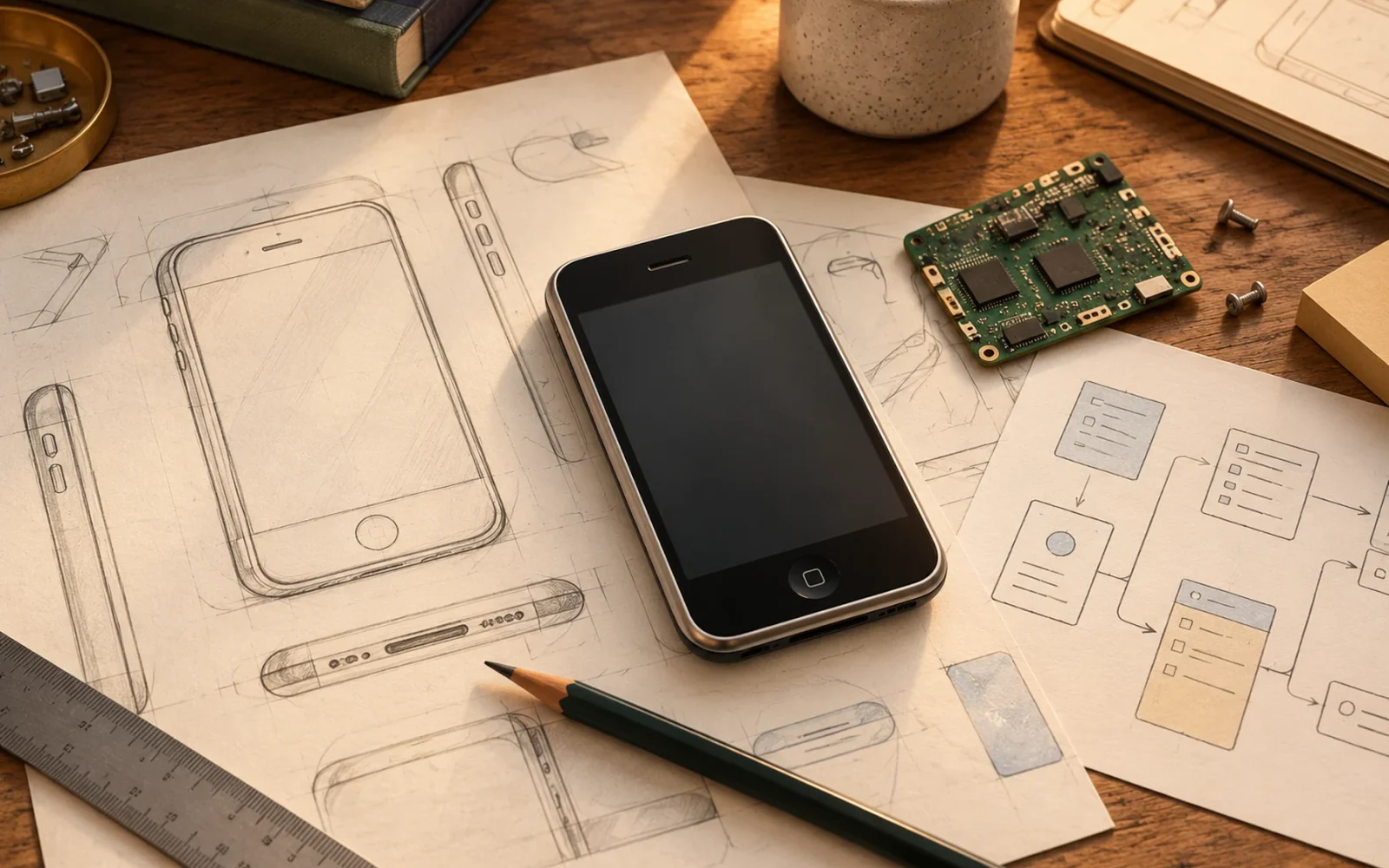
The iPhone was developed by Apple’s design and engineering teams under Steve Jobs’ leadership. Jobs set product direction and introduced it publicly, but he did not personally design every component, write the software, or invent all the technologies it used.
For a short answer, “Apple, led by Steve Jobs” is accurate. For the history of how the product was created, the contributions of industrial designers, hardware engineers, software developers, and earlier researchers need to be kept distinct.
Steve Jobs and the people who built the product
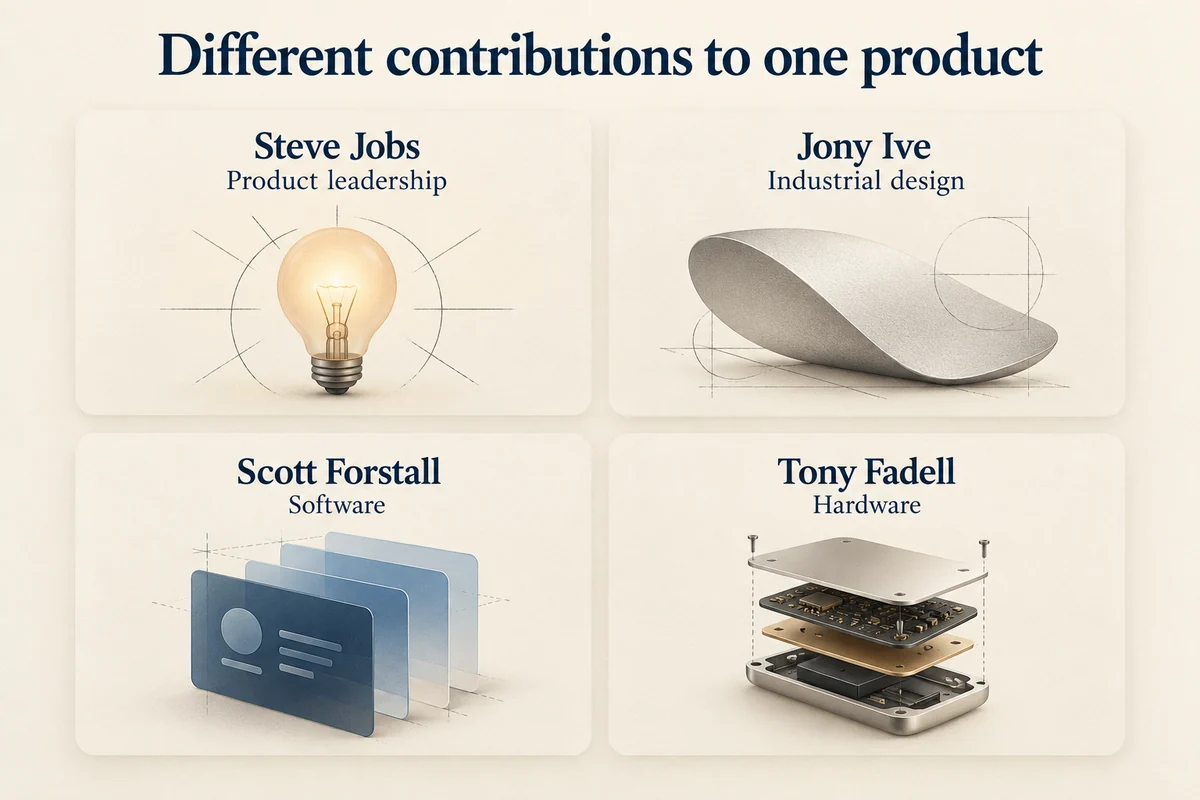
Jobs is strongly associated with the iPhone because of his leadership and the 2007 presentation. Other prominent contributors had different responsibilities. The following is a guide to those roles, not a complete roll call or a patent-inventor list.
| Contributor | Role in the original product’s development |
|---|---|
| Steve Jobs | Product direction, major decisions, and public introduction |
| Jony Ive and Apple’s design team | Industrial design and the physical product experience |
| Scott Forstall and the software team | Software design and interaction development |
| Tony Fadell and hardware colleagues | Hardware development and integration |
| Other engineers, designers, and collaborators | The many systems and implementation details needed for a working phone |
Apple’s account of Ive’s design career identifies the iPhone among his major contributions. The Computer History Museum’s interviews with Forstall and original engineers identify Forstall as the original software leader and include Hugo Fiennes, Nitin Ganatra, and Scott Herz.
The museum’s conversation with Tony Fadell describes his leadership of the hardware work. These first-person accounts are more informative than reducing development to the person who held the finished phone on stage.
What did Jobs actually contribute?
Setting a product’s direction is real creative work. A leader can choose the problem, decide which experience matters, demand improvements, and accept the risk of a particular design. Those contributions do not require the leader to perform every specialist task.
The original development interviews describe the decision to pursue a finger-controlled interface and a large screen rather than rely on a conventional physical keyboard. That direction then had to become usable hardware and software. Recognizing Jobs’ role and recognizing the team’s work are compatible explanations.
Consider a simple interaction such as typing a web address and enlarging part of a page. The display, touch sensing, keyboard behavior, browser, and networking must work together. A compelling idea for that interaction and the engineering needed to implement it are related, but they are not the same contribution.
That example also explains why a familiar product can have many legitimate contributors. The question “Who led it?” can have a short answer while “Who made it possible?” needs a wider one.
Did Apple invent the smartphone or touchscreen?
No. Apple’s original iPhone was a particular integrated product built from technologies and ideas with earlier histories. Calling it influential does not require claiming that mobile telephony, internet communication, touchscreens, or handheld computing began with it.
Apple’s January 2007 announcement describes the combination it was introducing: a phone, media player, and internet communication functions operated through a multi-touch interface. That is a claim about Apple’s product and implementation, not a complete account of who originated every enabling technology.
It is also useful to distinguish a product-development team from the named inventors on an individual patent. A patent concerns particular claimed inventions. A product name, a company founder’s title, and a list of patent inventors answer different questions. One should not be substituted for another without specifying what is being credited.
When was the first iPhone introduced?
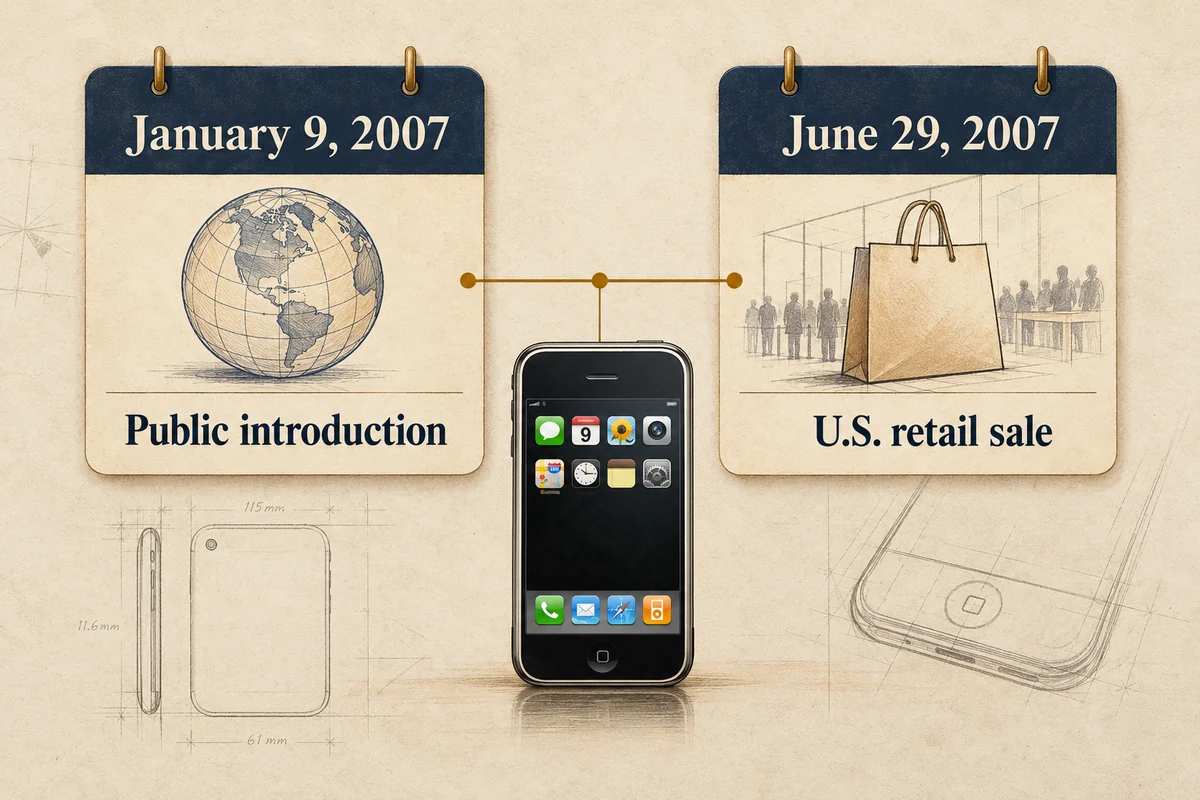
Steve Jobs unveiled it on January 9, 2007, at Macworld in San Francisco. U.S. retail sales began June 29, 2007, as recorded in Apple’s retail launch announcement.
Those are public milestones, not a single “invention day.” Research, prototypes, software work, manufacturing preparation, and integration preceded the announcement and continued through development. Saying the iPhone debuted in 2007 does not imply its team started from nothing that year.
Later features should not be projected backward onto the original phone. Today’s iPhone platform reflects years of additional products and software. Identifying the 2007 team does not identify everyone responsible for later capabilities.
Was Steve Wozniak the iPhone’s inventor?
Wozniak’s role in Apple’s early computers is a different part of the company’s history. Founding Apple and developing the first iPhone are not interchangeable achievements. The original iPhone accounts above identify the later hardware, software, and design effort rather than treating Apple’s founders as a two-person smartphone development team.
When answering a classroom or general-knowledge question, name Apple and Jobs’ leadership. When explaining the creation process, add the specialist teams and distinguish their product work from the earlier technologies they built upon.
Conclusion
Give credit at the level of the question: Jobs for leading the product’s creation, Apple’s teams for designing and engineering it, and earlier work for its technological foundations. That preserves a clear short answer while avoiding the misleading picture of one person producing a finished smartphone alone.

Ethan Miller
Ethan Miller writes about home improvement, interior design, cleaning, and everyday living at Home & Living Daily. He shares practical tips and simple ideas to help readers create more comfortable and functional homes.