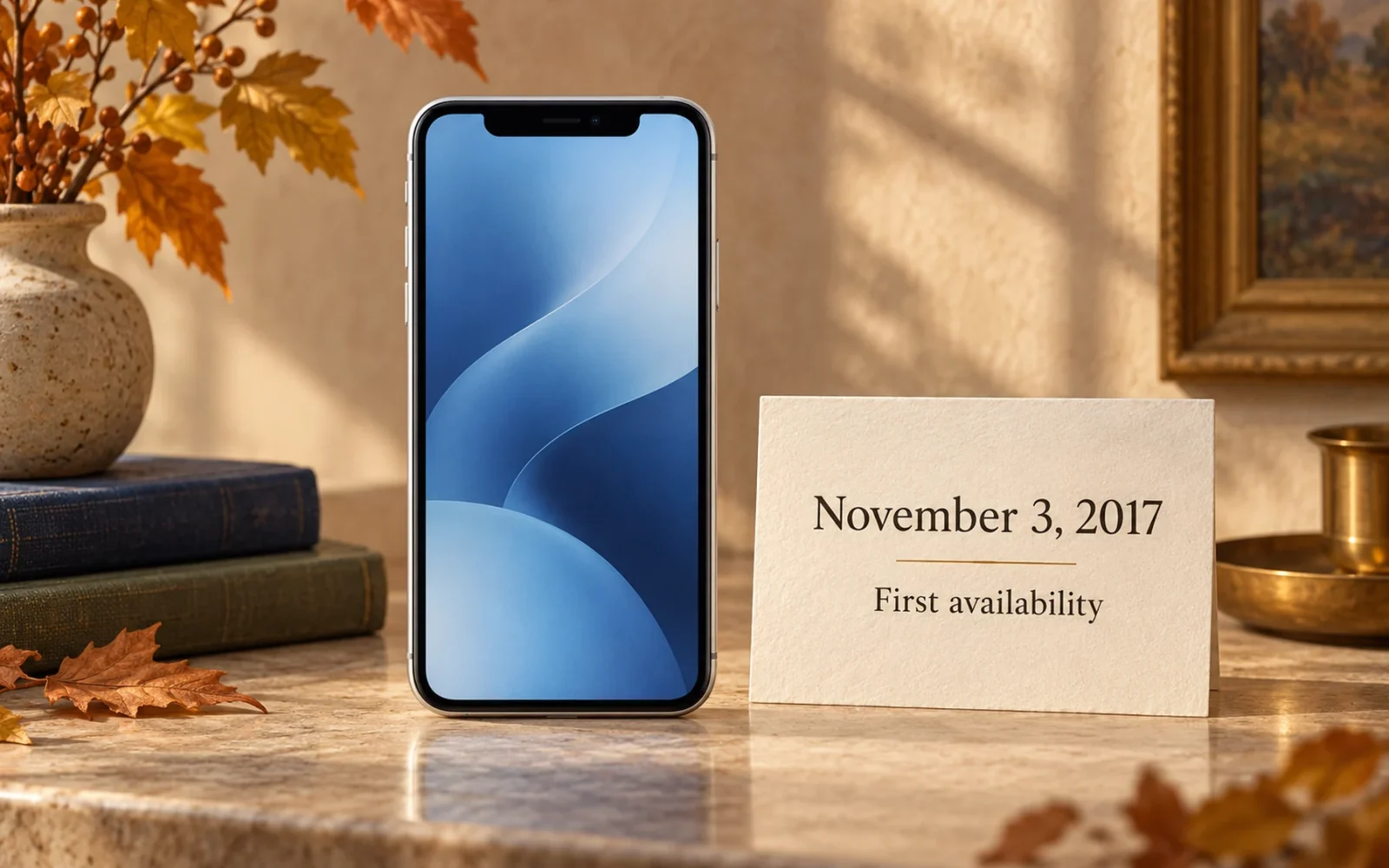
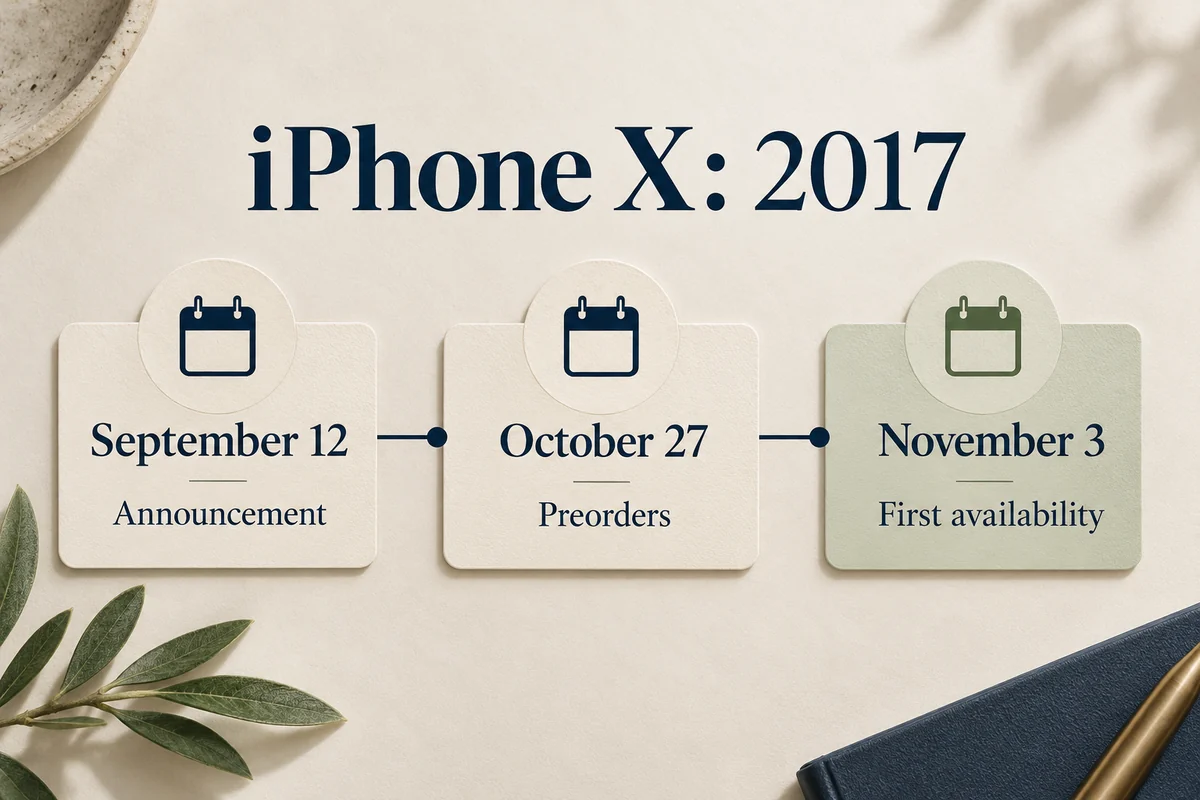
The iPhone X first went on sale on November 3, 2017. Apple announced it on September 12, and preorders opened October 27. The X is pronounced “ten,” so a search for the iPhone 10 usually refers to this same phone, not a separate model.
November 3 is the useful date if you mean when customers in the initial launch markets could buy it. September 12 identifies its public unveiling, nearly two months earlier.
Announcement, preorders, and first sale
Apple’s original iPhone X announcement gives three distinct milestones:
| Milestone | Date |
|---|---|
| Public announcement | September 12, 2017 |
| Preorders began | October 27, 2017 |
| First store availability | November 3, 2017 |
The preorder and initial release covered more than 55 countries and territories. A later local introduction or an individual delivery estimate can therefore differ from the first-release date without changing the phone’s place in Apple’s history.
When checking an old article, look at what the date describes. An event report can say Apple “launched” a phone while reporting an announcement rather than a day when stock was available to take home. A receipt tells you when one unit was purchased, not when the generation debuted.
Was iPhone X released alongside iPhone 8?
The phones were announced at the same September event, but their retail releases were separate. The iPhone 8 and 8 Plus first became available on September 22, 2017. The X followed on November 3.
That distinction matters because searches for “the 2017 iPhone” can produce either family. Our iPhone 8 and 8 Plus release timeline explains that earlier release and the later red edition.
The designs are also different. The X introduced Face ID and a 5.8-inch OLED display with a top notch, replacing the Home-button navigation of the 8 family with gestures. Those are useful identifying features; they do not make the X a Pro model or an iPhone XS.
What does the X mean?
X is the Roman numeral for ten. Apple introduced the phone in the original iPhone’s tenth-anniversary year, 2017. It is commonly spoken as “iPhone ten,” although the official product name uses the letter X.
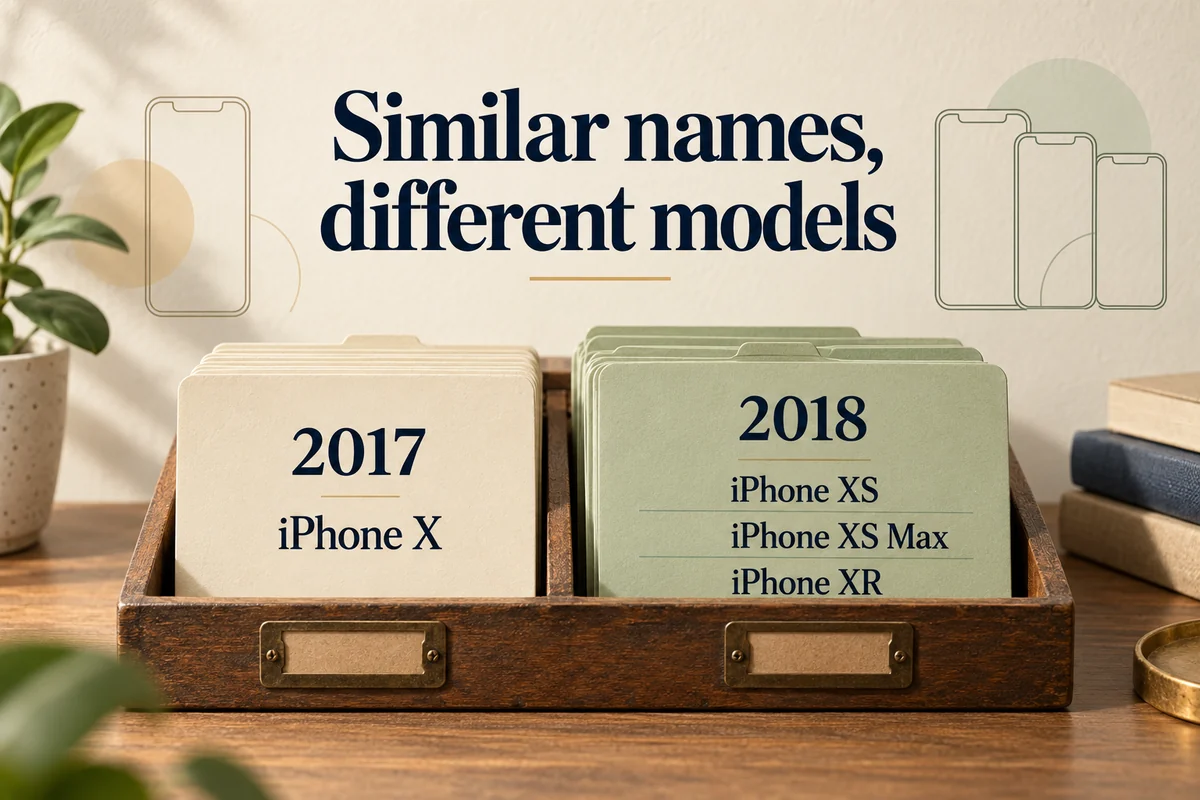
Keep the following names separate when reading a listing or ordering a case:
| Name | What it identifies |
|---|---|
| iPhone X | The model first released in November 2017 |
| iPhone XS and XS Max | Different models introduced in 2018 |
| iPhone XR | Another 2018 model, with a different size and design |
A seller’s informal “iPhone 10” description is worth checking against the actual Model Name. Similar names and a familiar notch are not enough to establish accessory compatibility.
What the date means when identifying an older phone
The release date describes a model family. It does not establish when a particular handset was manufactured, first activated, repaired, or refurbished. A phone purchased after 2017 can still be an iPhone X.
For a definite identification, open Settings > General > About and read Model Name. If the phone is unavailable or cannot be used, our guide to identifying an iPhone through its model number and records covers other routes.
For software questions, check the specific device and the updates it is offered. A historical launch date is not a promise of current app compatibility or future support. For a used purchase, inspect the handset’s condition and account status independently of its age as a generation.
Conclusion
Use November 3, 2017, for the iPhone X’s first retail release, and label the announcement or preorder dates separately. If the purpose is buying an accessory or identifying a used phone, confirm the complete model name before relying on the informal name “iPhone 10.”

Ethan Miller
Ethan Miller writes about home improvement, interior design, cleaning, and everyday living at Home & Living Daily. He shares practical tips and simple ideas to help readers create more comfortable and functional homes.