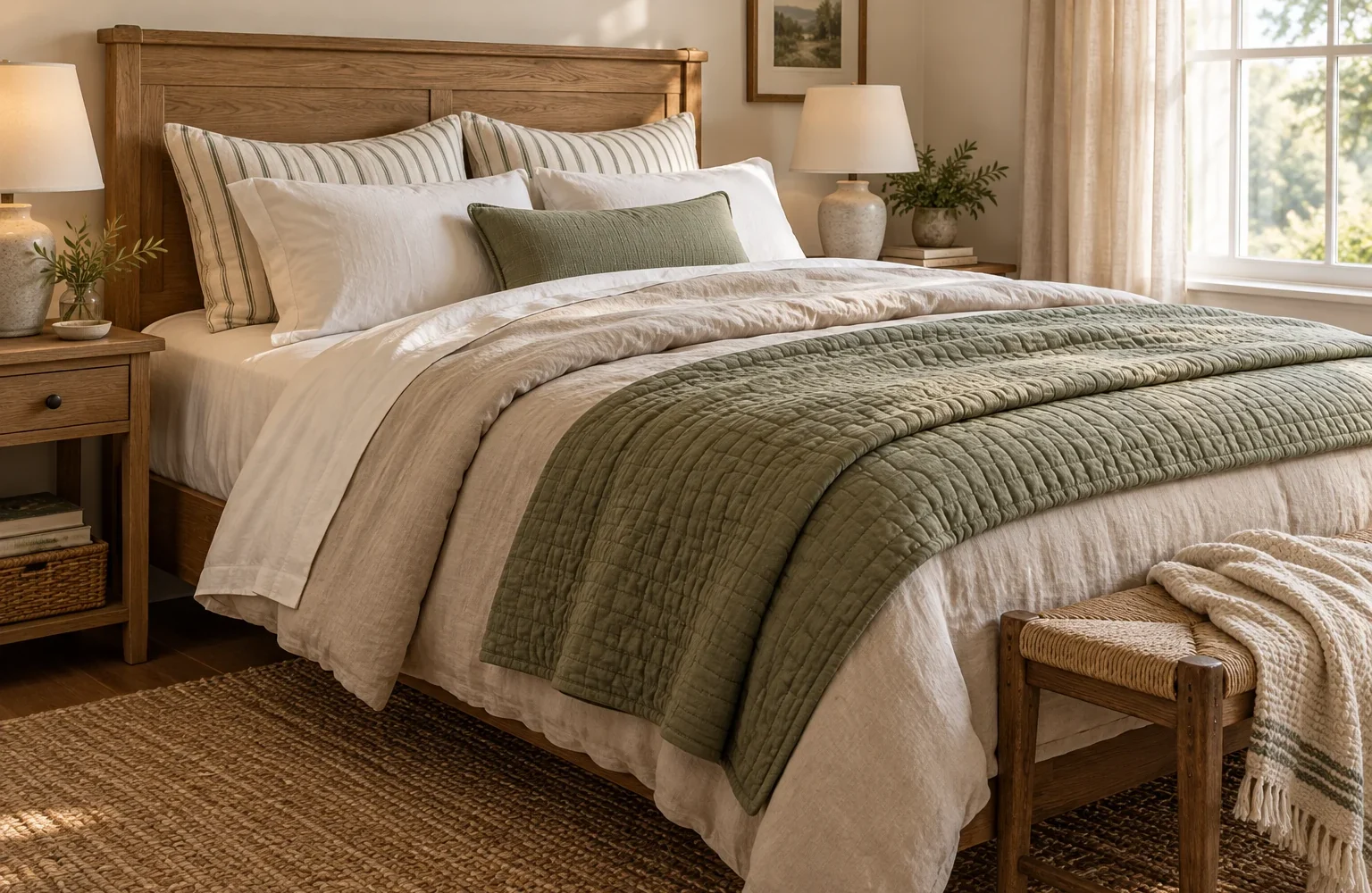
Farmhouse bedding works when the bed feels relaxed, useful, and a little collected. Start with sheets you already like sleeping on, add one quilt or duvet as the main layer, and bring in a quiet pattern or contrasting texture. You do not need shiplap walls, a matching bedroom suite, or a mountain of decorative pillows.
These farmhouse bedding ideas give you five combinations to adapt to your own bed. Choose the one that works with your headboard and the bedding you want to keep, then use the layering and sizing checks below before buying anything.
Choose a look from what you already own
Put your existing duvet, quilt, and pillowcases together in daylight. Look for one color you can repeat and one piece you want to make the focus. If you are still choosing an overall direction, our guide to interior design styles can help you place farmhouse within the rest of your home.
| If you already have… | Try this bedding look | First change to make |
|---|---|---|
| A warm wood bed and neutral sheets | Warm white and oatmeal | Add a visibly textured coverlet |
| A black metal frame or simple upholstered headboard | Modern farmhouse with ticking stripes | Use narrow stripes in the pillow layer |
| A green quilt or leafy artwork | Sage and ivory | Repeat the green once; keep the rest quiet |
| An heirloom or vintage-style quilt | Collected patchwork | Pull one muted color from the quilt |
| A painted bed and a floral duvet | Soft floral farmhouse | Pair the print with plain sheets and a simple quilt |
1. Layer warm white with oatmeal for a quiet farmhouse bed
The recipe: ivory sheets + an oatmeal duvet cover + a cream quilted coverlet + one flax-colored lumbar pillow.
Keep the colors close and make the surfaces different. Smooth pillowcases, small quilted stitches, and a visibly woven duvet can give a neutral bed definition without a busy print. Lay the coverlet over the bed and fold the duvet across the lower third, or reverse those positions if the duvet is your everyday top layer.
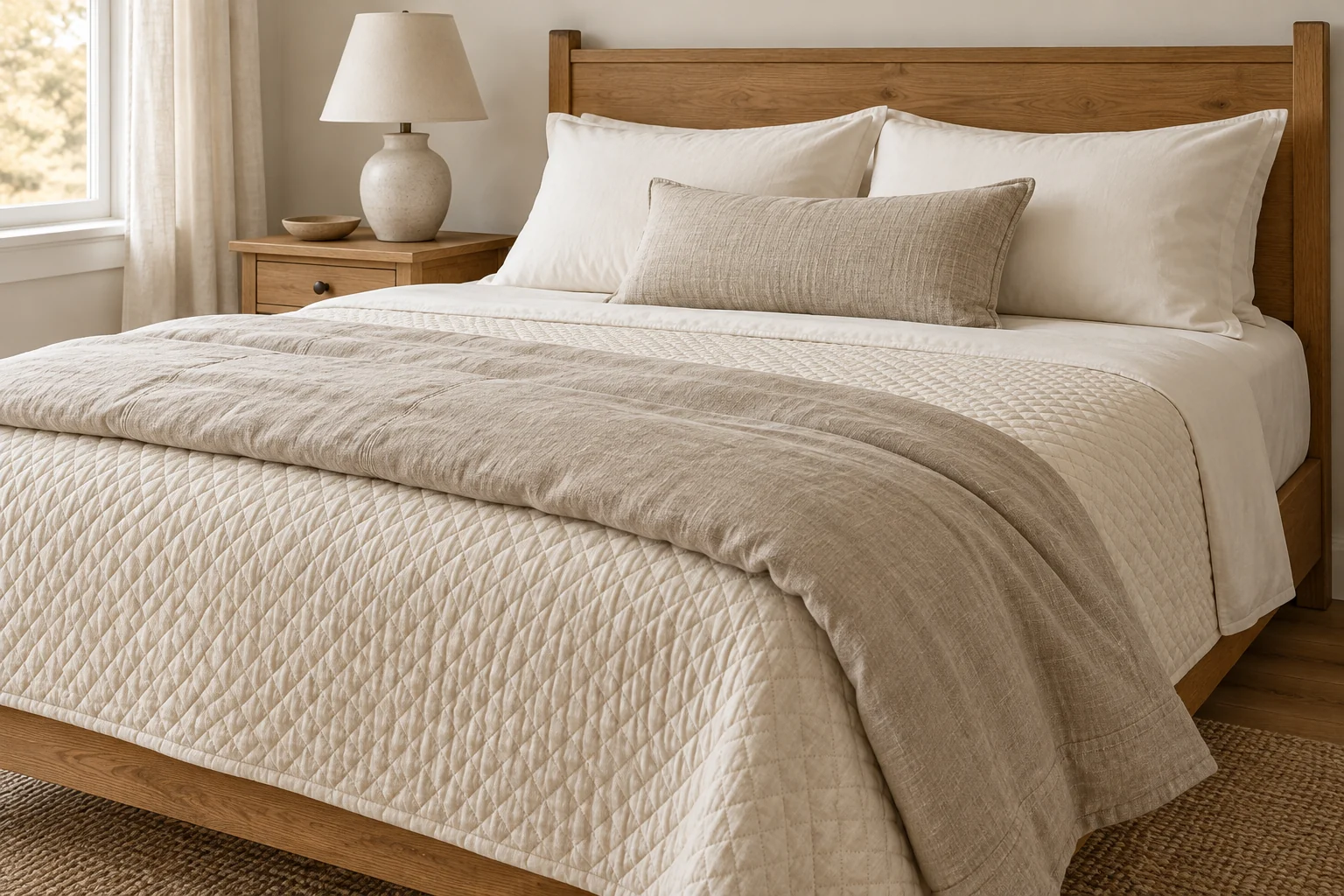
This is a useful starting point with honey oak, weathered wood, or a woven headboard. Compare the whites together before ordering: a blue-white sheet can look noticeably cooler against a yellow-cream quilt. If that contrast bothers you, separate them with an oatmeal layer or keep the main pieces in a similar undertone.
Keep it practical: cream is a color choice, not a promise of easier upkeep. Choose washable pieces according to their actual care labels. If you already own white sheets, keep them and change the visible top layer first.
2. Use ticking stripes for a cleaner modern farmhouse look
The recipe: plain white sheets + a stone-colored quilt + charcoal ticking-stripe shams + one rust or tan throw.
Narrow, evenly spaced stripes bring structure to relaxed bedding. Put them on the shams or a folded blanket rather than every surface. A mostly plain bed leaves room for the line of a black metal frame or a simple upholstered headboard to show.
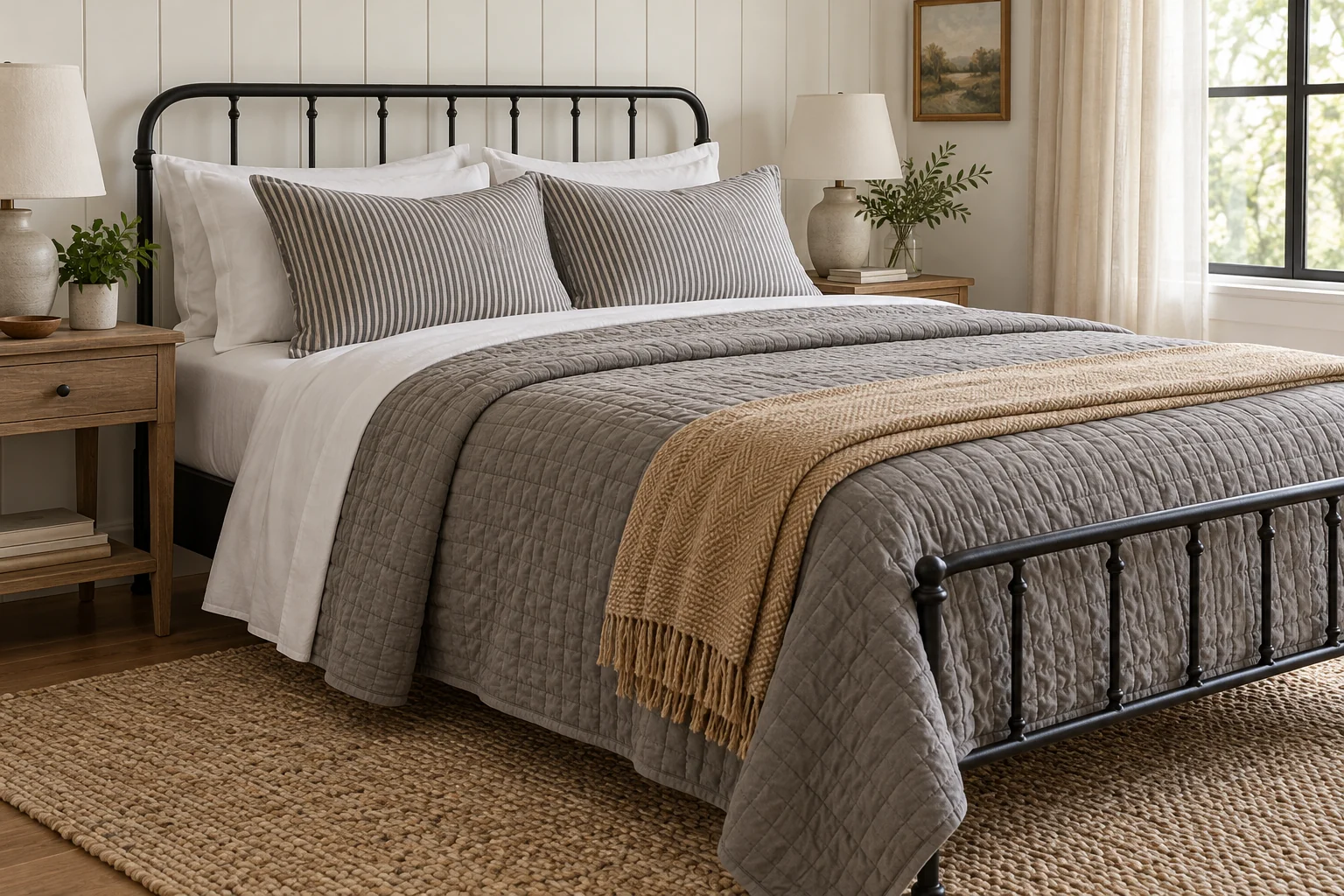
If you prefer buffalo check, use it in the same accent position. Avoid adding a large check, a high-contrast stripe, and a bold floral at equal strength; pick the one you want to notice first. For a warmer version of clean-lined styling, see our modern decor guide.
Keep it practical: start with your sleeping pillows and one pair of shams. Add a decorative cushion only if you have somewhere convenient to put it at night. The right pillow count is one you will reset willingly.
3. Pair sage and ivory without making everything match
The recipe: ivory sheets + a sage quilt + natural linen-colored shams + a small muted botanical cushion.
Let the sage quilt be the main block of color. Repeat a little green in one smaller piece rather than ordering every layer in the same shade. Natural beige, cream, and a restrained botanical print keep the combination from feeling like a packaged set.
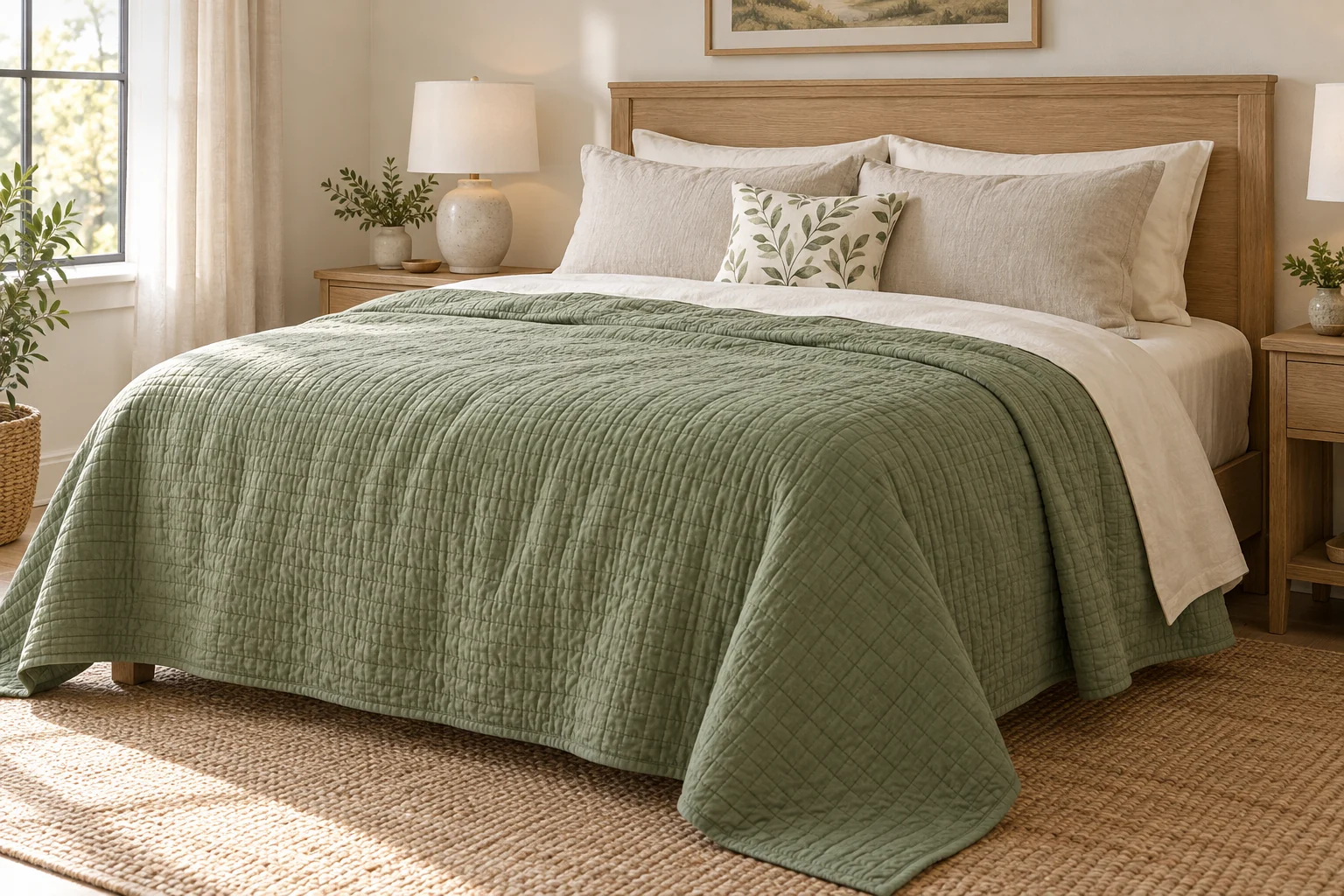
With a dark wood headboard, leave a band of ivory visible near the pillows. With a pale wood bed, a slightly deeper sage can make the bedding stand apart. Test the combination beside your actual wall and curtains; green can look different under different light.
Keep it practical: when the room is warm, use the quilt as the main cover if its warmth suits you. Bring back a duvet when you need it rather than leaving unused heavy layers on the bed for appearance alone.
4. Make a patchwork quilt the focal point
The recipe: a patchwork quilt + plain sheets in one light quilt color + solid shams + an optional simple woven blanket.
A quilt with several fabrics already supplies pattern and color. Give it a quiet background. If the patches include faded blue, cream, and brick red, try cream sheets and faded-blue shams instead of introducing a fourth accent color.
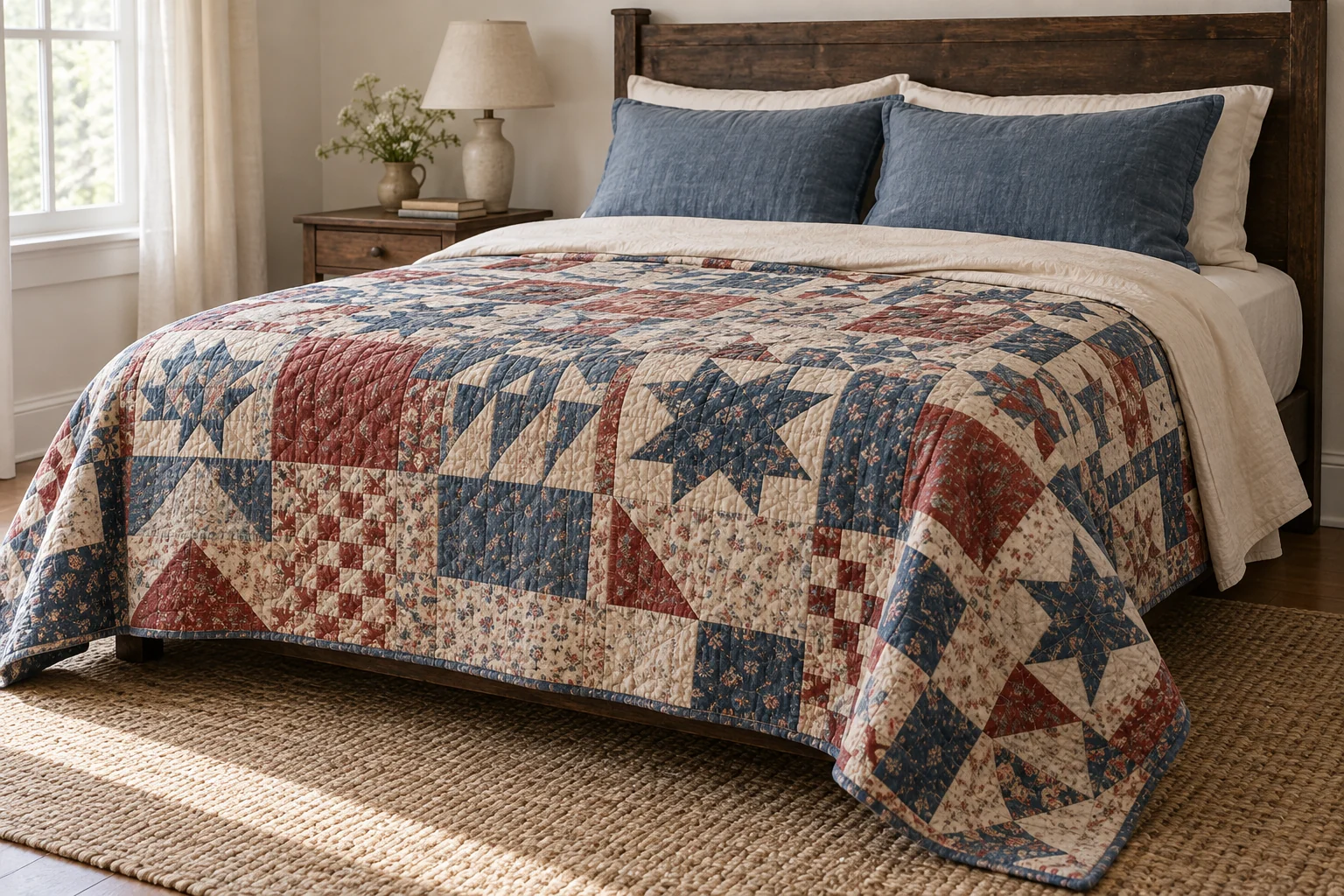
Use the quilt across the full bed when you want the pattern to lead. Fold it at the foot when you want a smaller dose, with the most interesting patchwork facing outward. You do not need distressed furniture or antique accessories to make it belong.
Keep it practical: a genuinely old quilt needs its own care assessment. Do not assume that a handmade or inherited piece can go through the same wash as modern sheets. If it is fragile, display it away from daily wear and use a washable contemporary quilt on the bed.
5. Balance a floral duvet with plain, useful layers
The recipe: a small-scale floral duvet cover + plain cream pillowcases + a solid dusty-blue or muted-rose coverlet + little or no extra trim.
This version suits a painted wood or iron bed and readers who want a softer country look. Choose a print with some open background so the pattern has breathing room. Echo one flower or leaf color in the folded coverlet, then stop.
If the duvet has ruffles, keep the pillowcases and quilt edges simple. If you prefer a straighter silhouette, let a fine floral print supply the softness. A plain bed skirt is optional when you want to conceal an unattractive base; it is not a requirement of farmhouse style.
Keep it practical: if your curtains or wallpaper already have a strong floral, try a plain duvet and put the smaller botanical accent on a pillow instead. The bed can support a patterned room without competing with it.
How to layer a farmhouse bed for everyday use
A styled bed should still be straightforward to sleep in. Use this order as a starting point and remove anything you do not need:
- Fit the sheet first. Check that the fitted sheet accommodates the mattress and any topper. Smooth the corners before adding decorative layers.
- Add a flat sheet if you use one. Leave enough at the head to turn a clean band over the top cover. Skip it if your usual bedding routine does not include one.
- Choose the main sleeping cover. Use a quilt, blanket, or duvet according to your comfort and the room. Farmhouse is a visual style, not a required warmth level.
- Add one contrasting layer. Fold a quilt over a plain duvet or place a throw across the foot. Show enough of each texture to make the difference visible.
- Finish with the pillows you actually want. Stand sleeping pillows at the back, add shams if desired, and place one smaller cushion in front. Leave some headboard visible.
If you are starting with the bed itself, our mattress cleaning and protection guide covers the maintenance side of a bedding refresh.
Mix patterns by changing scale
Try one clear main pattern and one quieter supporting pattern. A larger patchwork design can sit beside a very fine ticking stripe if they share a color. A tiny floral can work with a plain quilt whose stitching supplies texture. Place samples or your existing pieces together on the bed; if everything asks for attention, remove one patterned item before adding another.
Check the drop before you buy a quilt or duvet
Size labels alone do not tell you where a cover will end. Measure the mattress width and length, its depth, the bed frame, and the amount of side coverage you want. Read the manufacturer’s actual finished dimensions, and check the duvet cover and insert together.
For a centered cover, a useful starting calculation is (cover width − mattress width) ÷ 2 = approximate drop on each side. For example, a 92-inch-wide quilt on a 60-inch-wide mattress gives about 16 inches per side before allowing for the way it drapes. A thick mattress, raised frame, or tucked styling can change the result. This calculation does not establish the foot-end coverage; check the length separately and compare it with the furniture.
Avoid automatically sizing up. A larger cover may hide a wood side rail you wanted to show, drag on the floor, or be too bulky for your washer. Follow the bedding care instructions and your machine’s capacity guidance.
Refresh the look without replacing the whole set
Make the change where it will be most visible. If your sheets are comfortable and fit well, keep them. If the duvet is still useful but its pattern no longer suits the room, consider a compatible cover rather than replacing the insert. If the bed already has a strong pattern, one solid quilt can settle the whole combination.
Before buying, check fiber content, finished dimensions, care instructions, and what the package includes. Shams, pillow inserts, sheets, and duvet inserts may be sold separately. The FTC’s textile-labeling guidance explains required fiber-content information for covered textile products; use the label to assess the actual material rather than relying on a style name such as “linen look.”
For seasonal changes, keep the color scheme and adjust the useful layers. In warmer weather, you might store the duvet and use the quilt. In cooler weather, add a blanket or a suitable insert. Choose the combination for your room and comfort rather than copying every layer in a photograph.
Common farmhouse bedding questions
Does farmhouse bedding have to be white?
No. Oatmeal, sage, muted blue, soft rose, and earthy reds can all work. Give the palette a clear base, and repeat an accent rather than using unrelated colors on every layer.
Can I use a comforter instead of a quilt?
Yes. Keep the comforter as the main cover and add farmhouse character through a striped pillowcase, woven throw, or folded quilt. You do not need to replace a comfortable main cover simply to fit the style.
How do I keep the bed from looking overdecorated?
Remove a layer or cushion and see whether the main texture or pattern reads more clearly. Start with plain sheets, one main cover, and one accent. Add more only when it improves the look or serves a practical purpose.
Choose one of the five recipes, lay out what you already own, and identify the single missing piece. A bed that you enjoy using and can remake easily will carry the relaxed farmhouse feeling better than a complete set bought all at once.

Ethan Miller
Ethan Miller writes about home improvement, interior design, cleaning, and everyday living at Home & Living Daily. He shares practical tips and simple ideas to help readers create more comfortable and functional homes.