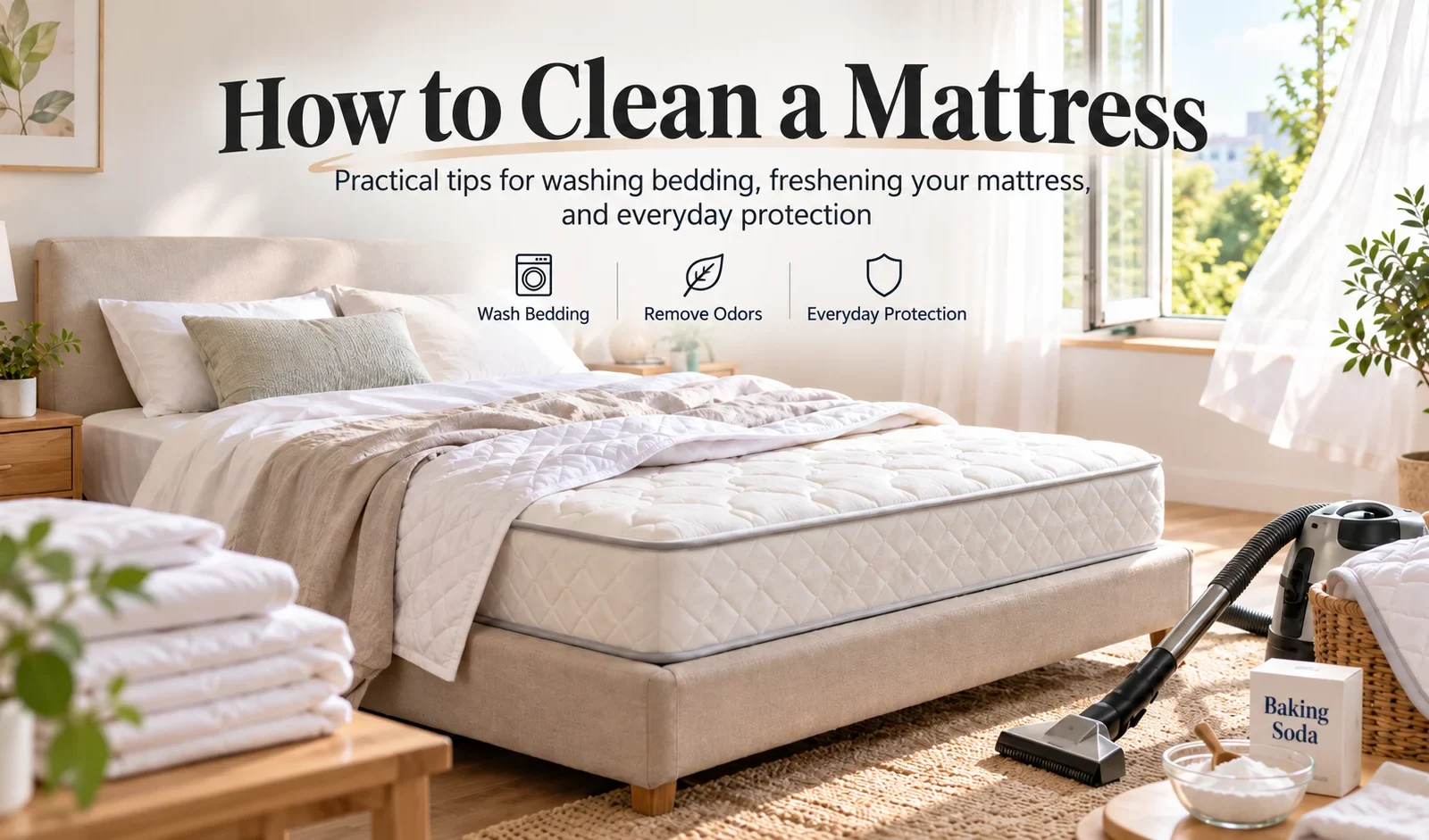
If your sheets are clean, does that mean your mattress is clean too?
Not necessarily. Sweat, dead skin cells, dust, and everyday debris can gradually build up in your bed and contribute to stale or musty odors. Because a mattress usually stays covered with sheets and bedding, it is also one of the easiest parts of the bedroom to overlook during routine cleaning.
A good mattress-care routine does not have to be complicated. Regularly washing your sheets, airing out the mattress, vacuuming the surface, and using a mattress protector can all help keep your sleeping environment fresher.
More importantly, consistent maintenance is usually more useful than waiting until odors develop and then looking for a quick fix.
Start With the Sheets to Prevent Odor Buildup
Think of your sheets as the clothing your mattress wears.
While you sleep, sweat and body oils come into contact with the bedding. Over time, sheets can start to smell less fresh, and if they are not washed regularly, those odors may also affect the mattress underneath.
A practical routine is to wash your sheets every one to two weeks, depending on your sleeping habits, climate, and personal needs.
If your bedroom or bed starts to smell stale, the bedding is one of the first places worth checking.
Let the Mattress Air Out When You Change the Sheets
After removing your used sheets, you do not have to put a fresh set on immediately.
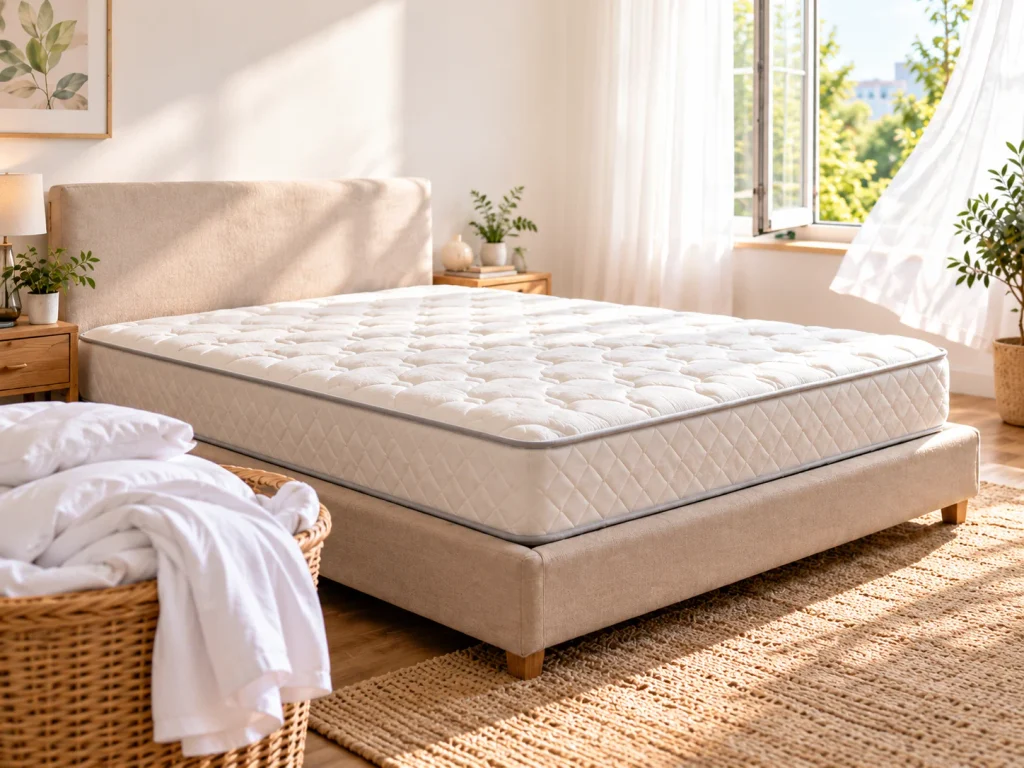
Instead, use the time while the bedding is being washed to let the mattress breathe. When the weather and indoor conditions allow, open a window or improve air circulation in the room.
Because mattresses spend most of their time covered, leaving the surface exposed for a while during sheet changes is a simple habit that can help reduce trapped moisture and stale odors.
Vacuum the Mattress Surface and Seams
A mattress may look clean while still holding dust, skin flakes, hair, and other small particles on the surface.
Use a vacuum cleaner with an upholstery or fabric attachment to clean the main surface. A crevice tool can be useful for seams, tufting, quilted areas, edges, and deeper indentations.
Work systematically across the mattress, moving from top to bottom and from one side to the other so that you do not miss any areas.
The goal of this step is to remove loose surface debris rather than deep-clean the internal layers of the mattress.
After vacuuming, allow the mattress to continue airing out before replacing the bedding.
Using Baking Soda for Mattress Odors: Check Your Vacuum First
Baking soda is commonly used as a deodorizing powder for mattresses.
One method is to lightly and evenly sprinkle baking soda over the mattress surface, leave it for around 30 minutes, and then vacuum it away.
However, baking soda is a very fine powder, and not every household vacuum cleaner is designed to handle large amounts of fine dust.
Before using this method, check the manufacturer’s instructions for your vacuum. Do not assume that a vacuum is suitable simply because it is expensive or has strong suction.
If the manufacturer advises against vacuuming fine powders, it is better to choose another deodorizing method.
Prioritize Fresh Air and Clean Bedding Over Spraying Vinegar
Another common mattress-cleaning tip online is to mix equal parts white vinegar and water, spray the solution onto the mattress, and allow it to air-dry.
For routine mattress care, however, good ventilation and regularly washed bedding are often the better habits to prioritize.
Adding unnecessary moisture to a mattress can make drying more difficult, especially in humid rooms or on thick mattresses. If you use any liquid cleaning solution, apply it sparingly and make sure the mattress dries completely before covering it again.
Use a Mattress Protector After Cleaning
Once the mattress is clean and dry, a mattress protector can make future maintenance much easier.
There are fitted-sheet-style protectors as well as encasement-style protectors that cover the entire mattress. Depending on the product, these may provide a waterproof or moisture-resistant barrier that helps prevent sweat, spills, and other contaminants from reaching the mattress directly.
When shopping for one, check the product specifications carefully. A regular mattress cover or pad should not automatically be assumed to be waterproof.
A simple combination of clean bedding, regular ventilation, occasional vacuuming, and a suitable mattress protector can go a long way toward keeping a mattress fresh and easier to maintain.

Ethan Miller
Ethan Miller writes about home improvement, interior design, cleaning, and everyday living at Home & Living Daily. He shares practical tips and simple ideas to help readers create more comfortable and functional homes.