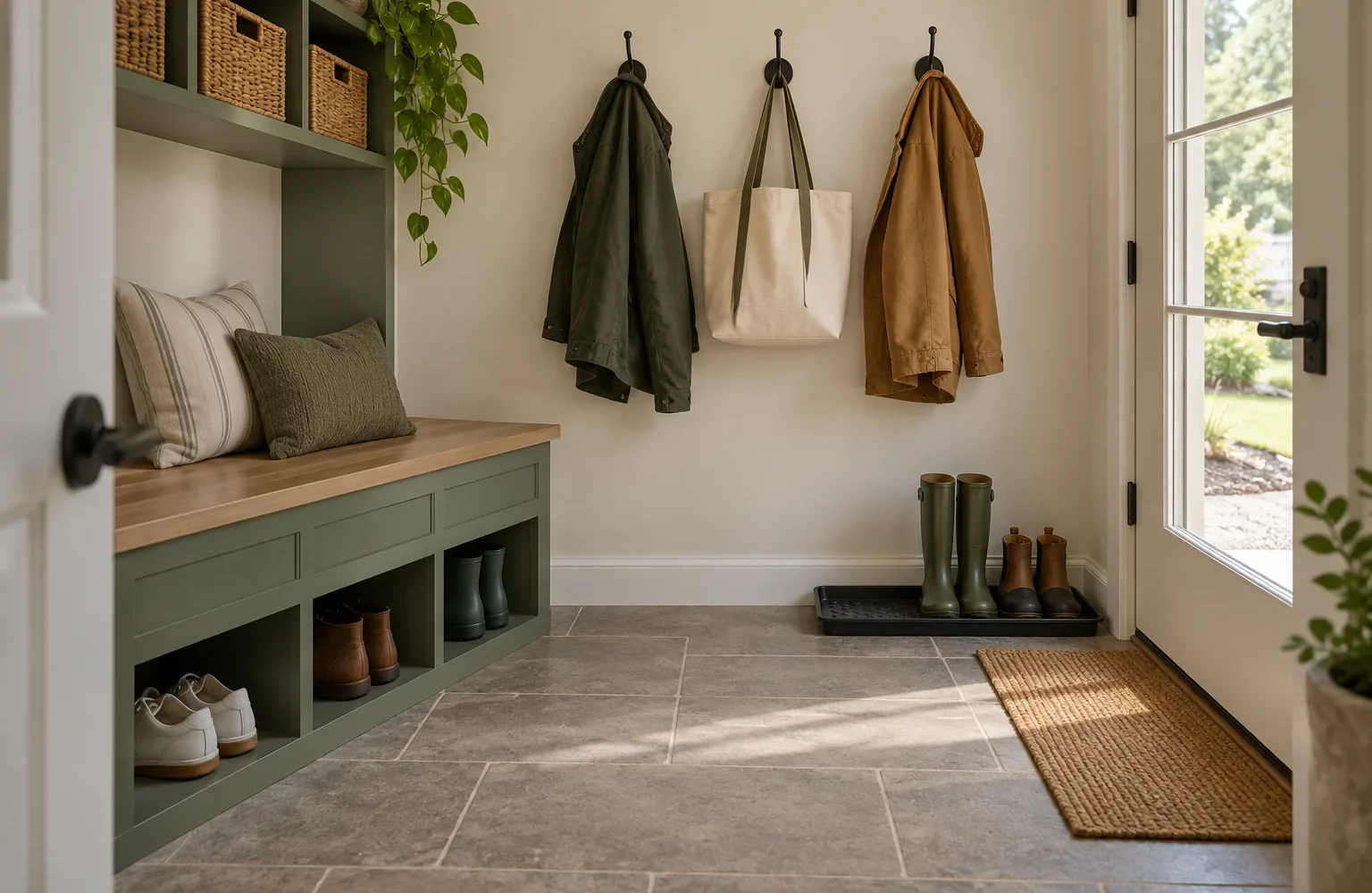
A useful mudroom gives wet shoes, daily bags, and outdoor layers a place to stop before they spread through the house. Start with a clear route through the door, add an easy place to take off shoes, and put the things you reach for every day within comfortable reach. You can build that routine with a bench and hooks, even without a separate room.
These mudroom ideas help you choose storage that fits the way your household arrives home. Decide what needs to live here first; cabinet style and paint color can follow.
Plan the arrival routine before the storage
Watch what happens during a normal arrival. Does someone put a bag on the floor while pulling off boots? Do coats land on a kitchen chair because the closet is too far away? Design for that first pause rather than for an idealized empty room.
Make three small zones: a landing area close to the door for wet footwear, a place to sit or stand while changing shoes, and a dry storage area for coats and bags. They can share one wall. Keep the door swing and the route to the rest of the house clear, including when a drawer is open or a bag hangs from a hook.
Before ordering furniture, mark its footprint with painter’s tape. Open the door, carry groceries through, and have two people pass each other. Include the space used by hanging coats, not just the depth of the hook rail. This trial often reveals that a shorter bench works better than wall-to-wall storage.
Start small with a bench, hooks, and a shoe tray
For a narrow entry or rental, a slim bench, a short hook rail, and a removable tray can handle the essentials. Choose a bench intended for seating, check its load rating, and make sure its legs sit securely on the floor. A decorative console is not automatically a safe seat.
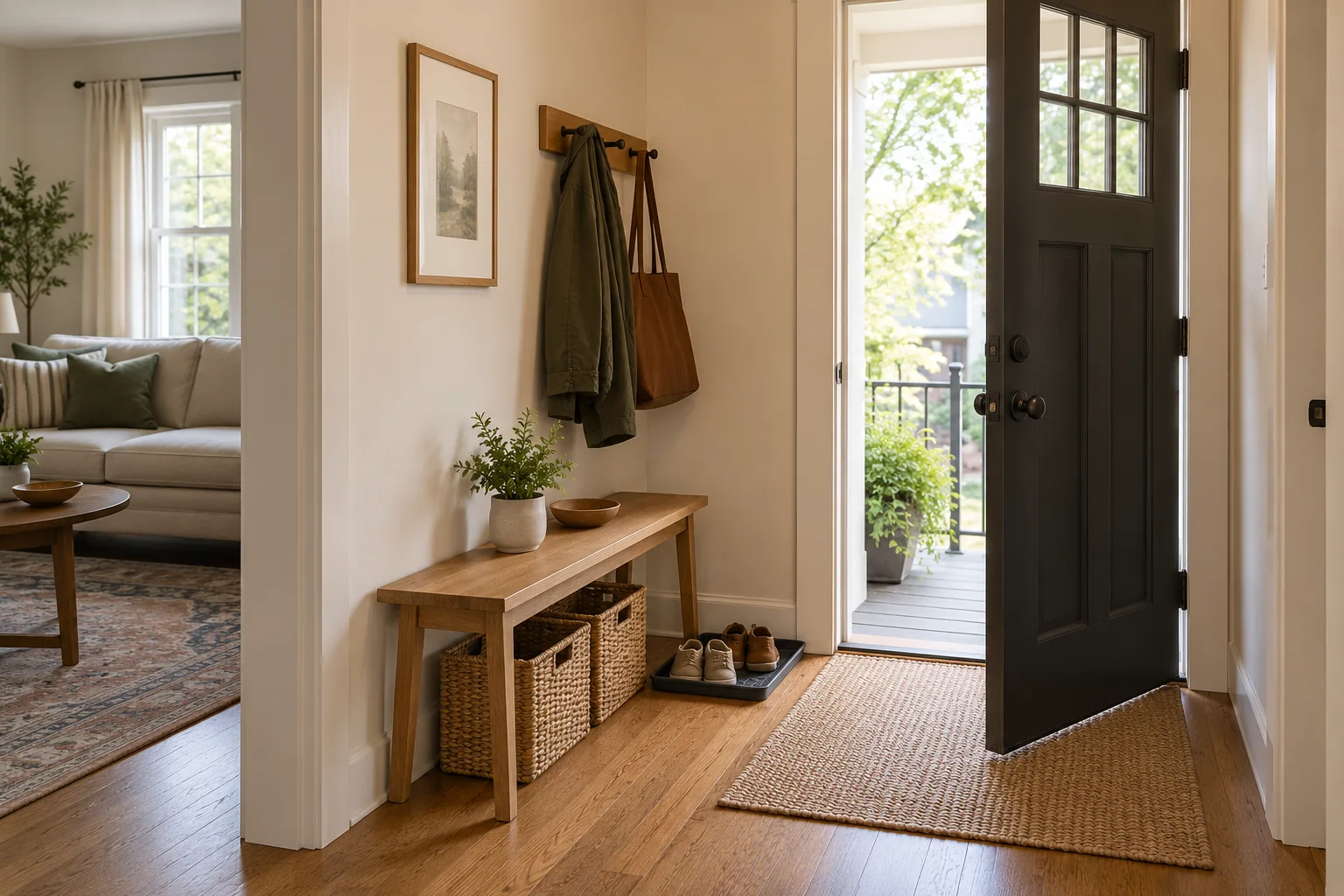
Give the tray enough room for the footwear you actually use. Tall boots, work shoes, and children’s sneakers need different clearances. Store just the current rotation here and move occasional shoes elsewhere. A small entry becomes crowded quickly when it doubles as the household’s entire shoe closet.
If you cannot secure wall hooks or furniture as required, discuss permitted fixings with the landlord. Adhesive hooks are appropriate only for the surface, item weight, and conditions specified by their maker; a heavy backpack may need a different solution.
Use personal bays when several people share the door
A separate bay for each household member makes it easier to see where a bag belongs. This can be a row of hooks with a basket underneath rather than a complete locker system. Put frequently used items at a height their owner can reach comfortably.
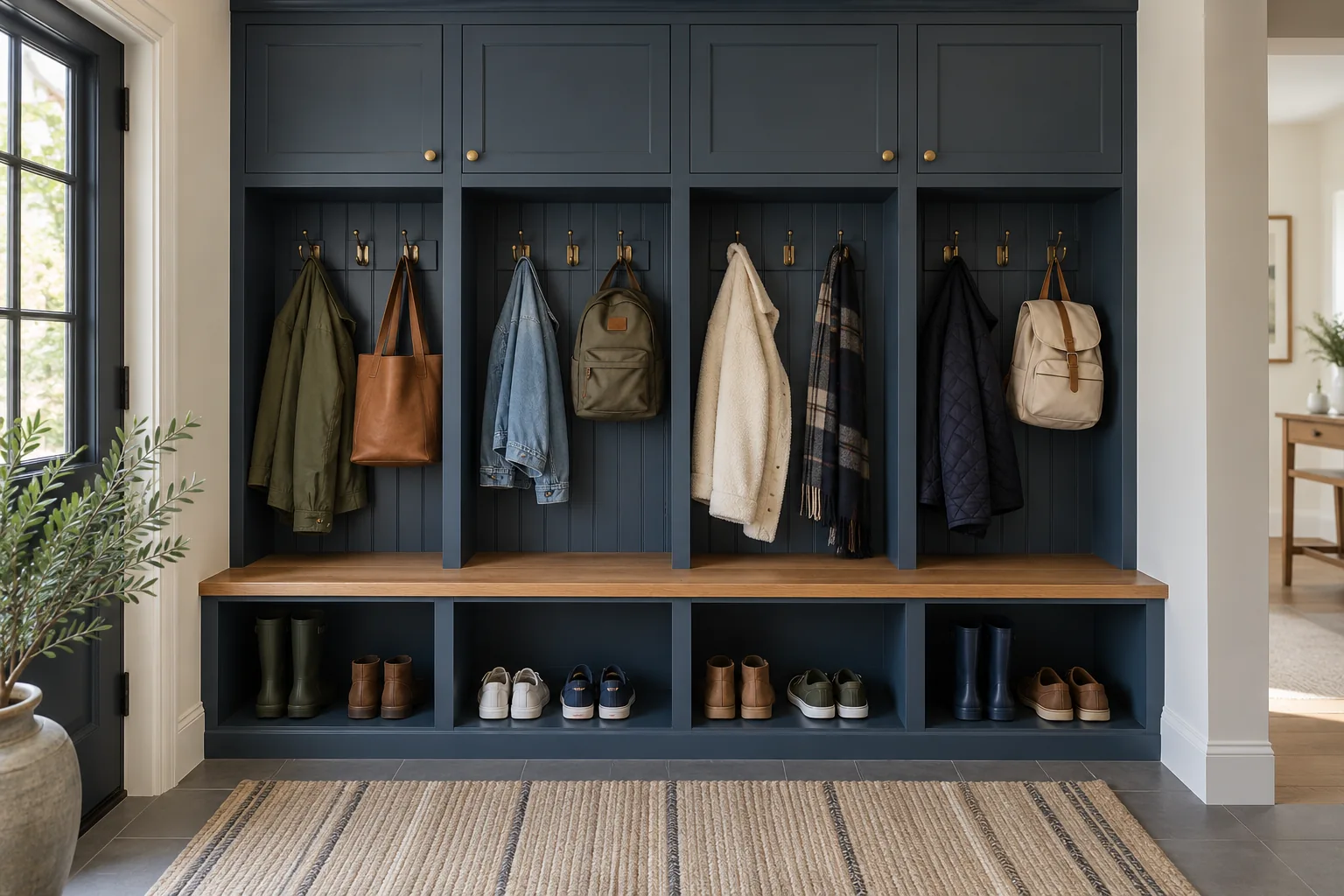
Size each bay around the bulkiest everyday item: a winter coat, school backpack, or sports bag. Leave room between hooks so everything can hang without getting buried. A neat row of tiny hooks will not solve a large-bag problem.
Upper storage suits dry, occasional items such as spare hats or off-season accessories. Keep daily essentials below. Avoid putting tempting objects high up where a child may try to climb for them, and secure storage furniture according to its instructions.
Separate wet gear from dry storage
A removable boot tray near the entrance contains drips and is easier to empty than a deep cabinet is to dry. Let wet coats and shoes dry before closing them away. Avoid crowding damp items together or pushing a soaked mat beneath a bench and forgetting it.
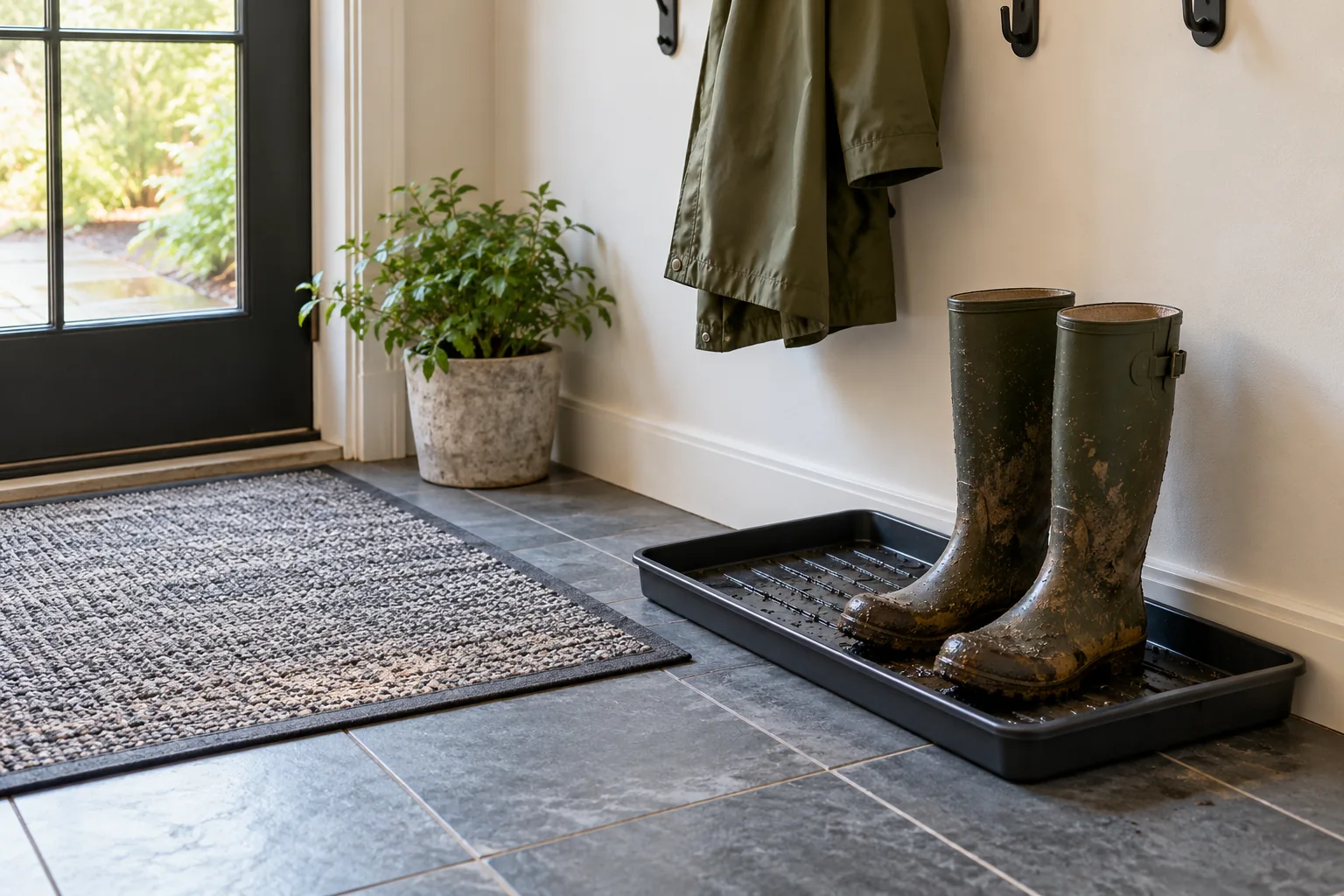
For water-damaged materials, the EPA recommends drying damp or wet surfaces within 24–48 hours and addressing the water source. A mudroom still needs regular drying and cleaning; water-resistant finishes do not remove that need.
Choose a washable mat that lies flat, does not interfere with the door, and suits the floor beneath it. Lift it periodically to check for trapped moisture. If wet gear routinely overwhelms the space, add more drying room before adding more closed storage.
Mix open storage with doors and drawers
Open hooks are convenient because using them takes one movement. Doors hide visual clutter but add a step. A practical compromise is open space for today’s coat and bag, closed space for dry spares, and a small drawer or basket for loose accessories.
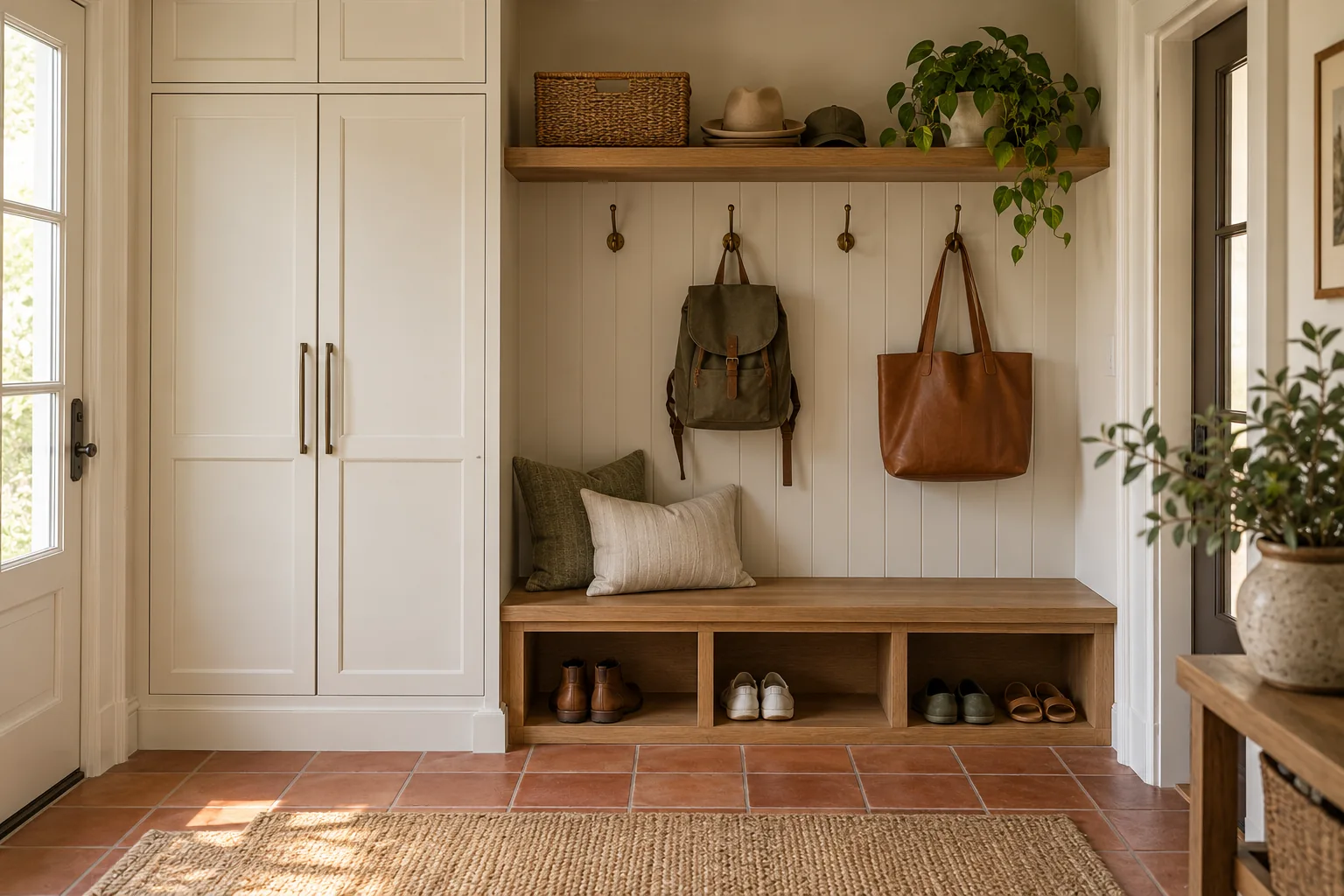
Check whether cabinet doors and drawers can open while someone sits on the bench. Put items you need together near each other: dog-walking gear in one basket, winter gloves in another. Keep keys and small valuables away from an easily reached exterior opening.
Choose finishes for the mess you bring inside
Look beyond a floor’s color. Consider wet traction, cleaning instructions, seams, subfloor requirements, and how the surface meets adjoining rooms. Tile can be a useful choice, but its suitability depends on the particular product and installation. Wood and resilient flooring need care matched to their manufacturer’s guidance.
Our guide to choosing flooring for each room can help you compare those tradeoffs. Order samples and place them beside the existing floor and cabinet finish before committing.
Use a wall finish that tolerates the cleaning it will receive behind hooks and bags. A wood seat can add warmth to painted cabinetry; a washable removable cushion adds softness if wet gear will not soak it. Choose a simple cushion shape you can take off easily rather than upholstery that complicates cleanup.
Make the mudroom feel connected to the house
Repeat one color or material from an adjoining room, then give the mudroom its own practical details. A darker cabinet color can create contrast; a light wall can keep a small space from feeling enclosed. Neither choice replaces useful lighting, especially where you look for shoes or read a small label.
For broader palette and furniture decisions, use our home decor planning guide. Keep decorative objects off the seat and out of the landing area. The best-looking basket is only useful if you can reach it and remember what it holds.
Common mudroom questions
Can a hallway work as a mudroom?
Yes, if the storage leaves a usable passage and does not obstruct doors or required exit routes. Start with one shallow wall zone rather than storage on both sides. If a bench makes circulation awkward, use a smaller seat elsewhere and keep only hooks and a tray at the entrance.
What should stay out of the mudroom?
Items that need different storage conditions, large collections of rarely worn shoes, and anything that blocks the route through the door. Do not let a household drop zone become a permanent home for returns, unopened packages, or overflowing laundry.
How can I improve a mudroom without remodeling?
Remove off-season items, move daily belongings within reach, and trial a tray or basket before buying cabinetry. Live with the arrangement through a busy week. Once you know where the routine still breaks down, buy or build the storage that solves that specific problem.

Ethan Miller
Ethan Miller writes about home improvement, interior design, cleaning, and everyday living at Home & Living Daily. He shares practical tips and simple ideas to help readers create more comfortable and functional homes.