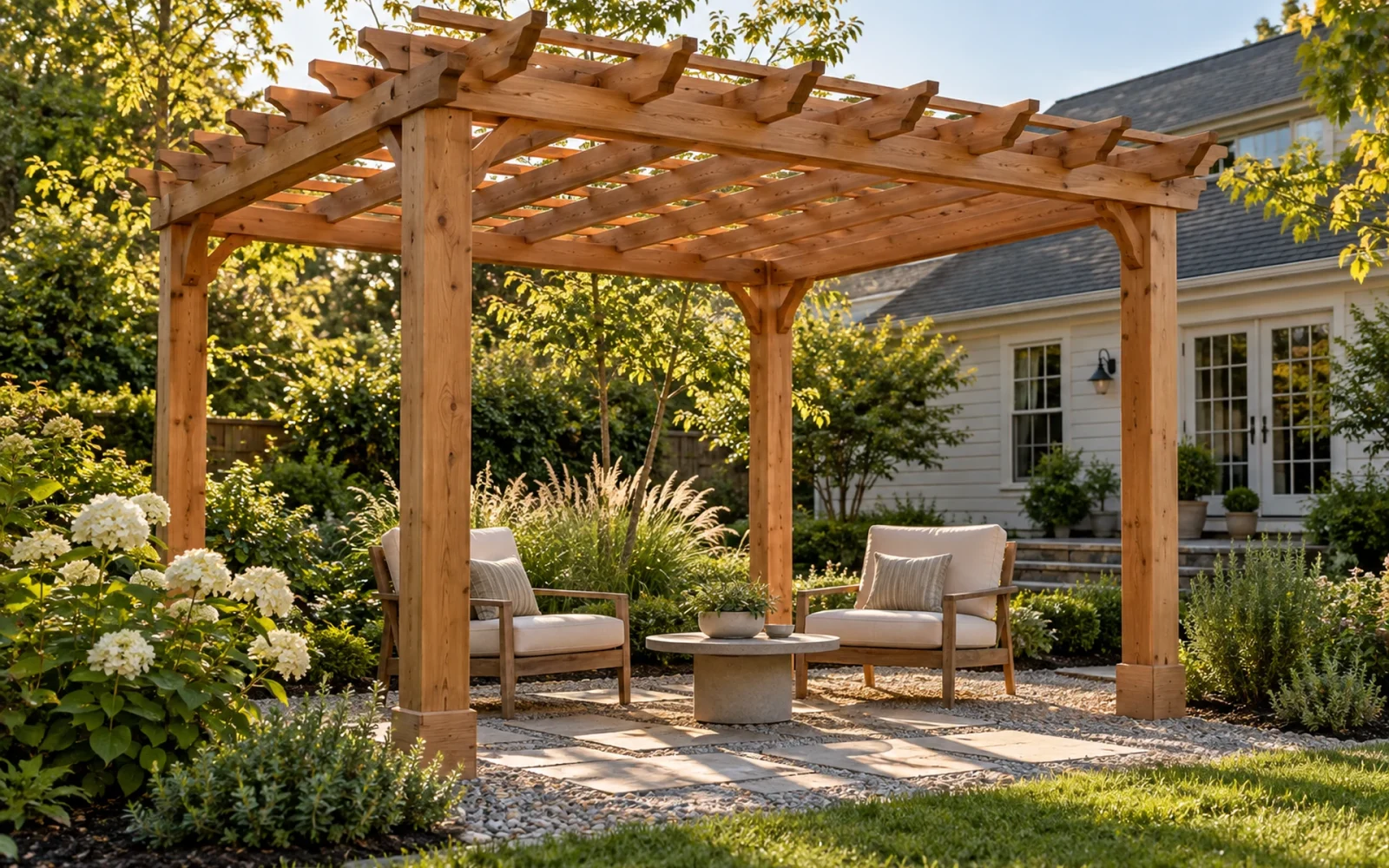
A pergola is an outdoor structure with upright posts supporting an overhead framework of beams and rafters. It creates a defined place to sit, eat, or walk through a garden while keeping the sides open. A traditional pergola has gaps above you, so it provides filtered shade rather than the continuous shelter of a solid roof.
Modern products complicate the definition slightly. Some have adjustable louvers or retractable fabric, and retailers sometimes use “pergola” for structures with permanent roof panels. When choosing one, the useful question is what the overhead system actually does: filter sunlight, block it, or also manage rain.
What makes a structure a pergola?
Look for a frame that defines an outdoor area from above. Posts carry horizontal beams, and rafters or another overhead system span between them. The frame may stand independently in the yard or connect to a building. Walpole Outdoors describes these freestanding and attached forms in its guide to pergolas.
A small trellis against a fence does a different job: it supports plants on a mostly vertical plane. A pergola creates space you can occupy underneath. It can include trellis panels along a side, but those panels are additions to the main structure.
The frame does not make the area an indoor room. Open sides still admit wind, insects, and sideways rain. Furniture and lighting underneath need to suit their actual outdoor exposure, even when there is overhead cover.
Why have an open structure over a patio?
A pergola can organize a space that otherwise feels like furniture scattered on paving. Its posts mark the edges of a dining area, and its overhead frame gives that area a ceiling without enclosing it. This is especially useful on a large terrace where lounging, eating, and circulation share the same surface.
It can also frame a view or mark a transition between the house and garden. Over a path, it gives a route a clear beginning and direction. Over seating, it establishes a destination. Those are design functions; they do not depend on the structure keeping you dry.
Shade is a separate question. With an open frame, the width, spacing, and direction of the overhead members affect where sunlight reaches the ground. The pattern moves as the sun moves. A seat that is shaded at noon may be exposed in late afternoon. Check the spot during the hours you expect to use it before choosing the roof arrangement.
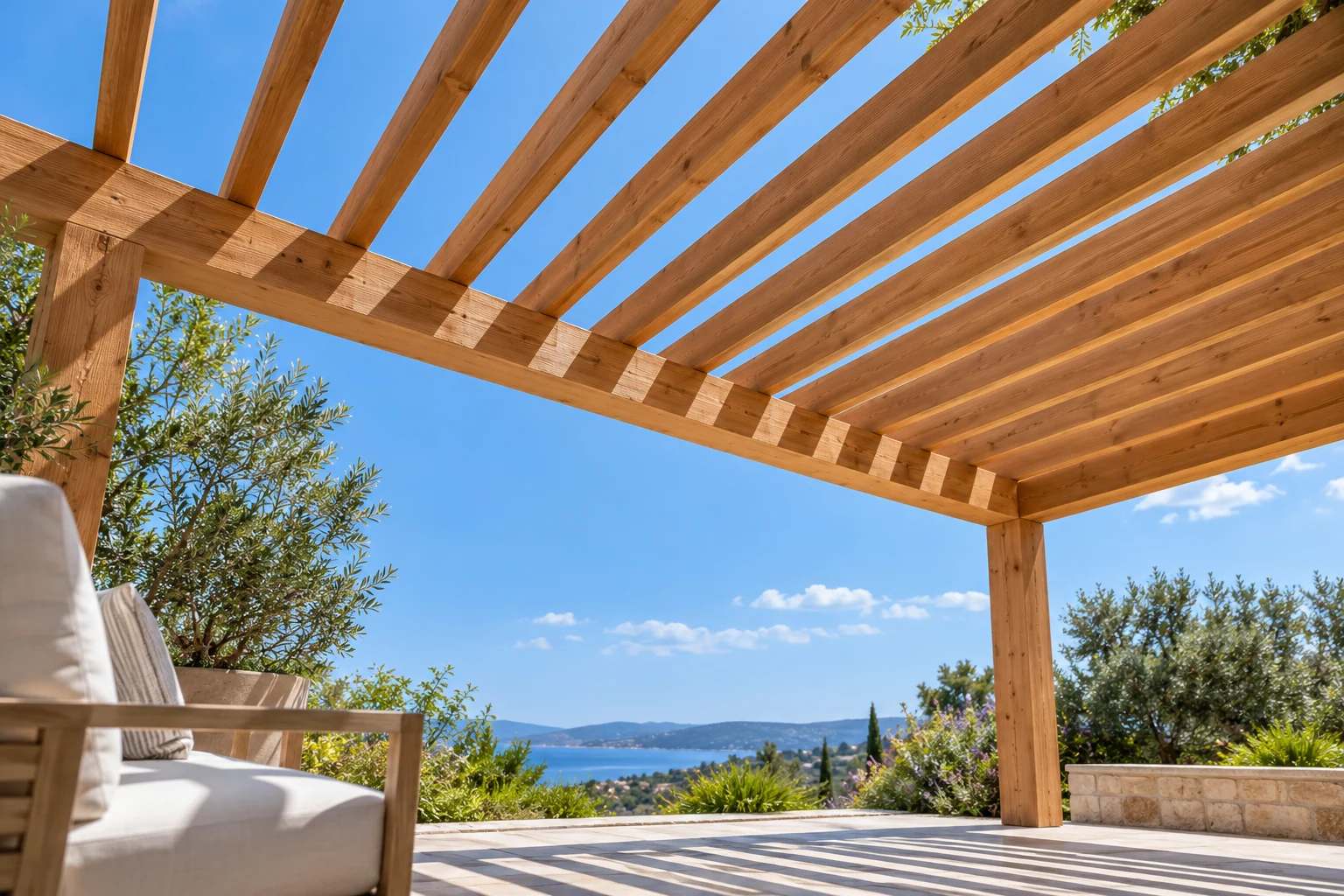
Climbing plants can add seasonal cover, but their mature weight and maintenance needs belong in the plan. Do not assume any frame can support a heavy vine, hanging chair, or swing. Those loads need explicit approval for the structure and its connections.
The overhead design matters more than the name
Traditional open rafters let rain through. Adding closely spaced slats can improve shade, but gaps remain gaps. If you want to leave a dining table set during a passing shower, assess an actual rain-management system rather than the appearance of the frame.
| Overhead arrangement | What to expect | What to check |
|---|---|---|
| Open rafters or lattice | Filtered, moving shade and an open view upward | Sun angles and spacing; no continuous rain cover |
| Retractable fabric | Adjustable shade with a softer appearance | Whether it is shade-only or rain-rated; wind and storage instructions |
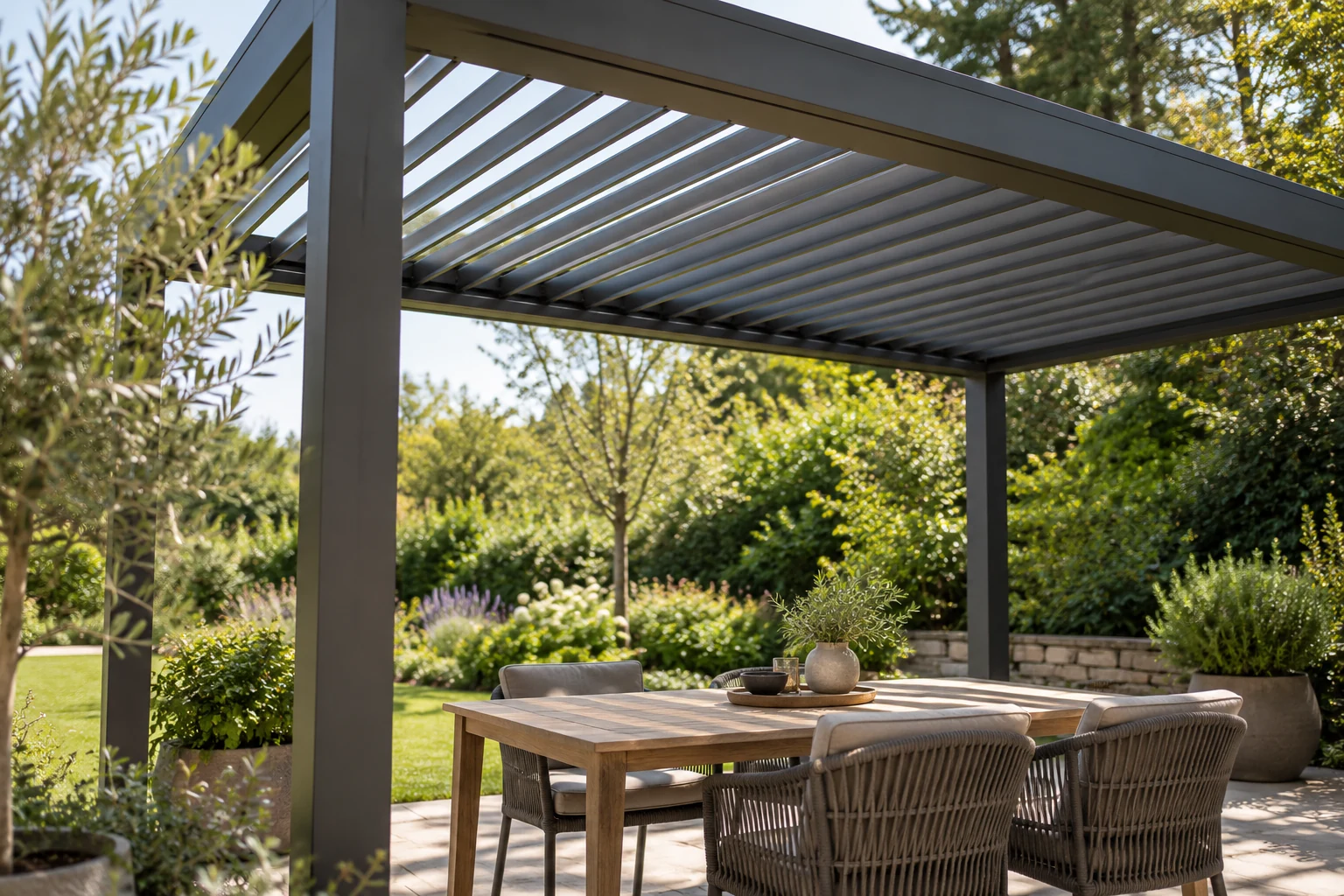
| Adjustable louvers | Variable overhead coverage | Closing position, drainage, operating limits, and maintenance |
| Fixed roof panels | Permanent overhead coverage | Light transmission, runoff, structural design, and local classification |
A closing louvered roof may direct water into built-in gutters, but that capability is product-specific. Mirador distinguishes an open frame from a closing roof with drainage and notes that wind-driven rain can still enter through open sides. A model described as weather-resistant is not automatically an all-weather enclosed room.
Pergola, gazebo, pavilion, or arbor?
These names overlap in catalogs, so compare the physical design as well as the label.
- Pergola: an overhead frame defining a usable outdoor area, traditionally with an open top.
- Gazebo: usually a freestanding garden shelter with a covered roof. It need not be octagonal, despite that familiar shape.
- Pavilion: commonly a larger open-sided shelter with a permanent roof, often used over seating or dining.
- Arbor: a smaller structure marking a gate, entrance, or path, often supporting climbing plants.
- Trellis: a framework for plants, often placed against a wall or fence.
The distinction matters most when it changes your expectations. If the goal is a dry seating area, compare covered structures and their drainage details. If the goal is to frame a garden route or preserve an open feeling, a traditional pergola may be a closer fit. Do not pay for a complex roof simply because it appears in the same product category.
Choose the location before choosing the finish
Place your furniture temporarily and walk around it with the chairs pulled out. The useful space is between the posts, not necessarily the overall roof dimensions in a listing. Roof overhangs, post bases, and beams can make two products with similar advertised sizes feel different underneath.
Then watch the sun and think about runoff. A covered design should discharge water somewhere appropriate, and an attached design should not create a water problem at the house. If the project includes a new paved surface, our guide to outdoor patio tiles explains why the base, drainage, and material approval need to be considered together.
Also check how posts will be supported. A decorative paving surface is not proof that there is a suitable structural foundation below it. Existing decks and slabs need assessment for the proposed loads and anchoring method. Permit requirements, setbacks, and homeowners association rules depend on the location and project; the product name does not settle them.
What ownership will involve
Wood brings visible grain and a finish that can change outdoors. Coated metal and vinyl offer different appearances and care requirements. Moving louvers, fabric tracks, gutters, and accessories add their own inspection and cleaning tasks. Ask for the actual care instructions before deciding that a design will be low-maintenance.
Compare complete proposals: frame, roof, foundations, installation, drainage, and any electrical work. A simple open frame and a motorized roof solve different problems, so their prices are not directly comparable. Claims that a pergola will increase a home’s sale value also need local evidence rather than a blanket promise.
A useful final test is to finish this sentence: “We want this area to work better when…” If the answer is “we eat outside in the evening,” begin with furniture clearance and the evening sun. If it is “it starts raining,” begin with the roof and drainage. That makes the pergola a response to how you use the garden, rather than an attractive frame waiting for a purpose.

Ethan Miller
Ethan Miller writes about home improvement, interior design, cleaning, and everyday living at Home & Living Daily. He shares practical tips and simple ideas to help readers create more comfortable and functional homes.