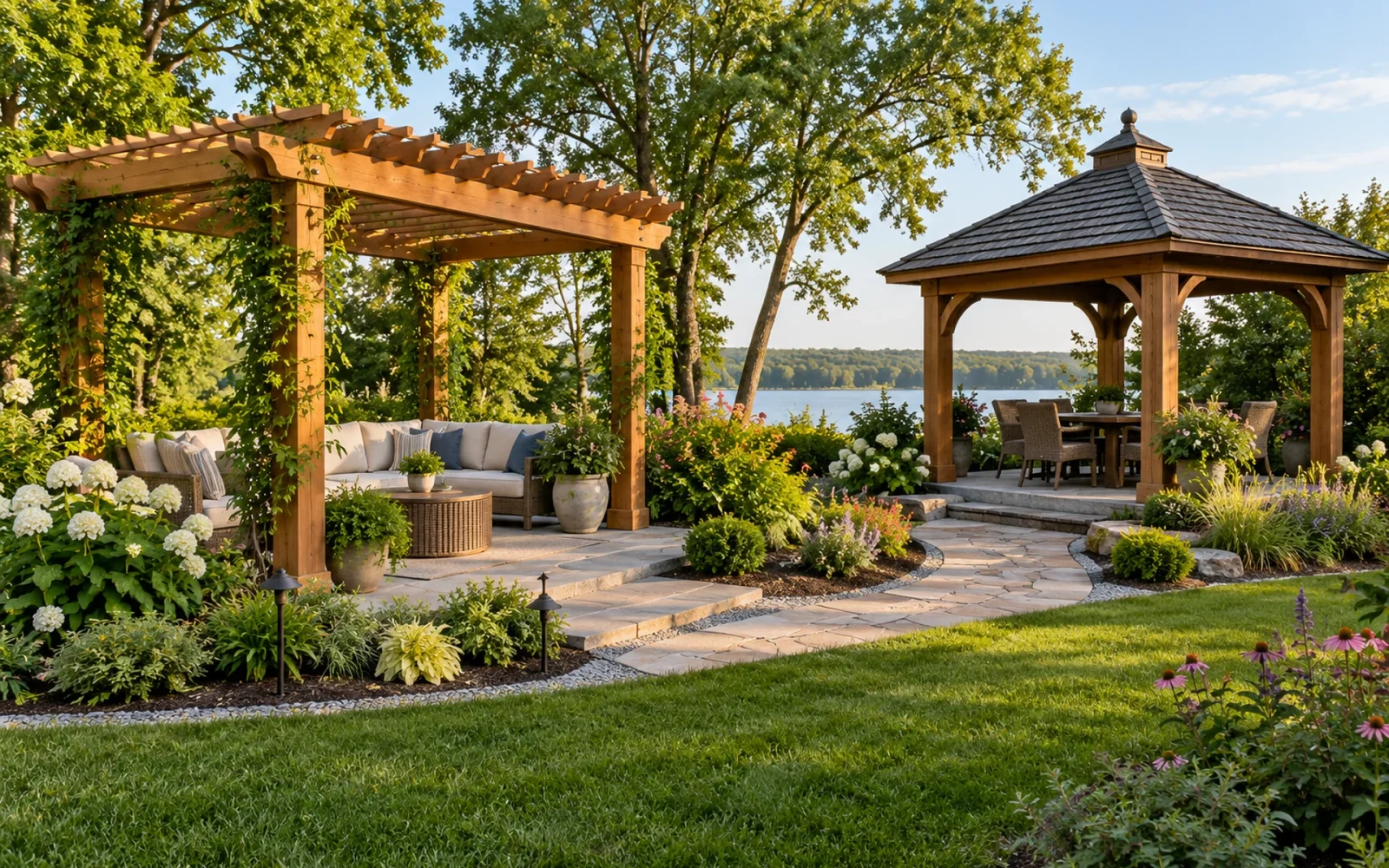
The main difference between a pergola and a gazebo is the overhead cover. A traditional pergola has an open framework of beams or rafters that creates partial shade. A gazebo generally has a continuous roof that provides a more sheltered sitting area. Modern louvered pergolas blur that distinction, so compare what the actual roof does rather than buying on the name alone.
Choose an open pergola when you want a defined outdoor space that still feels connected to the garden. Look more closely at a roofed gazebo when your priority is consistent overhead coverage. Either choice still needs to fit your furniture, site, and local weather conditions.
Pergola vs. gazebo at a glance
| Decision | Traditional open pergola | Roofed gazebo |
|---|---|---|
| Overhead shade | Partial; changes with the rafters and sun angle | More continuous beneath the roof; sunlight can still enter from the sides |
| Rain | Passes through an open roof | Roof sheds rain, but open sides can admit wind-driven water |
| Garden character | Light framework; can frame a path, table, or seating zone | A more visually substantial destination or outdoor room |
| Possible additions | Approved canopy, louvers, screens, or supported planting | Approved curtains, screens, lighting, or accessories |
| Installation | Requires a suitable support and anchoring design | Also needs a suitable foundation, anchoring, and roof-water plan |
| Price comparison | Include the roof or shade additions you actually need | Compare equivalent size, materials, foundations, and installation scope |
Shape is a less reliable shortcut. Gazebos can be rectangular as well as polygonal, and a pergola may be attached to a house or freestanding. A built-in raised floor is not a feature you should assume every gazebo kit includes.
Ask what you want the roof to accomplish
If you want somewhere to read among plants, an open pergola can define the seat without replacing the open sky. Its framework also gives the garden a focal point when viewed from indoors. Our guide to what a pergola does explains the basic forms and uses.
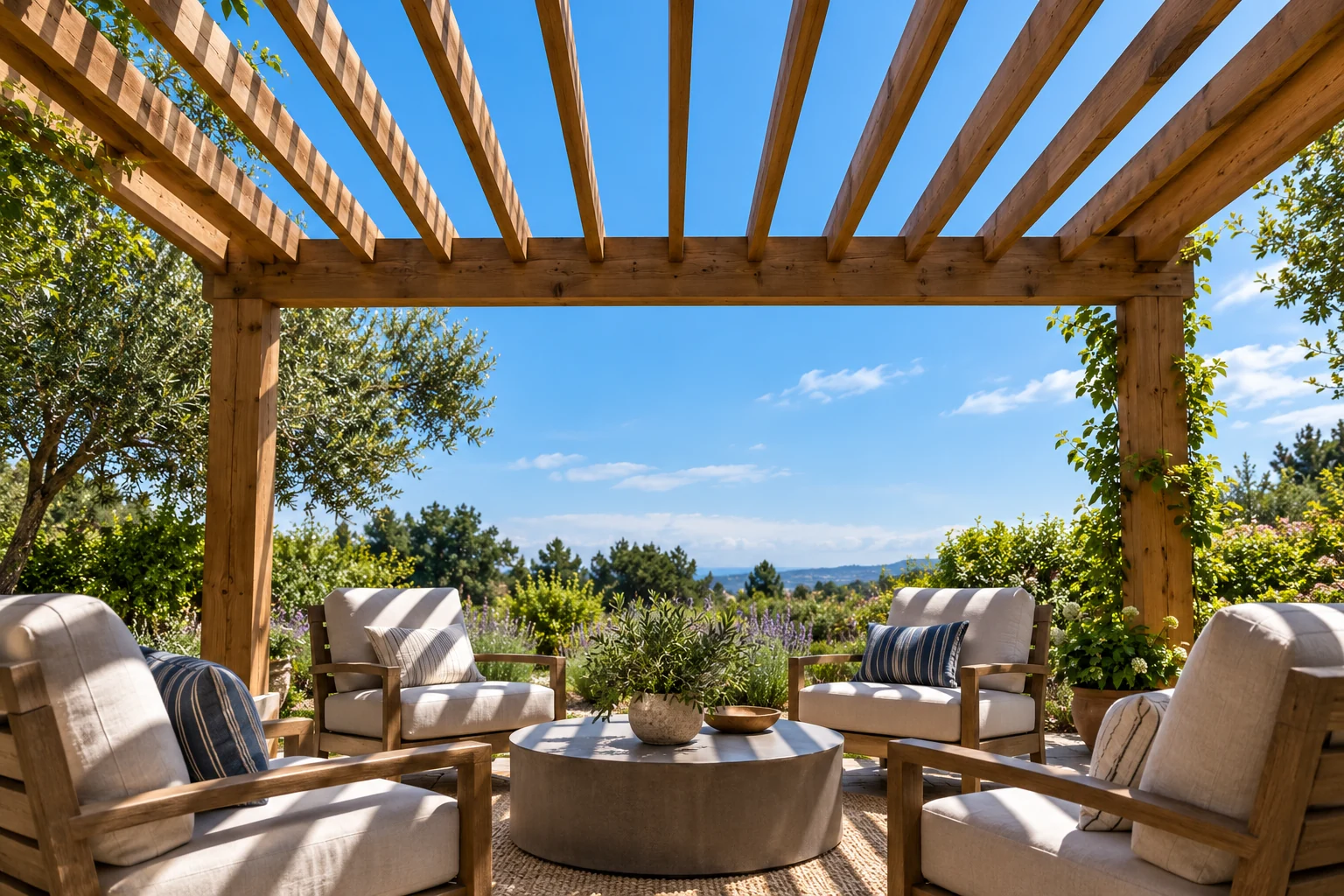
If the problem is a dining table exposed to midday sun and occasional rain, a continuous roof may be more useful. But stand under the proposed position at the hours you will use it. A roof directly above the table does not necessarily block low afternoon light from the west.
A cloth canopy can change a pergola’s shade, but its rain performance depends on its material, slope, and product design. Do not equate shade fabric with a watertight roof. Likewise, plants growing overhead provide seasonal, variable cover rather than a predictable rain barrier.
Backyard Discovery’s comparison distinguishes an open pergola roof from a closed gazebo roof and notes that a soft shade canopy does not necessarily keep out rain or support snow. That distinction is more useful than assuming all covered-looking structures perform alike.
Where does a louvered pergola fit?
A louvered pergola uses adjustable roof blades so you can admit light or close the overhead surface. It is a different purchase from a basic timber framework. Some systems include channels for collecting and directing rainwater; performance depends on the specific model and installation.
If this is the option you want, ask how water exits the roof and posts, what happens during wind-driven rain, and what the operating instructions require in snow, frost, or strong wind. Check whether the stated dimensions describe the roof or the usable area between posts.
The word “pergola” alone cannot tell you those answers. Compare the actual technical information and installed scope against the gazebo you are considering.
Check the furniture footprint before the structure footprint
Mark the inside post positions on the ground, then place the furniture in that space. Pull out the dining chairs, recline the loungers, and walk the route from the house. Posts, braces, screens, and curtain tracks may take up space that is not obvious in a photograph.
Next check the roof overhang and height against the yard. Will the structure cover a window, dominate a small patio, or discharge water beside a doorway? An attractive elevation drawing does not show how it feels to walk past a front corner every day.
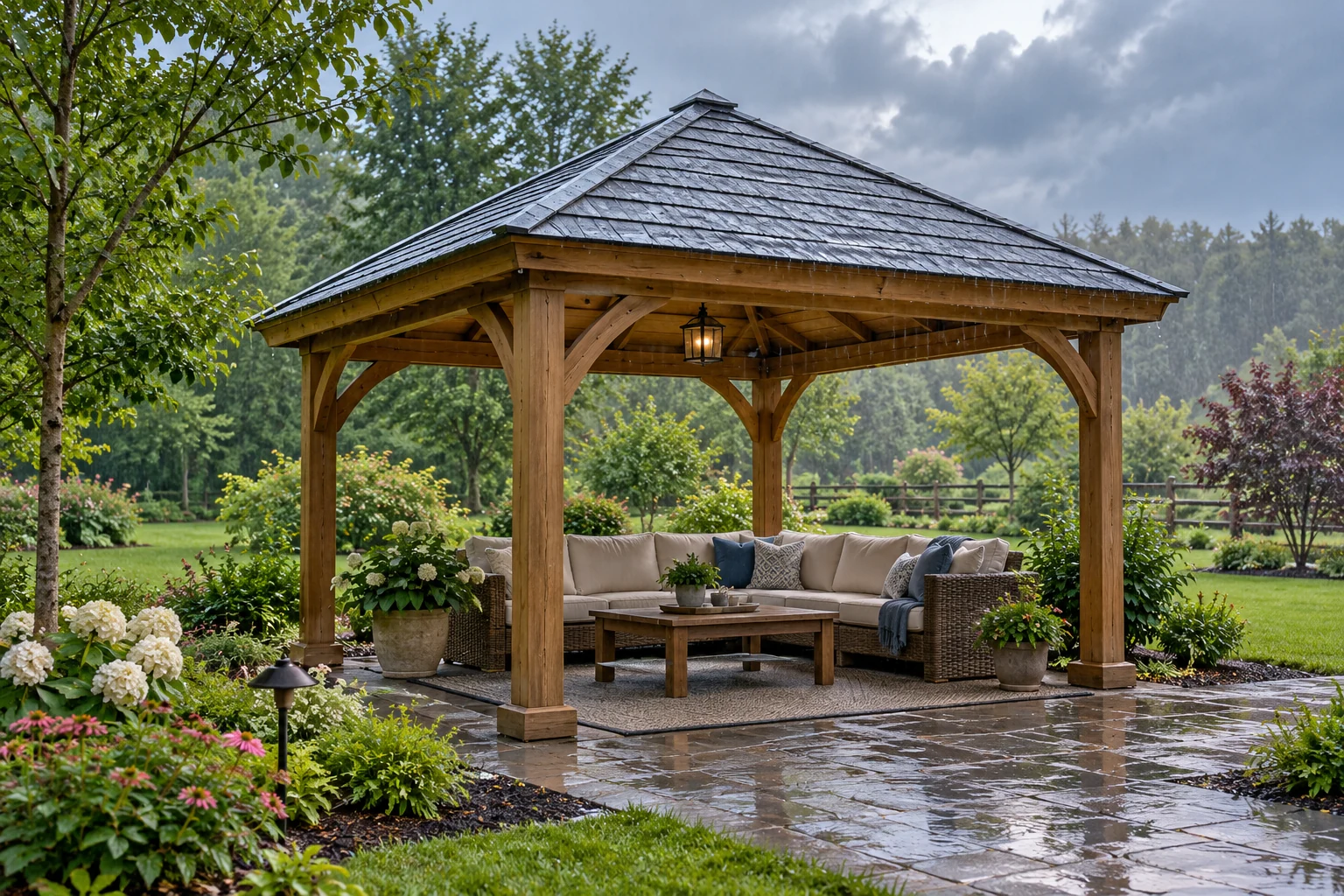
For a remote garden seat, consider the path and carrying food, cushions, or drinks from the house. For a structure close to the house, think about daylight, mounting, and water management as part of the same decision.
Compare complete prices and ongoing care
A simple open frame may cost less than a similarly sized roofed structure, but that does not establish a universal pergola-versus-gazebo price order. Add a motorized roof, premium finish, foundations, or difficult access, and the comparison changes.
Request prices that identify the structure, delivery, ground preparation, foundations or approved anchors, assembly, drainage provisions, and any electrical work. Put screens, lighting, and roof accessories on the same basis. A kit price and a complete installation quote are different numbers.
Maintenance also follows the materials and mechanisms. Timber may need finish care. Fabric may need removal or storage. Moving louvers, tracks, and gutters need access for cleaning and inspection. Choose a routine you can actually perform, especially where leaves collect overhead.
Questions to settle before ordering
- Does the exact model provide the shade and rain performance you need?
- Is its usable interior large enough with the chairs occupied?
- Are the wind and snow ratings suitable for your site, with the specified foundation and anchors?
- What approvals or property restrictions apply to this installation?
- Where will roof water go, and can you reach the drainage components for maintenance?
- Which accessories are approved, and what must be closed, removed, or stored during bad weather?
Do not assume either structure permits a grill, fire pit, heater, hanging swing, or other added load. Those uses need specific product and installation approval. For many households, the deciding factor is simpler: choose the structure whose roof and usable floor area support the activity you already want to do outdoors.

Ethan Miller
Ethan Miller writes about home improvement, interior design, cleaning, and everyday living at Home & Living Daily. He shares practical tips and simple ideas to help readers create more comfortable and functional homes.