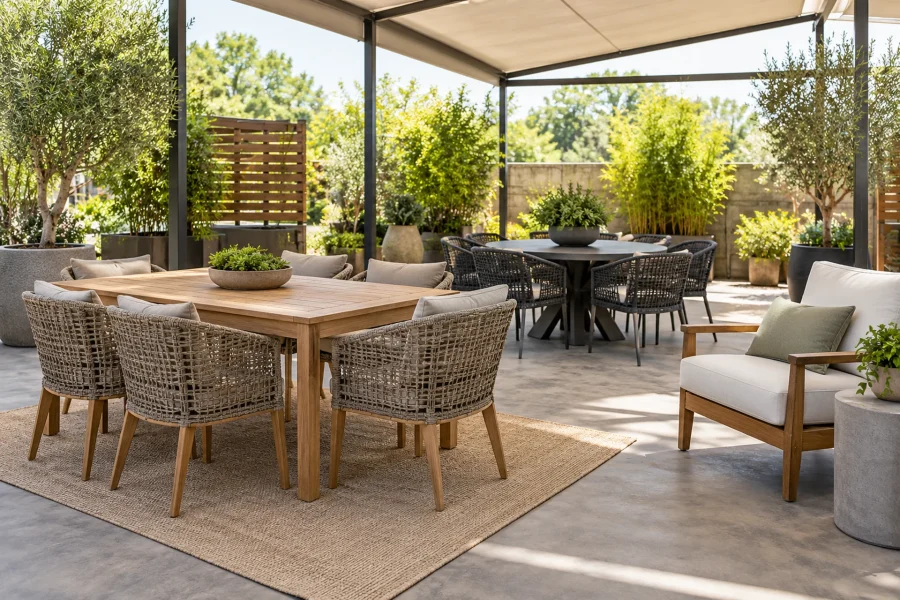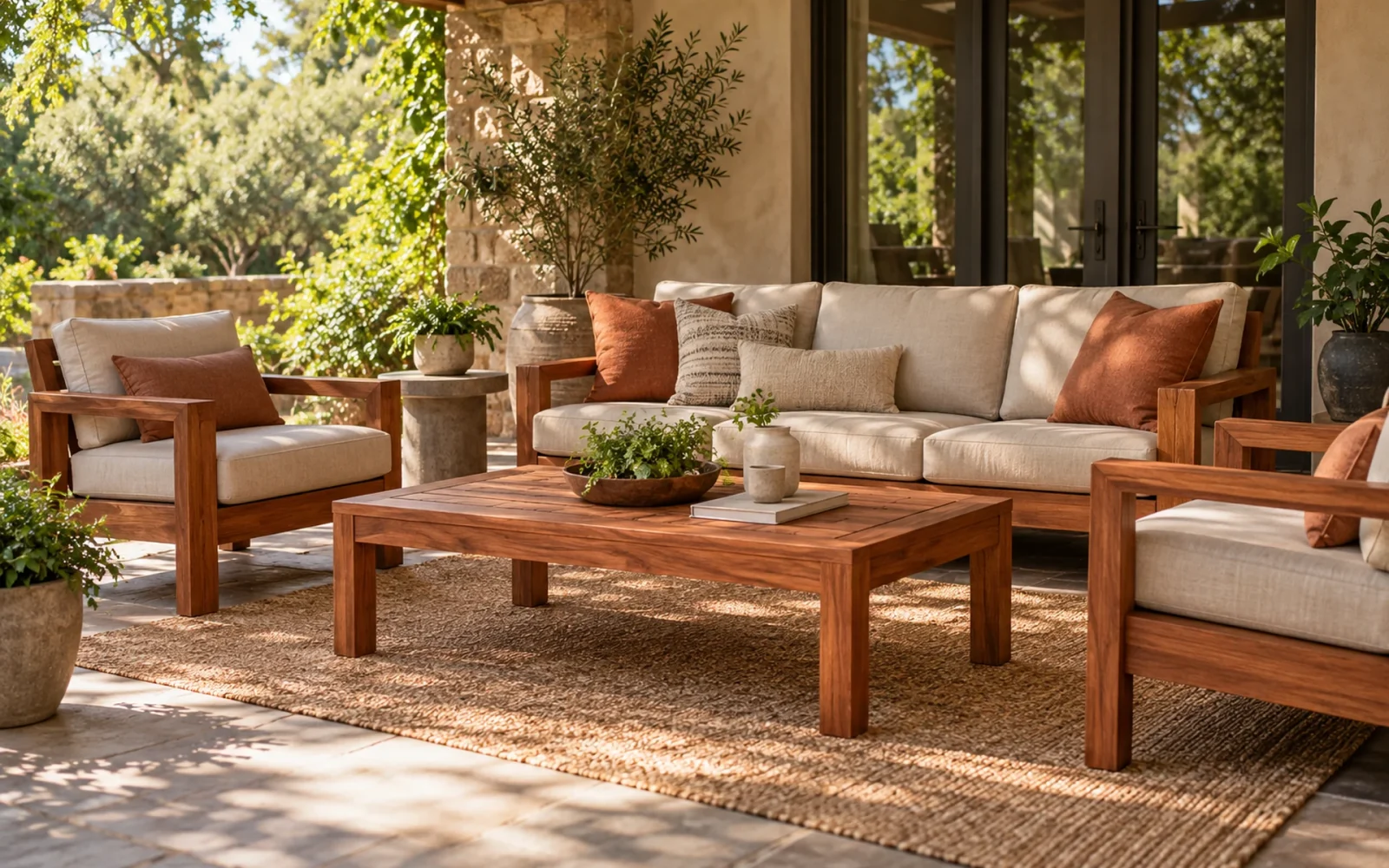
Eucalyptus can be a good wood for outdoor furniture when the specific product is built and finished for its exposure. It suits someone who wants solid wood and accepts cleaning, finish maintenance, and protection during unsuitable weather. The word “eucalyptus” alone does not establish a chair’s quality or service life.
Before buying, compare the actual furniture and its care instructions with the place it will live. A covered dining set used seasonally faces different demands from a bench repeatedly soaked by lawn sprinklers.
Where eucalyptus furniture makes sense
Put it on your shortlist if you like its appearance, the furniture is comfortable, and you can follow its documented outdoor-care routine. Check the complete purchase cost rather than assuming eucalyptus is always the economical choice: cushions, covers, delivery, replacement parts, and ongoing finish products can change the comparison.
It is a less convenient choice if you want wood that keeps the same new color without attention, or if your plan depends on leaving the set uncovered through every season regardless of its instructions. In those circumstances, another frame material may suit the way you use the space better.
For a broader shortlist, see our guide to outdoor furniture materials. Use that comparison to identify care tradeoffs, then return to the specifications of the actual piece.
Ask what the wood description means
Eucalyptus is a broad name, not one standardized furniture material. Species, timber quality, drying, construction, and finish affect the result. Ask for a more specific description when available and establish whether the furniture is intended for covered outdoor use or full exposure.
There are genuine outdoor applications. Agriculture Victoria lists outdoor furniture among uses of rose gum, Eucalyptus grandis, and notes a tendency for that timber to surface-check during drying. This is information about a named timber, not a warranty for every assembled set sold as eucalyptus.
Do not convert a timber durability class into a promised number of years for a chair. The furniture also depends on joints, glues, hardware, board selection, loading, and moisture exposure. Equally, the scent associated with eucalyptus leaves does not show that a finished table will repel insects.
Inspect the details that stay outdoors
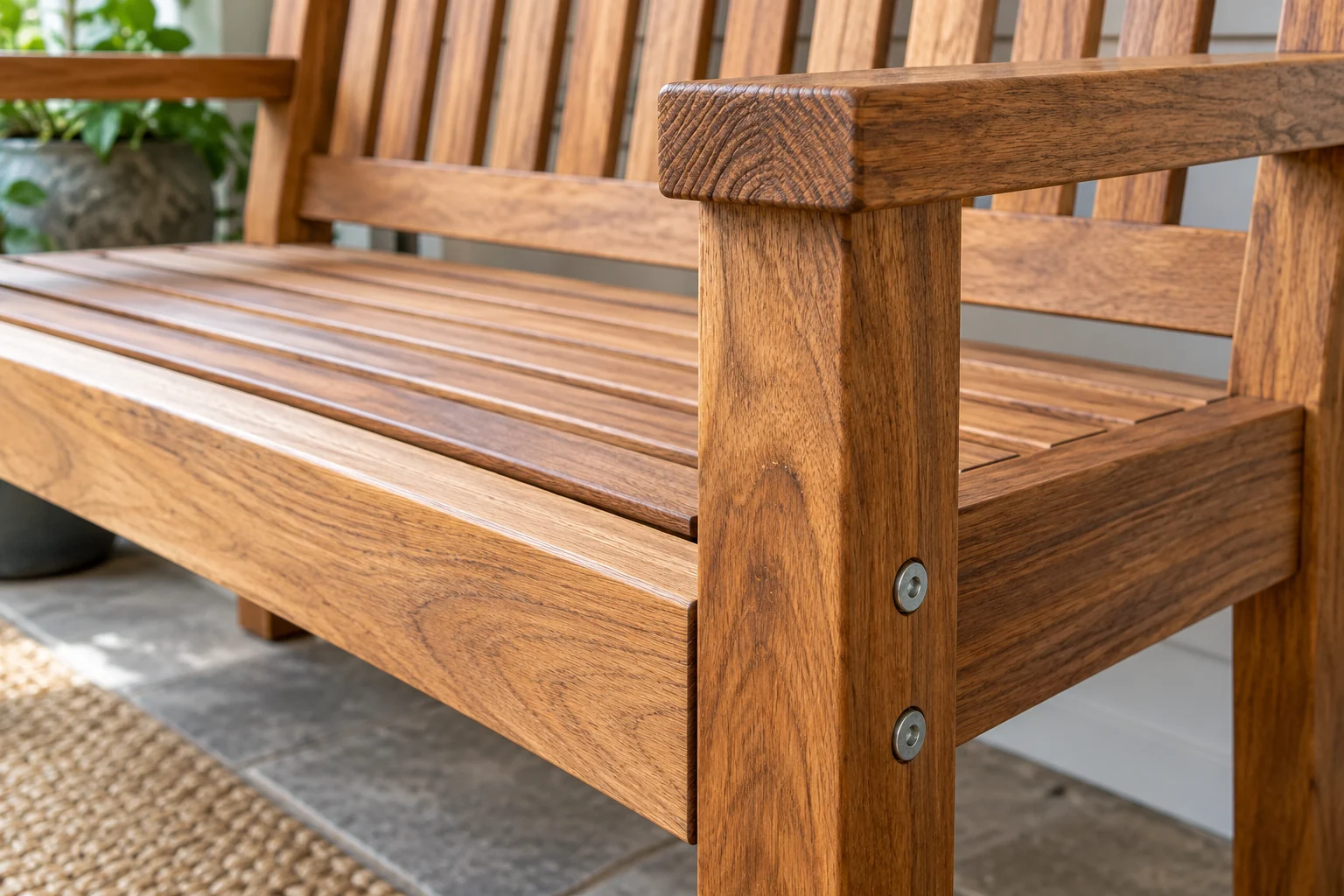
Examine slat supports, end grain, joints, feet, and accessible undersides. Sit in the chair and check its stability. Ask whether the fasteners and glides can be replaced and whether the same care instructions cover both the wood and any metal components.
Look for a sensible way for water to leave the furniture. A tabletop with a beautiful finish can still have a joint that collects debris and stays wet. Furniture feet sitting in damp turf create a different problem from feet on a draining terrace.
Check the condition of the coating around edges and fixings. A surface check needs to be distinguished from a split at a loaded connection or movement in the frame. If a new piece rocks or a joint opens under ordinary use, obtain a remedy rather than treating it with extra oil.
Plan care around wetting and drying
Wood exchanges moisture with its surroundings. The USDA Forest Products Laboratory’s wood-moisture chapter explains why changes in moisture affect wood properties and performance. In practical terms, a furniture-care plan needs to manage exposure as well as the appearance of the top surface.
Keep leaves and spills from remaining against the wood, use the approved gentle cleaning method, and allow the piece to dry before covering. Position it outside the normal reach of irrigation where possible. Shelter helps, but inspect the sides and undersides after wind-driven rain.
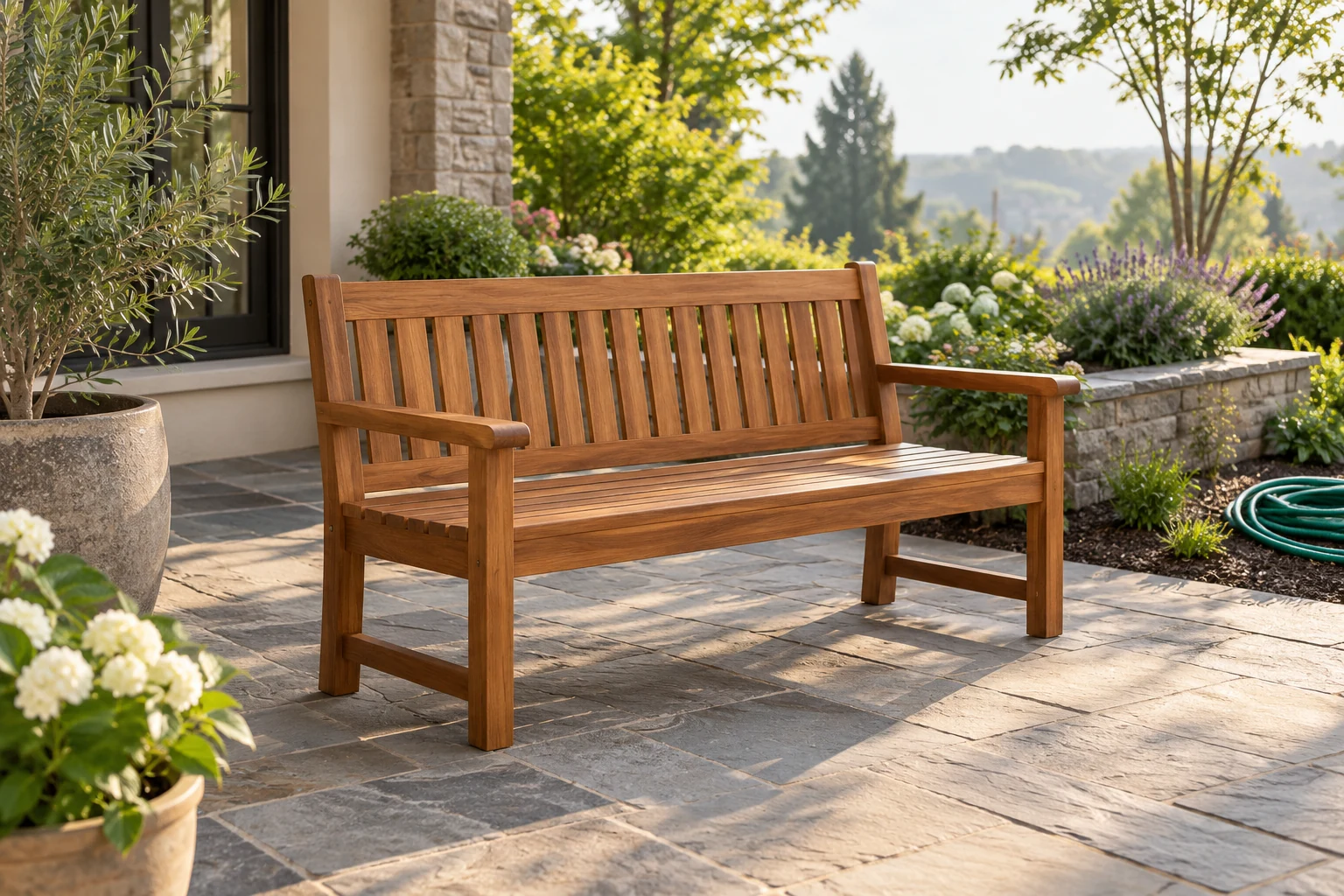
Renew the finish according to the original system. A painted or sealed piece should not receive a random penetrating oil over the coating. Check compatibility, surface preparation, and application conditions, then test a discreet area. Set an inspection routine based on exposure rather than accepting one re-oiling interval for every climate.
Compare evidence and ownership costs before deciding
If sourcing matters to you, ask for the product’s documented certification and supply information. Fast growth or a plantation description does not by itself demonstrate that a particular set is sustainably sourced. Check the actual claim and what it covers.
Read warranty exclusions for exposure and maintenance, and find out who supplies replacement components. Compare those details with the upkeep you will realistically do. A cheaper set that needs care you cannot provide may be a poor saving.
Choose eucalyptus when you can name the product’s intended conditions, know how its finish is maintained, and have a workable protection plan. If the seller cannot provide those basics, the wood name is too little information to make the decision for you.

Ethan Miller
Ethan Miller writes about home improvement, interior design, cleaning, and everyday living at Home & Living Daily. He shares practical tips and simple ideas to help readers create more comfortable and functional homes.