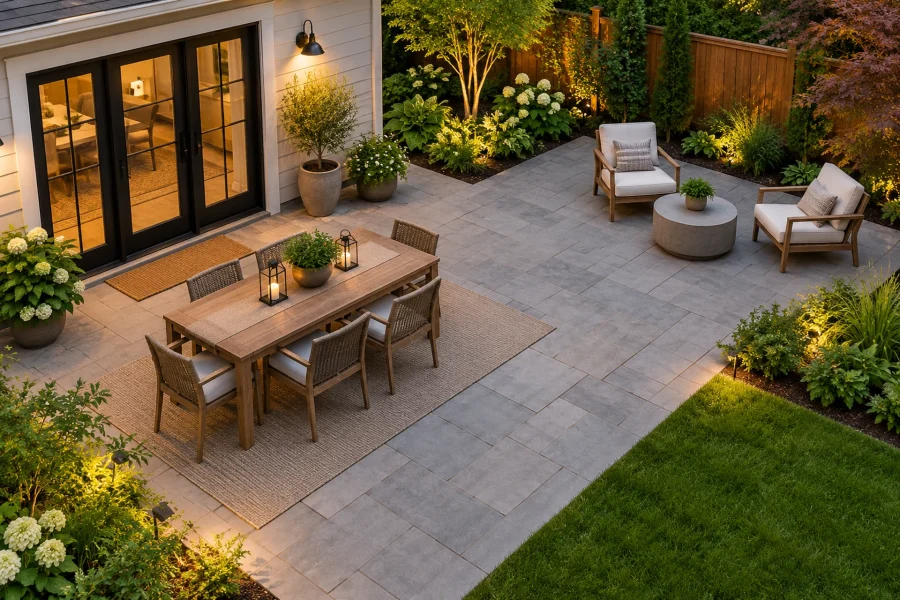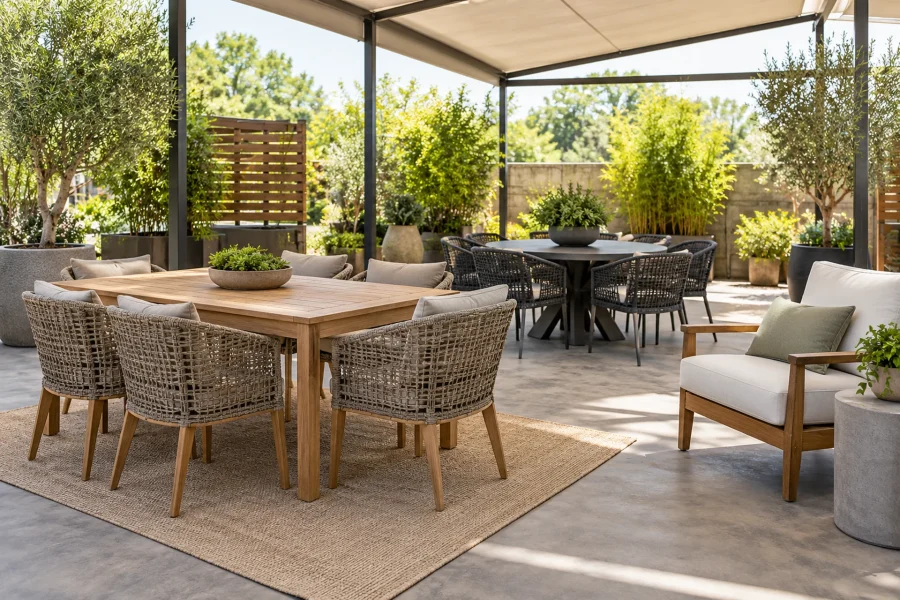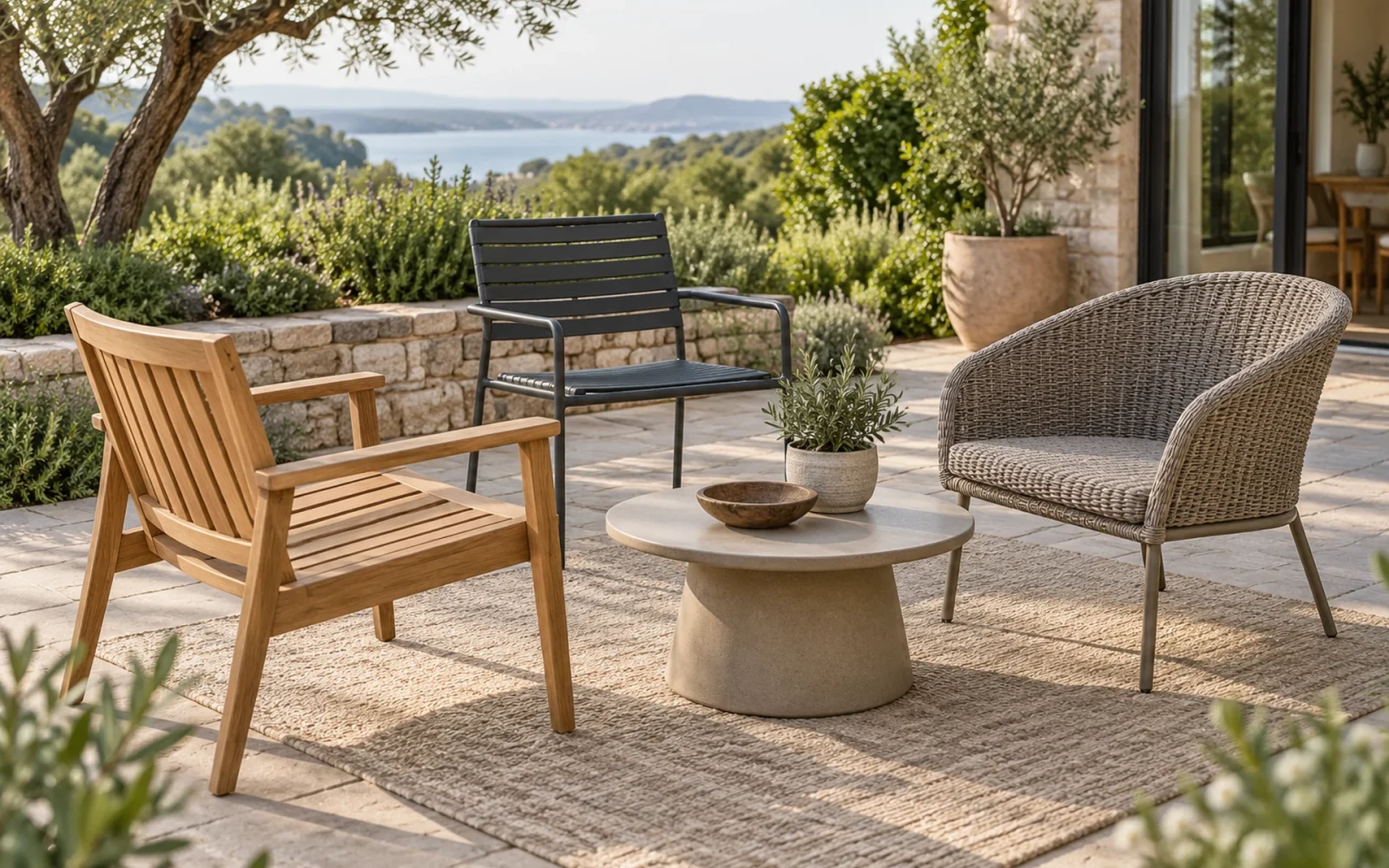
Powder-coated aluminum is a practical starting point when you want outdoor furniture that is relatively easy to move and care for. Teak is worth considering when you prefer real wood and accept its changing appearance. HDPE lumber and well-made synthetic wicker offer other useful combinations of texture, weather resistance, and upkeep.
There is no single best material for every patio. Choose for your actual exposure, how often you move the furniture, and what maintenance you will realistically do. Then examine the complete piece: an excellent frame does not compensate for cushions that stay wet or hardware you cannot replace.
Start with the conditions the furniture will face
Write down whether the space is covered, how long it receives direct sun, whether it gets wind-driven rain, and whether salt spray or pool water is part of normal use. A roof changes overhead exposure, but it does not necessarily keep the sides dry.
Also decide what “low-maintenance” means to you. Occasional washing is different from preserving a new wood color, touching up a chipped coating, or bringing cushions inside every evening. The most durable option on paper can still be the wrong choice if you will not follow its care routine.
| Your main concern | A useful shortlist | The deciding detail |
|---|---|---|
| Rain and frequent dampness | Coated aluminum, suitable HDPE lumber, or synthetic wicker over a corrosion-resistant frame | Drainage, exposed hardware, cushion drying, and the product’s care instructions |
| Moving chairs or changing layouts | Lighter aluminum designs or compact woven seating | Actual piece weight, stackability, and whether you can lift it comfortably |
| A natural wood appearance | Teak or another specifically identified outdoor-suitable wood | Whether you accept weathering or want to maintain the original finish |
| Strong wind exposure | Compare substantial, lower-profile pieces across materials | Weight, shape, storage options, and the maker’s storm guidance |
| Lots of sun | Documented outdoor-grade finishes, polymers, and fabrics | Surface temperature, color, shade, UV information, and warranty exclusions |
This is a way to narrow the search, not a weather rating. A chair’s geometry and construction can matter as much as the name of its material.
Aluminum: convenient to live with, but check the finish
Aluminum is appealing when furniture needs to be moved for meals, cleaning, or winter storage. It does not develop the red rust associated with ordinary steel. However, that does not make every aluminum frame immune to corrosion, coating failure, or damaged hardware.
Inspect the coating around joints, feet, and edges. Ask how a scratch should be treated and what care is required near salt water or a pool. A wood-look coating should be maintained as that finish, not oiled as though it were timber.
Do not assume all aluminum furniture is light. Cast pieces, thick sections, and different mechanisms change the weight substantially. Lowe’s material guide identifies aluminum’s relatively light weight and rust resistance as useful qualities, but compare the dimensions and weight of the actual products on your shortlist.
Wicker: find out what is woven and what supports it
Wicker is a weaving technique rather than a specific raw material. Natural rattan and synthetic outdoor resin can look similar in a small photograph, yet they have different exposure limits. For an uncovered setting, establish that the strands and underlying frame are intended for that environment.
Today’s Patio distinguishes synthetic resin wicker from natural indoor fibers. That distinction should be explicit in a listing. “Woven” or “rattan-style” alone tells you little about durability.
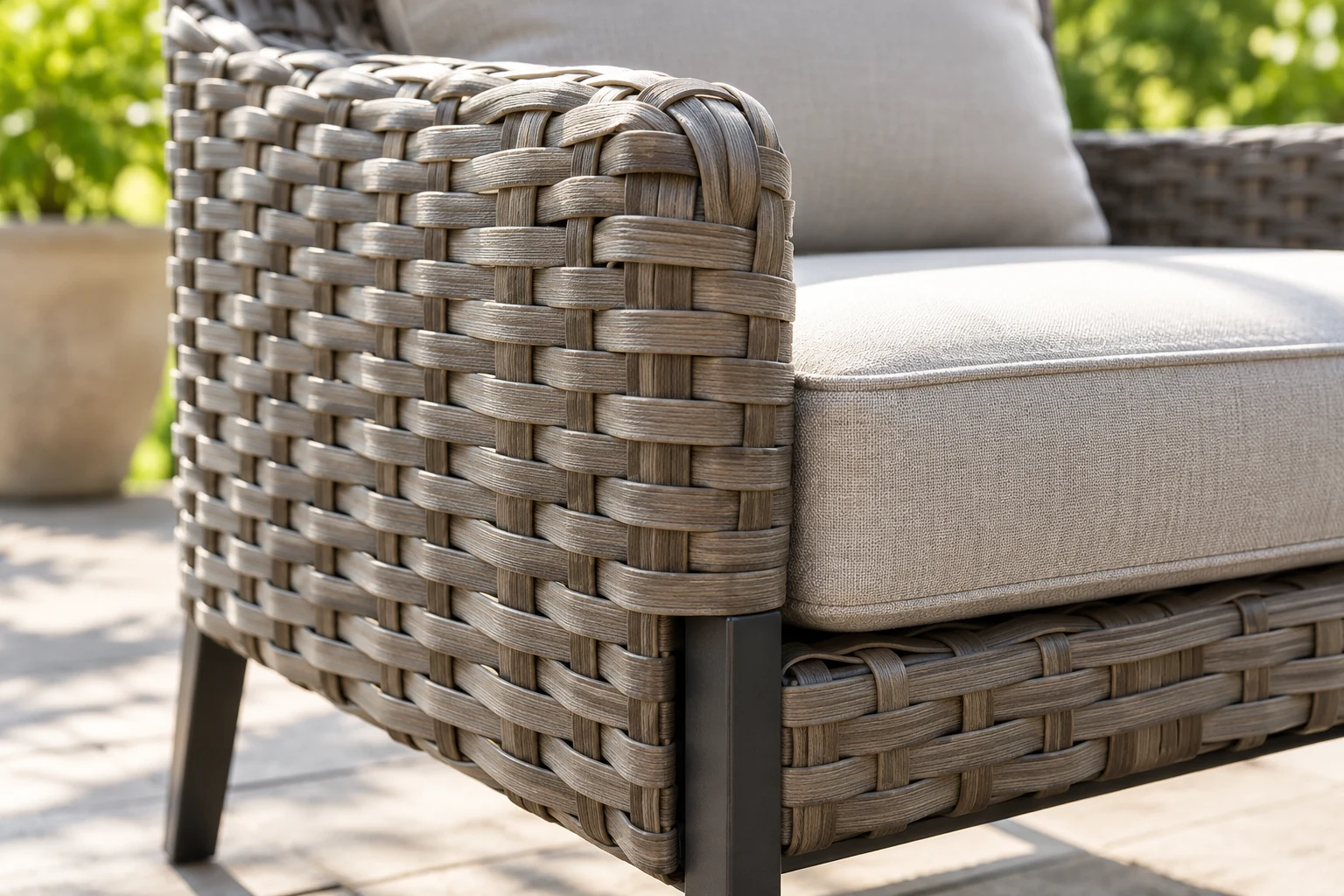
Ask what the frame is made of, whether replacement woven components are available, and how the strands should be cleaned. Feel accessible edges for loose ends and inspect the underside. A thick cushion can hide a seat construction that is awkward to repair or clean.
Synthetic wicker is useful when you want a softer visual texture, but it is not a maintenance-free shell. Debris can collect in the weave, finishes vary, and damage to one strand can be harder to address than a mark on a plain frame.
Teak and other woods: decide how you want them to age
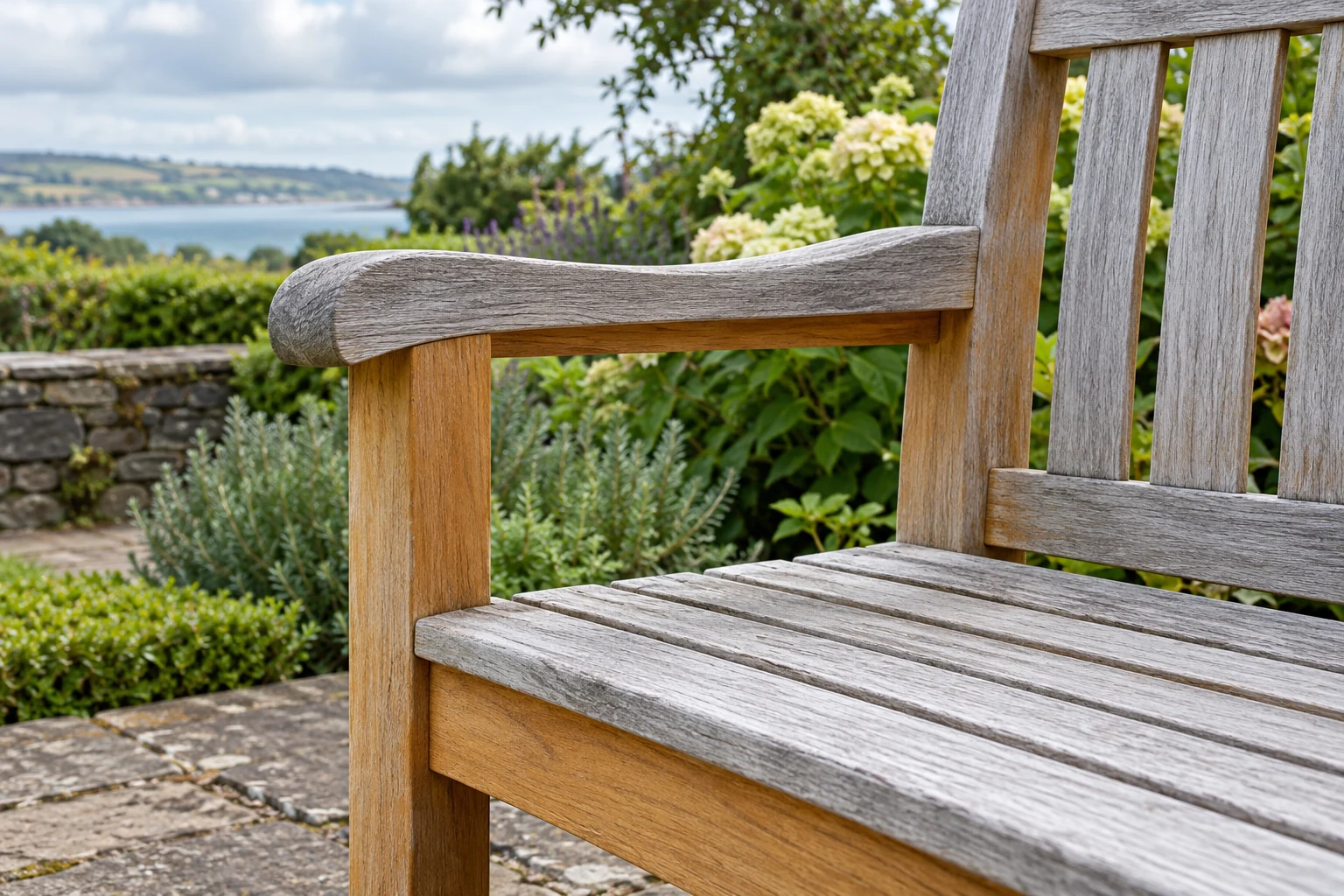
Teak is valued for outdoor use because of its natural durability and oil content. Its warm new color can gradually become silver-gray outdoors. That change alone is not proof of rot, and keeping a golden appearance is a different maintenance goal from keeping the furniture clean and sound.
Castlery’s material comparison separates teak’s weathering from the maintenance needed to retain its original appearance. Ask the seller whether the piece is bare, sealed, or factory-finished, then get the matching care instructions.
Do not treat acacia, eucalyptus, cedar, and teak as equivalent simply because all are wood. Species, board quality, joinery, finish, and exposure affect the result. Compare the specific construction and care burden, especially when a lower initial price depends on regular protective treatment.
Look at end grain, joints, and feet as well as the tabletop. Consider whether a worn finish can be renewed and whether individual parts can be replaced. If the thought of color variation bothers you, choose a finish you are willing to maintain or consider a different material.
HDPE lumber, steel, and other alternatives
HDPE furniture lumber offers a board-like appearance without being wood. For example, POLYWOOD describes its lumber as HDPE with pigments, UV inhibitors, and protective compounds. That is a description of its particular formulation, not proof that every plastic chair performs the same way.
Compare actual weight, bracing, joints, and available replacement parts. Check the approved cleaning method; do not assume that a plastic lumber product can be sanded or refinished like timber. If environmental claims influence your purchase, ask for the product’s documented material content and locally available end-of-life options rather than relying only on the word “recyclable.”
Steel and iron can provide a substantial feel and slim profiles, but ordinary coated versions need inspection for chips and corrosion. Stainless steel also varies by grade, fabrication, and maintenance. A blanket “metal” description is too vague for a coastal purchase.
Concrete, stone, and composite tabletops may suit a permanent layout, but examine their weight, support requirements, stain treatment, and winter instructions. A composite top’s appearance does not establish its composition or freeze tolerance.
Check cushions, hardware, and daily comfort before buying
For rainy areas, look at how water leaves the seat and how cushions can be dried. A water-resistant fabric is not the same as waterproof seams or quick-drying filling. Removable covers, replaceable inserts, and a realistic dry-storage location can matter more to daily usability than a small difference between frame materials.
For sunny locations, inspect samples outdoors if possible. Dark surfaces can become uncomfortable, and even a durable material may need shade for pleasant seating. Ask for relevant UV and care information rather than assuming “all-weather” means unchanged appearance forever.
For wind, compare piece weight and shape, then plan where furniture and cushions will go before a storm. Neither a heavy material nor a wide base is a guarantee that a piece cannot move. Do not rely on furniture weight as a substitute for the manufacturer’s instructions.
Finally, sit in the chair and move it. Check seat height, back angle, arms, and whether the feet suit your paving. Read the warranty’s exposure and maintenance exclusions, and price the cushions, covers, delivery, and likely replacement parts alongside the frame.
A good choice is the one whose tradeoffs you can name before ordering: the light chair you will store when storms approach, the teak you will allow to gray, or the woven set whose cushions have a dry place to go. That is more useful than choosing a material because a list calls it the longest-lasting.

Ethan Miller
Ethan Miller writes about home improvement, interior design, cleaning, and everyday living at Home & Living Daily. He shares practical tips and simple ideas to help readers create more comfortable and functional homes.