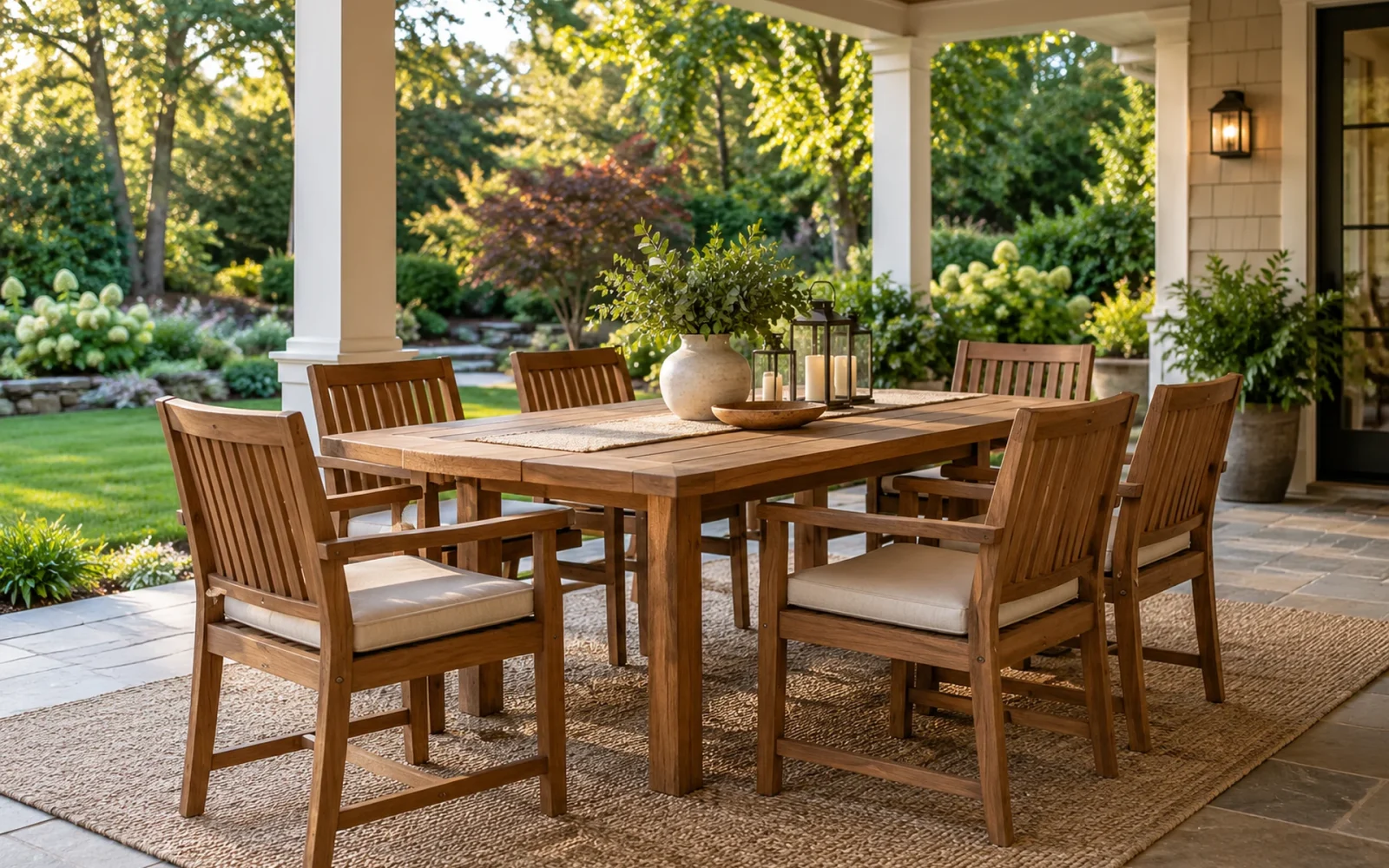
Acacia can be a good choice for outdoor furniture when the particular piece is made for the exposure it will face and you are willing to maintain its finish. It is a more comfortable choice for a sheltered patio than for a purchase you expect to leave unattended through repeated soaking and harsh weather.
Look beyond the warm color and the word “hardwood.” The species, timber selection, joinery, coating, and storage instructions give you more useful information than an unsupported promise that acacia lasts a fixed number of years.
When acacia makes sense
Consider it when you want real wood, like the particular design, can keep the feet on a suitable draining surface, and have a practical plan for covers or off-season shelter. A simple chair with accessible joints and renewable surfaces may be easier to own than a complicated set with deep cushions and concealed connections.
It is less appealing if preserving an even new color is essential but you do not want to do finish maintenance. The same applies where daily irrigation will soak the furniture or where there is no realistic way to dry and store components that require protection.
Compare actual sets rather than assuming acacia is always cheaper or better value than another wood. Include delivery, cushions, covers, storage, and any recommended coating products in the purchase decision.
The wood name is not an outdoor specification
Acacia covers different timbers, and a retail name may not tell you which one you are buying. As an example of why the distinction matters, Private Forests Tasmania describes blackwood, Acacia melanoxylon, as unsuitable for weather-exposed use. That does not identify the timber in a garden set or mean every acacia product is unsuitable outdoors.
Ask the seller for the species where available, the intended outdoor setting, and the complete care instructions. Establish whether “outdoor” means covered use or continuous exposure. If a listing offers only a wood name and a lifestyle photograph, ask for the missing details before relying on it.
Also distinguish genuine acacia from products marketed as “false acacia,” a name used for black locust. A durability claim for one timber should not silently become evidence for another.
Inspect the complete piece before comparing finishes
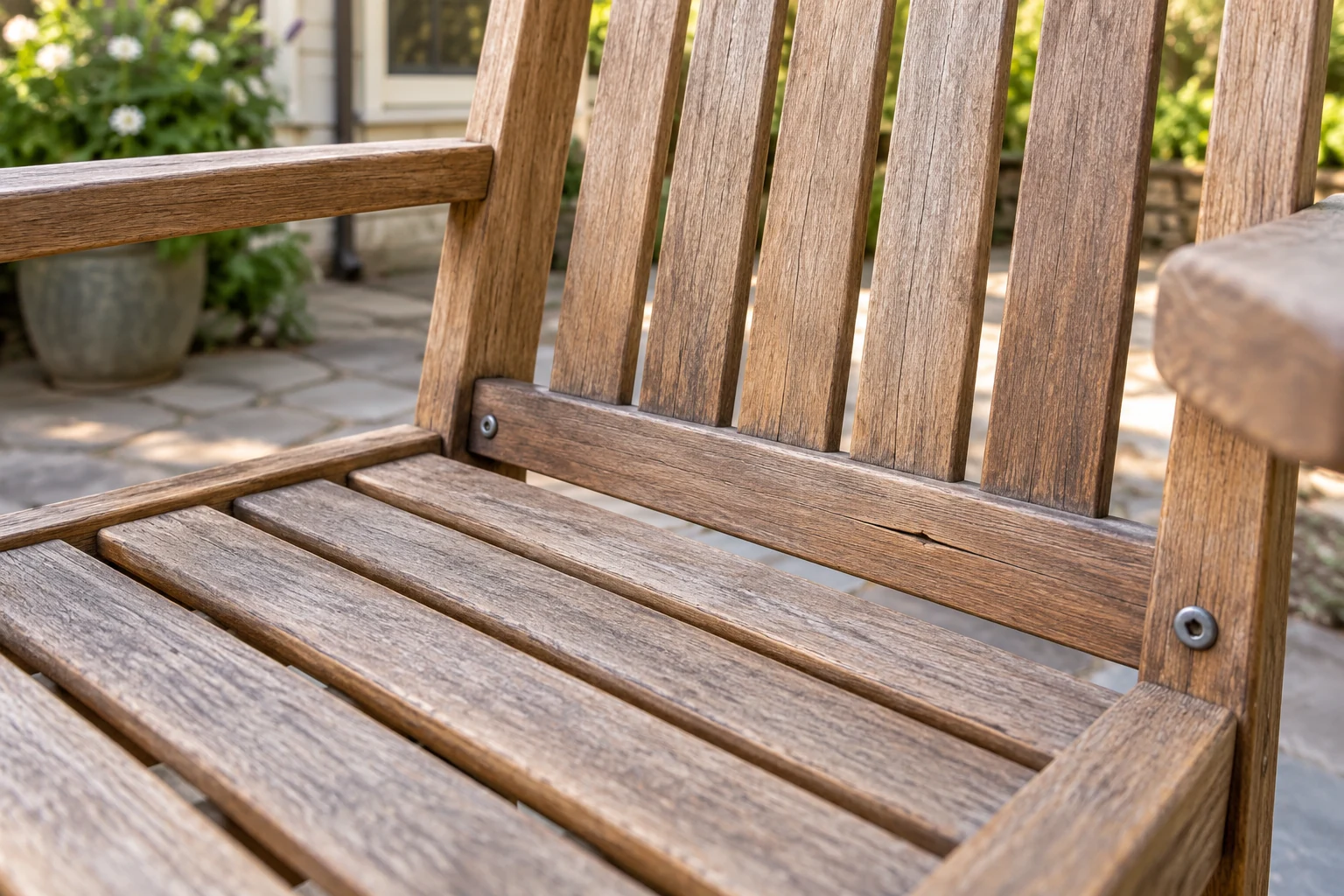
Look beneath the seat and table as well as at the attractive upper faces. Check that joints are tight, boards are properly supported, hardware is accessible, and the furniture stands without rocking. Ask whether damaged slats, foot glides, and fasteners can be replaced.
Slatted surfaces should have a workable way to shed water. Examine exposed board ends and places where two components may hold moisture together. A thick coating on a tabletop does not protect an unaddressed problem underneath the joint.
Small surface checks and color changes need to be distinguished from a split through a loaded connection, loose hardware, or softened timber. Do not accept structural movement as harmless simply because wood is a natural material. Ask for a repair or replacement decision before using an unstable chair.
Maintain the existing coating rather than adding a random oil
Find out whether the piece is painted, sealed with a film-forming coating, or treated with a penetrating finish. Those surfaces do not all need the same renewal process. Applying oil over an incompatible factory coating can leave residue rather than providing useful protection.
Keep the maker’s instructions with the product details. Clean using the approved gentle method, allow the wood to dry, and inspect high-exposure places such as tabletop edges, arms, and feet. Renew the finish when its condition and the specified maintenance method call for it, rather than applying a universal annual recipe.
Use only compatible products and test a discreet area before treating visible surfaces. A change in sheen or color after the test may matter to you even if the finish adheres. If a coating is peeling, obtain a preparation method for that system instead of covering the loose layer.
Match protection to the way the patio gets wet
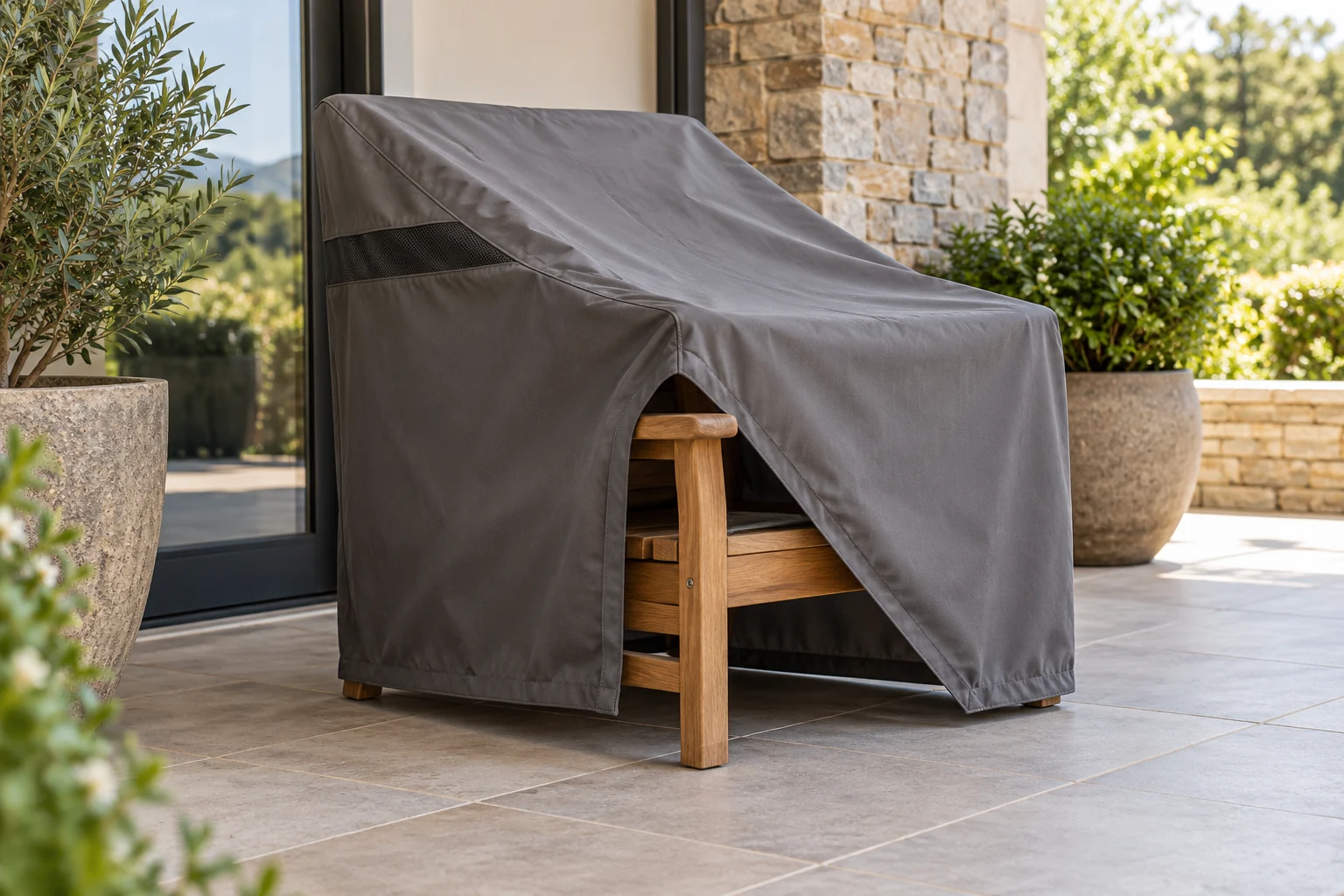
Move the set out of repeated irrigation spray and avoid leaving its feet in wet soil. Clear leaves from joints and remove spills before they remain against the finish. If using a cover, put it over dry furniture and check underneath during long periods of storage. A waterproof outer surface can still trap moisture inside.
Follow storage instructions for the specific piece. A roof may protect the top while wind-driven rain reaches the sides; it is useful shelter, not proof that the furniture stays dry.
Acacia is worth considering when its design, documented outdoor use, and care routine fit your home. If those conditions do not fit, compare other outdoor furniture materials before buying. A material with a care routine you will follow is a better purchase than a wood name you have to defend after every wet season.

Ethan Miller
Ethan Miller writes about home improvement, interior design, cleaning, and everyday living at Home & Living Daily. He shares practical tips and simple ideas to help readers create more comfortable and functional homes.