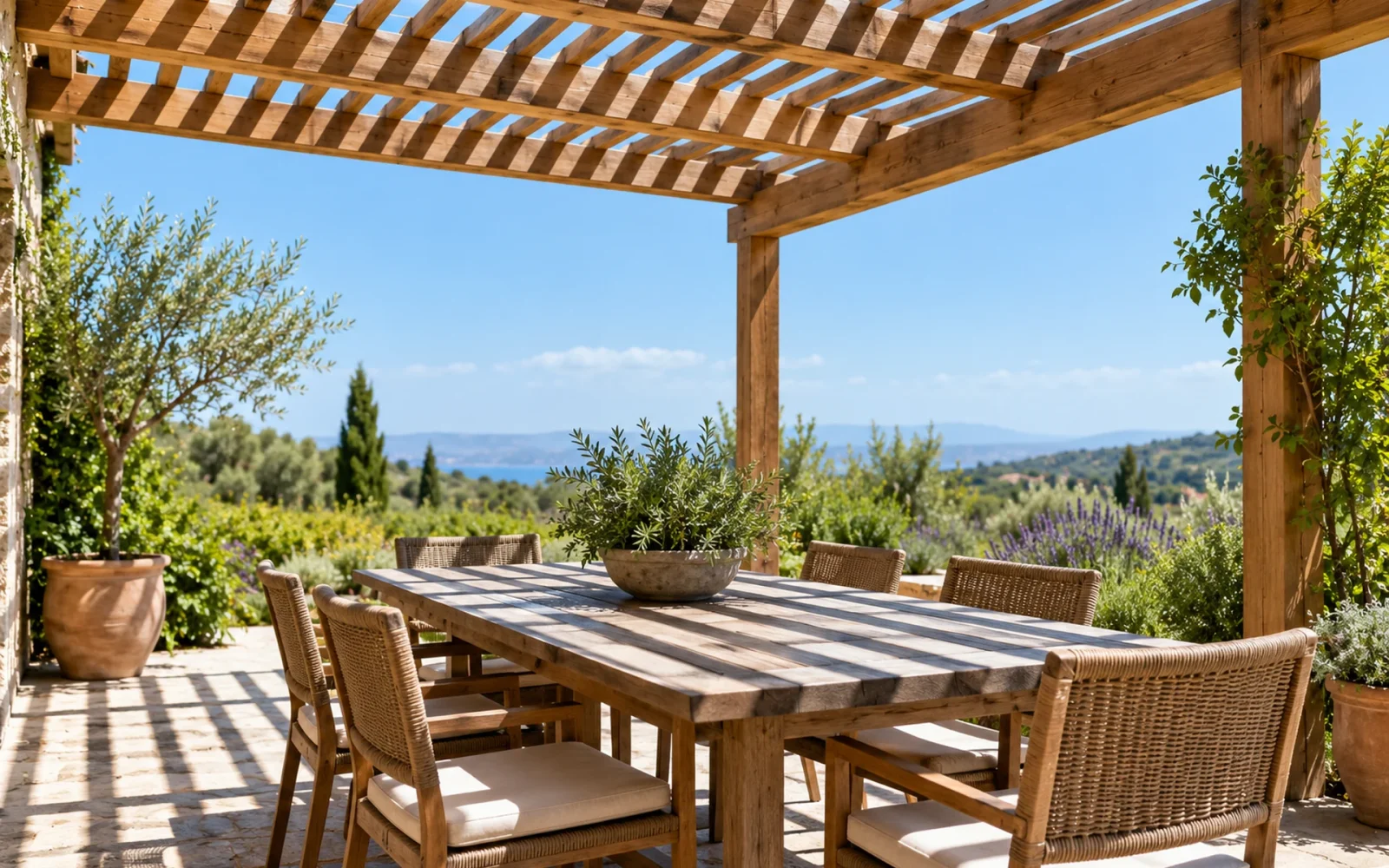
Yes, pergolas provide shade, but an open-rafter pergola usually creates moving bands of sun and shadow rather than continuous cover. How useful that shade feels depends on the roof geometry, its position relative to the sun, and where you sit. A canopy or adjustable louver system can change the coverage substantially.
Judge the shadow on your seat at the time you need it. A pergola that looks shaded in an early-morning photograph may leave the dining table exposed at lunch.
Partial shade can still leave the seat in direct sun
A traditional pergola’s beams and rafters block some incoming light, while the gaps let the rest through. Those shaded strips move as the sun changes position. If a strip crosses your shoulder but the rest of the chair remains exposed, you may not get the relief you expected from a structure covering the whole patio.
That does not make the pergola useless. It can define an outdoor room, frame planting, or offer the level of filtered light you want. It simply answers a different need from a continuous roof.
Start by describing your goal: occasional dappled shade, shade over an entire occupied table, or adjustable cover for different seasons. Those goals lead to different roof choices.
What controls the shadow?
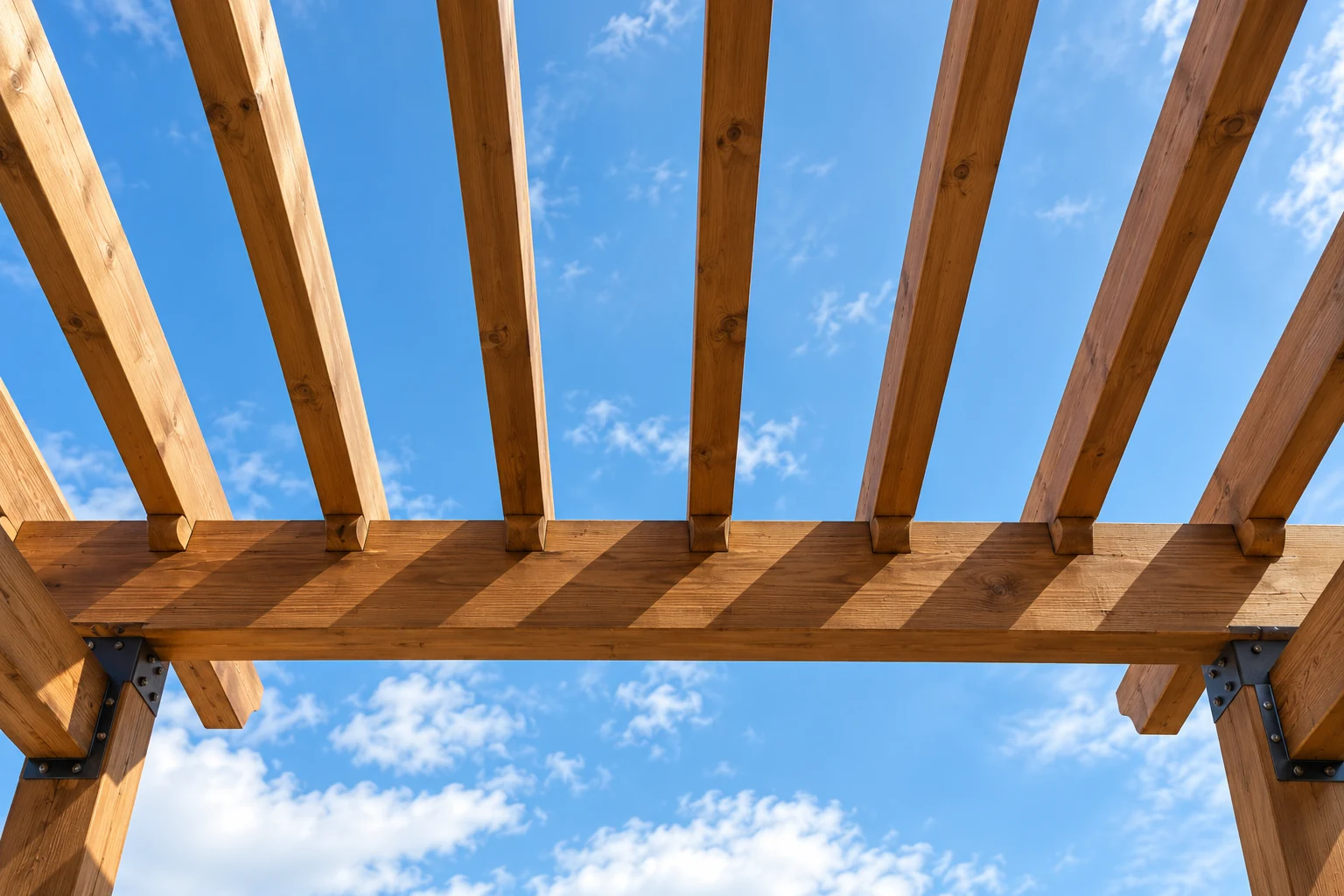
Spacing and width: closer members or wider shade elements generally block more overhead light than wide-open spacing. The depth and angle of the members also affect the shadow as sunlight becomes oblique.
Roof direction: sunlight strikes members differently as it moves across the roof. There is no single orientation that guarantees the best shade in every yard, because your latitude, season, roof geometry, and intended hours all matter.
Height: a higher structure changes where a shadow reaches the ground when the sun is low. The shade can extend beyond the roof footprint while leaving another part of the patio exposed.
Nearby objects: the house, trees, and boundary structures can add useful cover or change how much light enters from the side. Assess the combined setting rather than isolating the pergola in a product drawing.
Sunset Pergola Kits identifies spacing, orientation, time of day, and season as factors in its shade coverage. That is a more useful starting point than assuming every open-roof design has one fixed performance figure.
Read a shade percentage carefully
A supplier’s “75% shade” statement may describe a particular slat arrangement or a product tested under defined conditions. Ask how the figure was obtained and what it measures. Does it refer to overhead openness, light reduction through a fabric, or the shadow produced at a particular sun angle?
Those measures are not interchangeable. A fabric’s shade rating does not establish that 75% of a whole dining group stays shaded all afternoon. Nor should a general shade percentage be treated as a medical protection rating or a guarantee of a specific temperature drop.
Ask for photographs or a shade study of the proposed design at the hours and season that matter to you. Include the furniture position in the drawing. An empty shaded corner is not useful evidence if your chairs sit elsewhere.
Diagnose what is wrong before adding a cover
If sunlight passes directly through the roof at midday, a compatible overhead canopy or a different roof system may address the problem. If low sun enters under the open side, covering more of the roof may leave the same seat exposed.
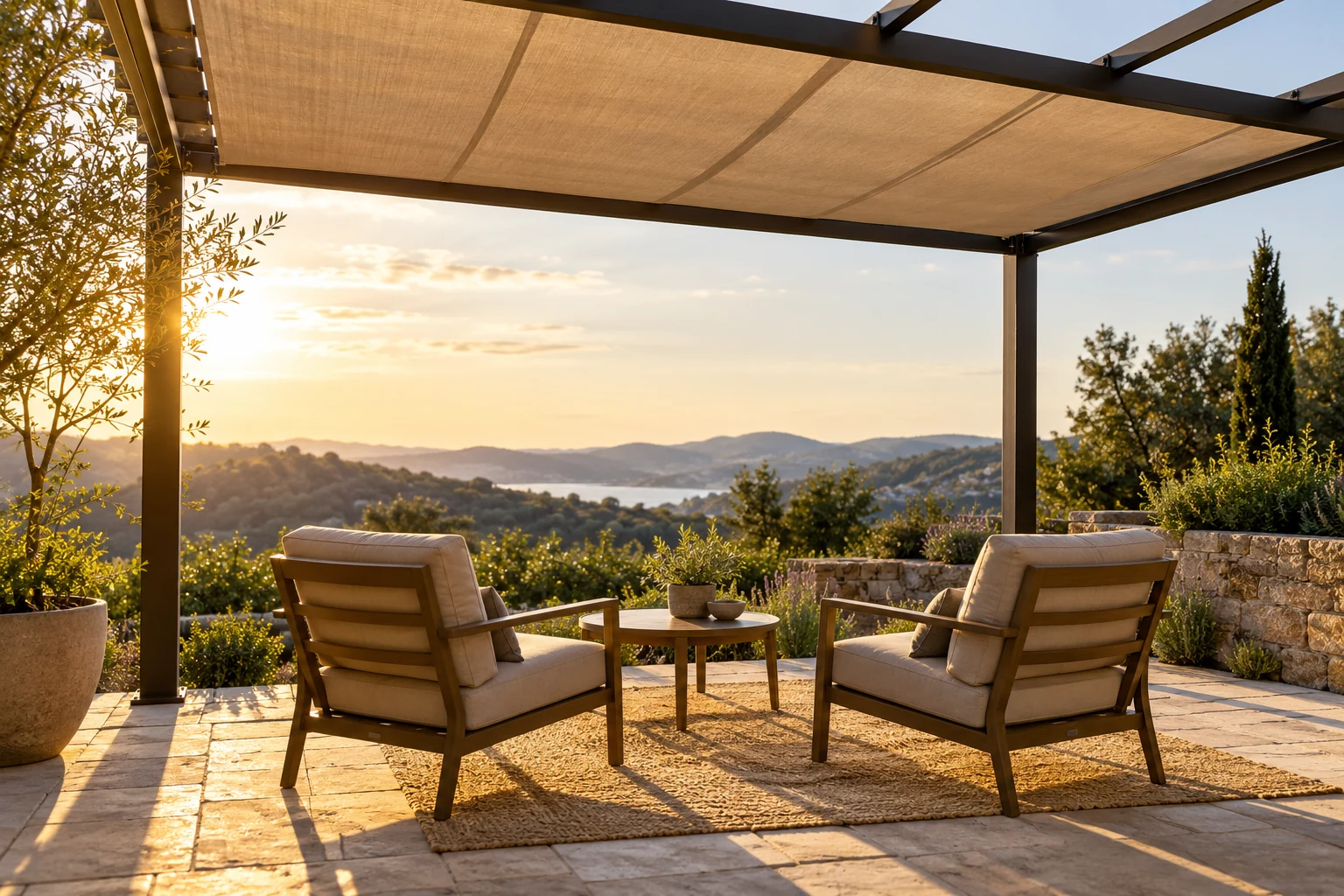
Try moving the furniture within the existing shadow before changing the structure. If side exposure remains the problem, investigate an approved side screen or shade, checking its wind and attachment requirements. Added fabric changes the area exposed to wind and cannot be fixed to any convenient decorative member.
Compare ways to increase useful coverage
Fixed shade fabric: can increase overhead coverage while retaining some airflow. Its performance, fixing method, weather limits, and storage requirements depend on the product. Shade fabric is not automatically rainproof.
Retractable fabric: lets you open the sky when shade is unnecessary. Check the track arrangement, how the fabric stores, and whether it must be retracted for rain, wind, or snow.
Adjustable louvers: change the roof opening and may include a designed rainwater system. Compare the actual model’s operating instructions and drainage, rather than assuming all closed blades behave like a permanent roof.
Plants: can create seasonal cover as they grow, but need suitable support and care. Their weight, leaf loss, and time to establish make them different from an immediately usable manufactured canopy.
A solid cover is another option where a properly designed structure permits it. It changes light, rainwater handling, and loading. Our pergola and gazebo comparison helps if continuous shelter is becoming your main requirement.
Test the useful hours
For an existing pergola, photograph the occupied seating area at the beginning, middle, and end of your usual outdoor time. Note which seats become exposed and from which direction. That short record gives a supplier a concrete problem to solve.
For a new structure, mark the posts and furniture before ordering, then review the proposed shadow with the installer. Choose the amount and type of shade that supports your activity, with its operating limits understood, rather than buying a bigger frame and hoping it will be enough.

Ethan Miller
Ethan Miller writes about home improvement, interior design, cleaning, and everyday living at Home & Living Daily. He shares practical tips and simple ideas to help readers create more comfortable and functional homes.