A vintage living room can start with the sofa you already own. Add an older piece that does a useful job, connect it to the room through color or shape, and leave enough space for everyday life. A worn wood table beside a clean-lined sofa often gives you a clearer starting point than a room full of matching period furniture.
These vintage living room ideas offer four directions to adapt, followed by smaller changes for rugs, lighting, art, and compact spaces. Choose the combination that works with your existing furniture rather than trying to recreate every detail.
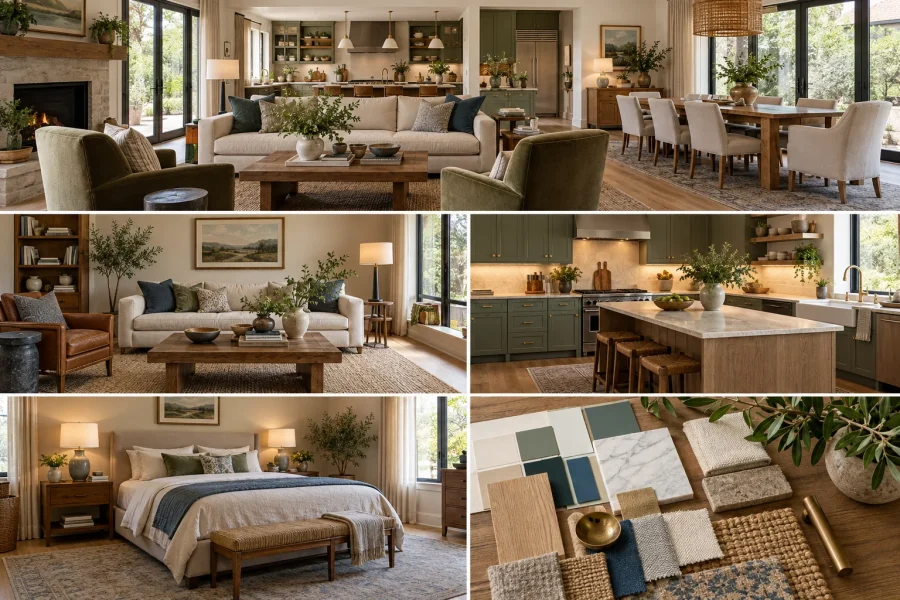
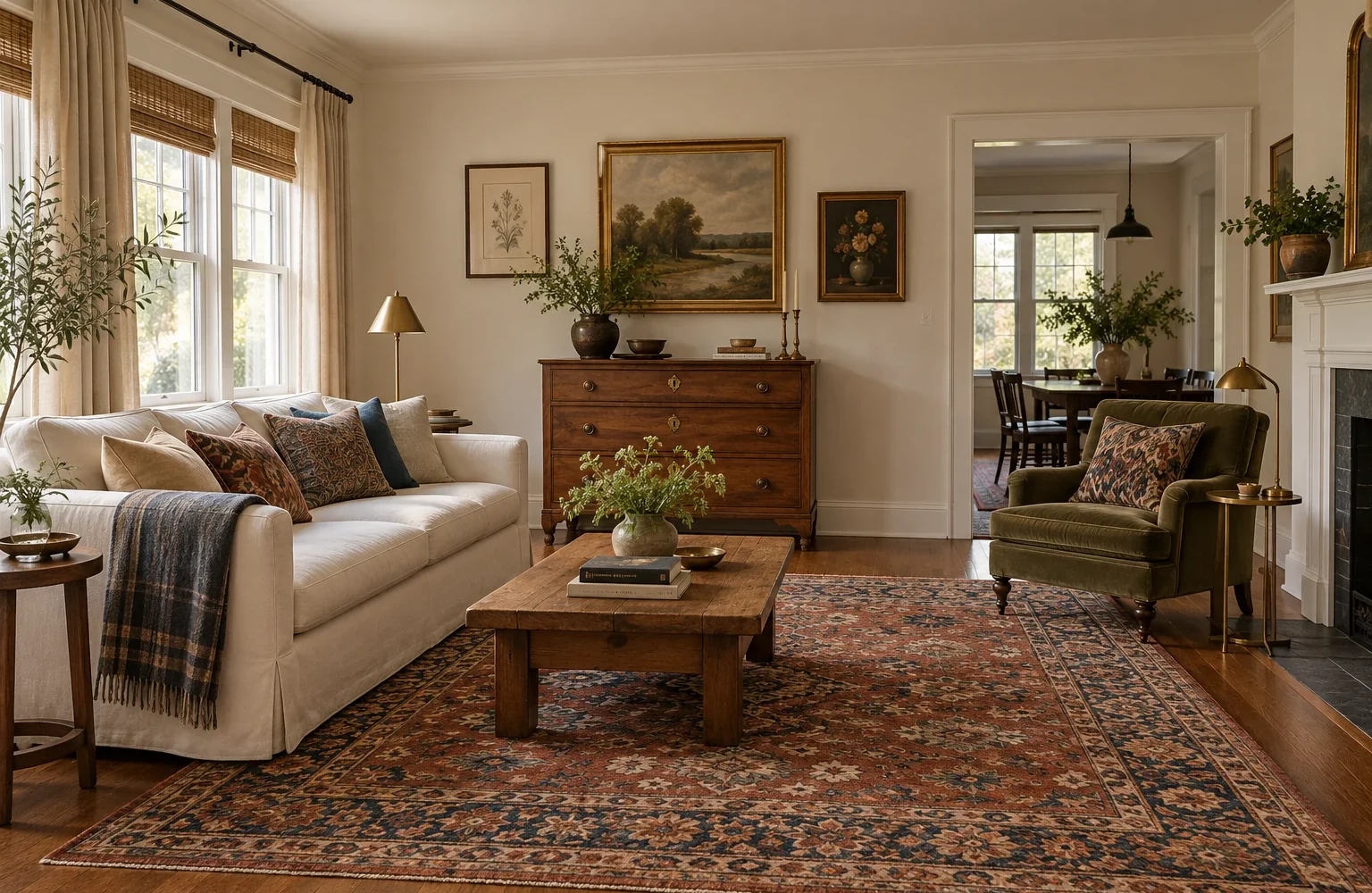
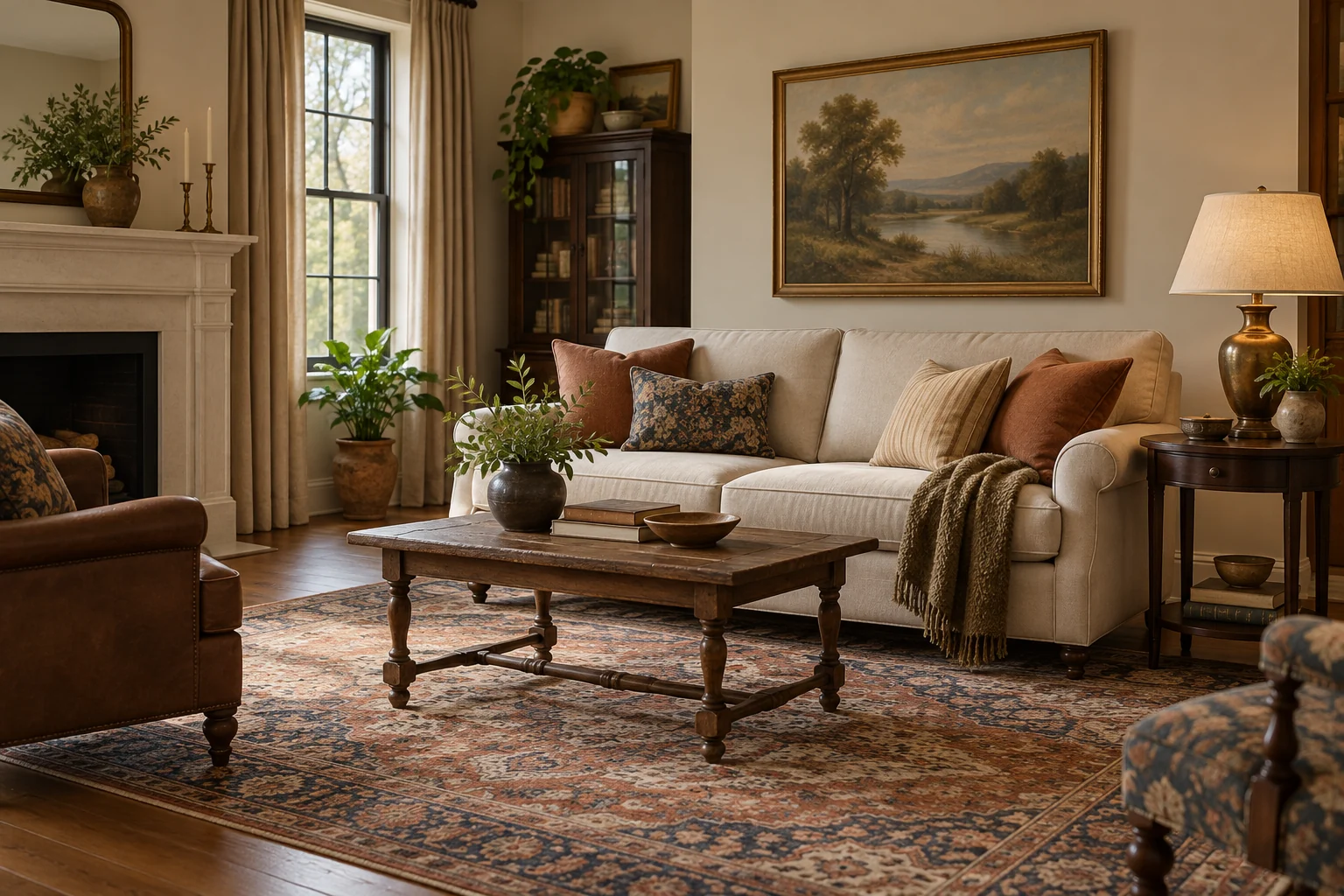
Images are AI-generated decorating concepts, not photographs of completed homes.
Choose a vintage direction from what you want to keep
Here, vintage describes a room with older furnishings and a sense of history. Vintage-inspired pieces can create a similar visual mood, but a new reproduction should not be described as an original older piece. You can mix the two; the useful question is whether each item earns its place.
| What you already have | Direction to try | First addition |
|---|---|---|
| A plain sofa and light walls | Warm, collected traditional | A dark wood side table and framed landscape |
| A low sofa or simple wood furniture | Midcentury leaning | A sculptural chair or slim storage cabinet |
| A pale upholstered sofa and soft textiles | Relaxed cottage vintage | A small patterned textile and painted cabinet |
| A gray sofa or contemporary apartment | Vintage-modern contrast | A warm wood chest and one colorful artwork |
These are starting combinations, not rules about what belongs together. If you are still comparing broader looks, our guide to interior design styles gives you a wider frame of reference. Keep this room’s plan more specific: one main furniture shape, a manageable palette, and a few older pieces with purpose.
Four vintage living room looks to make your own
1. Warm traditional with a modern sofa
Keep a simple cream, oatmeal, or tan sofa and bring in a darker wood coffee table or chest. Add a muted patterned rug and a shaded lamp. The contrast between plain upholstery and more detailed wood gives the older piece room to stand out.
For a concrete palette, try cream seating, walnut brown, muted rust, and a small amount of blue. Repeat the blue in a cushion or artwork rather than buying a whole matching accessory set. If your sofa already has a pattern, reverse the balance: choose a quieter rug and let the upholstery lead.
Make it work: Give the wood piece a job, such as storing games or supporting a reading lamp. Keep the space around its legs visible. Several bulky dark pieces close together can make a modest room feel more crowded than one substantial anchor.
2. Midcentury shapes without a complete period set
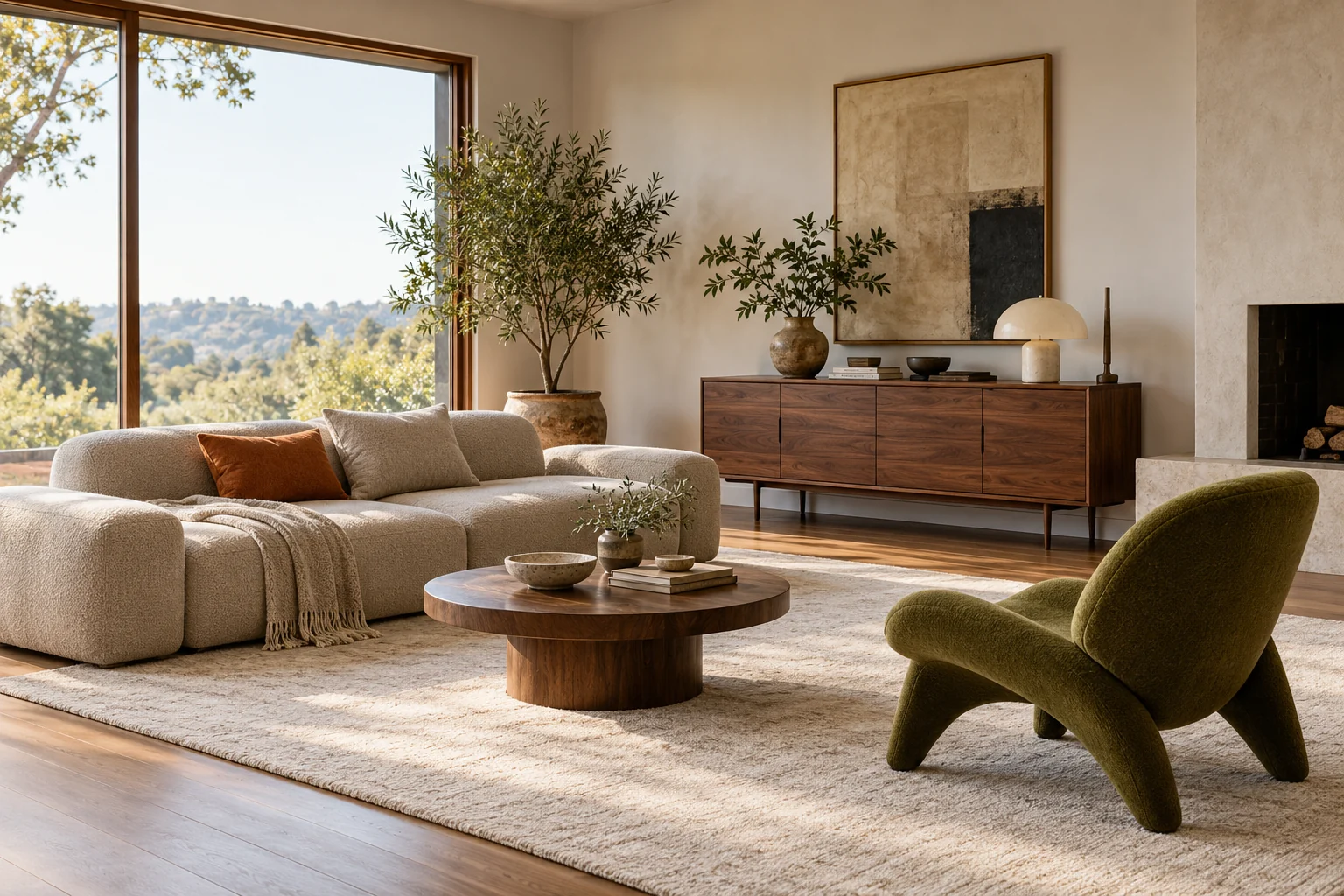
Pair a low, clean-lined sofa with one sculptural chair and a slim wood cabinet. Use the chair’s silhouette as the focal point, then keep the other furniture quieter. A rounded arm or tapered leg can establish the direction without requiring every item to come from the same decade.
Try walnut, olive, and a warm off-white, with a small orange accent if you enjoy stronger color. A simple rug keeps the chair’s outline readable. If you already have a large patterned rug, choose an upholstered chair in a solid color drawn from it.
Make it work: Check comfort before buying for appearance. Sit in a low chair and consider how you will use it. A striking seat that nobody finds comfortable is better left out of a daily-use living room.
3. Relaxed cottage vintage with restrained pattern
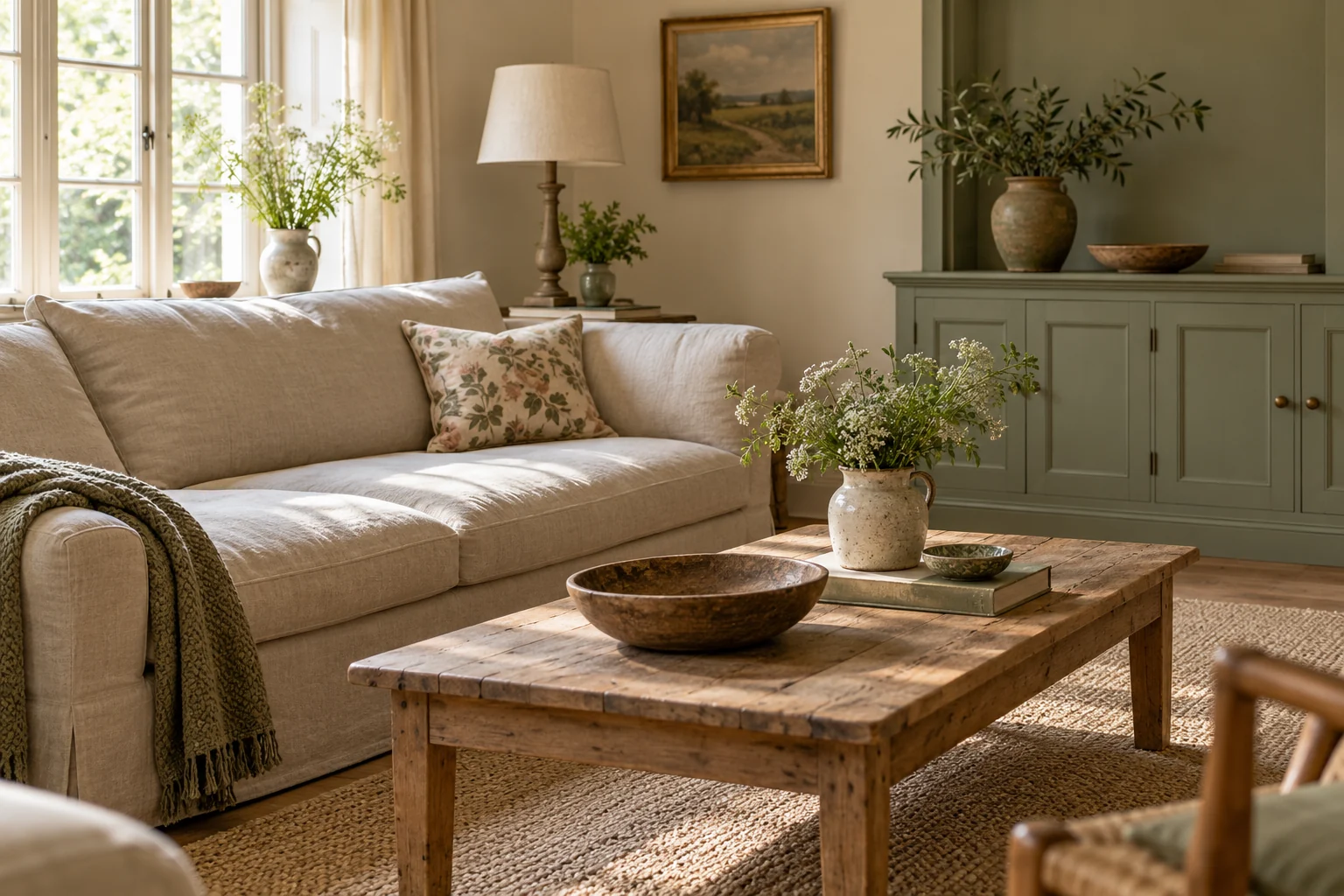
Start with a pale sofa, then add a painted cabinet, a small floral cushion, and a woven or softly patterned rug. The result can feel personal without relying on distressed finishes across every surface.
Choose one pattern to lead. A floral cushion might share its green with a plain throw, while the curtains stay neutral. If you prefer patterned curtains, keep the sofa cushions simpler. Vary the size of the patterns so they do not all compete at the same distance.
Make it work: Include a clean-lined element, such as a plain lamp shade or simple coffee table. Leave the cabinet top partly empty. Older frames and ceramics have more presence when they are not packed tightly together.
4. Vintage-modern contrast for an existing gray sofa
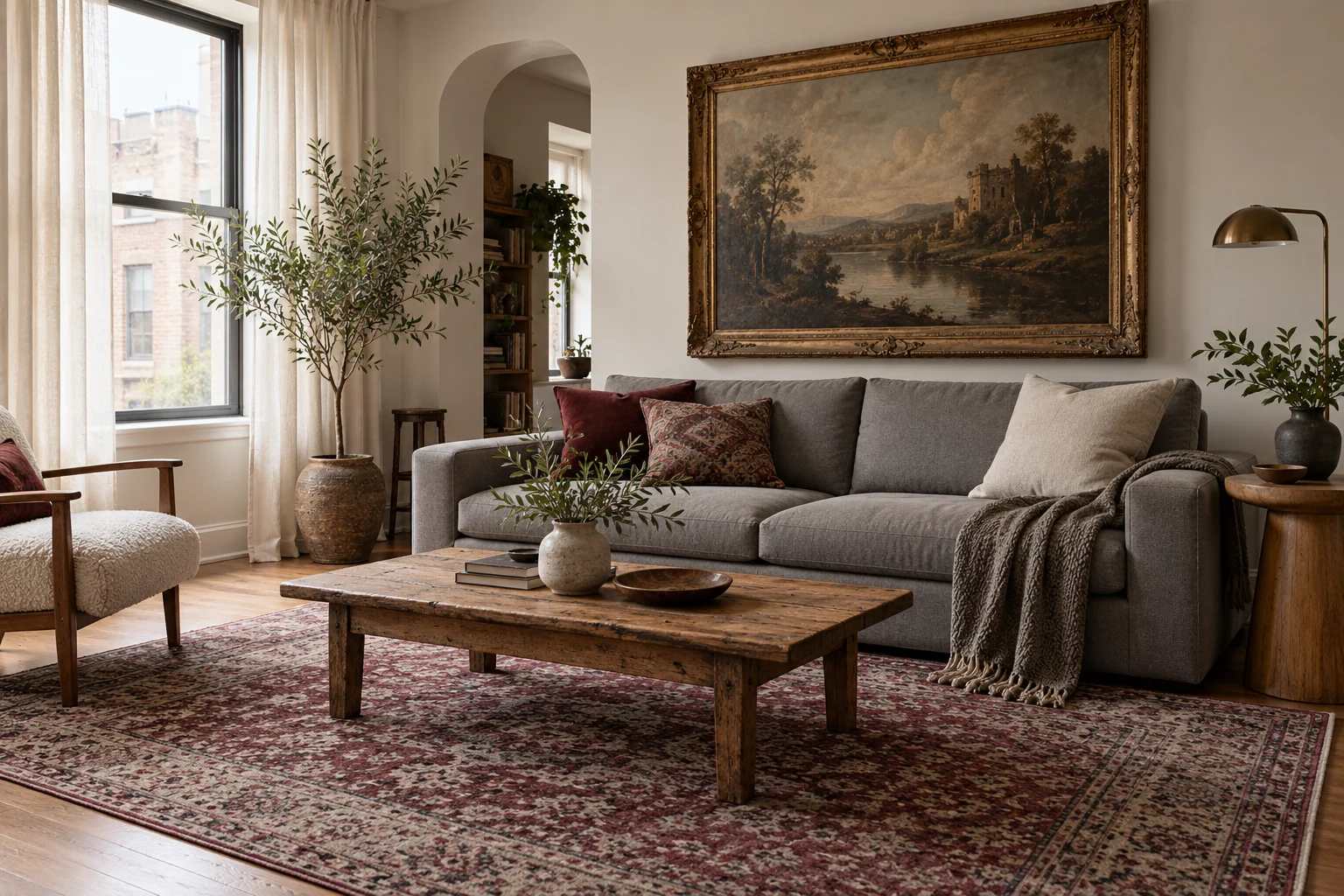
A contemporary gray sofa can stay. Place a warm wood side table beside it, add a rug containing both gray and a warmer color, and choose one older-looking frame or artwork. The shared rug colors help the new and old pieces relate.
For example, combine gray upholstery with honey-colored wood, a muted burgundy accent, and warm white curtains. Test actual samples beside the sofa in daylight and under your evening lamps; photographs can hide differences in undertone.
Make it work: Avoid replacing every metal finish at once. Repeat one finish in a small pair of details, such as a lamp base and frame, while allowing another useful piece to remain different.
Ideas that make the mix feel intentional
Use a rug to connect the furniture
Choose the seating layout before the rug. Mark its proposed outline on the floor and check how the sofa, chairs, and table sit around it. A rug should support the conversation area rather than become an isolated patch between distant seats.
A faded-looking pattern can soften the contrast between different furniture finishes. It does not need to be an old rug: a new rug can supply the colors you want while an older table supplies the history. Inspect secondhand textiles closely and factor any suitable professional cleaning into the decision.
Mix woods through repetition, not exact matching
Put photographs or samples of your existing woods together before shopping. Look for a relationship you like: a dark table might connect to a dark picture frame, while lighter flooring remains the background. Place a textile or upholstered seat between two wood pieces if their tones feel awkward side by side.
You do not need an exact formula for how many finishes a room can contain. Start with the largest surfaces, add one piece, and judge the whole room from the doorway. If nothing feels connected, repeat one tone before adding another.
Choose lamps for the light as well as the base
A ceramic or brass-style lamp can introduce vintage character at a smaller scale than a sofa. Check shade size from a seated position: the shade should not block a view or leave the bare bulb glaring into your eyes. Position the lamp where reading or conversation actually happens.
Have a qualified repair professional assess an older electrical fitting when its condition or history is uncertain. A decorative base is not evidence that the wiring is ready for use. Include inspection or repair in the purchase decision.
Make a small art grouping feel collected
Choose a unifying detail, such as a repeated subject, a shared color, or related frame finishes. Arrange the pieces on the floor first and photograph the grouping. Start with the largest work, then use smaller pieces to balance it rather than filling every gap.
Keep the grouping related to the furniture beneath it. A few pieces above a chest can feel more deliberate than tiny frames scattered across an otherwise empty wall. Use fixings suited to the wall and the weight of each piece.
Let one wall carry the pattern
If you want more visual texture, a botanical or small-scale geometric wallpaper can set the mood. View a sample beside the sofa and rug before committing. Pattern at every surface can obscure the furniture shapes you wanted to highlight.
Keep wallpaper as a supporting choice rather than turning the whole room into a pattern catalogue. If the rug is already busy, a quiet wall color may give the furniture more definition.
Adapt the look for a small living room or rental
Use one older piece that replaces something you need, rather than adding another layer of furniture. A compact chest can provide both storage and a lamp surface; a small side table can carry the vintage detail when a large coffee table would obstruct movement.
Measure the room, the intended furniture position, and the delivery route, including door turns and stairs. Mark the footprint with removable tape that is suitable for your floor. Walk through the room with the seats occupied and cabinet doors open.
In a rental, textiles, freestanding storage, lamps, and framed art give you several ways to change the mood. Check your lease before changing walls or fixtures. Removable products still need a surface-compatibility check and any required permission.
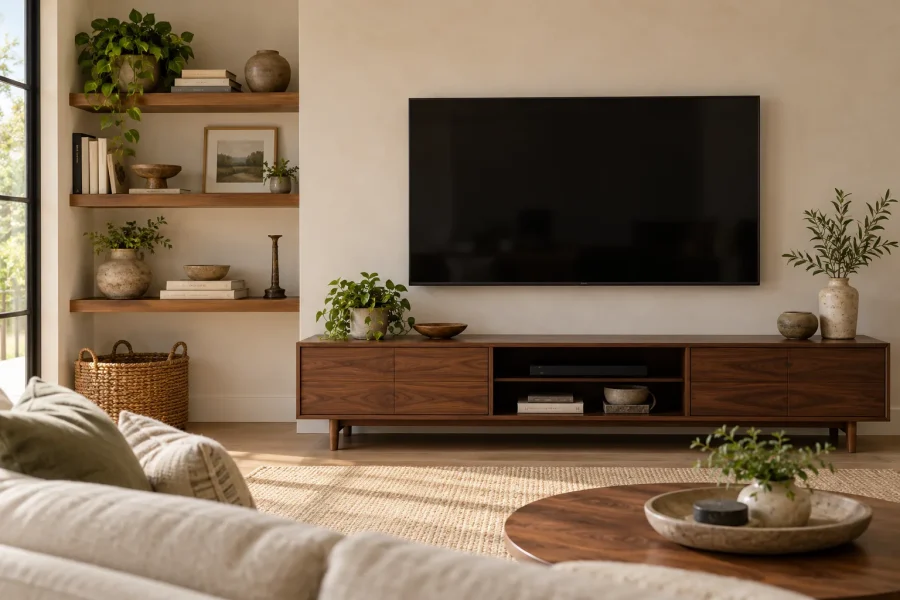
Keep everyday technology in the plan. A television does not need an elaborate disguise: a useful cabinet and some breathing space around the screen may be enough. Avoid decorating over ventilation openings or making cables difficult to reach.
What to check before buying secondhand
- Fit: Record dimensions and confirm the delivery route, not just the space on the floor.
- Structure: Check for wobble, loose joints, sticking drawers, missing parts, and repairs you cannot assess.
- Condition: Examine upholstery, undersides, backs, and interiors. Ask about odors, storage history, and known damage; do not assume a photograph shows everything.
- Total commitment: Add transport, suitable cleaning, and professional repair to the asking price before deciding it is affordable.
- Identity: Treat an era or maker attribution as a claim to verify. Buy for usefulness and appearance if provenance cannot be established.
- Safety information: Check the US Consumer Product Safety Commission recall database for an identifiable product before purchase. Follow relevant product instructions and recall remedies.
Pass on a piece when the repair, uncertainty, or transport is beyond what you want to take on. The room does not require a rare find to work. A modest, sound table that fits is more useful than an ambitious restoration project you cannot finish.
Start with three decisions
- Choose the main piece you will keep, usually the sofa or rug.
- Select one vintage direction and one useful older addition that fits the room.
- Repeat a color or shape in a textile, lamp, or artwork, then live with the arrangement before buying more.
For ideas beyond this room, our practical home decor ideas can help you prioritize the next space.
Take another photograph from the doorway after the changes. If the room feels balanced and works for the people using it, leave it there. A collected living room can grow gradually as you find pieces you actually want to live with.

Ethan Miller
Ethan Miller writes about home improvement, interior design, cleaning, and everyday living at Home & Living Daily. He shares practical tips and simple ideas to help readers create more comfortable and functional homes.