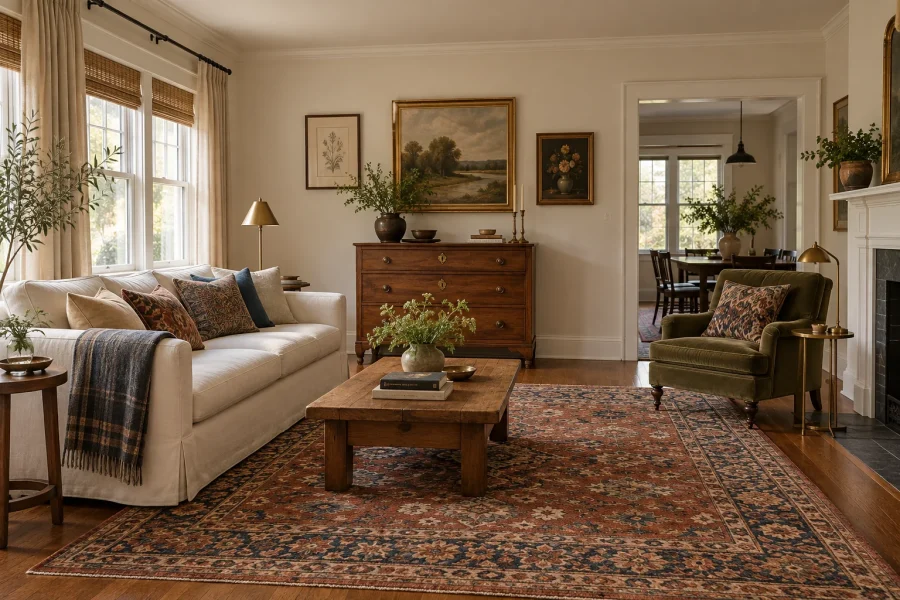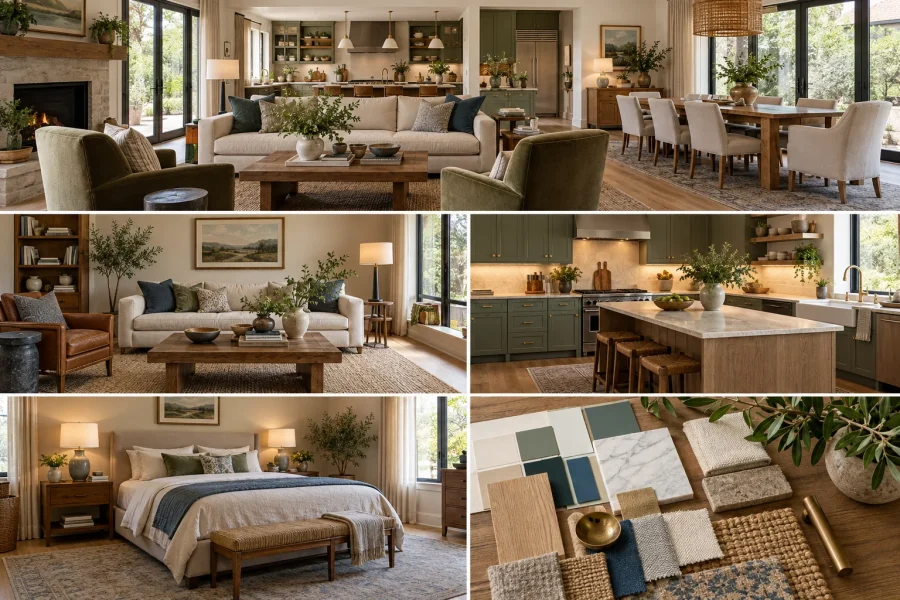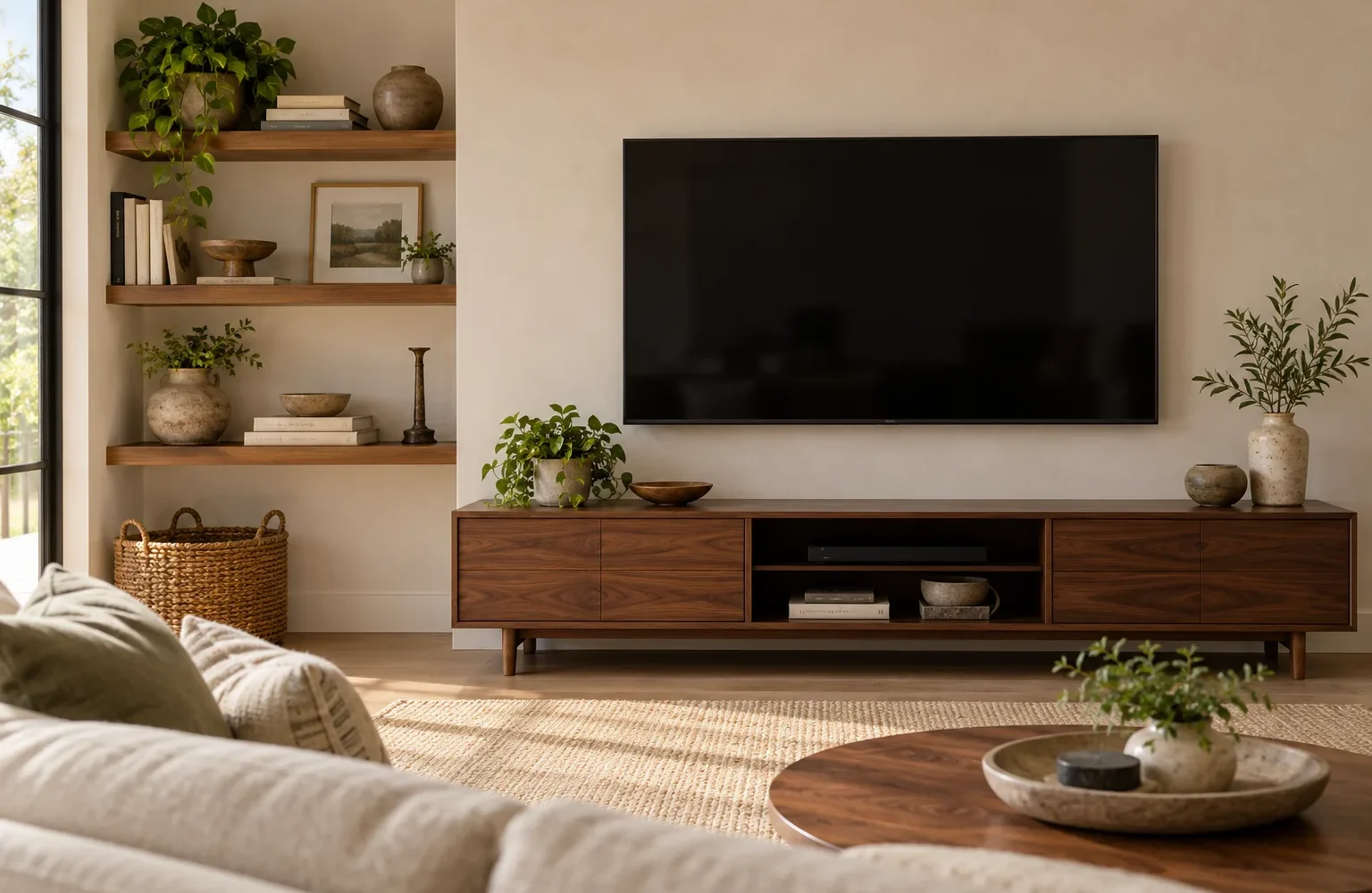
A successful media wall starts with a comfortable view of the screen and storage you can actually use. A low cabinet and a carefully chosen wall color may be enough; fitted shelving, panels, and lighting are optional layers. Plan around your sofa, devices, and access needs before deciding what the wall should look like.
These media wall ideas focus on a living room TV and its surrounding furniture. Use them to choose a direction, then check the mounting, ventilation, and installation requirements for your specific equipment.
Start at the sofa, not at the wall
Sit where you normally watch television. Mark a possible screen position with painter’s tape and look at it from the main seat and any side chairs. If you have to tip your head back or turn away from the room’s natural seating arrangement, reconsider the position before adding cabinetry.
There is no single mounting height that works for every room. Screen size, seat height, reclining positions, and viewing distance all matter. Use the actual screen dimensions rather than its diagonal measurement when making the tape outline.
Check glare at the times you tend to watch. A window opposite the screen may call for a different orientation or adjustable window coverings. Also map outlets, heating registers, doors, and the space needed to remove the TV from its mount later.
Use paint and a low cabinet for a simple media wall
Painting the wall behind a TV is a relatively straightforward way to define the viewing area. Deep olive, muted navy, warm charcoal, or a quiet neutral can work with the rest of the room. Test a large sample beside the screen in daylight and evening light before choosing.
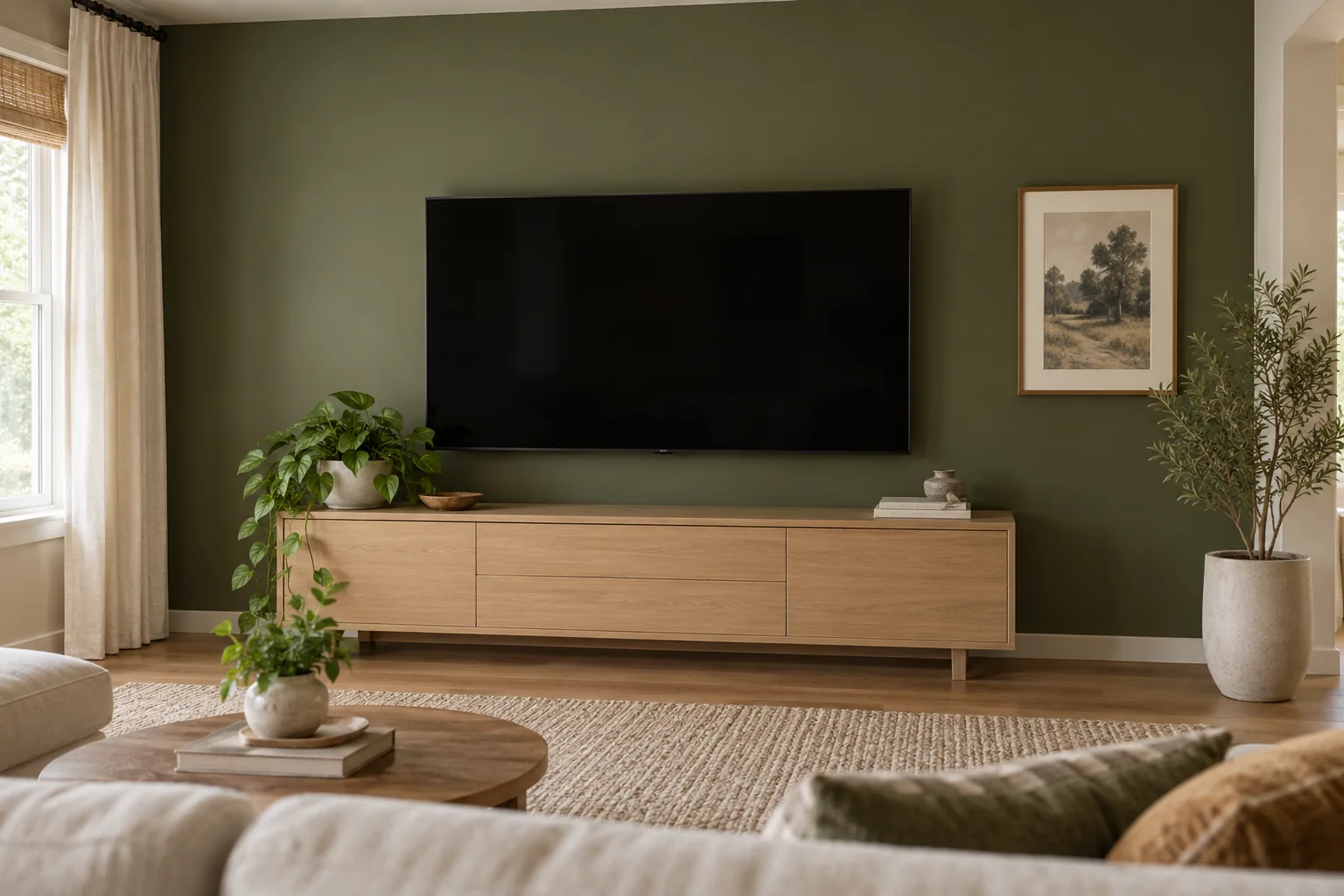
Choose the cabinet for its job first. Measure the devices, controllers, and accessories that need a home, including plugged-in connectors behind them. A beautiful shallow drawer is little help if the power adapter prevents it from closing.
Use a cabinet designed to support a television if the TV stands on it. The CPSC’s Anchor It guidance calls for securing TVs and furniture according to the manufacturer’s instructions. A low cabinet still needs the anchoring required by its design.
Add shelves to one side for a less formal arrangement
Asymmetrical shelving suits a room where the screen is not centered on the entire wall. Put a bookcase or a few shelves on one side and leave the other side quieter. Repeat the cabinet finish or a color from the seating to make the pieces feel related.
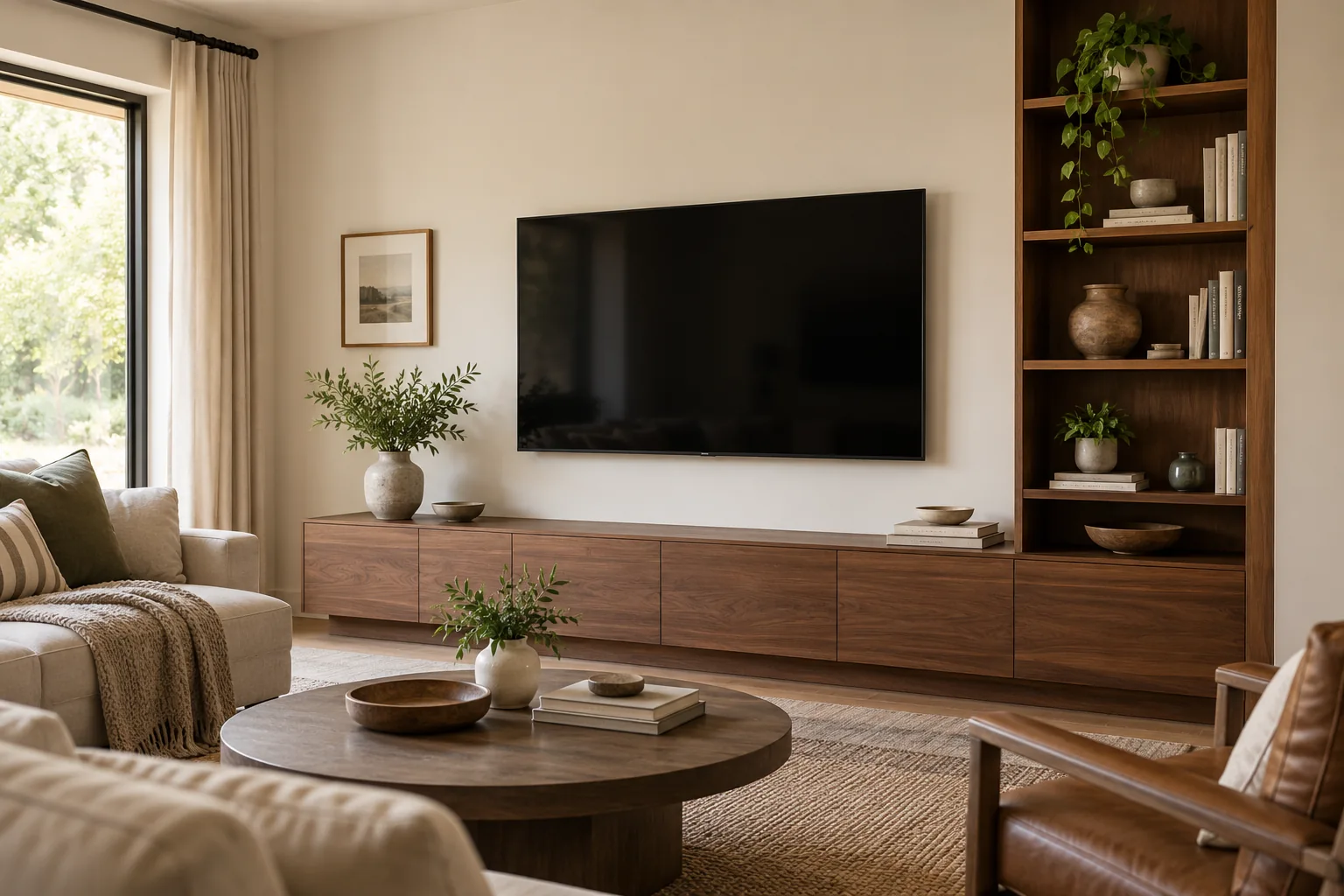
Keep shelves far enough from the screen that books and objects do not intrude into the viewing area. Avoid shiny ornaments or bright lamps that create distracting reflections. Place heavier objects where the shelf system is rated to hold them, and resist filling every opening.
This approach also lets you change the room gradually. Begin with the TV and cabinet, then add shelving only if the room needs it. Our guide to interior design styles can help you choose between more traditional framing, warm modern furniture, and simpler open arrangements.
Choose fitted cabinetry when you need substantial storage
A fitted wall can combine books, household storage, and entertainment equipment in one composition. Start by deciding which items belong behind doors and which deserve open display. Give equipment its own planned space rather than fitting it into whatever gap remains.
Leave the TV opening appropriate for its required clearances and future removal. A close-fitting decorative surround can become inconvenient when the screen needs service or replacement. Ask the cabinetmaker how panels come off, where cables run, and which parts can be adjusted later.
Fitted construction is most useful when the wall solves several real storage needs. If you only need room for a streaming device and a few remotes, a full wall of joinery may add expense and visual weight without making the room easier to use.
Hide clutter while keeping devices accessible
Measure the full depth of every device with its cables attached. Allow the ventilation clearances specified in each manual, and check whether controls work with a door closed. A cabinet back with a small cable hole is not automatically a suitable ventilation system.
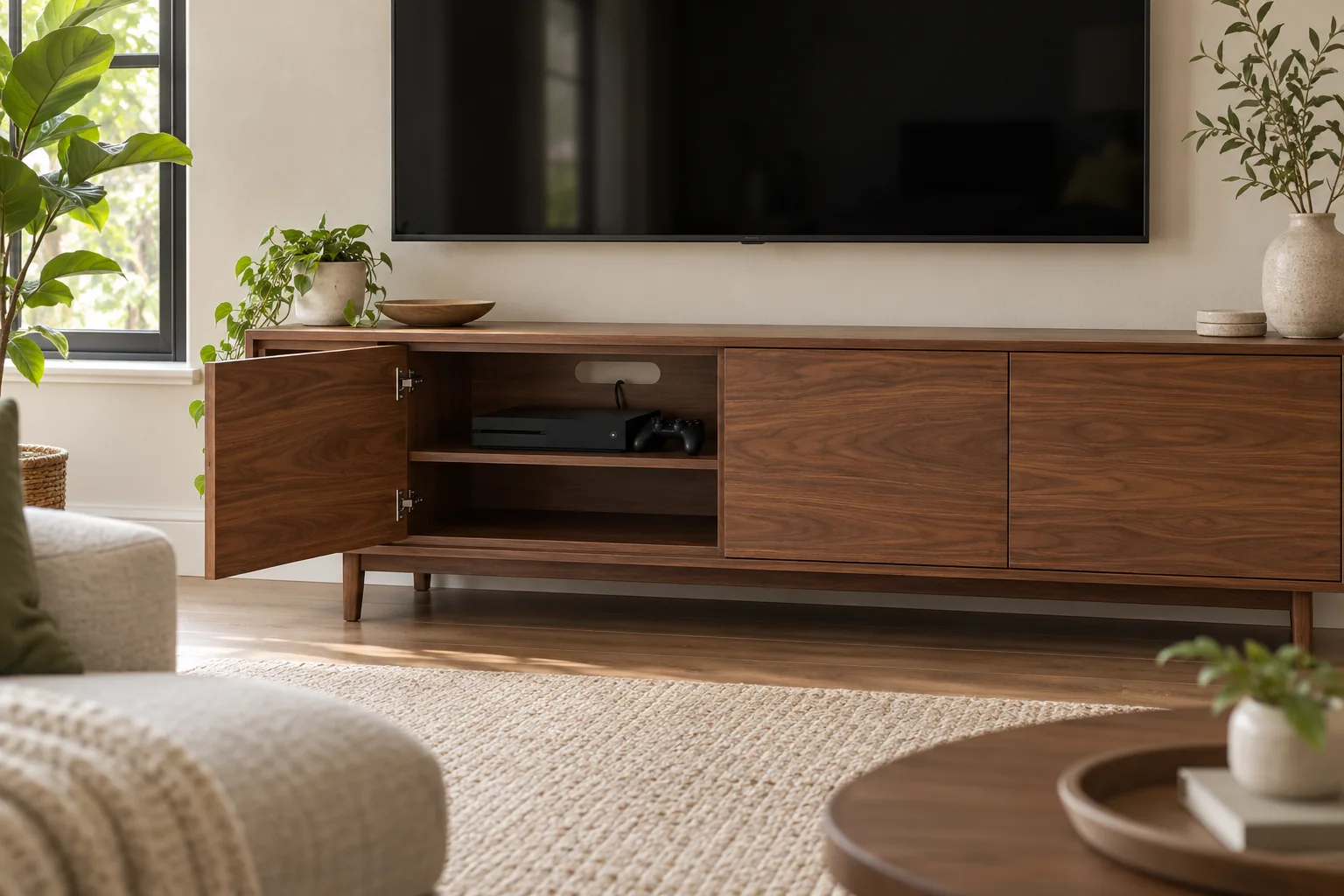
Use the maker’s model-specific instructions for mounts, fasteners, airflow, and cable connections. For example, Samsung’s TV support page provides a route to manuals by model. Treat a reference photograph as a design idea rather than an installation specification.
A surface cable raceway may be enough for a simple setup. If the project involves new outlets, in-wall wiring, or uncertain wall construction, have a qualified installer or electrician plan that work. Do not bury ordinary power cords in the wall or seal connections behind permanent decorative panels.
Keep a small media wall shallow and quiet
In a compact room, bulky side towers can crowd the seating area. Consider a shallow console on legs, a plain wall, and one small decorative element beside the screen. Measure the cabinet depth against the space you need to walk past it.
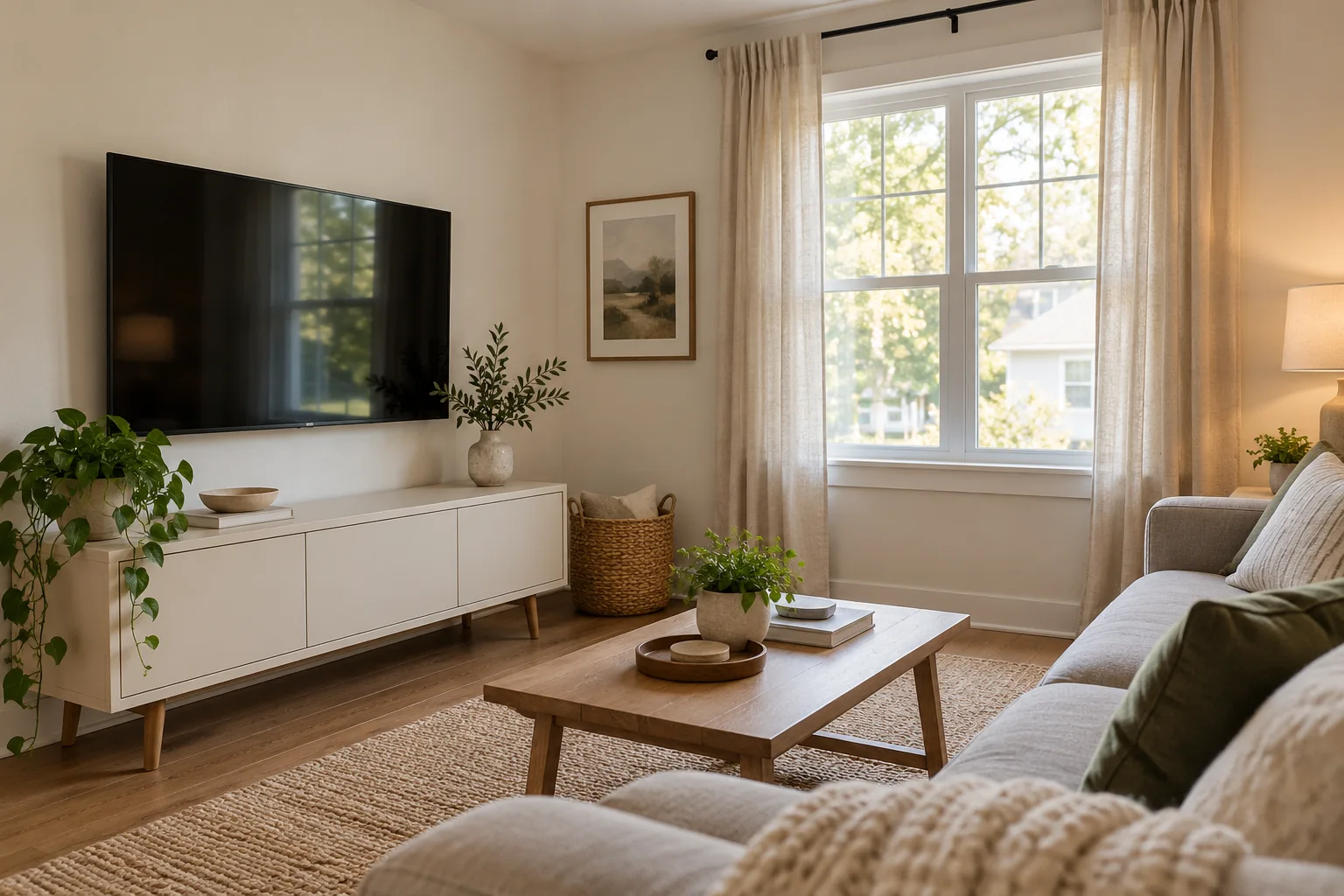
Floating furniture can show more floor, but it needs suitable structural fixing. A freestanding cabinet is often a simpler starting point, provided its support and anti-tip requirements are met. Avoid choosing a floating design solely because it looks lighter in a photo.
Use texture and lighting selectively
Wood, painted paneling, or a textured finish can give the wall interest when the screen is off. Pick one dominant treatment and compare a sample with the cabinet and flooring. If the wall already has a strong finish, simpler shelves and fewer accessories usually make it easier to read.
Check light positions from the sofa before installation. A shelf light aimed toward the screen can create glare; a bright decorative strip can compete with the picture. Prefer dimmable, accessible lighting with a planned power source, and keep drivers and connections serviceable.
If you are painting or refinishing furniture, allow the coating to cure before placing devices and objects on it. Our explanation of paint drying versus curing covers why a surface that feels dry may still need more time.
Do you need a fireplace in a media wall?
No. A TV wall can be complete with cabinetry, color, or shelving. Leaving out the fireplace often makes it easier to choose a comfortable screen position and retain useful lower storage.
If you want both features, plan them together using the exact appliance and TV instructions. Heat, mantel details, clearances, and the viewing position all affect the design. Do not copy the gap between a TV and fireplace from a photograph; have the relevant professionals confirm the arrangement before building.
Make a short plan before you commit
- Tape out the screen and cabinet, then test the view from every regular seat.
- List devices and storage contents, including cable and ventilation space.
- Choose a simple painted wall, separate furniture, or fitted cabinetry.
- Plan mounting, power, lighting, and service access before decorative finishes.
- Try samples in the room and remove any feature that makes viewing or circulation worse.
Once those decisions work, the decorative details become easier. The wall should support the way you watch, store, and move through the room every day.

Ethan Miller
Ethan Miller writes about home improvement, interior design, cleaning, and everyday living at Home & Living Daily. He shares practical tips and simple ideas to help readers create more comfortable and functional homes.