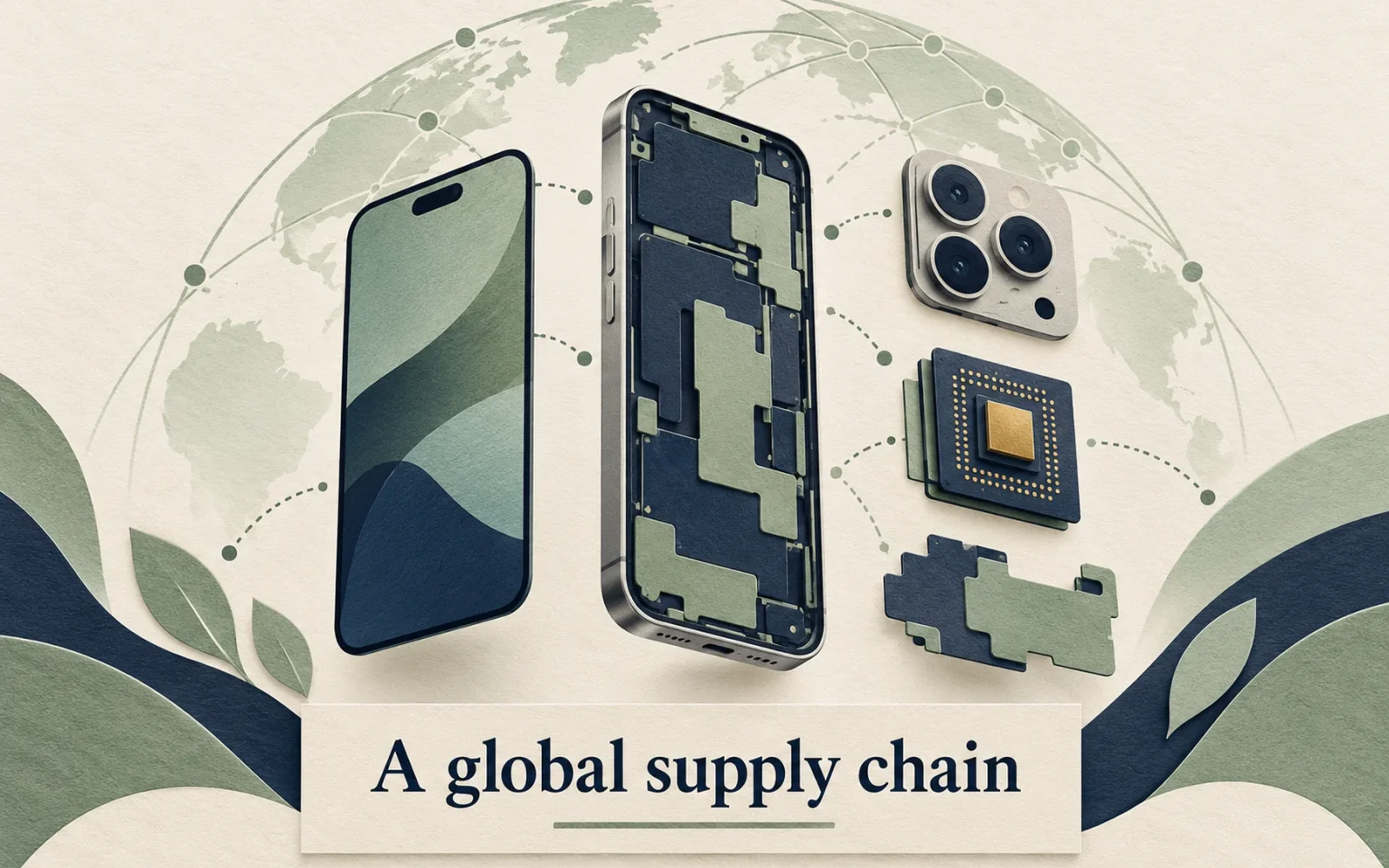
iPhones are designed by Apple and built through a global supply chain. China and India are documented final-assembly locations; the components and engineering behind a finished phone involve additional countries. There is no single country that accurately describes every stage of making an iPhone.
If you are specifically asking whether iPhones are made in Israel, distinguish engineering work from final assembly. Apple has engineering operations there, but that does not establish that complete retail iPhones are assembled there.
“Made” can describe several different jobs
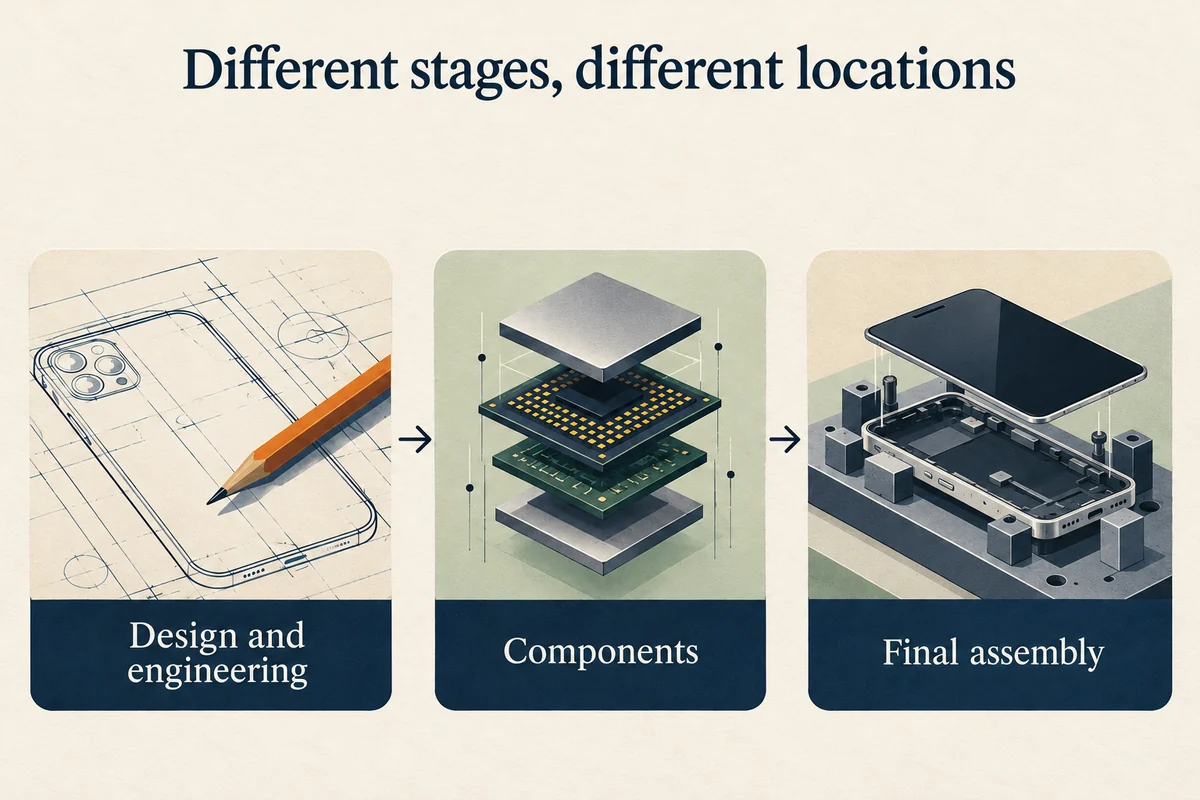
A phone’s development includes product design, chip engineering, component production, assembly, testing, and distribution. Those jobs can happen in different places, sometimes through different companies.
| Term | What it tells you |
|---|---|
| Designed by Apple | Who develops and specifies the product |
| Component supplier location | Where a particular part or manufacturing process is based |
| Final assembly location | Where parts are brought together into the finished device |
| Sales region | The market a particular configuration is intended for |
These categories should not be substituted for one another. A supplier operating in a country does not prove that the whole phone was assembled there. Likewise, buying an iPhone in the United States does not mean its assembly took place there.
What Apple’s own sources establish
Apple has explicitly identified final assembly in China. Its November 2022 supply update described the iPhone 14 Pro and Pro Max assembly facility in Zhengzhou. This is evidence about those products and that facility, rather than a claim that every iPhone has always come from the same factory.
Apple also states in its India manufacturing history that it began manufacturing iPhones in India in 2017 and works with suppliers on assembly and components there.
Its broader supply-chain information describes a global production network. The sensible conclusion is that the assembly country can vary by model, production run, and individual unit. A fixed percentage quoted in an old article should not be treated as a permanent breakdown of current production.
Does Apple’s work in Israel mean the phone is assembled there?
No. Apple’s Herzliya job listings include engineering roles involving technologies such as chips and camera hardware. Those are examples of development work, not documentation of a final iPhone assembly line.
It would be equally misleading to say that an iPhone has no connection with a country merely because final assembly occurs elsewhere. Research, intellectual property, components, and assembly are different kinds of involvement. State which one you mean before drawing a conclusion about the product’s origin.
This distinction also helps when reading a supplier list. A supplier’s office address may identify a company or a facility involved in one part of production. It cannot, by itself, answer where a specific phone was assembled.
Check the individual phone instead of guessing
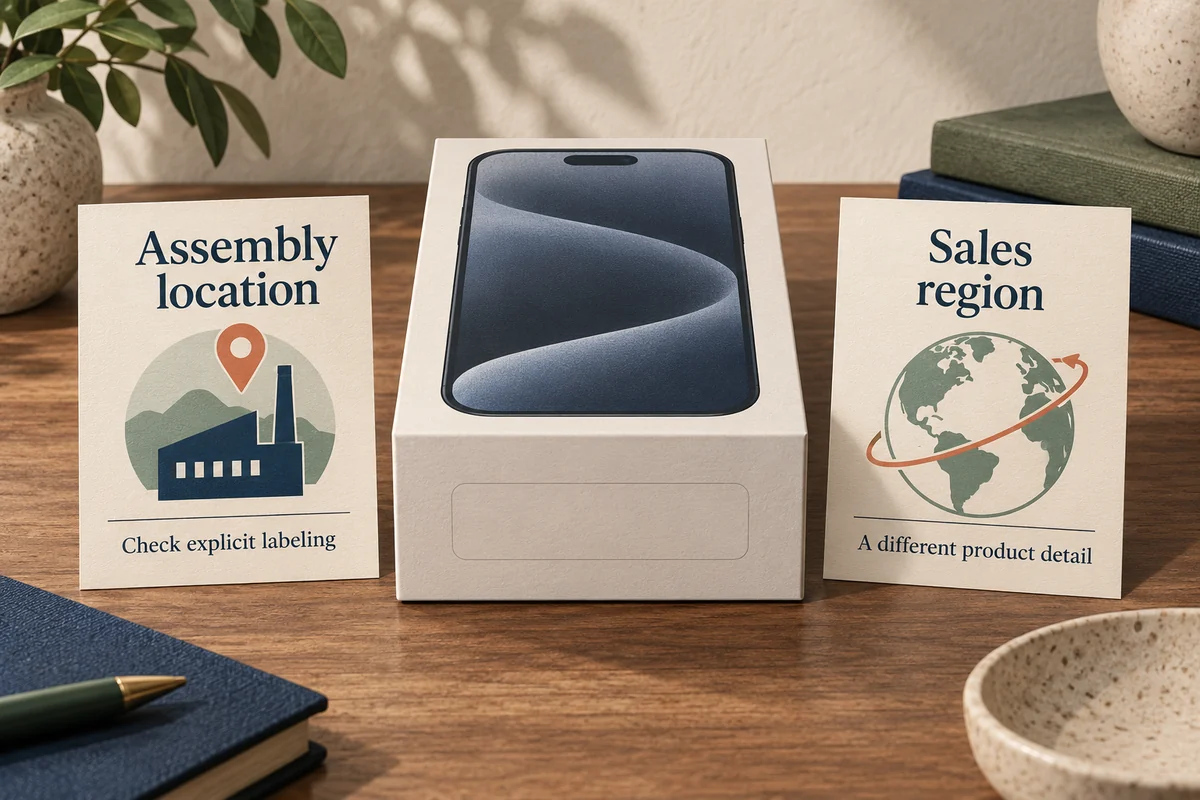
If the assembly location of your own unit matters, inspect its original packaging and available regulatory or product labeling. Look for wording that explicitly says where it was assembled. Keep that separate from the model number or sales-region information.
Do not rely on a social-media claim that one serial-number prefix reveals an exact factory or guarantees better quality. A model identifier helps establish the product and regional variant, but it is not a complete supply-chain record.
When buying used, condition, repair history, activation status, and the seller’s return terms usually provide more actionable information than an unsupported claim that one assembly country produces a “better” phone. If a procurement requirement needs formal origin documentation, request the relevant documentation from the seller rather than inferring it from a listing photograph.
Conclusion
For a specific device, look for explicit assembly labeling. For the product as a whole, describe a global supply chain with documented assembly in China and India. Keeping design, engineering, components, and assembly separate gives a much more accurate answer than assigning every iPhone to one country.

Ethan Miller
Ethan Miller writes about home improvement, interior design, cleaning, and everyday living at Home & Living Daily. He shares practical tips and simple ideas to help readers create more comfortable and functional homes.