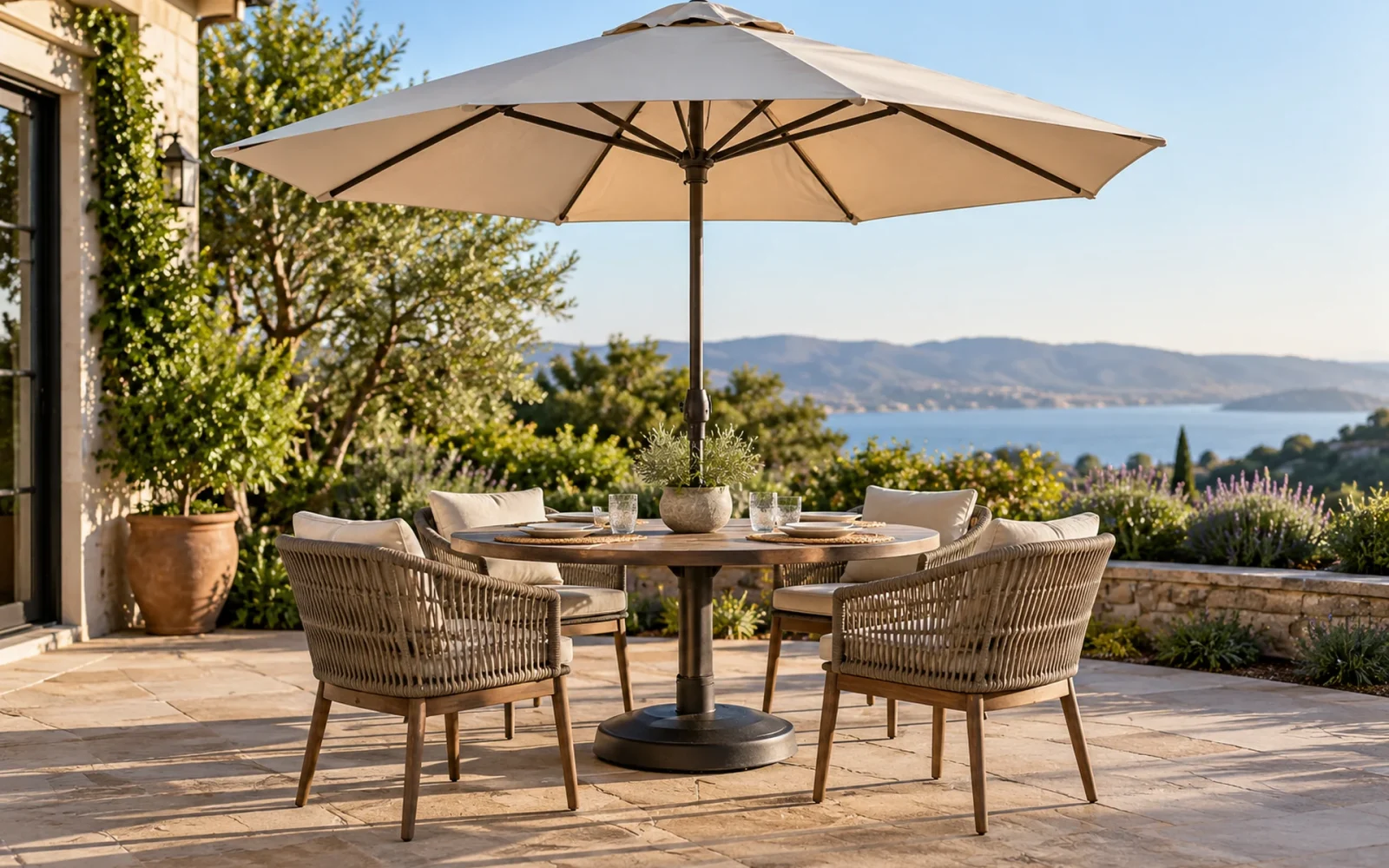
Choose a patio umbrella large enough to cover the people around the table, with space for its base and opening movement. For a centered round dining table, a useful starting calculation is the table’s diameter plus about four feet, giving roughly two feet of canopy overhang on each side. Then check the chairs, sun angle, and the exact model’s requirements before ordering.
That calculation estimates a canopy size. It does not guarantee that its moving shadow will cover every seat all afternoon.
Measure the furniture while it is in use
Record the table’s width and length or diameter. Pull the chairs into their occupied positions and measure the space people actually use. Include reclining or deep lounge seats if those are the items you want to shade.
For a table umbrella, check the hole diameter, the support arrangement beneath it, and the distance between the tabletop and any obstruction. For a freestanding or cantilever model, measure the base footprint where it will sit. A base hidden in a product photograph can occupy the route you planned to leave open.
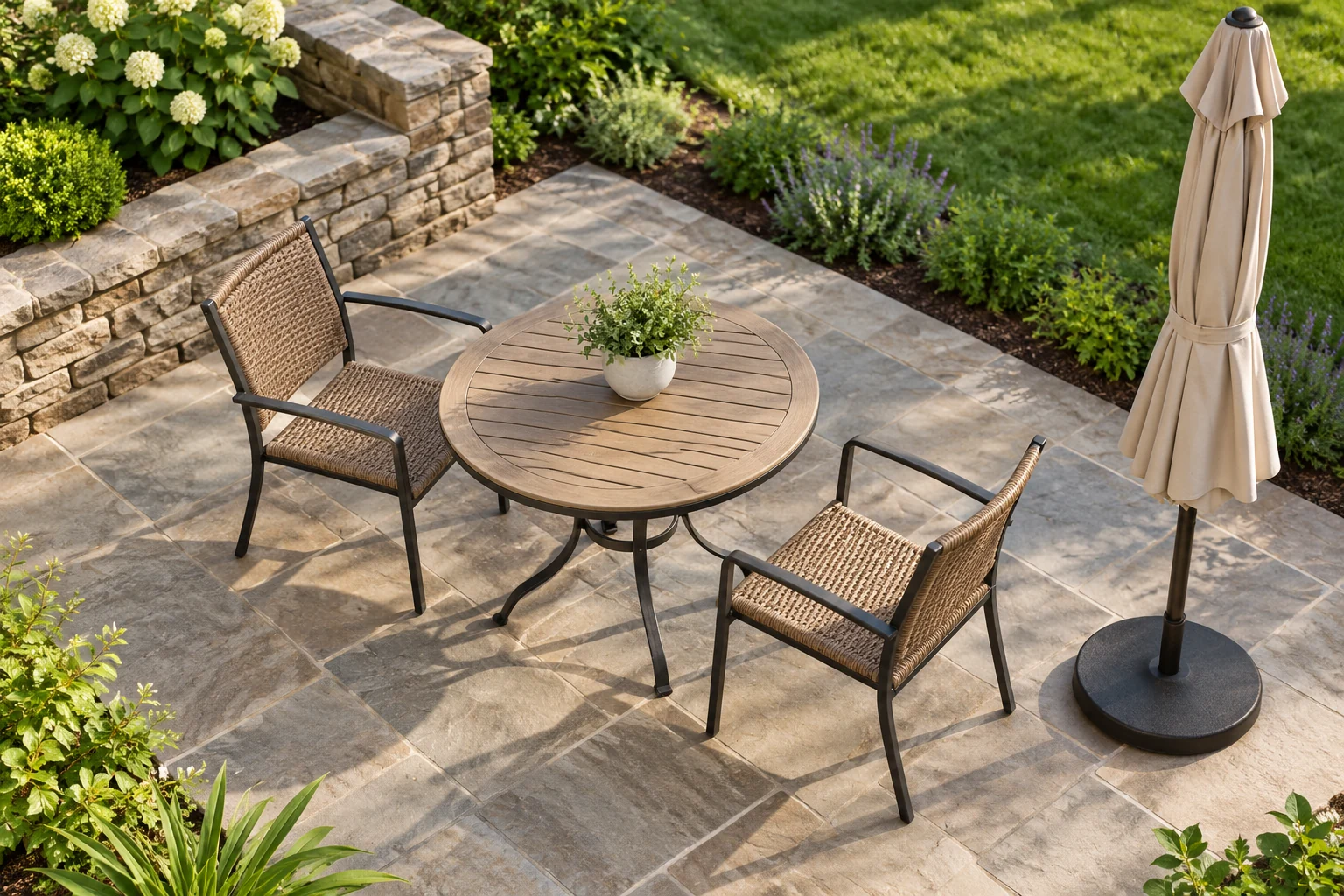
Also note walls, overhead branches, a roof edge, lights, and the door swing. You need room to open and close the umbrella, not only room for its final position.
Use overhang as a starting calculation
California Umbrella’s size guide suggests roughly two feet of overhang beyond a table edge. Define that clearly when doing the arithmetic: two feet on each side adds four feet to the total dimension.
| Measured furniture | Illustrative calculation | Size to investigate |
|---|---|---|
| 36-inch round table | 3 feet + 4 feet | A canopy around 7 feet across, with the chairs and shade checked |
| 48-inch round table | 4 feet + 4 feet | A canopy around 8 feet across |
| 60-inch round table | 5 feet + 4 feet | A canopy around 9 feet across |
| 6-by-3-foot rectangular table | Add 4 feet to each dimension | A roughly 10-by-7-foot rectangular canopy as a first comparison |
These examples help create a shortlist; they do not replace a model’s sizing information. Product ranges offer different shapes and measurements, and chair depth may make a larger or differently positioned canopy useful.
If two people sit at a very small table, their occupied seats may still need more shade than the tabletop suggests. Conversely, one large umbrella may be awkward over separate chairs that are far apart. Consider the actual arrangement rather than assigning a size solely by the number of people.
Check what the advertised measurement describes
A round or octagonal umbrella is commonly described by its span, while a square or rectangle may be listed by its side lengths. Check the product drawing: the measurement may be taken along the canopy or between specific points, and square dimensions are not the same as the diagonal.
For comparison, a perfect 10-foot-diameter circle has a plan area of about 78.5 square feet, while a 10-by-10-foot square is 100 square feet. An octagonal canopy and the actual ground shadow are different shapes. Those geometric areas cannot promise 78.5 or 100 square feet of shade at every hour.
A long table can expose its ends under a round canopy even when the center feels comfortable. A rectangle often follows that footprint more closely. A square can suit a compact seating group, but check its corners against walls and paths.
Watch where the shade falls
Observe the area during the hours you will use it. Is the sun mostly overhead, or does it enter from the side? Moving the umbrella or furniture, or using a model with an approved tilt or rotation feature, may solve the problem better than simply increasing diameter.
A cantilever model lets the canopy reach over a seating area without placing the pole in the middle. Check its reach, rotation envelope, base position, and controls. Do not assume that its nominal size is directly interchangeable with a centered table umbrella.
Our guide to adding shade to a backyard compares other options if low sun or a very exposed layout makes an umbrella a poor fit.
Choose the umbrella and base together
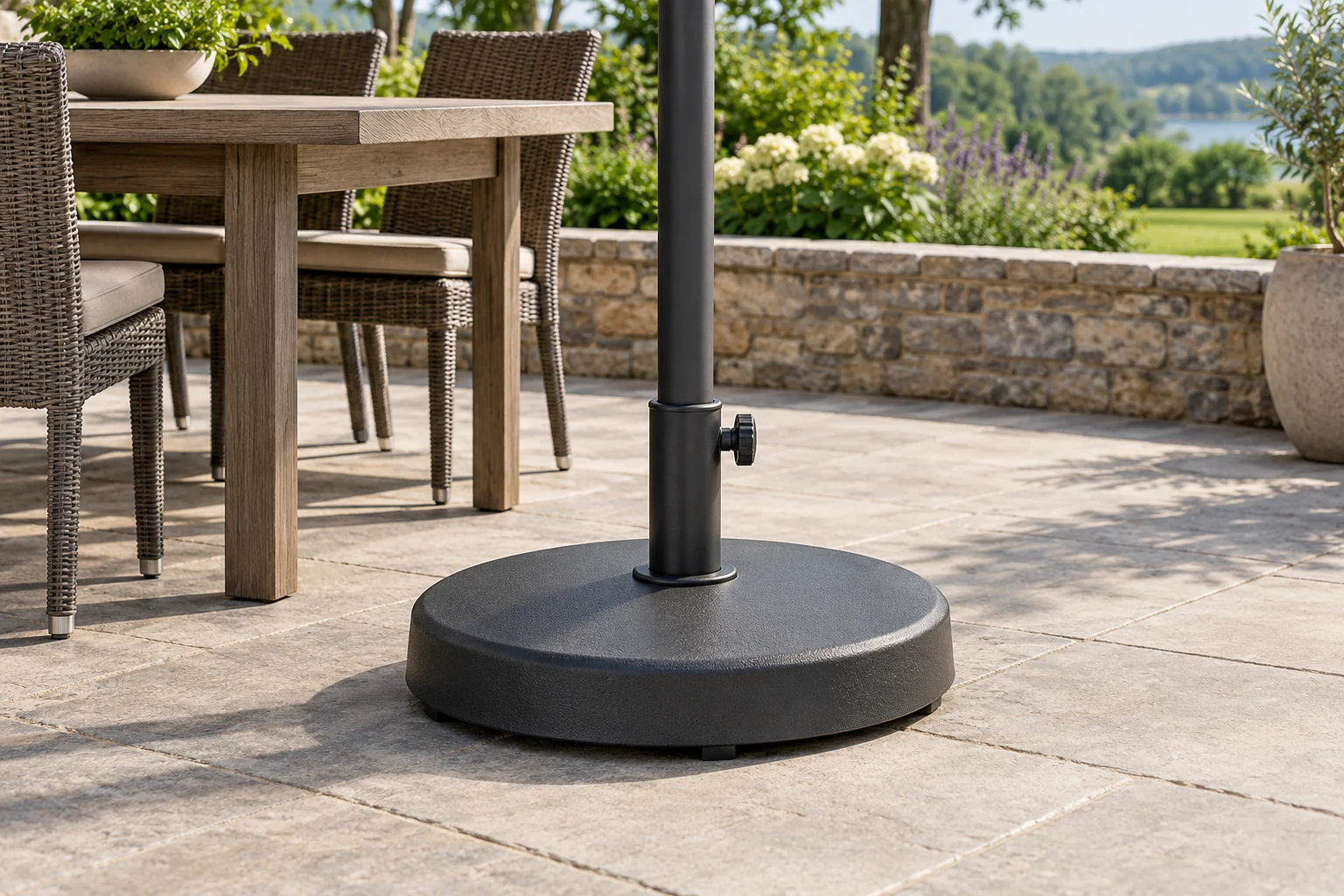
Use the exact model’s support instructions. Base requirements depend on the umbrella design, whether it is supported by a suitable table, the mounting method, and its operating limits. General online charts differ substantially, so averaging their recommended weights would not establish a suitable base.
Verify pole diameter, sleeve fit, fastening, and any required ballast. A cantilever often needs a purpose-designed base or approved permanent mount. An existing decorative stand is not automatically compatible with a larger replacement canopy.
Finally, check whether you can operate and store the chosen size comfortably. A large umbrella that cannot open without moving the dining table may create a routine you soon stop using. Keep the product’s wind and unattended-use instructions alongside the dimensions when making the final choice.

Ethan Miller
Ethan Miller writes about home improvement, interior design, cleaning, and everyday living at Home & Living Daily. He shares practical tips and simple ideas to help readers create more comfortable and functional homes.