To add shade to a backyard, first mark the place and time you want to use, then choose a canopy whose shadow reaches that spot. An umbrella can serve a small seating group, an awning can cover a patio beside the house, and a properly supported sail or roofed structure can define a larger zone. Trees can contribute long-term shade while a temporary solution handles the immediate need.
You rarely need to shade the entire yard. Start with the table, chair, or play area that becomes uncomfortable, and make that part work.
Watch the sun at the hour you actually sit outside
Take a chair to the intended spot and check it during the relevant part of the day. Note the direction of direct sunlight, the shadow from the house, and where nearby trees already help. Repeat later, since a useful lunchtime shadow may miss the chair completely by late afternoon.
A structure’s plan dimensions are not its guaranteed shadow footprint. Low sun travels underneath a high roof or canopy. An umbrella centered over a table may leave one side exposed, while moving the table slightly can sometimes use existing shade.
Also check the season in which you need cover. A photograph taken on one afternoon cannot establish summer coverage for a permanent installation. For a substantial project, a designer can assess sun paths alongside drainage, support, and access.
Choose the smallest system that solves the useful zone
| Your situation | Option to consider | Cost or practical item easy to overlook |
|---|---|---|
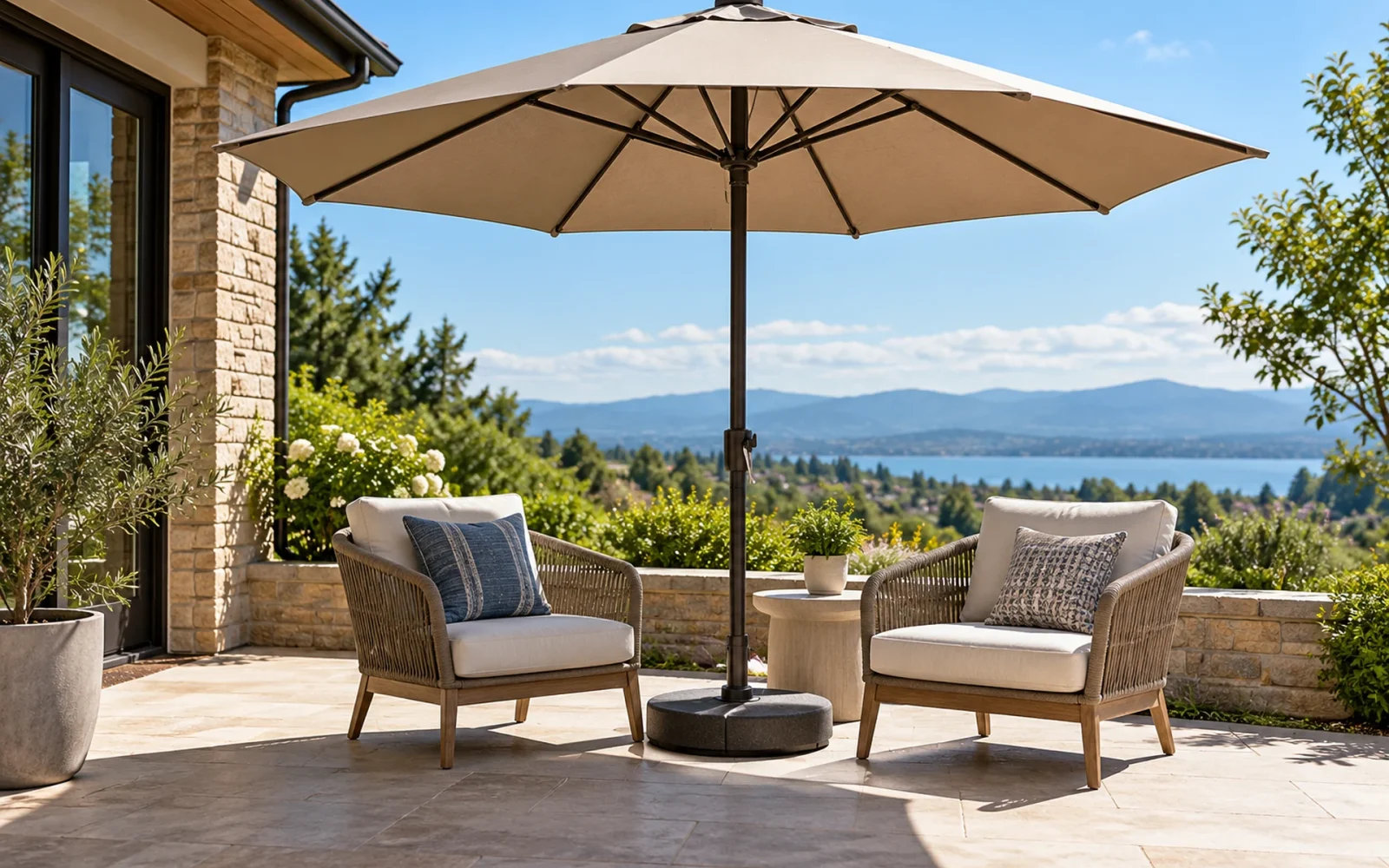
| One or two chairs, flexible layout | Patio umbrella | Correct base, clearance to open, wind routine, and storage |
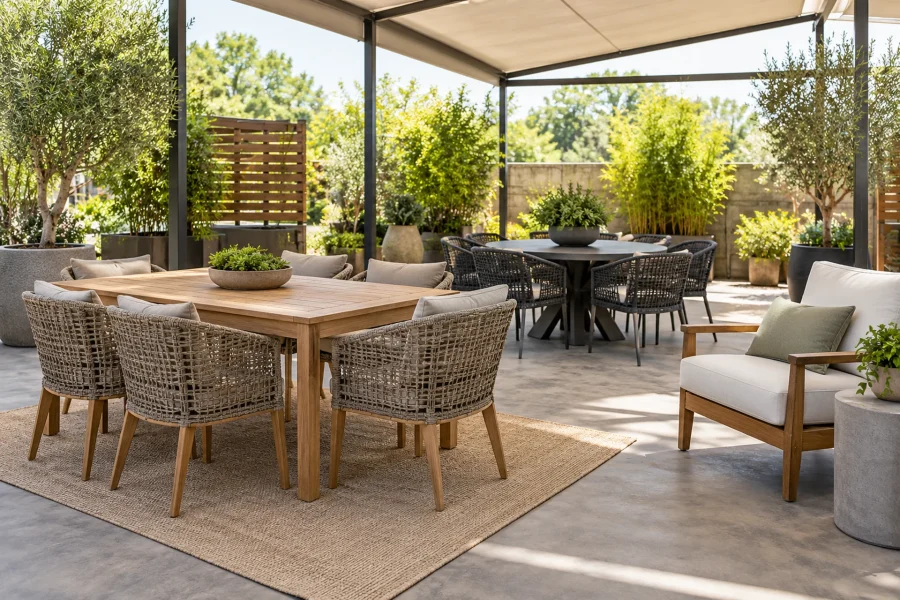
| Patio directly beside the house | Retractable awning | Suitable structural fixing, projection, pitch, and weather limits |
| Open area with feasible anchors | Shade sail | Posts, foundations, hardware, tensioning space, and removal access |
| A permanent dining or lounge destination | Roofed gazebo, pavilion, or suitable louvered system | Foundation, installation, drainage, and site-specific ratings |
| Long-term landscape improvement | Appropriate shade tree | Mature canopy and roots, establishment care, and the wait for useful cover |
A portable canopy can suit occasional use where the product and site allow it. Include its anchoring, guy lines, and storage in the decision. A cover that is easy to carry is not necessarily convenient to leave open on an exposed lawn.
For a small seating area, start with umbrella placement
Choose the umbrella and base together according to the manufacturer’s requirements. Check the full opened canopy, the mechanism’s height, and whether you can move chairs without hitting the pole or base. A cantilever design moves the pole away from the table, but its base can take up substantial floor area.
Place the shade where it falls across the people, not simply where the pole looks symmetrical. Tilt or rotation may help on a model designed for it. Do not improvise a tilt or extend the pole to chase a moving shadow.
Treasure Garden’s wind guidance says umbrellas should not be left unattended while open and recommends closing and storing them in windy conditions. A heavy base does not make an umbrella a permanent windproof roof. Follow the instructions for the actual model.
A shade sail needs more than somewhere to tie it
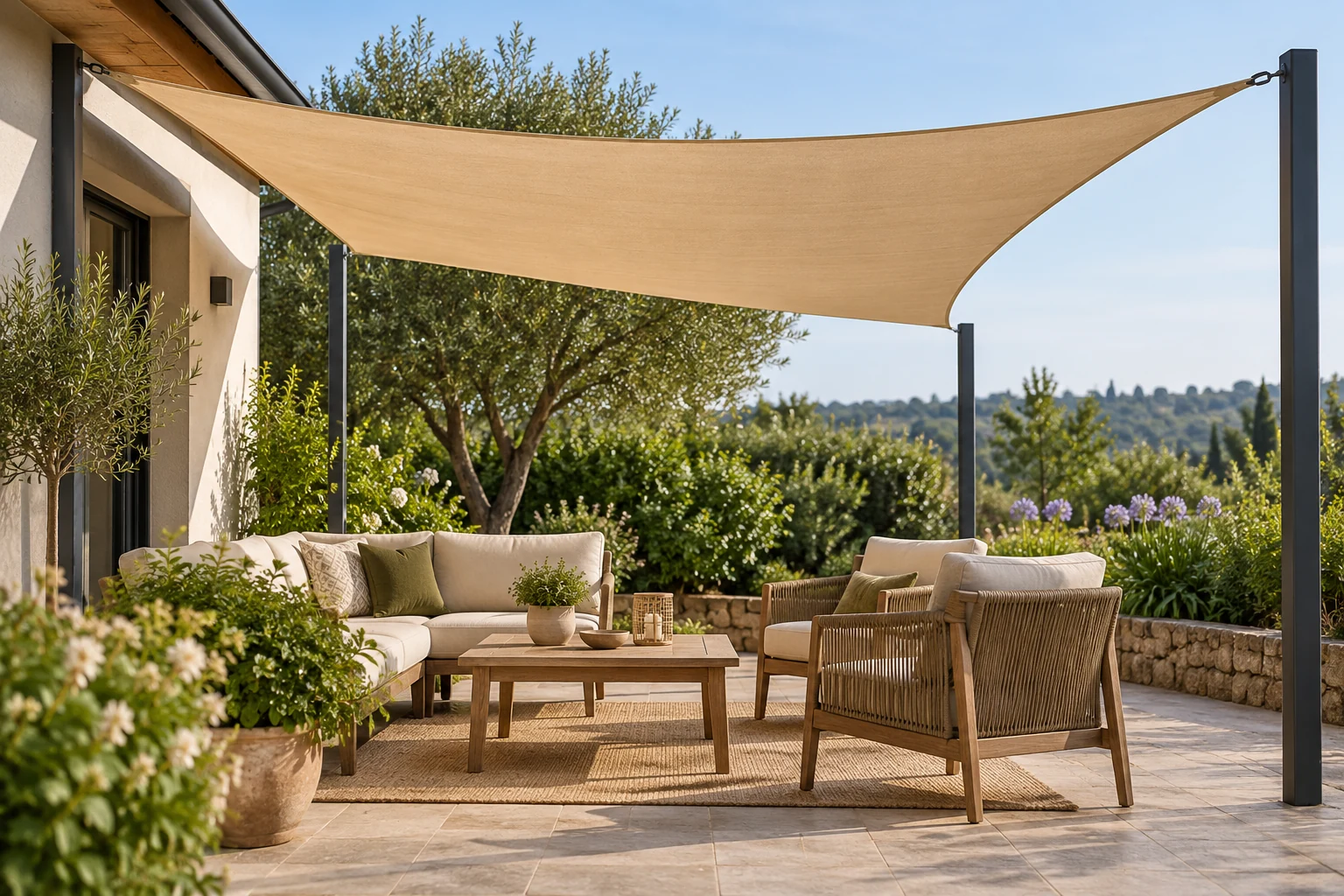
Sails can cover an awkward space with relatively little visual bulk, but the fabric price is only part of a working system. You need appropriate fixing points, hardware, clearance for tensioning, and a way to access it for maintenance or removal.
The Coolaroo Premium shade-sail manual calls for structurally sound anchors and notes that installation requirements vary with soil, supports, and local wind conditions. A generic post size or a hook in a fascia board is not a complete installation design.
Map the sail edges and the projected shadow before ordering. Curved fabric edges and the space needed for hardware mean a sail may shade less of a rectangle than its corner measurements suggest. Check whether the fabric is intended only for shade or also has a stated rain-shedding function. Do not let water collect in a poorly pitched cover.
Use side coverage for low afternoon sun
If the sun is coming horizontally under the canopy, a larger overhead cover may not solve the problem efficiently. Moving the seating, using an approved outdoor roller shade, or positioning a suitable vertical screen can be more useful.
Check wind exposure and support before adding side fabric to an existing structure. Curtains and screens change the area exposed to wind. They can also reduce airflow and views, so test which side actually needs coverage.
A traditional open pergola supplies some shade and a defined space, but sun passes between its rafters. Decide how much shade you need before pricing one. A canopy or louvered roof changes both its performance and the complete project cost.
Let trees become part of a longer plan

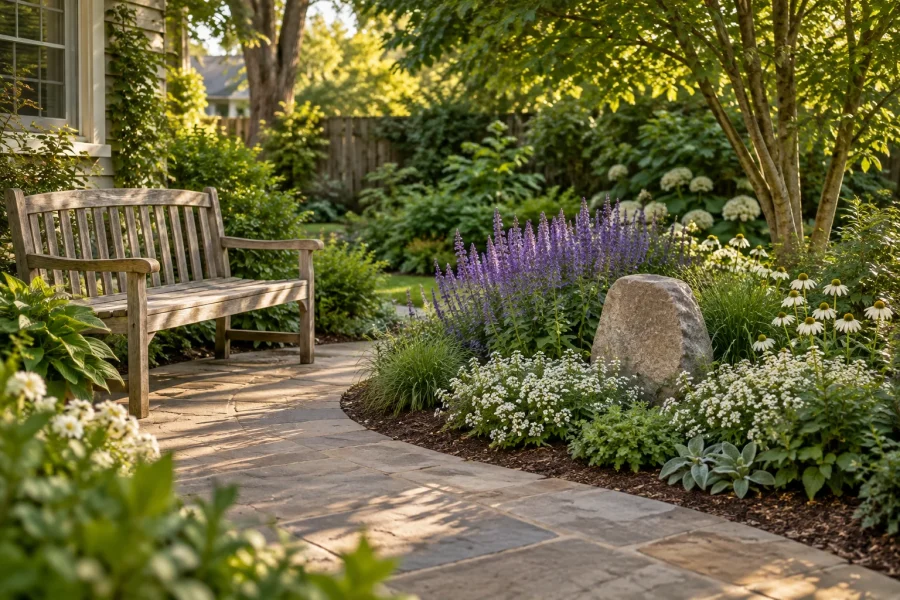
If you already have suitable tree shade, try locating a seat there before changing the patio. Keep furniture placement and any new paving from damaging roots or changing the soil around the trunk.
For a new tree, choose a species suited to the site and its eventual canopy, roots, water needs, and clearance from buildings and utilities. A small tree from the nursery cannot provide the immediate coverage shown in a mature-landscape photograph. Combine that planting plan with shade you can use now rather than expecting instant results.
Budget for the support and the daily routine
Compare complete systems: canopy plus base, sail plus engineered supports where needed, or structure plus foundation and installation. Include any approvals, electrical work, drainage, and storage accessories that belong to the chosen solution.
Then rehearse ordinary use. Can you open and close it comfortably, reach the controls, bring it in when required, and keep walking routes clear? For a modest budget, reliably shading a small seating zone can be more useful than stretching a lightweight cover across the whole backyard.

Ethan Miller
Ethan Miller writes about home improvement, interior design, cleaning, and everyday living at Home & Living Daily. He shares practical tips and simple ideas to help readers create more comfortable and functional homes.