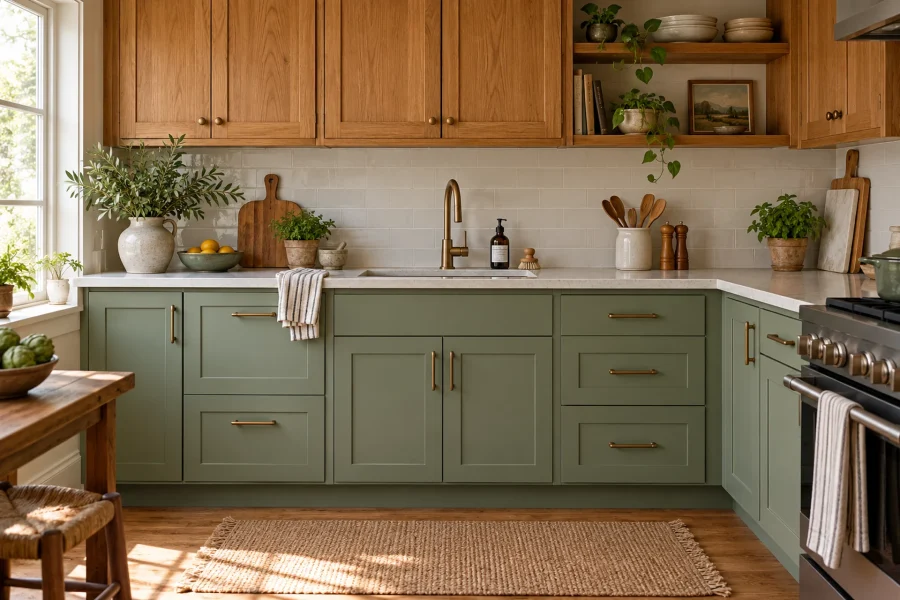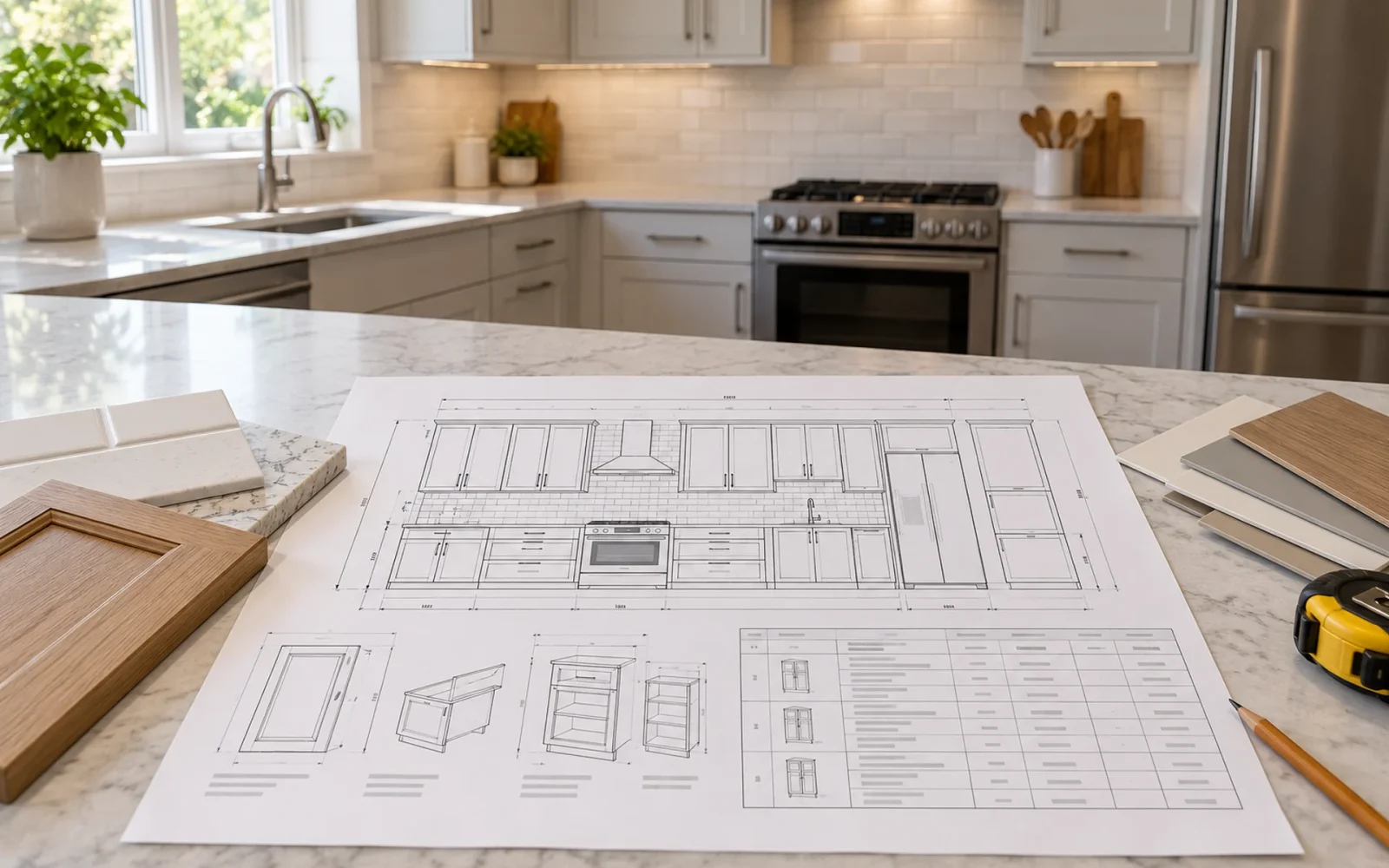
Choose a kitchen remodeling contractor by checking who will coordinate the cabinet plan, appliances, counters, trades, and final installation. A contractor can do attractive work and still be the wrong fit if the service you need falls outside the proposal. Establish those responsibilities before comparing prices.
Bring a description of the intended scope and the main problems in your existing kitchen. Then use a few real coordination questions to learn how each candidate would run your project.
Hire the service your project actually needs
A design-build firm may handle planning and construction under one organization. A build-only contractor may expect completed drawings and selections from your designer. A cabinet installer may install a supplied order while leaving demolition, services, counters, and project management to others.
None of those arrangements is automatically better. Ask what the company provides, what it assumes is already done, and who carries decisions between separate suppliers. A gap matters most when each party expects another to catch it.
| Situation | Responsibility to establish |
|---|---|
| The appliance model changes | Who checks openings, ventilation, services, and any affected cabinet order? |
| The wall differs from the drawing | Who verifies field dimensions and approves fillers or layout changes? |
| The countertop requires a final template | Who confirms the cabinet installation and sink details are ready? |
| A delivered component is wrong | Who reports it, obtains a replacement, and adjusts the schedule? |
Use an appliance-fit question to test coordination
Ask a candidate to explain how they would verify your refrigerator or range before the cabinet order is released. A useful answer goes beyond nominal width. It addresses the exact model, installation clearances, door movement, adjacent drawers, connections, and the delivery route.
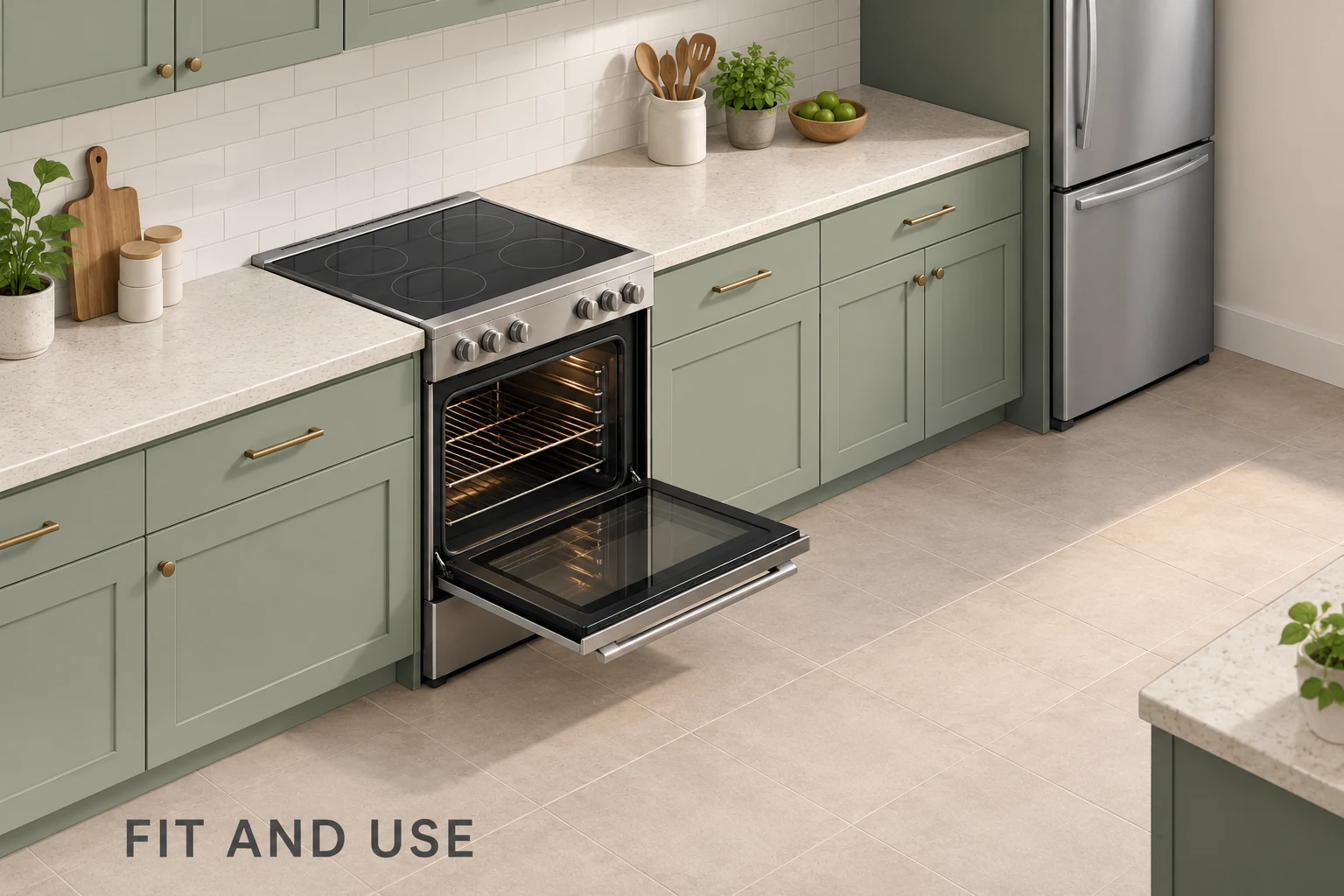
Follow with the counter sequence: what must be selected before templating, who checks cabinet readiness, and how the fabricator receives the sink or cooktop specifications? You are looking for a clear handoff, not a promise that everything will somehow fit on installation day.
If you plan structural or service changes, ask which qualified professionals assess them and what approvals apply locally. Avoid treating a general remodeling portfolio as evidence of expertise in every specialty.
Check business records and references for comparable work
Verify the business identity and applicable licensing or registration through the relevant official authority. Request current insurance documentation and clarify the roles of subcontractors. The FTC’s contractor guidance recommends checking licenses with state or county government and asking for insurance evidence.
Request references for a similar scope: an occupied-home remodel, a same-layout replacement, or a kitchen with structural work, depending on your plans. Ask how the team handled missing materials, decisions during demolition, and the final list of corrections.
A star rating or association membership is only one signal. Read reviews for recurring patterns, and give serious concerns a factual follow-up. References should help you assess communication and completion, not just whether the finished kitchen looks attractive.
Compare the purchasing responsibilities as carefully as the price
The proposal should identify who measures, orders, receives, stores, inspects, and installs each major component. Clarify owner purchases, allowances, excluded work, and who deals with returns or warranty claims. A cabinet price may not include end panels, installation, or delivery.
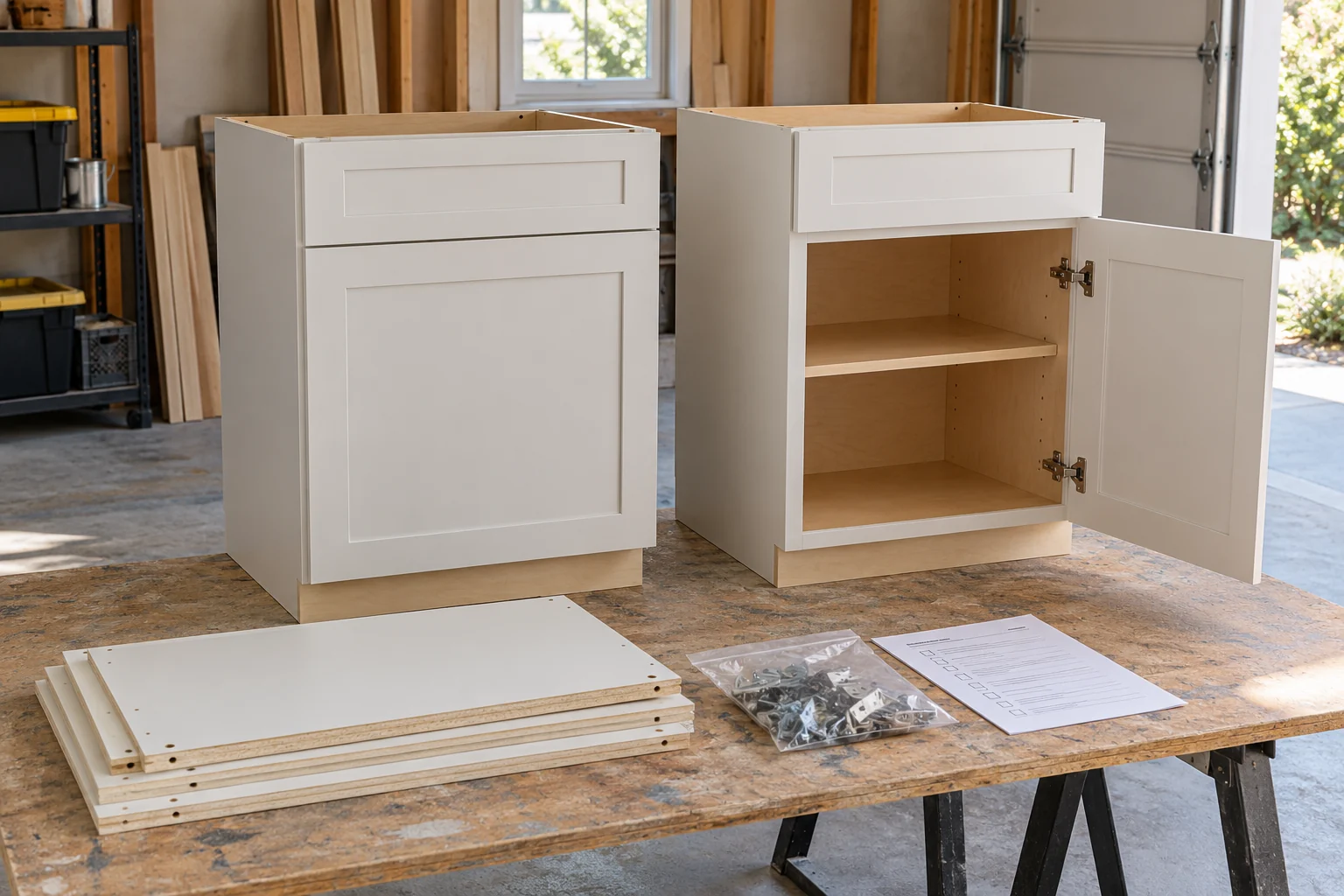
Ask whether the price is fixed for the defined scope or an estimate that can change, and how those changes are documented. Unseen conditions deserve an agreed approval process. Optional upgrades should be identifiable separately from necessary repairs.
Review payment and contract terms against applicable local requirements. Do not rely on a universal deposit rule or a verbal promise omitted from the written agreement.
Agree on the kitchen’s downtime and the finish line
Ask when the sink, cooking equipment, refrigeration, and utilities will be unavailable, and which work areas remain accessible. Our guide to living through a kitchen remodel can help turn that conversation into a practical household plan.
Set expectations for supervision, updates, site protection, cleanup, operation checks, remaining items, and handover documents. Choose the contractor whose proposal makes the coordination understandable. Clear responsibility is especially valuable when the project encounters something the original drawing did not show.

Ethan Miller
Ethan Miller writes about home improvement, interior design, cleaning, and everyday living at Home & Living Daily. He shares practical tips and simple ideas to help readers create more comfortable and functional homes.