To live through a kitchen remodel, set up three things before demolition: a practical place to prepare food, a workable way to wash and dry dishes, and a clean living area outside the work zone. Keep only the equipment needed for ordinary meals accessible, and plan a fallback for days when noise, dust, or service interruptions make staying home difficult.
The temporary setup does not need to recreate your whole kitchen. It needs to handle breakfast, an easy dinner, drinks, and cleanup without sending you through active construction every time you need a spoon.
Rehearse an ordinary day before the kitchen closes
Ask the contractor when the sink, refrigerator, cooking appliances, power, and water will become unavailable. These may be different dates. Also establish which routes and rooms remain usable, rather than treating “you can stay in the house” as a complete living plan.
Then try making a normal breakfast using only the temporary setup. Find the mug, prepare the food, wash the dishes, and put everything away. This rehearsal exposes missing utensils and awkward washing arrangements while you can still retrieve things from the kitchen.
Use the same exercise for packed lunches, pet feeding, and any routine that depends on refrigeration or water. The most important missing item may be a can opener or a drying space, not another countertop appliance.
Pack an operating kit, then store the rest
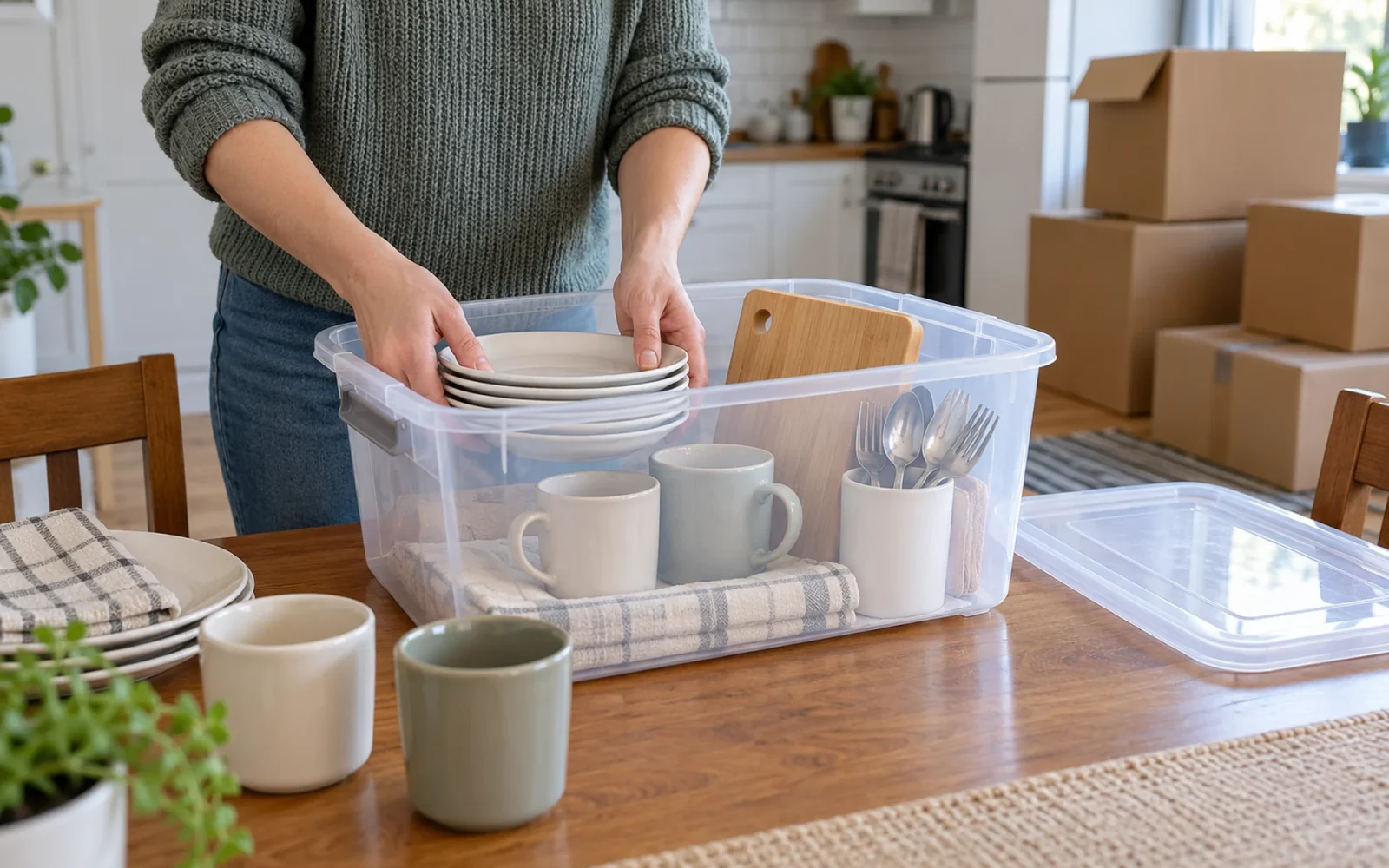
Set aside a small quantity of everyday dishes, cutlery, a cutting board, a knife, food-storage containers, dishwashing supplies, and the utensils needed for your chosen meals. Keep a separate container for rarely needed items you may want to retrieve, and label boxes by contents rather than simply “kitchen.”
Pack breakable and valuable items away from work and delivery routes. Agree with the contractor where new materials and appliances will be stored. A dining room that becomes a cabinet warehouse may no longer work as the household’s eating and preparation space.
Keep a simple inventory of what stays available. If every cupboard is packed but nobody knows where the kettle cord or refrigerator shelves went, the useful part of the preparation is unfinished.
Choose appliances around the location
A microwave, a kettle or coffee maker, and reliable refrigeration may be enough for many households. Add another appliance only if it supports meals you will actually make and the space can accommodate it properly. Owning an air fryer, toaster oven, pressure cooker, and hot plate does not mean all four belong on one temporary table.
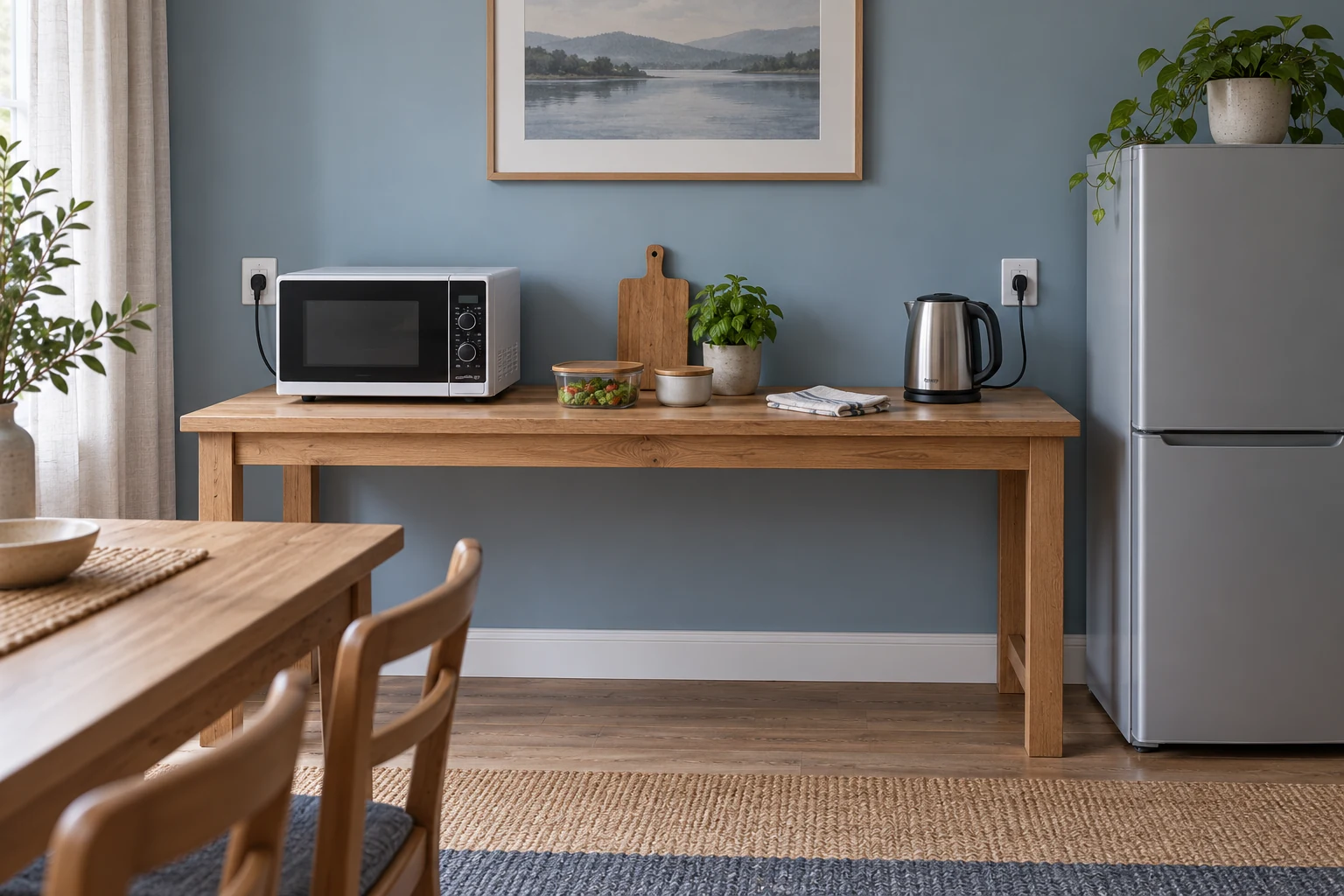
Check the appliances’ placement, clearances, and electrical requirements with the contractor or an electrician as appropriate. Keep cords out of walking routes and away from water. Use equipment only in the setting its instructions allow; outdoor cooking equipment does not become an indoor option because the main stove is disconnected.
If an existing refrigerator is being moved, plan its route and usable location before the work begins. Once it is set up, confirm it is actually holding the right temperature. FDA recommends a refrigerator at 40°F or below and an appliance thermometer to check it. A unit that feels cool is not the same as a verified cold-storage arrangement.
Plan meals backward from the cleanup
Choose a short rotation rather than a new recipe every night. Think about both the cooking method and the number of items you will need to wash. A meal requiring several pans can be technically possible and still be a poor fit for a small wash basin.
| Meal approach | What it needs | What to plan around |
|---|---|---|
| Simple cold meal | Appropriate refrigeration, clean preparation space, and a few utensils | Shopping quantities and keeping food protected from work dust |
| Prepared meal to reheat | Suitable storage and the appliance specified for reheating | Container compatibility and the cooking instructions |
| One-appliance cooking | Suitable power, ventilation, clearance, and utensils | Prep work and washing the appliance’s removable parts |
| Takeout or meal elsewhere | A realistic allowance and an available fallback | Frequency, household needs, and leftover storage |
Stock a manageable amount of food that works with that plan. Freezer meals help only when you have the storage, reheating equipment, and containers to use them. A larger grocery haul can be less helpful than smaller planned purchases when cold space is limited.
Give washing-up its own station
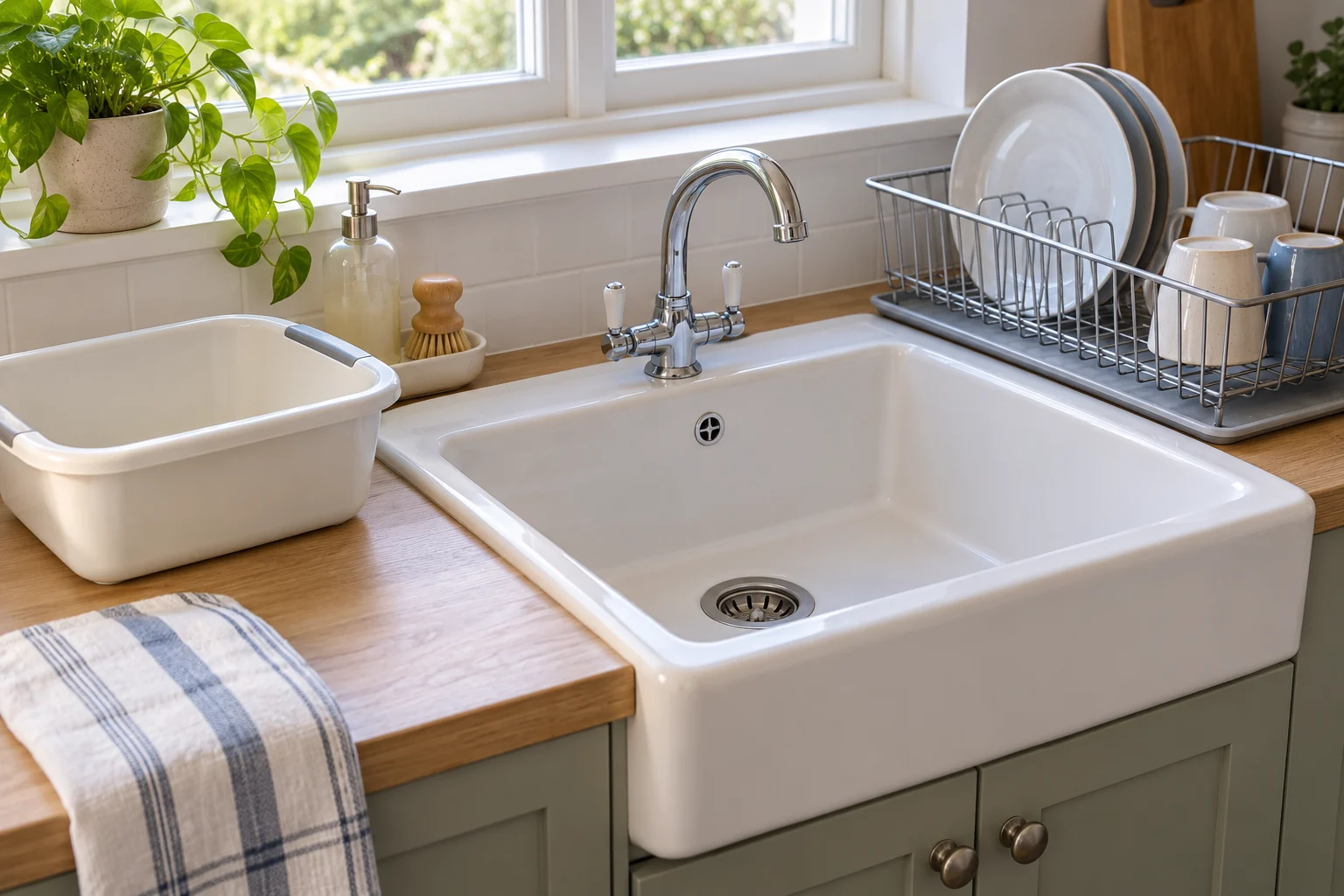
Choose an appropriate available sink and keep the washing area clean and separate from laundry, tools, or other contamination. A removable basin, a nearby drying rack, dish soap, and clean towels make the arrangement easier to repeat. Scrape food into the appropriate waste stream before washing.
KitchenAid’s remodeling guidance specifically discusses an alternative sink and space for a drying rack while the kitchen is unavailable. The point is to plan the whole cleanup route, not assume a small bathroom basin can comfortably handle every pot.
Keep the accessible dish supply small enough to wash promptly. If cleanup is consistently difficult, simplify the menu or adjust the dish arrangement. The problem may be the workflow rather than a lack of effort.
Protect a livable part of the house
Agree on work hours, entry routes, barriers, dust control, and end-of-day cleanup with the contractor. Ask how the work area is separated from occupied space and what happens during especially disruptive tasks. Do not improvise by sealing building vents or altering equipment yourself.
Give children and pets an area outside work and delivery routes. Arrange somewhere else for them on days when the site cannot provide the necessary separation. Keep one room usable for sleep, work, or a quiet break instead of allowing every spare area to fill with renovation materials.
Include extra meals, occasional time away, pet care where needed, and possible delays in the living-cost allowance. Decide which changes trigger the fallback plan, such as losing the alternative sink or reliable refrigeration. That makes a decision under pressure easier.
Move back by function, not appearance
Before unpacking everything, confirm which appliances, plumbing, and surfaces are ready for normal use and what work or checks remain. Agree on construction cleanup and follow the new surfaces’ care instructions. Keep access to unfinished tasks and let the contractor identify any restrictions on fresh finishes.
A successful temporary arrangement is deliberately modest. It keeps food, washing, and a clean retreat working while the project changes around them. Solve those daily functions first, and the household has a much better chance of managing the disruption without treating every meal as a new emergency.

Ethan Miller
Ethan Miller writes about home improvement, interior design, cleaning, and everyday living at Home & Living Daily. He shares practical tips and simple ideas to help readers create more comfortable and functional homes.