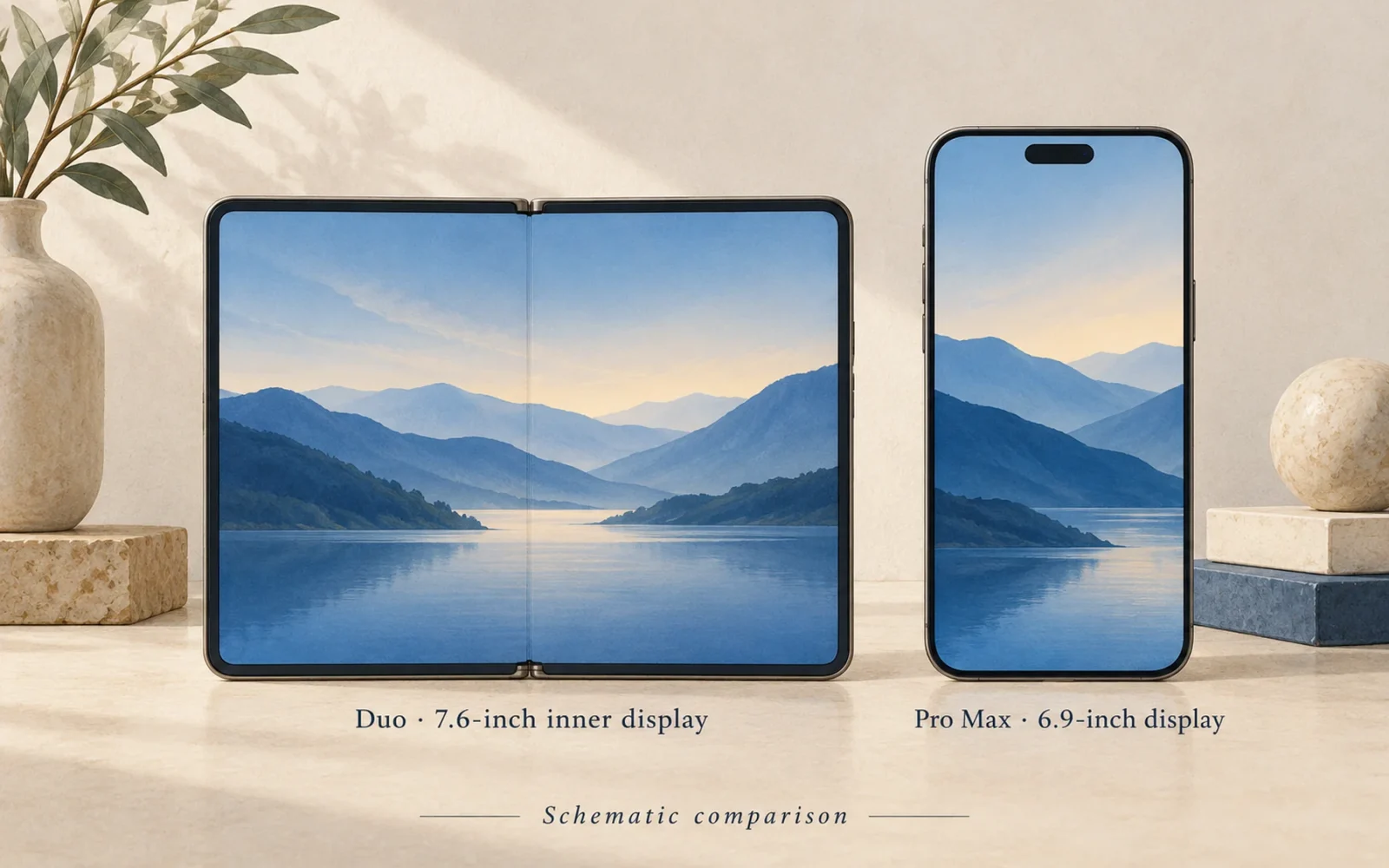
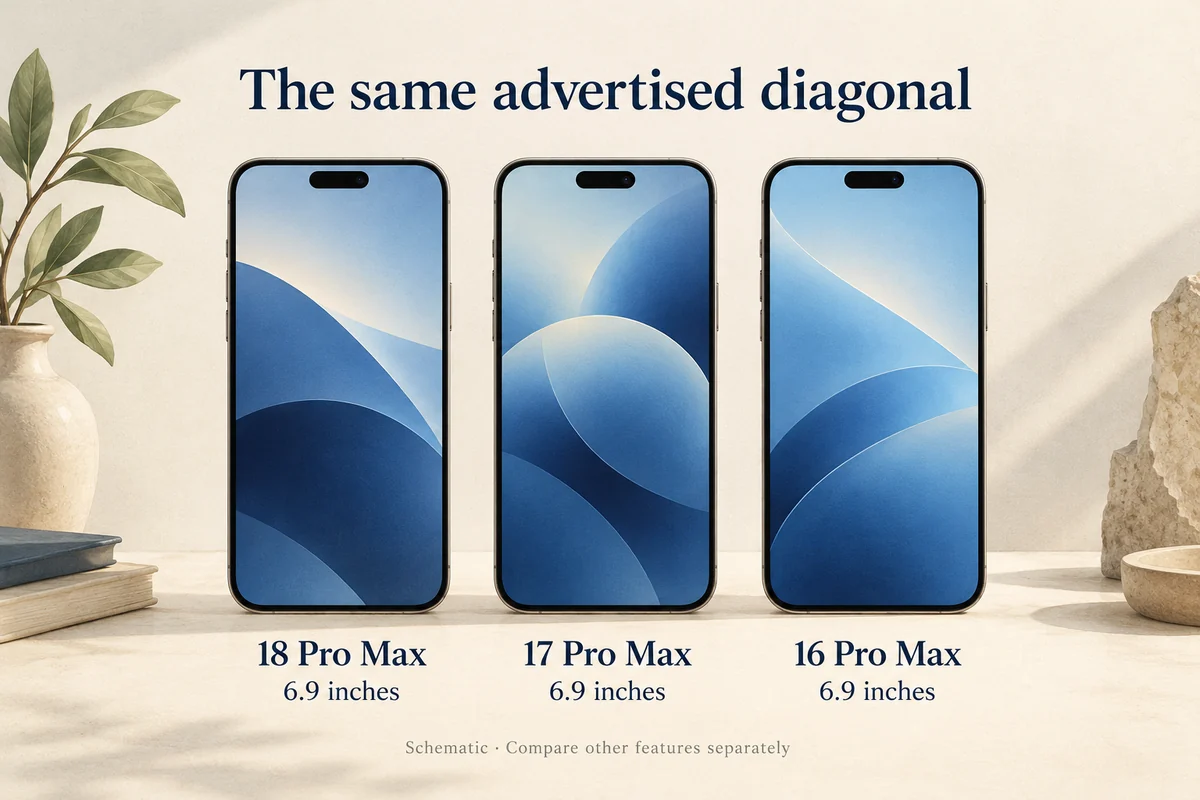
The iPhone Duo has the largest iPhone display: 7.6 inches when unfolded. Its outer screen is 5.4 inches. If you want a phone that does not fold, iPhone 18 Pro Max, 17 Pro Max, and 16 Pro Max share a 6.9-inch advertised display diagonal.
The distinction matters in daily use. Duo’s largest measurement applies when it is open; it does not mean the closed front screen is larger than a Pro Max. Choose the comparison that matches how you will actually hold and use the phone.
The largest displays compared
Apple’s Duo specifications and iPhone 18 Pro specifications identify the largest current designs. The 17 Pro Max and 16 Pro Max specifications confirm the same 6.9-inch class in those older models.
| Model or display | Advertised diagonal | What you are comparing |
|---|---|---|
| iPhone Duo, inner screen | 7.6 inches | The folding display when open |
| iPhone 18 Pro Max | 6.9 inches | A conventional one-piece phone |
| iPhone 17 Pro Max | 6.9 inches | An earlier generation with the same advertised diagonal |
| iPhone 16 Pro Max | 6.9 inches | Another earlier 6.9-inch option |
| iPhone Duo, outer screen | 5.4 inches | The display used while the phone is closed |
Duo’s announced first availability is October 23, 2026. Check the configuration and local delivery or pickup estimate rather than assuming a launch date means every version is in stock.
The illustrations in this article are editorial schematics. They explain the comparison and should not be used as exact product photographs or templates for checking whether a case fits.
Does a larger diagonal mean more useful space?
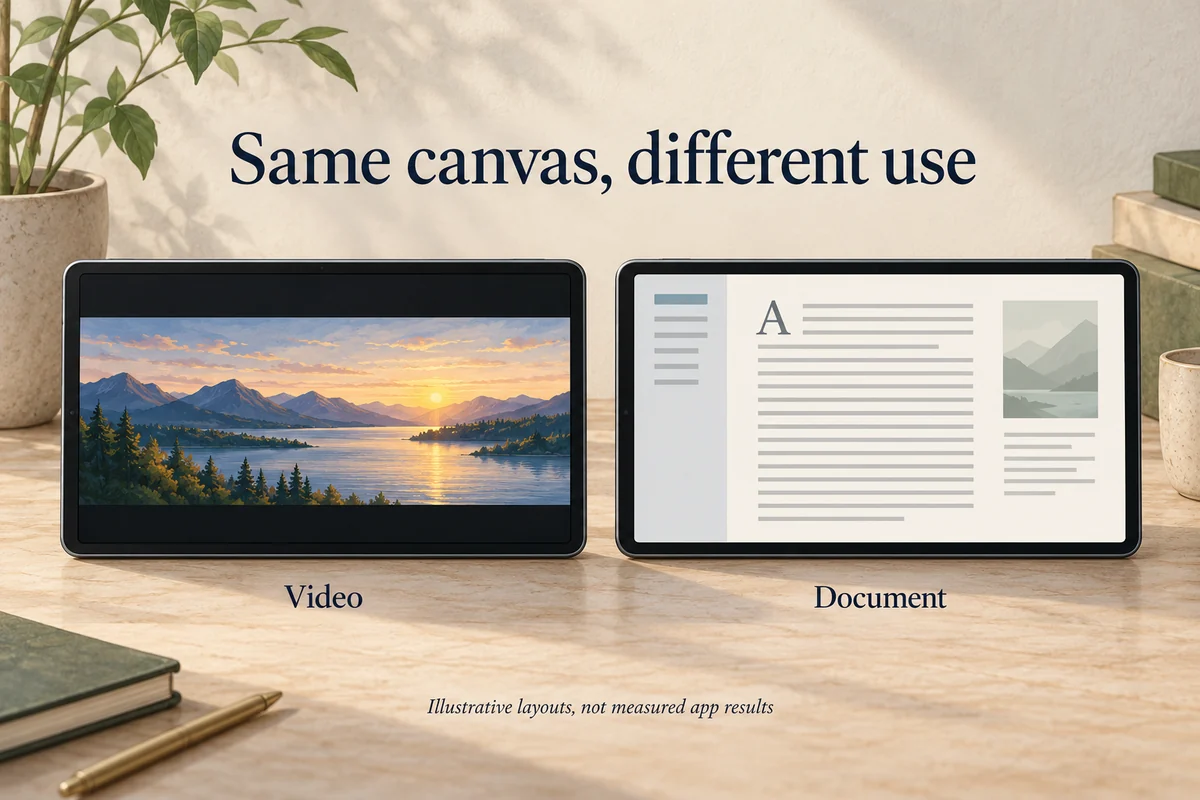
The inch figure measures across the screen diagonally. It does not directly tell you the display’s width, visible area for a particular video, or how much of a document an app will show.
A wider rectangle and a taller rectangle can use the same content differently. A movie can leave unused space above and below its picture. A document can benefit from a wider page view. An app may use extra room for a sidebar or controls rather than enlarge the content you care about.
Apple also notes that rounded corners reduce actual viewable area relative to the standard rectangle used for measurement. Use the published diagonal to identify the general size class, then inspect your own content at a comfortable setting.
In a Reddit discussion comparing Duo and Pro Max viewing space, users debated video viewing versus documents and multitasking. Those individual preferences illustrate why the task matters; their diagrams and percentages are not substituted here for a measured display test.
When the folding screen offers the clearer advantage
If you regularly open full-page documents, inspect photographs, or need more than one area of an app visible, try those tasks on the open Duo. Look at text size and how often you must pan or zoom, rather than judging only an empty Home Screen.
Then repeat quick everyday tasks while it is closed. If you usually reply to messages without unfolding, the outer display’s size and keyboard can matter more often than the larger inner panel.
For example, someone reading a reference document while composing a response may value the open layout. Someone who mostly sends short messages while standing on public transport may prioritize the closed grip. These are usage examples, not claims that one format is best for everyone.
Why an older Pro Max can be enough
Moving from a 16 Pro Max or 17 Pro Max to an 18 Pro Max does not increase the advertised diagonal beyond 6.9 inches. If a bigger screen is your only reason for changing phones, that upgrade alone does not solve the stated problem.
The models can differ in cameras, performance, battery behavior, condition, and price. Compare those separately. For a used phone, inspect the actual display and battery and check return terms; a lower asking price does not compensate automatically for a screen needing repair.
If your current issue is small text, try text-size and display controls before deciding that new hardware is necessary. Comfortable reading can improve through presentation settings even when the physical panel does not change.
Screen size is different from hand and pocket fit
The 18 Pro Max is 78.0mm wide and 249g before a case. Duo is 84.1mm wide and 11.3mm thick when closed, with a weight of 254g, according to the specifications above. Those dimensions describe the object you carry; neither can be derived simply from a screen diagonal.
Try reaching controls, typing, and holding the phone with one hand. Include a case in that judgment. For the foldable, try opening it, carrying it closed, and holding it open for a realistic reading session.
Conclusion
Choose Duo for its larger open canvas only if you will use that space; choose among the 6.9-inch Pro Max generations when a conventional large phone fits better. The decisive comparison is your normal content, text size, and grip, not the largest number on a specification sheet.

Ethan Miller
Ethan Miller writes about home improvement, interior design, cleaning, and everyday living at Home & Living Daily. He shares practical tips and simple ideas to help readers create more comfortable and functional homes.