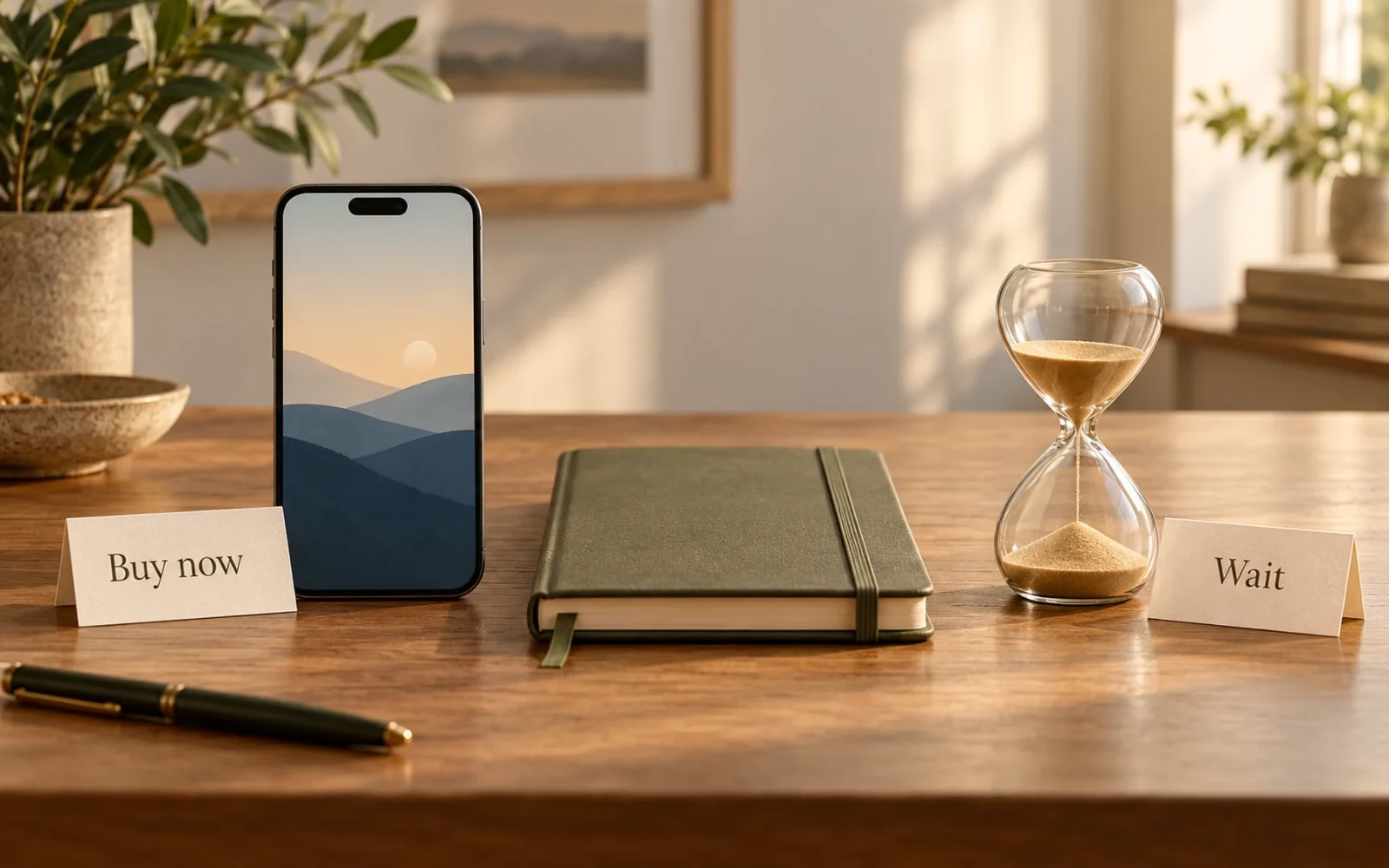
Buy an iPhone 17 if you need a reliable replacement now and its confirmed features meet your needs. Wait if your current phone still works and you specifically want to compare it with the standard iPhone 18 once Apple announces that model. Waiting makes less sense when the goal is an iPhone 18 Pro: the Pro and Pro Max are already released.
As of October 23, 2026, the standard iPhone 18 has no Apple-announced price, specifications, or release date. That uncertainty should be part of the decision, rather than filled in with the most appealing rumor.
Which iPhone 18 are you waiting for?
The name creates an important fork in this question. Apple’s Pro announcement confirms that the Pro models first became available September 18, 2026. They can be compared with an iPhone 17 as existing products, subject to stock.
The standard model is a different proposition. Reports about a future standard iPhone 18 do not make its final features or local price known. Our iPhone 18 release-date explanation separates confirmed models from expected future ones.
| Your situation | More useful starting point |
|---|---|
| Broken or unreliable phone needed every day | Compare currently available replacements |
| Working phone and no missing essential feature | Keep using it until there is concrete new information |
| Want a current Pro camera feature | Compare the released Pro with current alternatives |
| Want the next standard model specifically | Wait for its actual announcement before committing to assumptions |
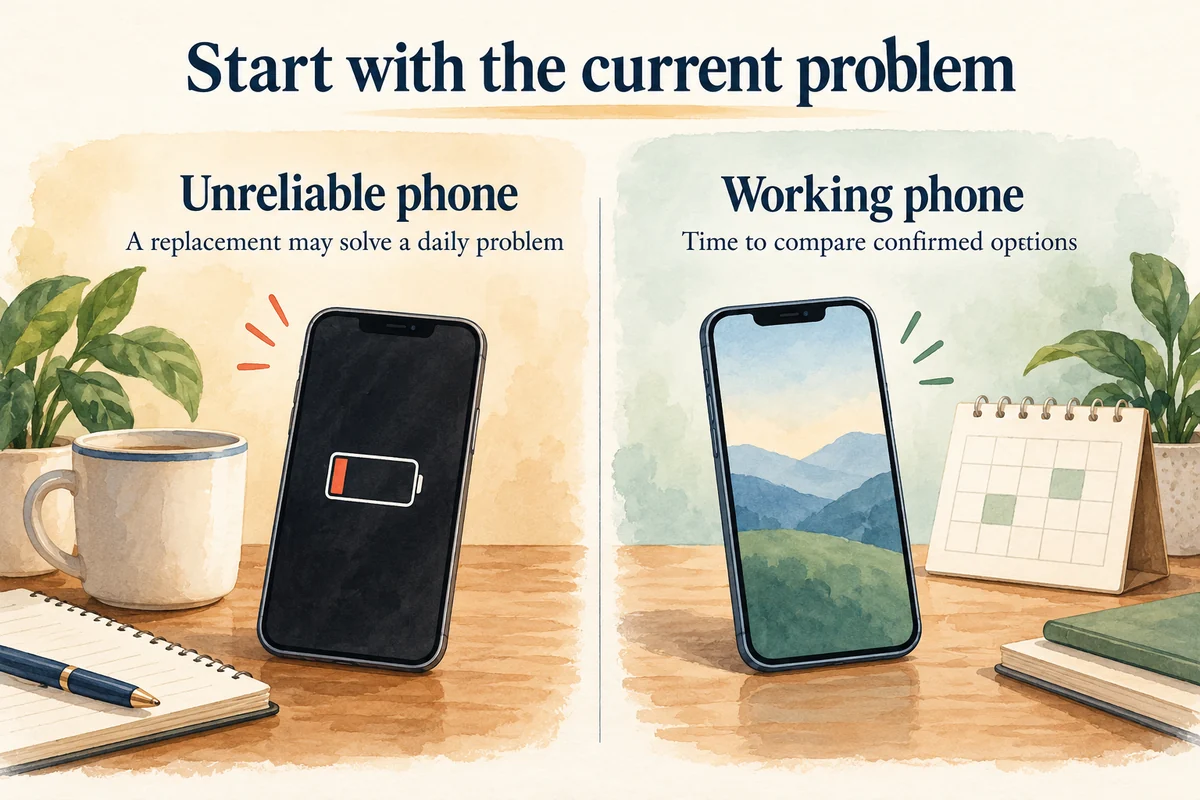
Buy now when the current problem is costly
A phone that cannot reliably make calls, hold enough charge for your routine, or run an essential app creates a practical cost while you wait. Define that problem before comparing generation numbers.
If the issue is mainly battery life, obtain a service assessment or quote before assuming a whole new handset is necessary. A repair can be a useful bridge if the rest of the phone meets your needs. It is less attractive if several other limitations would remain afterward.
Here is an illustrative case: someone needs navigation and work calls every day, while their current phone repeatedly shuts down. A suitable available model can solve that problem now. A speculative future upgrade cannot provide those missing weeks of dependable use.
The reverse case is also valid. Someone with a working phone who simply wants a new color loses little by keeping it longer. There is no need to invent an urgent reason to upgrade.
Compare the actual iPhone 17 with your requirements
The standard iPhone 17 has a 6.3-inch display and an A19 chip, according to its technical specifications. Decide whether its screen, storage options, cameras, and physical size fit your use rather than treating a higher model number as an automatic requirement.
For photos, name the task: photographing documents, ordinary family pictures, or distant subjects. For storage, estimate what must stay on the phone. For ergonomics, try typing and reaching controls with the case you intend to use. These checks can reveal a mismatch before a future comparison becomes relevant.
Do not describe an unannounced standard iPhone 18 as faster, cheaper, or worse in a way that settles the choice. Until Apple publishes that model’s specifications, a rumored improvement and a rumored compromise are both uncertain inputs.
Waiting does not guarantee a lower price
Apple’s current U.S. iPhone 17 ordering page lists the 256GB model at $929 before tax when you select “Connect on your own later,” as checked on October 25, 2026. Carrier-connected offers can differ, so compare the same capacity and connection choice. Use your actual checkout total rather than an old launch price or a conditional headline offer.
A future sale or older-model price cut may occur, but its amount, stock, and conditions are not guaranteed. Waiting for a hypothetical saving can be reasonable when you do not need the phone; it is a weak plan if your budget only works when a specific unannounced discount appears.
Likewise, a trade-in quote is time-sensitive. Record the quote and its conditions if it affects today’s decision, but do not invent a precise future depreciation amount to make buying immediately look necessary.
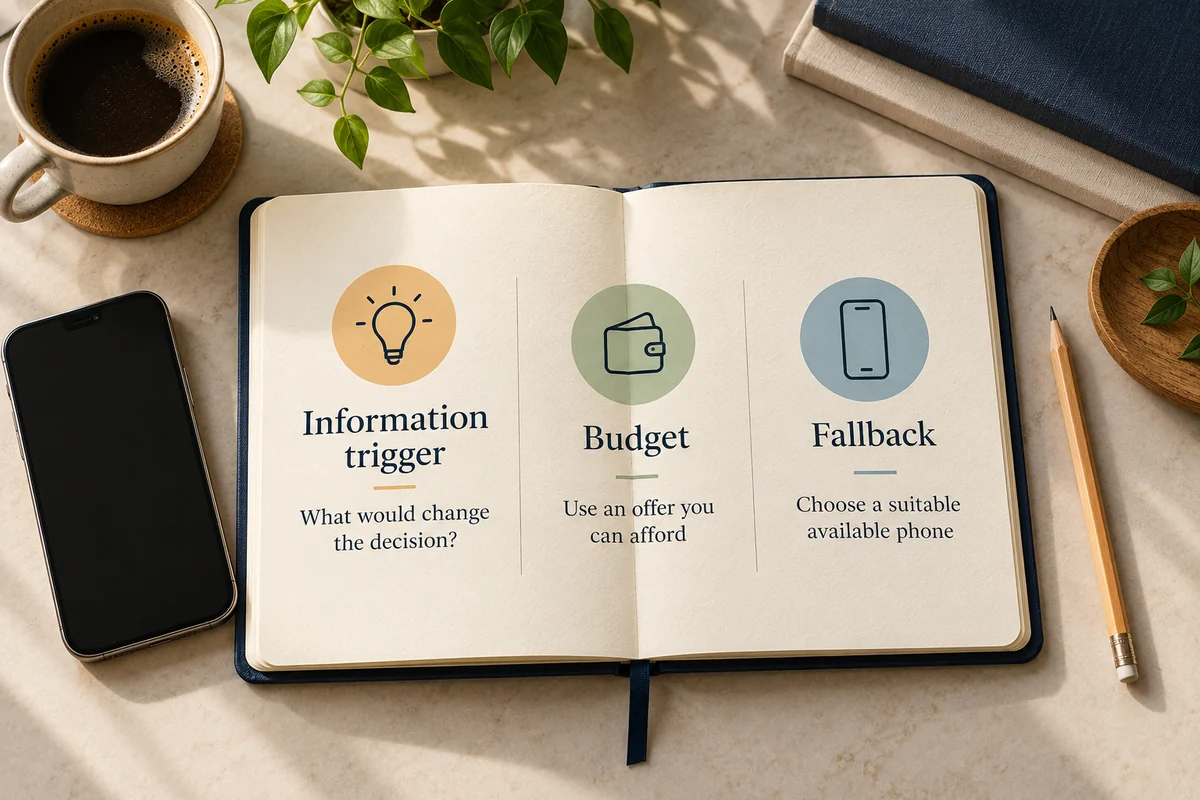
A practical waiting plan
Choose an information trigger and a fallback. The trigger might be Apple’s standard-model announcement, a genuine retailer offer, or a service assessment showing that your current phone is no longer economical to keep. The fallback is an available model you can afford if the desired launch is later or dearer than expected.
In one Reddit discussion about buying a 17 or waiting, the poster described a still-usable iPhone 11 and uncertainty about future local pricing. Replies debated replacing the battery and buying a current deal. It is an individual situation from the Philippines, not evidence of U.S. prices or the next model’s cost; the useful question is whether repairing the present phone would satisfy the owner.
Conclusion
Buy for a problem an available phone can solve, and wait for a comparison you actually need. A working handset gives you time to see the standard iPhone 18’s real terms; an unreliable one makes a confirmed current option more valuable. Neither decision needs a guaranteed future discount or an imagined specification sheet.

Ethan Miller
Ethan Miller writes about home improvement, interior design, cleaning, and everyday living at Home & Living Daily. He shares practical tips and simple ideas to help readers create more comfortable and functional homes.