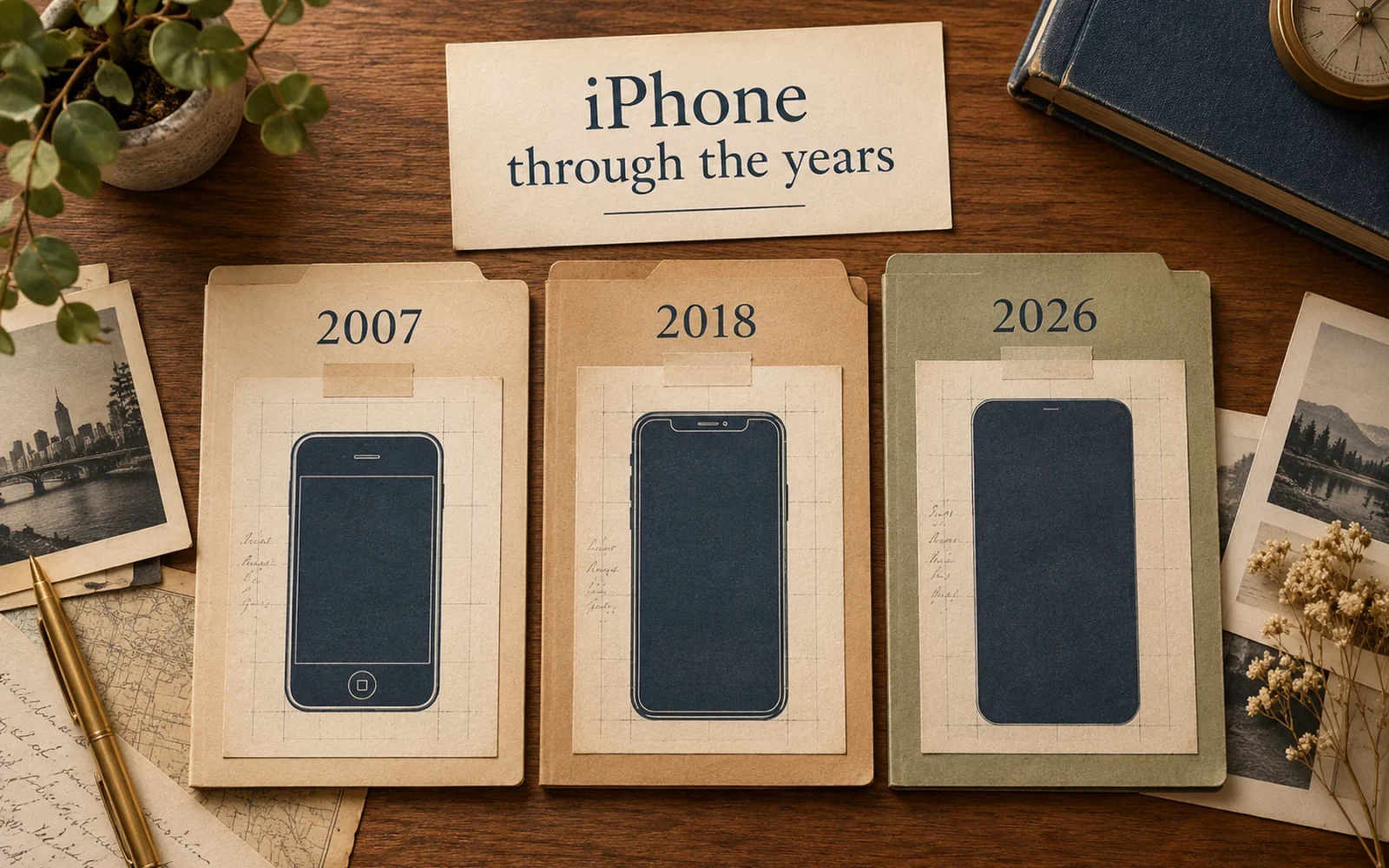
If you are looking for the iPhones that came out in 2018, the answer is iPhone XS, iPhone XS Max, and iPhone XR. More generally, the year in which a model first appeared is different from the year someone bought it or installed its latest software.
The table below groups iPhone families by introduction year, from the original model in 2007 through the confirmed 2026 lineup. It is a year lookup, not a promise that all models in a row reached every country on the same day.
iPhone models by year
Apple’s model-identification reference lists introduction years and hardware details. The newest separately named foldable is documented in the iPhone Duo announcement.
| Year | Newly introduced models or families |
|---|---|
| 2007 | iPhone, the original model |
| 2008 | iPhone 3G |
| 2009 | iPhone 3GS |
| 2010 | iPhone 4 |
| 2011 | iPhone 4s |
| 2012 | iPhone 5 |
| 2013 | iPhone 5s and 5c |
| 2014 | iPhone 6 and 6 Plus |
| 2015 | iPhone 6s and 6s Plus |
| 2016 | iPhone SE, first generation; iPhone 7 and 7 Plus |
| 2017 | iPhone 8 and 8 Plus; iPhone X |
| 2018 | iPhone XS, XS Max, and XR |
| 2019 | iPhone 11, 11 Pro, and 11 Pro Max |
| 2020 | iPhone SE, second generation; iPhone 12 mini, 12, 12 Pro, and 12 Pro Max |
| 2021 | iPhone 13 mini, 13, 13 Pro, and 13 Pro Max |
| 2022 | iPhone SE, third generation; iPhone 14, 14 Plus, 14 Pro, and 14 Pro Max |
| 2023 | iPhone 15, 15 Plus, 15 Pro, and 15 Pro Max |
| 2024 | iPhone 16, 16 Plus, 16 Pro, and 16 Pro Max |
| 2025 | iPhone 16e; iPhone 17, 17 Pro, and 17 Pro Max; iPhone Air |
| 2026 | iPhone 17e; iPhone 18 Pro and 18 Pro Max; iPhone Duo |
The 2026 row reflects announcements verified through October 23, 2026. The standard iPhone 18 has not been announced, so it is not inserted into the table as though a rumored future release were completed history.
Why one year can contain several release dates
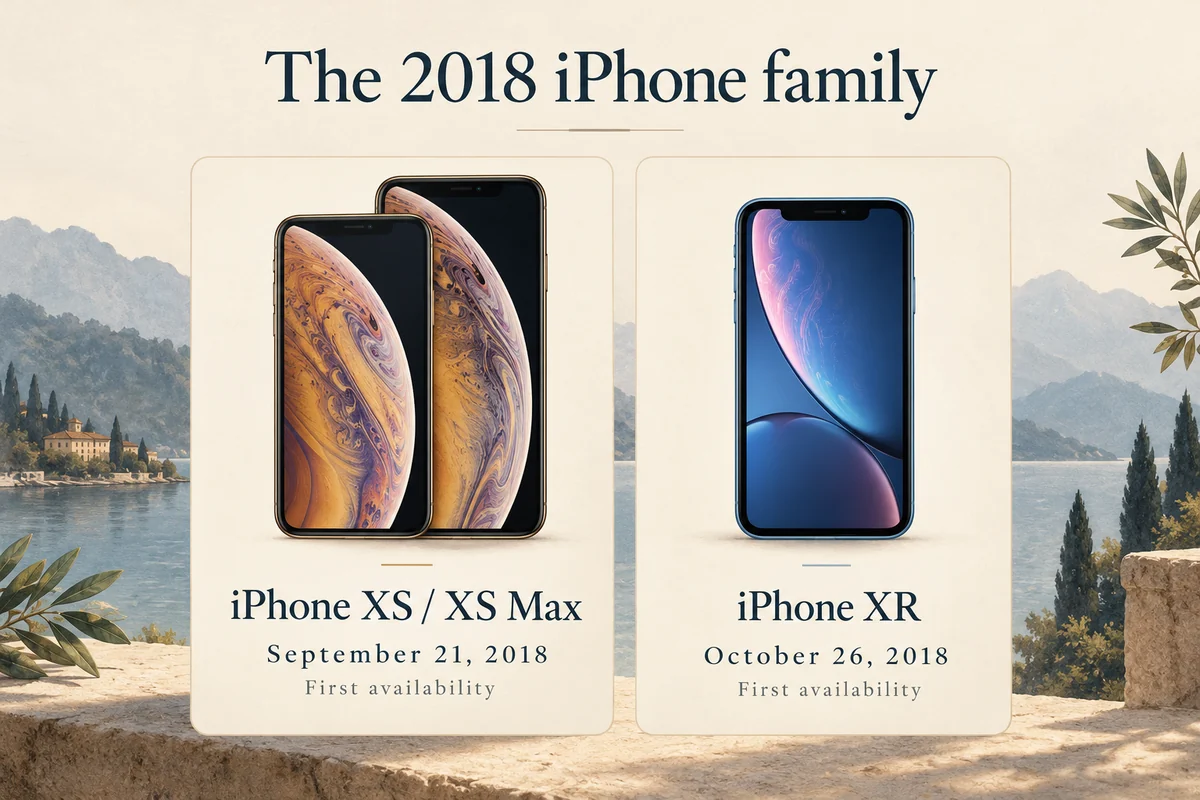
The 2018 phones illustrate the problem well. Apple announced XS, XS Max, and XR in September, but XS and XS Max first went on sale September 21, while XR followed October 26. The year answer is shared; the day answer depends on the model.
For 2017, the 8 family and X also had different first-sale dates. An annual table is therefore useful for finding the generation, while a model-specific timeline is better for an exact anniversary or launch-market question. Our iPhone 8 release history explains that example in detail.
The same care applies to regional releases. A model can be introduced in one year and arrive in a later country afterward. Use the original local announcement if your question is specifically when it reached that market.
SE, e, Air, and Pro are not interchangeable labels
Apple’s naming has not been a simple sequence in which every number is a year. A first-generation SE belongs in 2016, while a third-generation SE belongs in 2022. The SE name alone cannot settle the date.
Similarly, iPhone 17e and the standard iPhone 17 have different introduction years. Air is a separate product name, and Duo identifies the folding model. Read the complete name, including the suffix or generation, before using a timeline to identify a handset.
For a phone already in your possession, check its Model Name or hardware identifier. An owner-editable name such as “My new iPhone” and an installed version such as iOS 18 do not establish the hardware generation.
What the year cannot tell you
A release year does not establish the age or condition of one physical device. Old stock can be bought later; a handset can be refurbished or have a replacement battery. Conversely, a recent purchase does not make its hardware a newly introduced generation.
Nor does a model’s presence in a historical table mean Apple currently sells it new. Stock, refurbished listings, carrier compatibility, and software support are separate checks. Use the timeline to identify the family, then assess the actual product and current requirements.
Conclusion
Use the year table to find the right family, and then narrow the answer to the complete model and market when an exact date matters. That avoids the common errors of treating a purchase year as a release year or putting every similarly named iPhone into the same generation.

Ethan Miller
Ethan Miller writes about home improvement, interior design, cleaning, and everyday living at Home & Living Daily. He shares practical tips and simple ideas to help readers create more comfortable and functional homes.