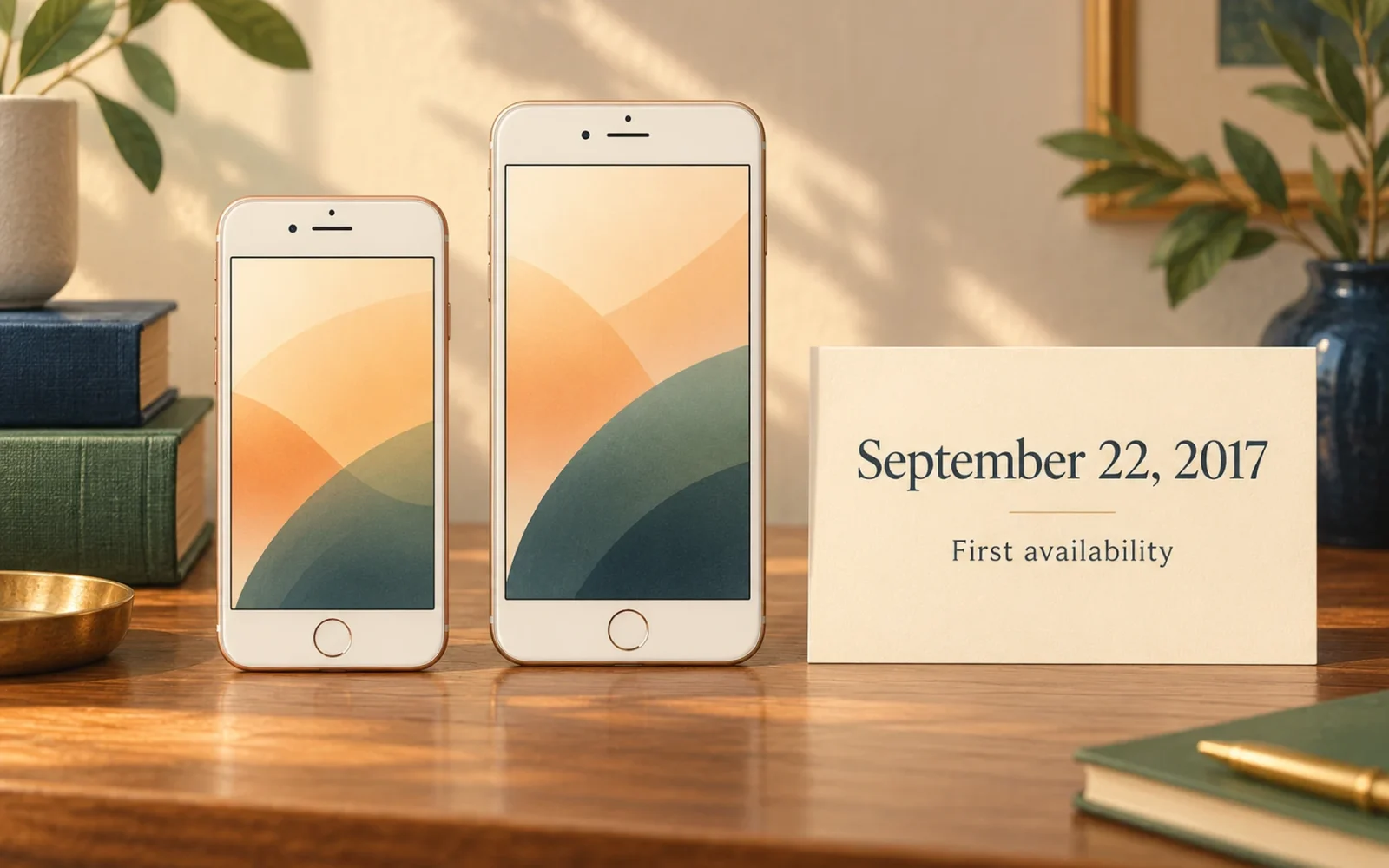
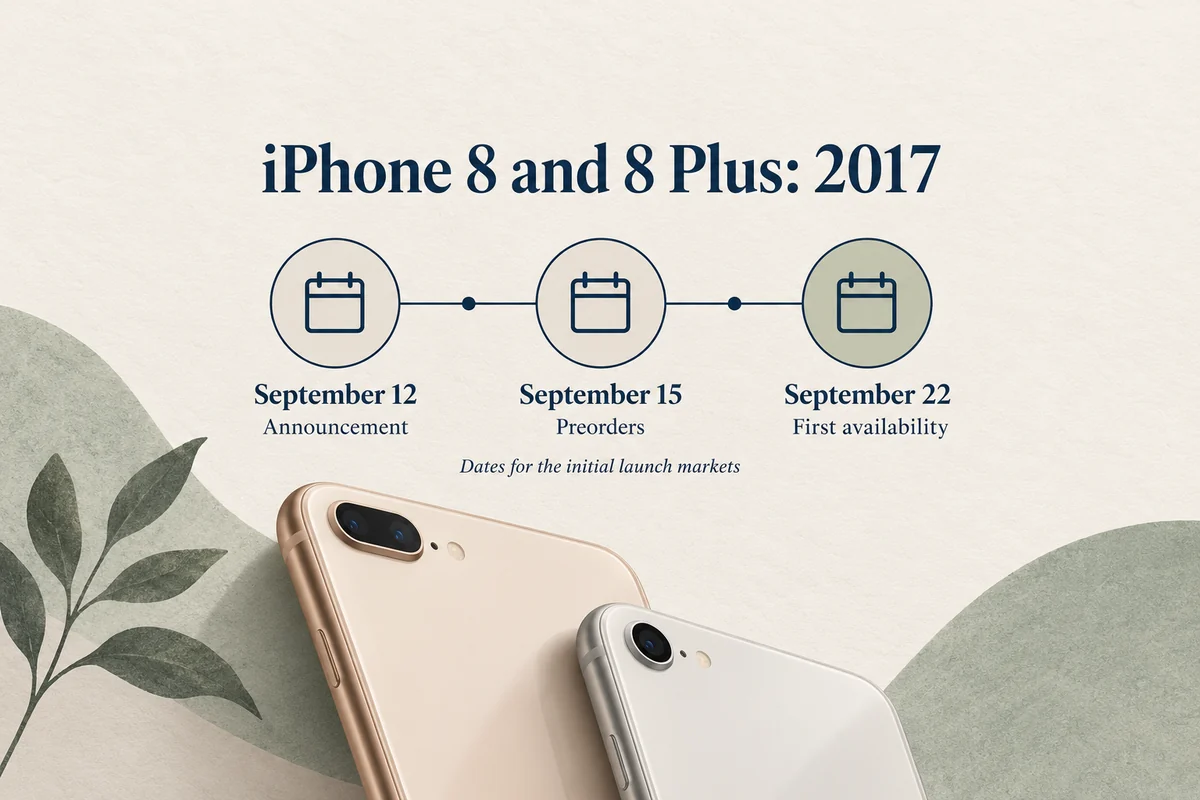
The iPhone 8 and iPhone 8 Plus came out on September 22, 2017, in the United States and the first group of launch markets. Apple announced both phones on September 12, and preorders began September 15. Neither model is an upcoming release.
Other dates you may encounter can refer to the announcement, a later regional rollout, or the red special edition introduced in 2018. Those are separate milestones within the same product history.
The original 2017 launch
Apple’s iPhone 8 and iPhone 8 Plus announcement records this schedule for both models:
| Event | Date |
|---|---|
| Announcement | September 12, 2017 |
| Preorders opened in the first markets | September 15, 2017 |
| First availability, including the U.S. | September 22, 2017 |
| A further regional rollout | September 29, 2017 |
The Plus did not have a later first release than the smaller iPhone 8. Its larger size was a model distinction, not a separate launch season.
The initial markets included the United States, United Kingdom, Canada, Australia, China, Japan, and several European countries. India was among the markets in the September 29 rollout. If a local article gives that later date, check its country before assuming it contradicts the U.S. launch history.
Why September 12 sometimes appears as the release date
September 12 was the presentation date. News reports used phrases such as “Apple launches iPhone 8” to describe the event, even though buyers could not collect the original retail release until later in the month.
For a product timeline, label those events explicitly. “Announced September 12; first available September 22” preserves both facts without using “launch” to mean two different things.
Older prediction articles can introduce another complication. Before the event, writers were discussing possible names and dates. Read them as evidence of what was expected at the time, not as the final authority on what Apple actually sold.
The red iPhone 8 arrived in 2018
Apple announced the iPhone 8 and iPhone 8 Plus (PRODUCT)RED Special Edition on April 9, 2018. According to its special-edition announcement, orders began April 10 in selected markets, with first deliveries and store availability on April 13.
The red enclosure and black front identify that special finish. Its 2018 release does not mean the iPhone 8 family originally came out in 2018.
Keep that distinction when checking an old review, receipt, or used-phone listing. A model-family introduction date and the introduction of an additional finish answer different questions.
Was iPhone X released with iPhone 8?
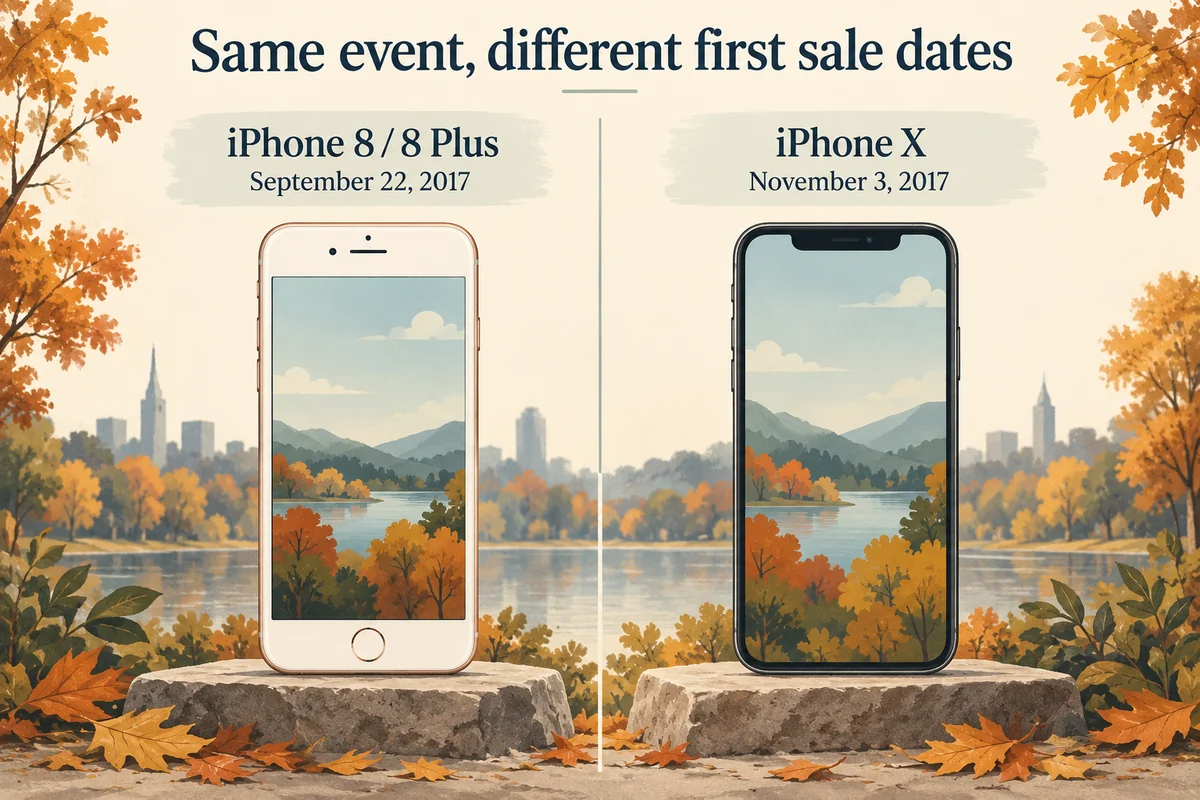
The phones shared an announcement event, but not the same first sale day. Apple’s iPhone X announcement set October 27, 2017, for preorders and November 3 for store availability.
That makes November 3 an iPhone X date, not an iPhone 8 Plus date. The X also used a different design and Face ID, while the 8 family retained the Home-button form factor. Do not identify an older phone solely from the year it was introduced.
What the release date tells you about an individual phone
The iPhone 8 generation reached its ninth anniversary in September 2026. That is the age of the model family, not proof that every individual handset has been in use for nine years.
A device could have been purchased later, repaired, refurbished, or kept in storage. The original release date does not establish its battery condition, repair history, or the date its current owner activated it.
If you are identifying a phone for an accessory or a sale, check the complete iPhone model name or hardware identifier rather than relying on “a 2017 iPhone.” For a used purchase, assess the actual device and the seller’s description separately from its generation’s launch date.
Conclusion
September 22, 2017, is the first-release answer for both iPhone 8 and iPhone 8 Plus. Use a different date only when you are specifying the announcement, another launch market, or the later red edition. Once the exact model is clear, judge an individual handset by its own condition and records, not the launch year alone.

Ethan Miller
Ethan Miller writes about home improvement, interior design, cleaning, and everyday living at Home & Living Daily. He shares practical tips and simple ideas to help readers create more comfortable and functional homes.