Pigafetta elata is a leading contender for the fastest-growing palm species, but the fastest palm for your yard depends on climate and mature size. Carpentaria, Mexican fan, queen, king, royal, and solitary fishtail palms are other fast growers worth comparing. A palm that races upward in a humid tropical garden may grow much more slowly in a cooler coastal yard.
For homeowners, the useful question is which fast palm can thrive locally without outgrowing the planting site. This guide compares seven candidates, separates specialist tropical palms from familiar landscape choices, and explains the tradeoffs behind the speed claims.
Which palm species grows the fastest?
The International Palm Society describes Pigafetta elata as arguably the world’s fastest-growing palm. That makes it a credible answer to the botanical question, with an important qualification: “arguably” is not a standardized world record.
There is no single growth figure in the sources reviewed here that compares every candidate at the same age, in the same climate, using the same measurement. A ranking based on total height can also look different from one based on clear trunk height. Treat these seven as a shortlist, not a first-through-seventh speed league table.
Filter by winter conditions and adult dimensions before comparing speed. A fast plant that repeatedly suffers cold damage offers little advantage over a slower, well-adapted palm.
Seven fast-growing palm trees at a glance
These distinctions are a starting point for a local nursery conversation. They do not establish that every species is suitable or permitted in your region.
| Palm species | Why compare it? | Main selection constraint |
|---|---|---|
| Pigafetta elata | Specialist tropical speed contender | Not a general-purpose US yard recommendation |
| Carpentaria — Carpentaria acuminata | Fast growth in warm, favorable conditions | Cold sensitivity and demanding site conditions |
| Mexican fan — Washingtonia robusta | Rapid height and a slender skyline silhouette | Exceptional adult height |
| Queen — Syagrus romanzoffiana | Fast-growing feather-leaf option | Fruit cleanup, nutrition, and regional escape risk |
| King — Archontophoenix cunninghamiana | Quick-growing canopy candidate | Local water, soil, and climate fit |
| Royal — Roystonea regia | Rapid development and a substantial crown | Large mature size and falling fronds |
| Solitary fishtail — Caryota urens | Vigorous vertical development | Large scale and eventual death after reproduction |
1. Pigafetta elata: the specialist tropical contender
If your question is about the species most associated with extraordinary speed, start here. Its reputation deserves a place in the answer, even though it is less familiar than queen or Mexican fan palms.
It should not automatically lead a shopping list. A specialist tropical palm calls for an assessment of the actual planting site, rather than a decision based on an impressive internet growth number. Ask whether a nursery has mature, outdoor examples in your locality and what protection or irrigation those examples receive. Without comparable local evidence, treat its speed reputation as botanical context rather than a promise for your property.
2. Carpentaria palm: fast where winters stay warm
UF/IFAS describes Carpentaria as fast-growing, typically 35–40 feet tall, and lists USDA zones 10B–11. Its guidance favors rich, moist, well-drained soil and warm winters; it also notes susceptibility to trunk cracking in cool weather.
That is a narrower brief than “plant it anywhere for quick height.” Check your winter exposure and soil before choosing it. The same UF/IFAS profile contains differing drought-tolerance labels, so this guide follows its more conservative management advice: do not choose Carpentaria for a dry, neglected bed. Ask for local examples rather than accepting a tropical maximum as an annual forecast.
3. Mexican fan palm: quick height with a very large endpoint
UF/IFAS identifies Mexican fan palm as fast-growing and gives an adult height of 70–100 feet. Its profile places cold hardiness around zone 9A and emphasizes drainage. It also notes that these palms are associated with reliable water in their native habitat, so a desert appearance does not mean zero irrigation needs.
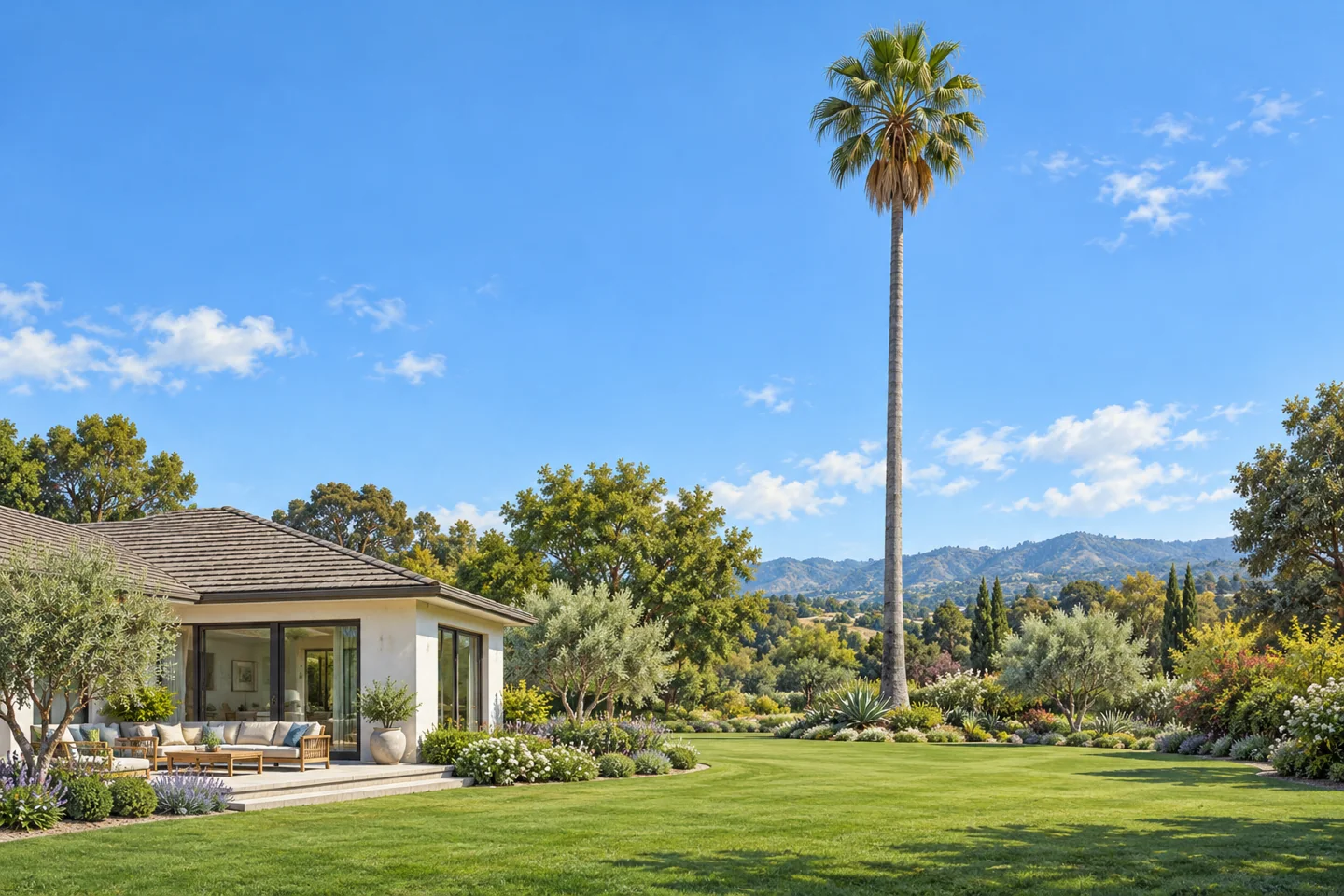
The selection problem is scale. A slender trunk can make a young plant look easy to accommodate, while its eventual height makes it unsuitable for many ordinary residential sites. Picture the adult palm before choosing the nursery specimen. Check regional non-native plant guidance as well; the Florida profile advises caution and preventing escape in South Florida.
4. Queen palm: graceful foliage with maintenance commitments
Queen palm is a familiar fast-growing landscape candidate. Its arching feather leaves create a different effect from a fan palm, but crown size and cleanup requirements deserve as much attention as the trunk.
The UF/IFAS queen palm profile lists zone 9B suitability, a height up to 50 feet, and a spread of 20–25 feet. It documents substantial fruit drop, poor performance on alkaline soils, and potential invasiveness in Florida.
Think carefully before positioning a fruiting queen above a frequently used paved area. Confirm that local soil conditions suit it and that you can maintain the planting over time. Attractive foliage and rapid growth do not make it a low-maintenance default.
5. King palm: a canopy candidate to assess locally
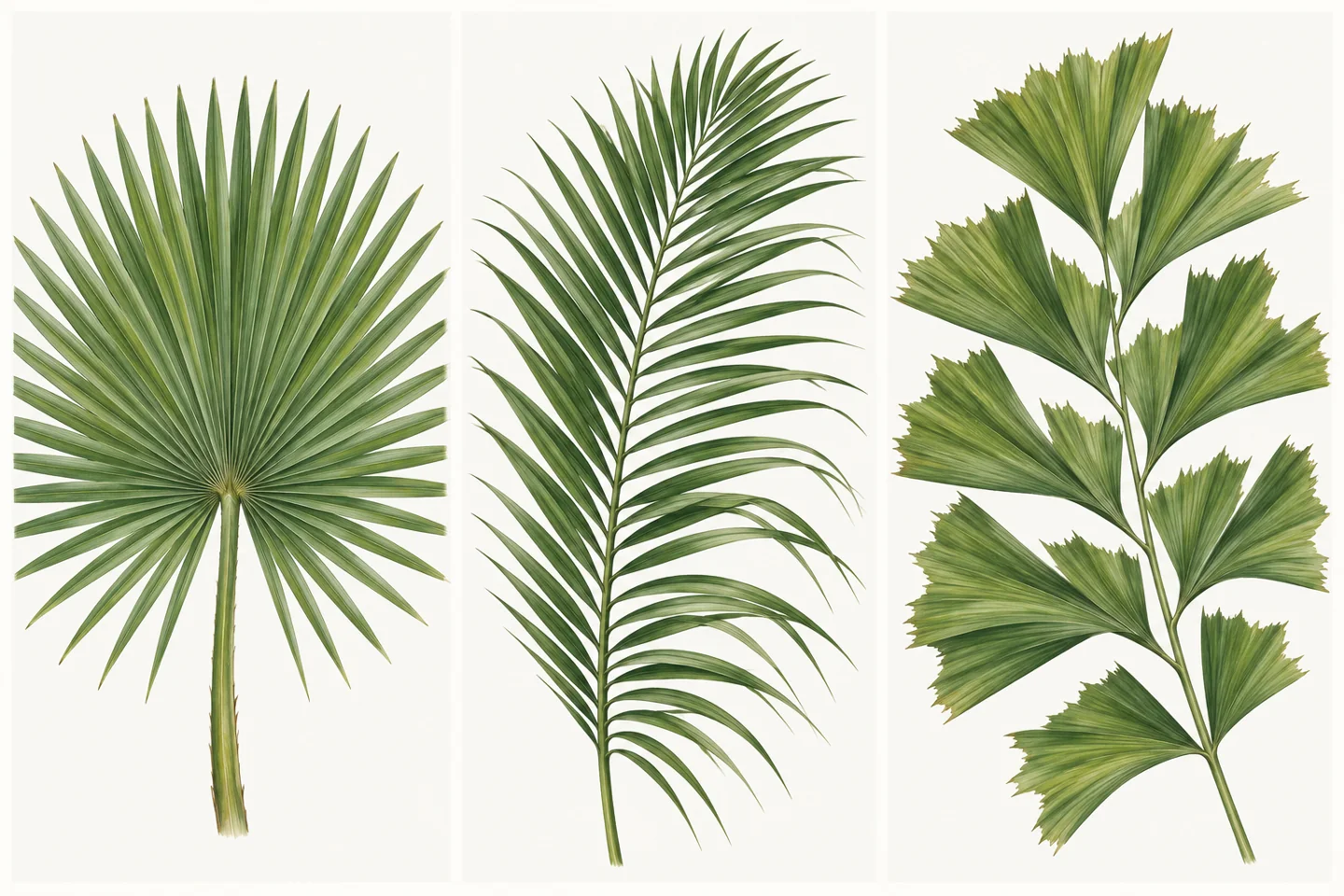
Here, “king palm” means Archontophoenix cunninghamiana; common names can refer to related species. Verify the botanical name on the nursery label before comparing plants.
Specialist grower Jungle Music describes this species as quick-growing and useful for canopy, with ample water and suitable soil. That is regional grower experience, not a controlled nationwide growth trial. It makes king palm a candidate to investigate where established local specimens demonstrate good performance. Ask what a healthy crown looks like in your area and whether your irrigation plan can support it.
6. Royal palm: a fast option for genuinely large sites
UF/IFAS says royal palms quickly reach 50–70 feet, with a 20–25-foot spread, and places cold hardiness around zone 10A. Its guidance describes the species as too large for typical residential landscapes.
There is a placement issue beyond size: naturally shed leaves can be 10–15 feet long and weigh up to 50 pounds when fresh. “Self-cleaning” means leaves detach naturally; someone still has to deal with what lands below.
Consider a royal only where a large site provides room for the crown and an appropriate area beneath it. A small patio is a poor reason to choose a palm of this scale just because it grows quickly.
7. Solitary fishtail palm: vigorous, with a different lifecycle
Caryota urens belongs on a fast-growing shortlist, but its long-term role differs from a permanent canopy tree. UF/IFAS explains that some palms, including Caryota, die after flowering and fruiting. Its example includes C. urens.
Plan for eventual replacement and removal access before planting. Do not assume every palm sold as “fishtail” has identical growth or habit: confirm the species. In Florida, check suitability particularly carefully, since C. urens appears in UF/IFAS guidance on invasive plants in natural areas. Inclusion here is a comparison, not an endorsement for every region.
How to choose a fast palm for your yard
Start with the job the plant needs to do. Quick height, overhead canopy, and privacy at seating level are different goals. A palm can gain height rapidly while leaving an open view underneath its crown.
- For a small yard: set an adult height and crown-width limit first. If none of these candidates fits, widen the search to smaller, slower palms rather than forcing a large species into the space.
- For canopy: compare the eventual crown and its position relative to the area you want shaded. Trunk speed alone cannot tell you how much shade a patio will receive.
- For a cooler or exposed location: prioritize locally proven survival and recovery. A zone number is a useful screen, not a complete description of wind, frost pockets, or soil conditions.
- For a low-maintenance garden: ask about fruit, dead leaves, irrigation, access, and eventual removal before choosing a fast grower.
Our guide to different types of palm trees offers a broader starting point if mature size and leaf form matter more than speed. When planning around a compact pool, consider the circulation and planting space discussed in our small-backyard cocktail pool ideas, then assess the specific palm separately.
Read growth claims before you buy
When a seller quotes feet per year or years to reach a roofline, ask four questions:
- What was measured? Total height to the top of a leaf and clear trunk height are different measurements.
- What size did the plant start at? A seedling and a substantial nursery palm have different starting points.
- Where was it grown? Ask for the climate and conditions behind the example.
- Is it a typical result or a favorable example? Request a realistic local expectation, including the establishment period.
The Jungle Music fast-growing palm guide illustrates why those distinctions matter: it reports that Carpentaria performs much more slowly in Southern California than in tropical conditions. Its observations are valuable regional context, but they should not become guaranteed annual rates for another yard.
Questions about fast-growing palms
Is Mexican fan palm always the fastest?
No. It is a recognized fast grower, but these sources do not establish it as the fastest species under every condition. Its mature size may matter more than speed when choosing for a home.
Which fast palm should I plant for privacy?
First decide where privacy is needed. An elevated crown does not necessarily block a neighbor’s view at window or chair height. Sketch the desired screen and compare the mature planting shape before choosing a species.
Can I keep a fast-growing landscape palm small in a pot?
Do not base a long-term purchase on that assumption. This shortlist concerns outdoor landscape candidates, not a selection of compact indoor plants. Ask for a species suited to your container, light, and eventual size limit.
How can I make the choice confidently?
Take your winter conditions, available planting area, soil information, and maintenance preferences to a local nursery or Extension office. Request examples of mature specimens nearby. The right fast palm is one you can accommodate when it has finished delivering all that quick height.

Ethan Miller
Ethan Miller writes about home improvement, interior design, cleaning, and everyday living at Home & Living Daily. He shares practical tips and simple ideas to help readers create more comfortable and functional homes.