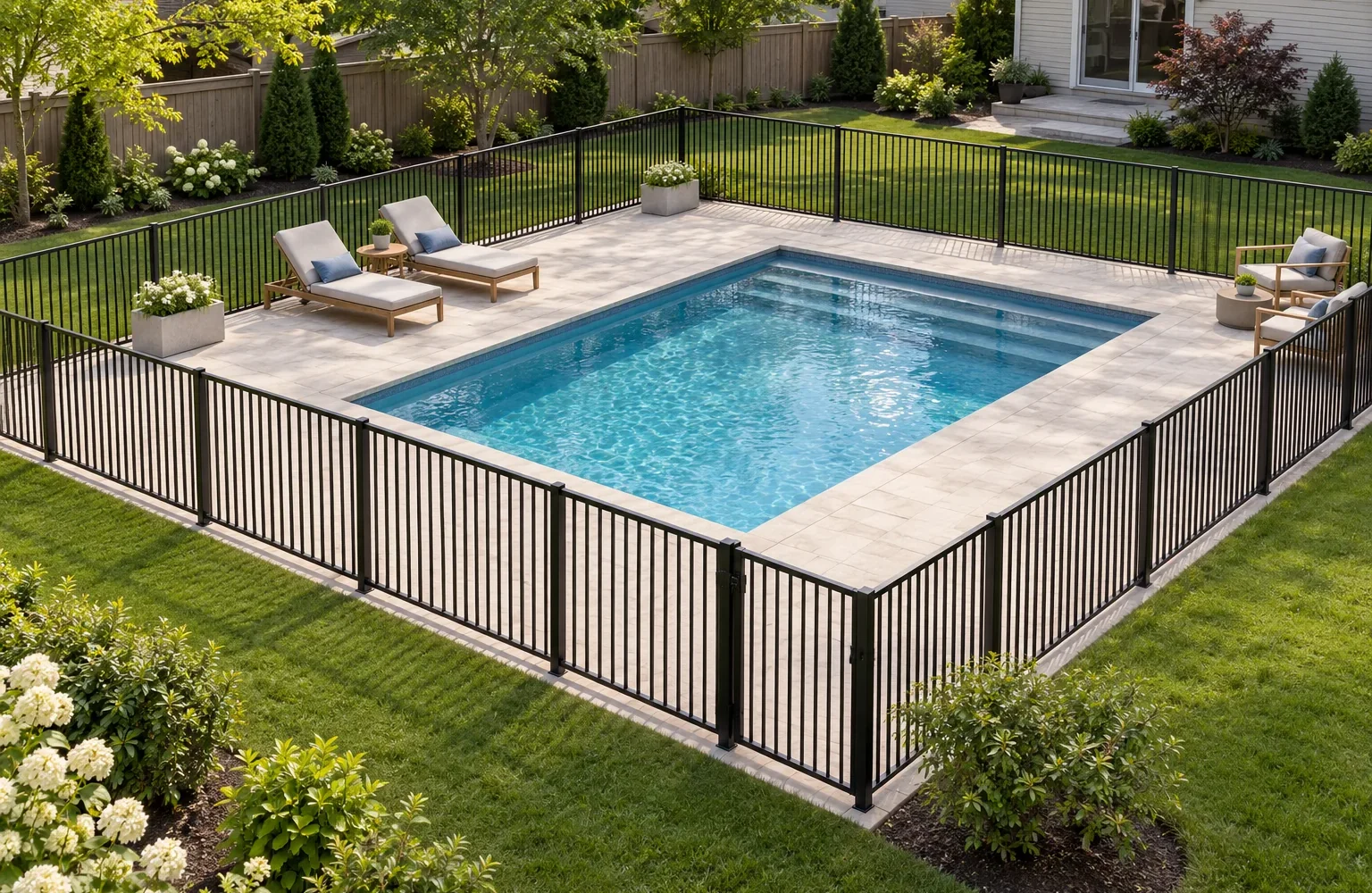
For open views, start with slender vertical metal pickets or clear glass. For privacy, consider a solid boundary on the exposed side of the yard while keeping the pool visible from the areas where adults supervise. A purpose-designed mesh pool fence is another option to investigate when a lighter-looking enclosure suits the space.
The most useful pool fencing ideas solve two separate problems: controlling access to the water and making the backyard feel inviting. Choose an approved barrier system first, then refine its color, placement, and surrounding landscape. A beautiful screen or hedge does not establish that a pool is properly enclosed.
Start with the barrier requirements, then choose the look
CPSC’s Pool Safely guidance recommends a non-climbable fence at least four feet high around all sides of a pool, with a self-closing, self-latching gate. This is national safety guidance, not confirmation of your local legal requirements. Check the proposed design with the local building department before ordering.
Ask about required height, openings, bottom clearance, gate swing and latch location, adjacent climbable objects, and how changes in ground level are assessed. A catalog label such as “pool style” does not answer those questions for your installed layout.
Keep supervision separate from enclosure design. A clear view through glass or pickets can help you see the pool, but it does not replace an adult actively watching children in or near the water. Fences, covers, and alarms are layers of protection rather than a reason to relax supervision.
Compare the main pool fence looks
| Design direction | Why choose it | Tradeoff to plan for |
|---|---|---|
| Dark vertical aluminum pickets | A defined edge with open views and a simple profile | Little visual privacy; finish and hardware still need care |
| Clear glass panels | Minimal visual interruption around a compact or scenic pool | Water marks, reflections, cleaning access, and engineered supports |
| Purpose-designed mesh system | A visually light enclosure with some systems designed for removal | Tension, anchors, gates, and reinstallation all matter |
| Solid wood or vinyl panels | Screening toward an exposed neighboring space | Reduced views, wind exposure, and system-specific barrier suitability |
| Mixed materials | Privacy where needed and openness elsewhere | Connections and transitions need as much attention as the panels |
These are starting points for comparing designs, not a list of automatically compliant products. Ask the installer to identify the exact panels, gate, fixings, and layout being quoted.
1. Use black aluminum pickets for a quiet garden edge
A flat-top fence with narrow vertical pickets suits many backyards because the repeated lines are simple enough to sit beside both traditional and modern houses. Against a deep green background, a dark finish can draw less attention than a bright fence; against pale walls, the same fence becomes a stronger graphic line.
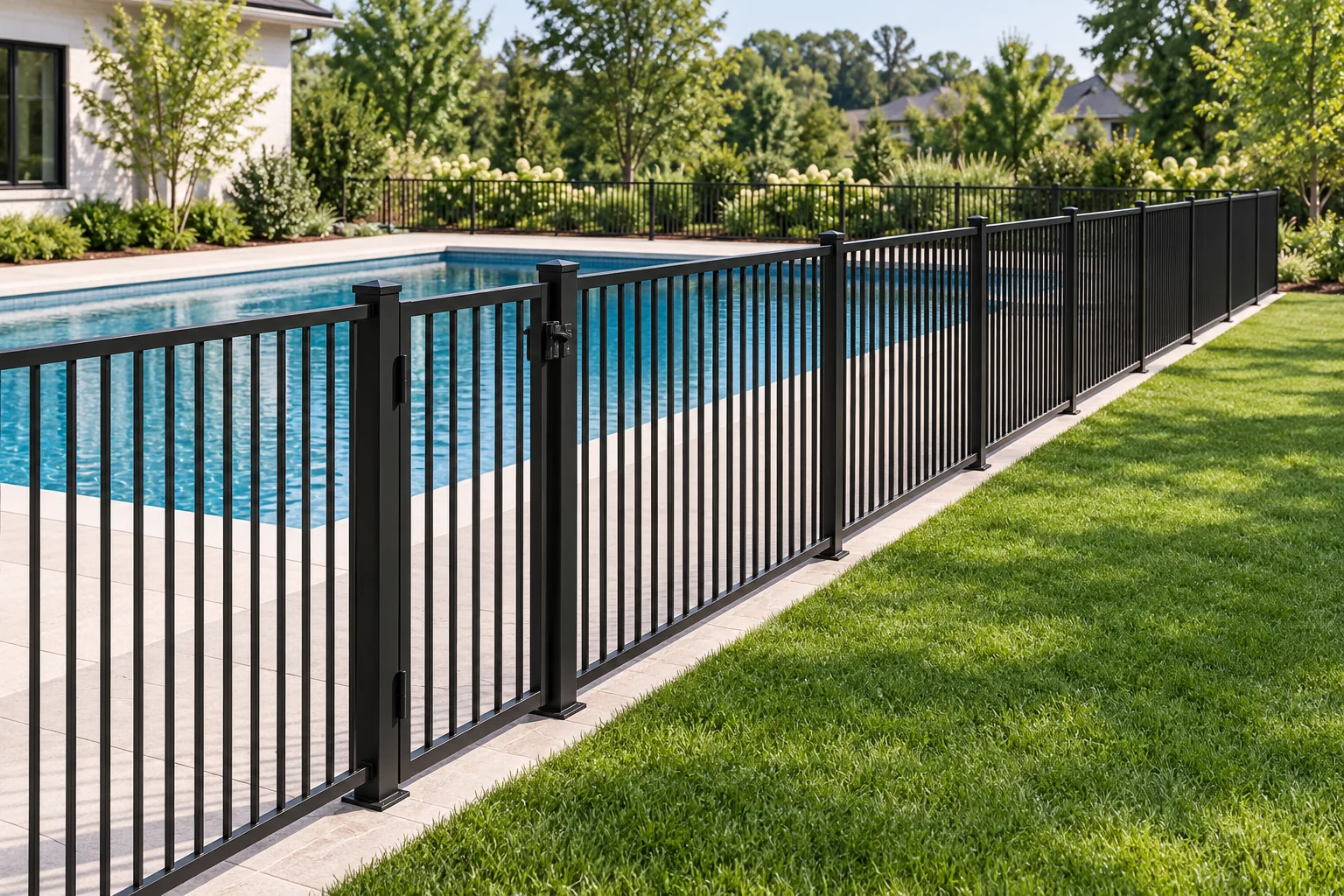
Repeat the finish in one or two nearby details, such as window frames or outdoor furniture, rather than matching every object. Avoid adding decorative crossbars or attaching planters without checking how they affect climbing and the approved system.
When comparing quotes, ask what coating, fasteners, and maintenance instructions apply to your conditions. Near salt exposure or pool chemicals, obtain the manufacturer’s suitability guidance for the complete assembly. “Aluminum” alone does not describe the finish or every piece of hardware.
2. Choose glass when preserving the view matters most
Clear panels can make a small pool feel connected to the rest of the garden. They are especially worth considering where the principal view crosses the fence toward a planted courtyard or a distant landscape. For a more defined edge, compare a framed system with a minimally framed one using samples and actual elevations.
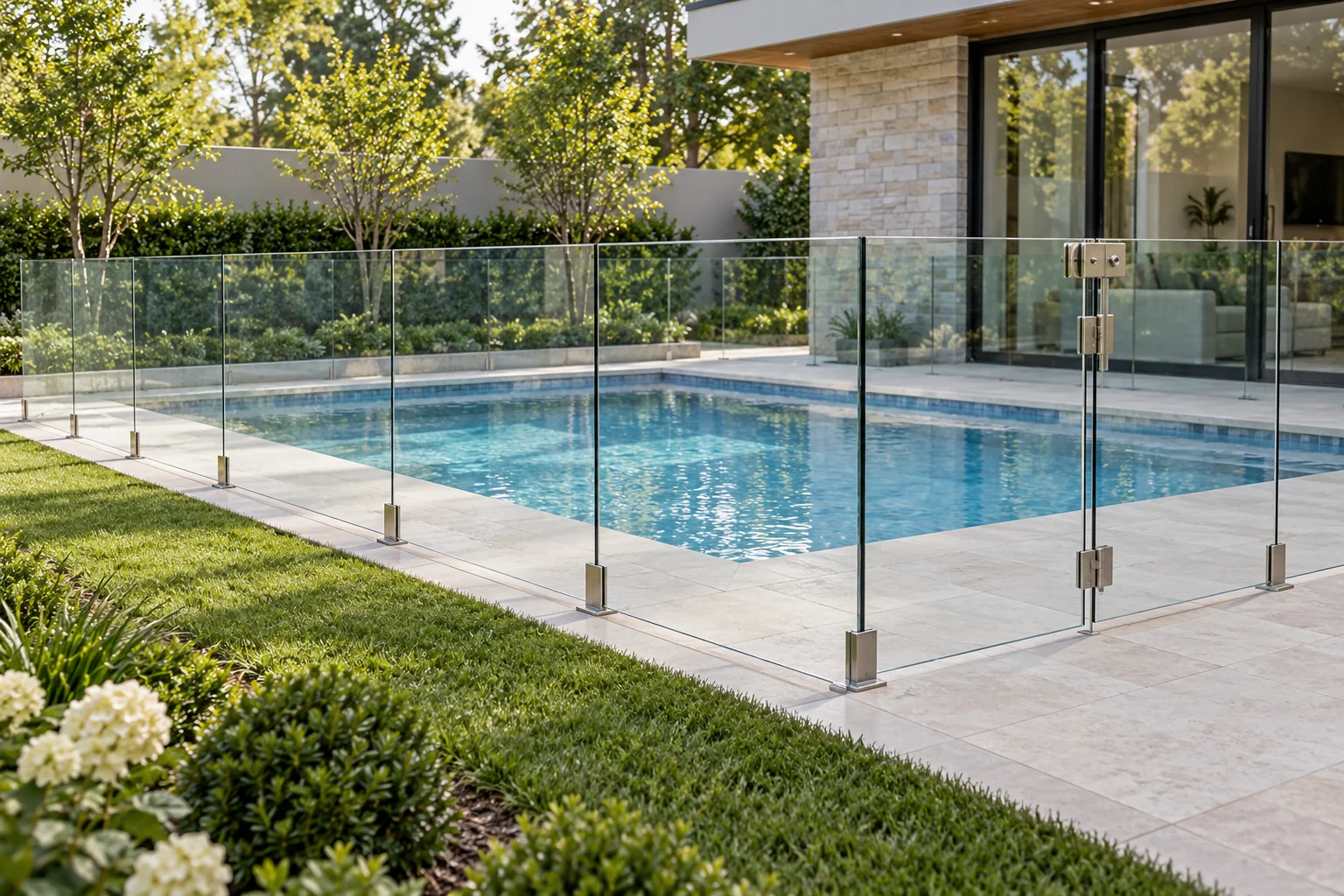
Think through cleaning before choosing the longest run. Sprinkler spray, splashes, and fingerprints can be conspicuous on clear panels. You need access to both faces without squeezing behind planting or leaning over water. Inspect a sample in the light and against the background you actually have.
Glass fencing is a designed structural system. Ask for the specified glazing, supports, gate hardware, and anchoring details for your deck or slab. Ordinary glass sheets, generic patio screens, or a railing selected only for its appearance are not substitutes.
3. Put privacy on the exposed side of the yard
If one neighbor overlooks the pool, a solid boundary or separate privacy screen on that side can provide a calmer backdrop. Keep a more open pool enclosure between the water and the main house or seating area where that fits the approved layout. This gives each element a clear job without enclosing every sightline.
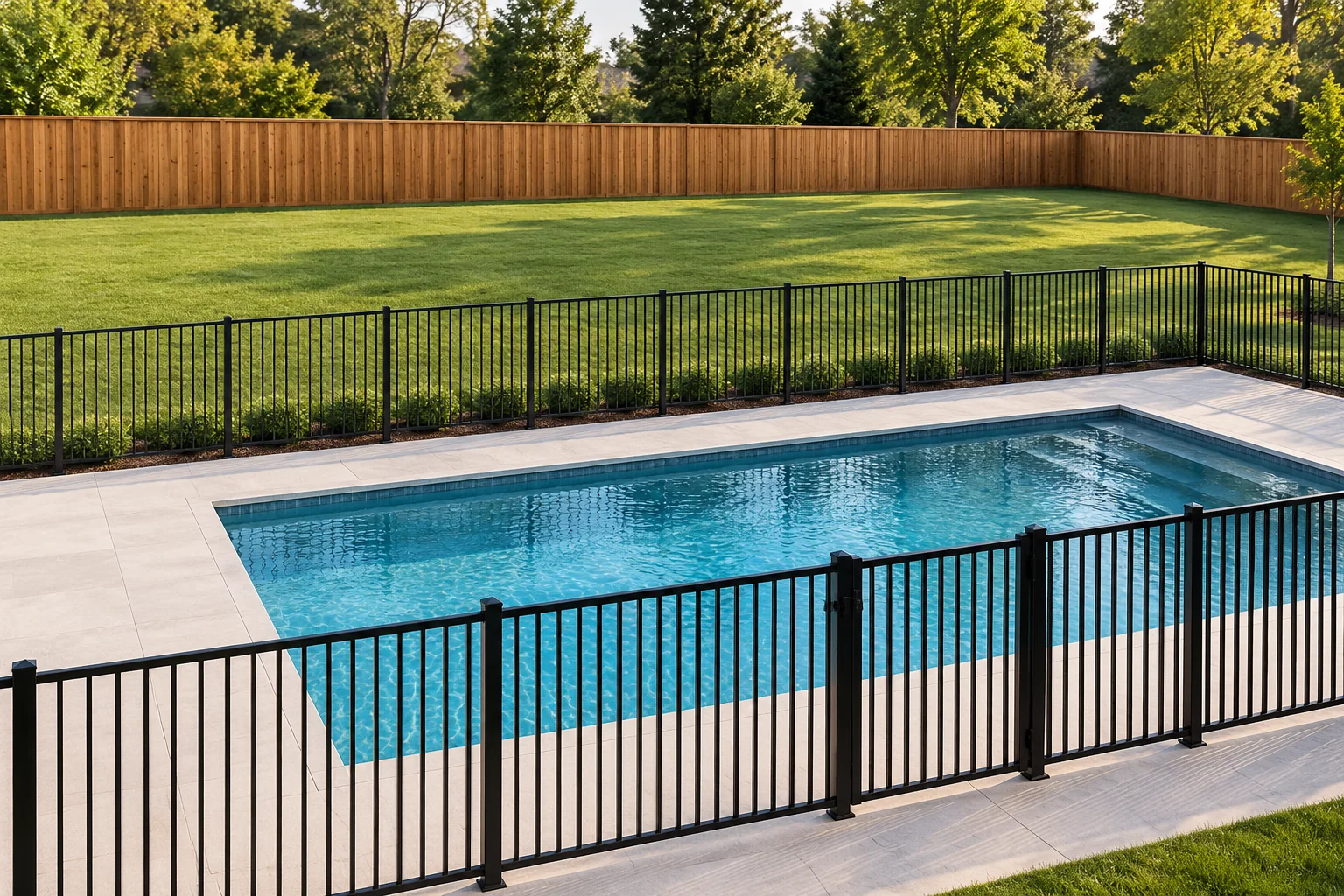
Wood can add warmth beside pale paving, while solid vinyl offers a different finish and care routine. Check wood for weathering and coating needs; ask a vinyl supplier about cleaning, wind suitability, and repairable components. Neither material name guarantees that a particular panel-and-gate arrangement can serve as a pool barrier.
Test privacy from the occupied spots, including an outdoor chair and the pool steps. A panel that blocks a ground-level patio may not block an upstairs window. Keep the arrangement from hiding the water from the adult responsible for supervision.
Planting can soften a boundary, but keep it from becoming a climbing aid or obstructing gates and inspection. Our guide to choosing plants along a fence line explains mature size and seasonal coverage. Pool-barrier clearances need their own local check; general planting spacing is not a substitute.
4. Consider a purpose-designed mesh enclosure
A dark mesh system can create a lighter visual edge than a solid panel fence. It may suit a family yard where separating the pool from the lawn is the priority and a large architectural statement would overwhelm the space. Compare the actual fabric, poles, anchors, and dedicated gate as one system.
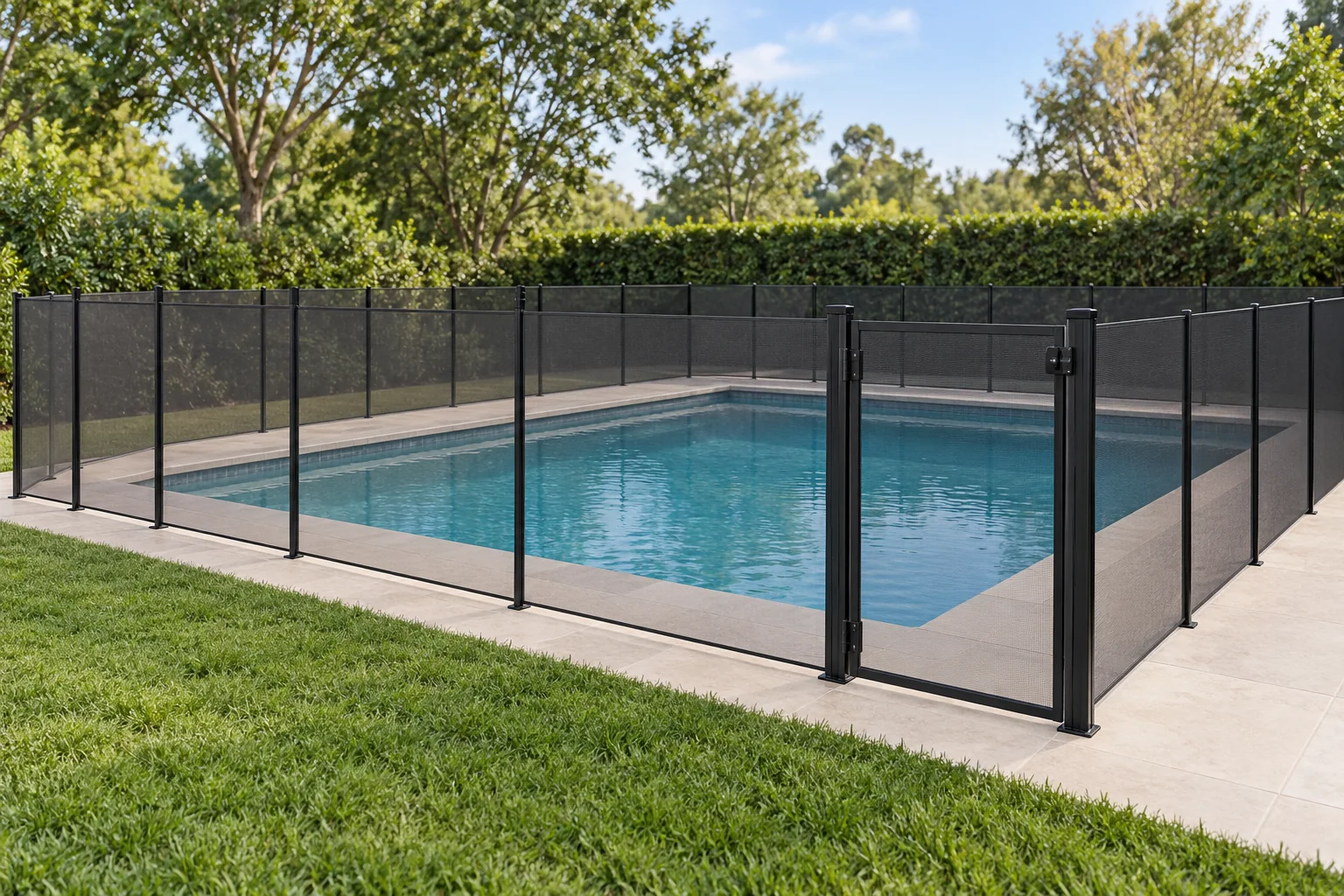
Some systems are removable, but removability is not permission to leave the pool unprotected. Confirm whether the product is accepted locally and what protection must remain when any section is taken out. Include inspection and correct reinstallation in the ownership plan.
A roll of garden mesh or a pet exercise pen is a different product. Do not improvise an enclosure from materials that merely resemble a purpose-designed pool fence.
5. Mix materials around a clear layout
Use a more transparent material where the view matters, and a more opaque one where privacy matters. For example, a clear front run might face the patio while a solid side boundary screens a neighboring seating area. Ask the designer to show the full enclosure route, including where different systems meet.
Keep the palette restrained: one main fence finish, a compatible gate, and a paving color that works with both. Put transitions where the geometry already changes, such as a corner, rather than scattering short sections across one straight view.
The junction is a practical detail, not just an aesthetic one. Check gaps, attachments, changes in level, and the relationship between the gate and adjacent walls. A retaining wall or a raised bed can change the effective approach height even when the panels themselves are identical.
Make the gate and walking route work together
Before committing to posts, mark the fence line and gate position on a site plan. Trace the route from the house to the water, the route to equipment, and the space needed for cleaning. For a compact pool, our cocktail pool layout ideas can help you consider how seating and circulation compete for space.
- Allow for the gate’s movement. Pool Safely’s barrier checklist recommends gates that open away from the pool. Confirm the required swing and keep its path clear.
- Keep the latch usable. Ask the installer to explain its required position and demonstrate closing and latching from different opening positions.
- Keep furniture and stored items away. Plan a place for loungers, bins, and large pots that will not create a climbing route or prevent the gate from closing.
- Resolve slopes before installation. A flat panel on changing ground can leave different bottom gaps along its length. Have the installer detail each change in grade.
- Plan for maintenance access. Confirm how equipment and replacement parts will reach the pool without routinely dismantling the barrier.
Choose with a sample and a complete quote
Narrow your options to two systems and view their finishes against your paving in daylight. Compare the view from the house as well as from inside the pool area. For glass, include cleaning access; for metal, inspect the finish and connections; for mesh, understand inspection and tension requirements.
Ask each bidder to price the same fence route, gates, site preparation, anchoring, and grade changes. A low panel price is difficult to compare with a complete installed system. Keep permits, deck repairs, and ongoing care visible in the comparison instead of choosing from material cost alone.
The right design is the one that supplies the required enclosure, leaves a workable route through the yard, and suits the maintenance you will actually do. Resolve those decisions first; the final color and planting will be much easier to choose.

Ethan Miller
Ethan Miller writes about home improvement, interior design, cleaning, and everyday living at Home & Living Daily. He shares practical tips and simple ideas to help readers create more comfortable and functional homes.