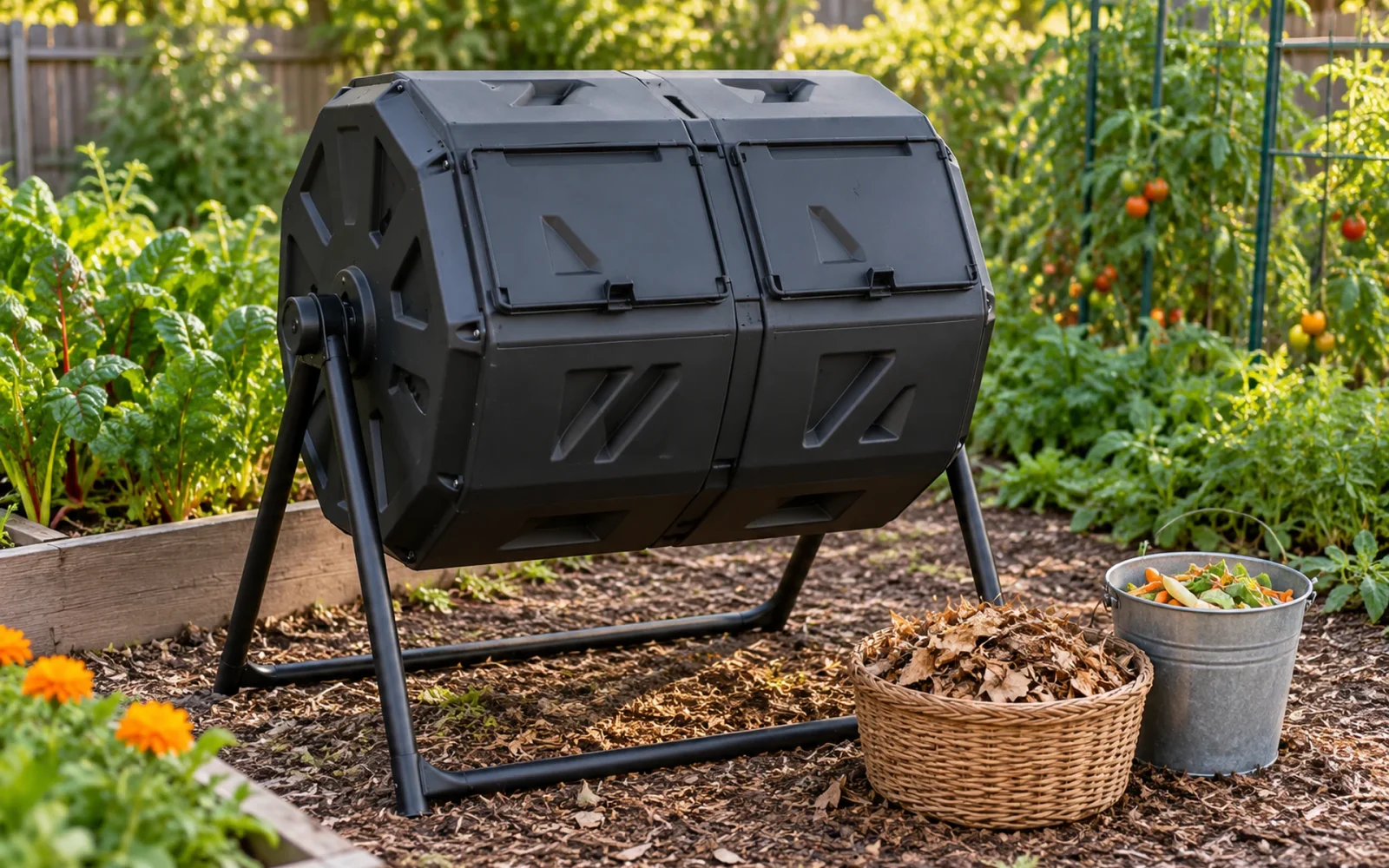
A compost tumbler is a container that rotates to mix and aerate composting material. Instead of turning a pile with a fork, you turn the drum. Microorganisms still do the decomposition, so a tumbler needs the same essentials as other backyard compost: suitable ingredients, moisture, air, and time.
The habit that matters most is finishing a batch. If you keep adding fresh scraps to the same chamber, some of its contents will always be unfinished. Plan where the next bowl of kitchen scraps will go while the first batch matures.
What changes when compost is inside a rotating drum?
The drum makes mixing more accessible and keeps the working material contained above or beside the ground, depending on the model. That can suit a small garden or someone who dislikes lifting a pile. It also gives you a definite capacity and a lid to close after feeding.
Containment brings tradeoffs. You have to fit scraps through an opening, move a wet load, and get compost out again. A full drum may be harder to turn than the empty display model suggests. Vent holes and latches also do not make every tumbler completely pest-proof.
Choose a unit you can operate comfortably. Check the emptying height, access for a tray or wheelbarrow, latch action, and how easily you can open a chamber without spilling material. For a household producing lots of leaves or bulky garden cuttings, a drum may be better as one part of the compost setup than the only container.
If your main need is handling a large volume on the ground, compare that routine with starting a conventional compost bin.
Set up the batch system before loading the first scraps
Place the tumbler on the firm, level surface specified by its manufacturer. Leave enough room for a full rotation and for opening the doors. Choose a spot you can reach during ordinary kitchen cleanup, with a supply of dry browns nearby.
Then decide how you will separate new material from finishing material:
- Two chambers: fill one side while the other finishes. Stop adding to the first side when you switch. The smaller chamber capacity still has to match your household’s output.
- One chamber: collect the next batch elsewhere while it finishes, or transfer partly processed material to a suitable curing container.
- Continuous feeding only: expect mixed ages rather than a drum of uniformly finished compost.
A second chamber buys separation, not unlimited throughput. If both sides are full and unfinished, you need another destination for incoming scraps.
Load a mixture that can move when the drum turns
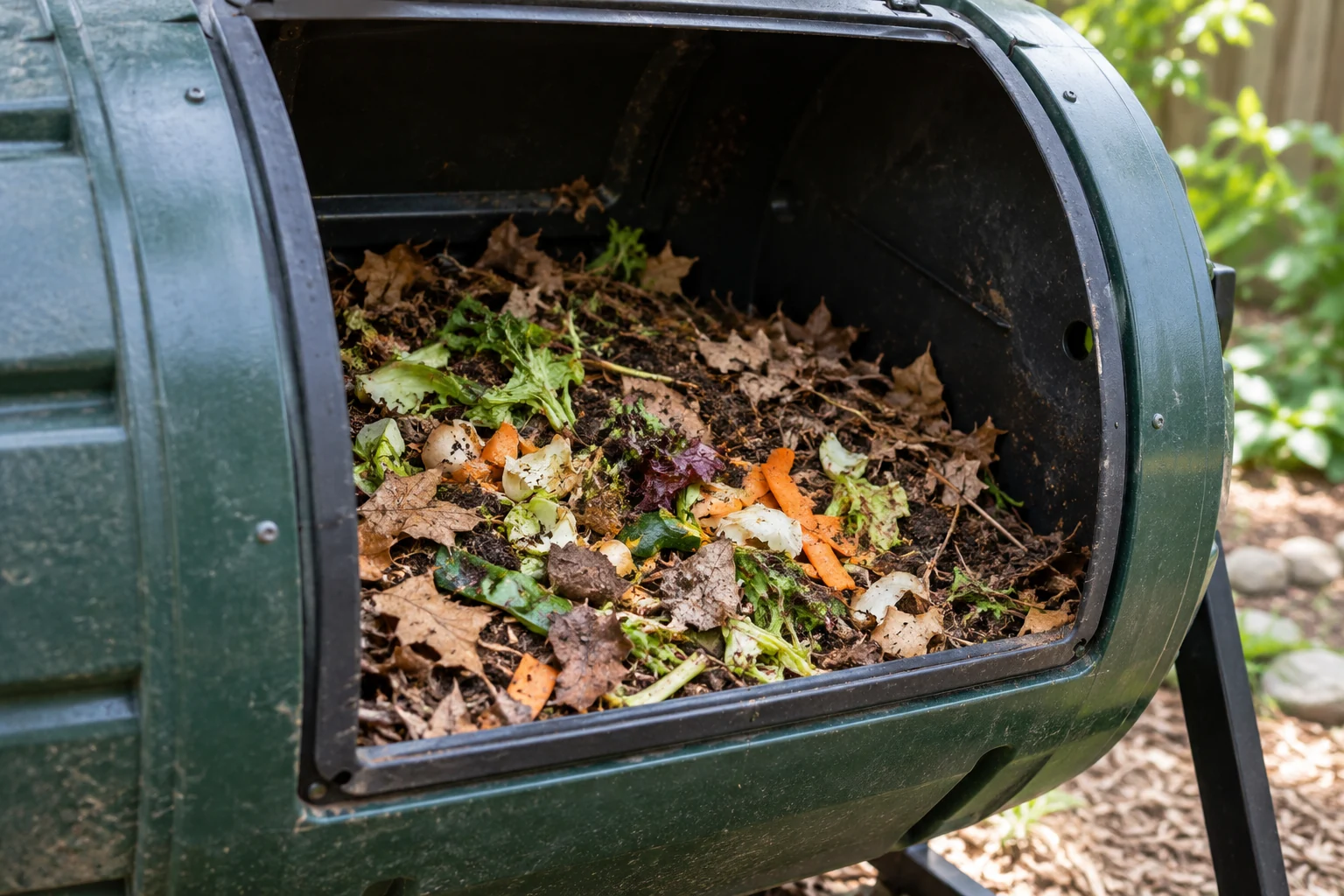
Start with dry, carbon-rich material such as crumbled leaves or shredded plain cardboard, then mix in suitable kitchen and garden scraps. Vegetable trimmings and coffee grounds are examples of moist greens. Keep coated packaging, plastic labels, and synthetic tea bags out.
Cut up bulky stems and large scraps before loading. Break apart mats of grass or cardboard so they do not become a wet block. A drum filled tightly to the top has little room for the contents to fall and mix; stay within the manufacturer’s working capacity.
For a typical home tumbler, leave out meat, fish, dairy, greasy cooked food, and pet waste unless you are using a separate system specifically designed to handle them. A closed lid alone does not make those inputs appropriate. Avoid diseased plants and seedy weeds if your process cannot reliably treat them.
You do not need to buy a compost starter simply because the container rotates. Keep the initial routine simple enough that you can see how the ingredients behave, rather than adding several products when the batch has barely begun.
Use moisture and movement as your controls
Open the chamber and inspect the actual material. It should feel damp throughout without dripping or forming a sloppy mass. A dry-looking top layer does not tell you what is happening in the center.
If the contents are wet, dense, and unpleasant-smelling, add dry browns and break up clumps. Check that drainage and ventilation openings are clear. Rotate as the manual recommends to redistribute the ingredients. Turning repeatedly cannot compensate for a drum packed with wet food scraps.
If leaves and cardboard remain dry and almost unchanged, add moisture gradually while mixing. Do not pour in a large bucket of water and hope it distributes itself. If the batch is damp but very woody and slow, some suitable greens may help restore a more balanced mixture.
Follow your model’s turning instructions, then adjust your observations rather than inventing a rigid universal schedule. After a turn, check whether the mass is actually mixing. A ball that rolls around intact may need breaking apart, not another dozen rotations.
Stop feeding before you judge whether it is finished
A smaller volume and less recognizable material show progress, but they do not prove that compost is ready for plant roots. Fresh additions reset part of the batch, even if the older material looks dark.
The Compost Education Centre’s tumbler factsheet warns against treating a short processing cycle as finished compost and describes a further six to eight weeks of curing. It also emphasizes stopping new additions while a batch finishes. Weather and ingredients still affect the result, so a calendar should support inspection rather than replace it.
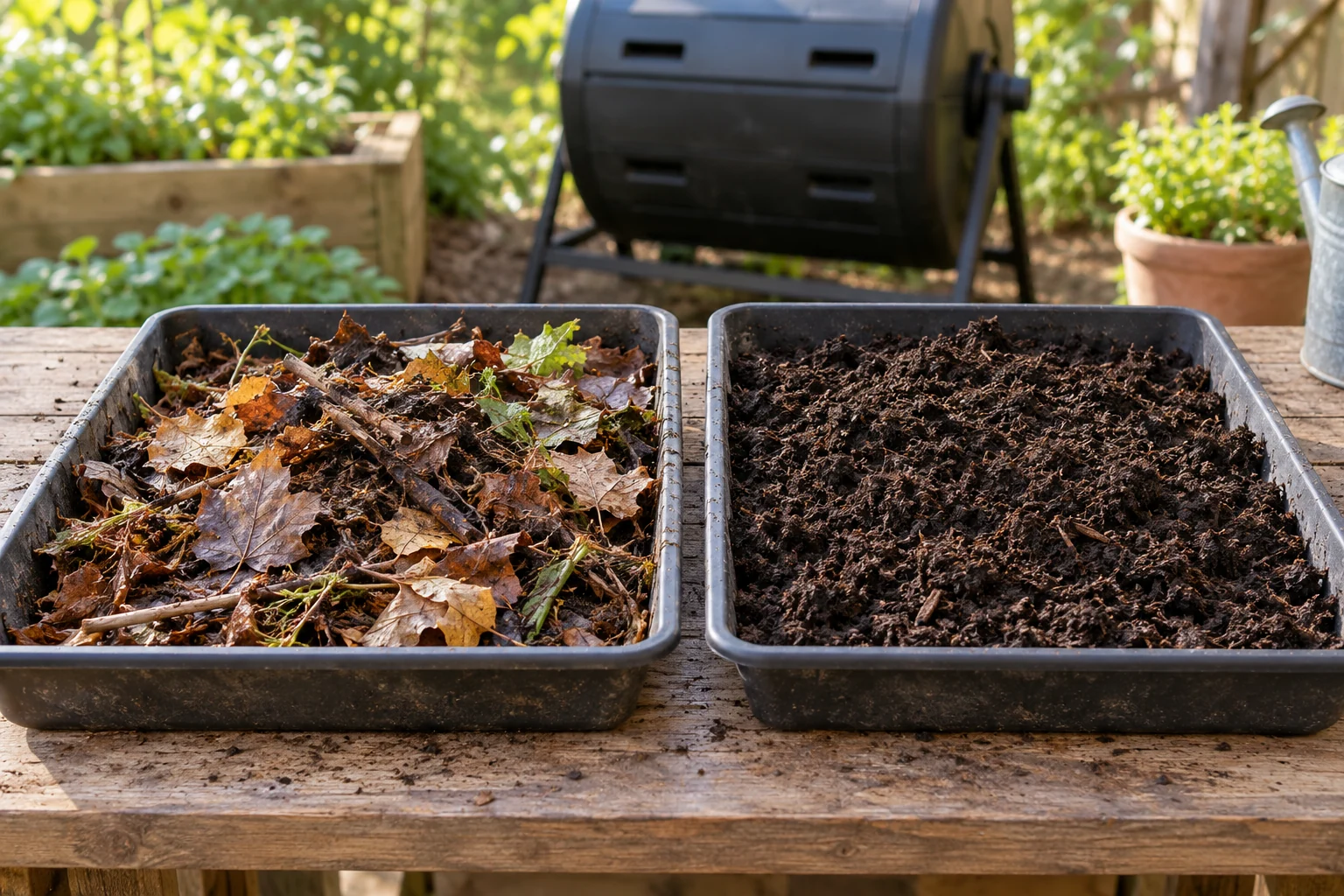
Let the batch mature with air and appropriate moisture, protected from becoming waterlogged or drying completely. Finished compost should be crumbly and earthy-smelling, with most original soft ingredients no longer recognizable. Larger woody pieces may need screening out and returning to another batch.
If you are unsure, leave it to cure longer before using it around seedlings or mixing it into a small container. Emptying the drum early to make room for new scraps is a capacity decision; it is not evidence that decomposition has finished.
When the tumbler seems to have stopped working
It smells sour and leaks. Pause fresh feeding, add dry material, loosen the mass, and inspect drainage. More greens make this problem harder to correct.
It contains heavy balls. Break them up and mix in dry, differently textured browns. Check the center of a ball, since its moisture may differ from the surrounding material.
It never gets noticeably hot. A small batch or cool weather may not produce sustained heat. Look for gradual decomposition, and do not assume that all cold material is safe to use immediately.
It is difficult to turn. Reduce the working load according to the manual and reassess whether the model fits your strength and household volume. Forcing the handle is not part of a useful compost routine.
A tumbler is most useful when its batch size and finishing space fit the way you collect scraps. Get that separation working, and the turning mechanism can do the job it was designed for.

Ethan Miller
Ethan Miller writes about home improvement, interior design, cleaning, and everyday living at Home & Living Daily. He shares practical tips and simple ideas to help readers create more comfortable and functional homes.