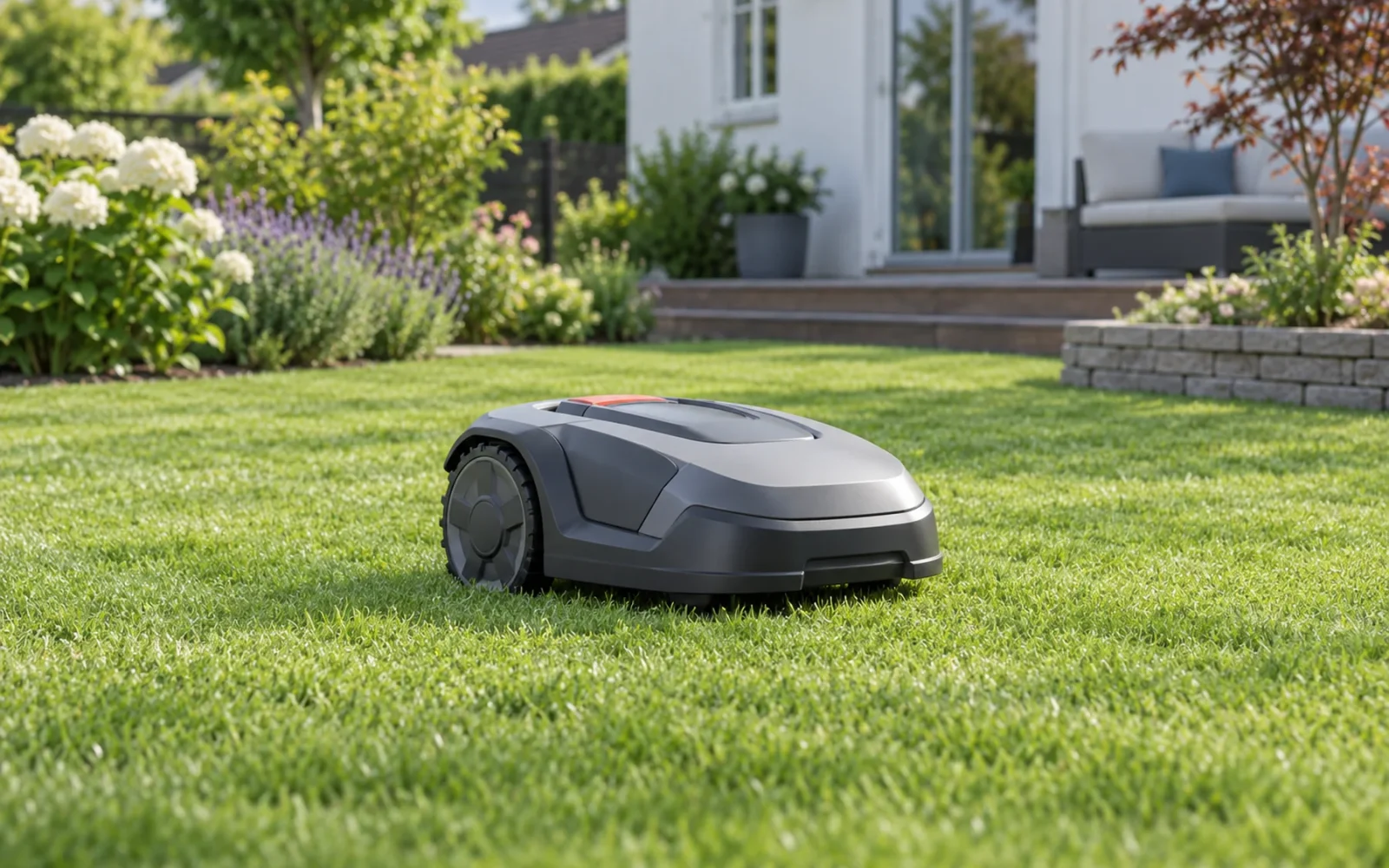
Robotic lawn mowers are worth considering when routine mowing takes time you would rather spend elsewhere and your lawn suits the machine's navigation, access, and slope limits. They offer less value when the yard needs constant preparation, has disconnected areas you must carry the mower between, or still requires substantial manual cutting.
Think of a robot as a replacement for much of the mowing, rather than a replacement for lawn care. You will still clear obstacles, maintain the machine, and handle edges or areas it cannot reach. The condition of your yard matters more than an impressive feature list.
Check the lawn before choosing the mower
Measure the grass the robot will actually maintain, excluding the house, driveway, beds, and other non-lawn areas. Then draw the narrow passages, gates, steps, steep sections, tree cover, and separate zones. A property of half an acre is not necessarily half an acre of mowable grass.
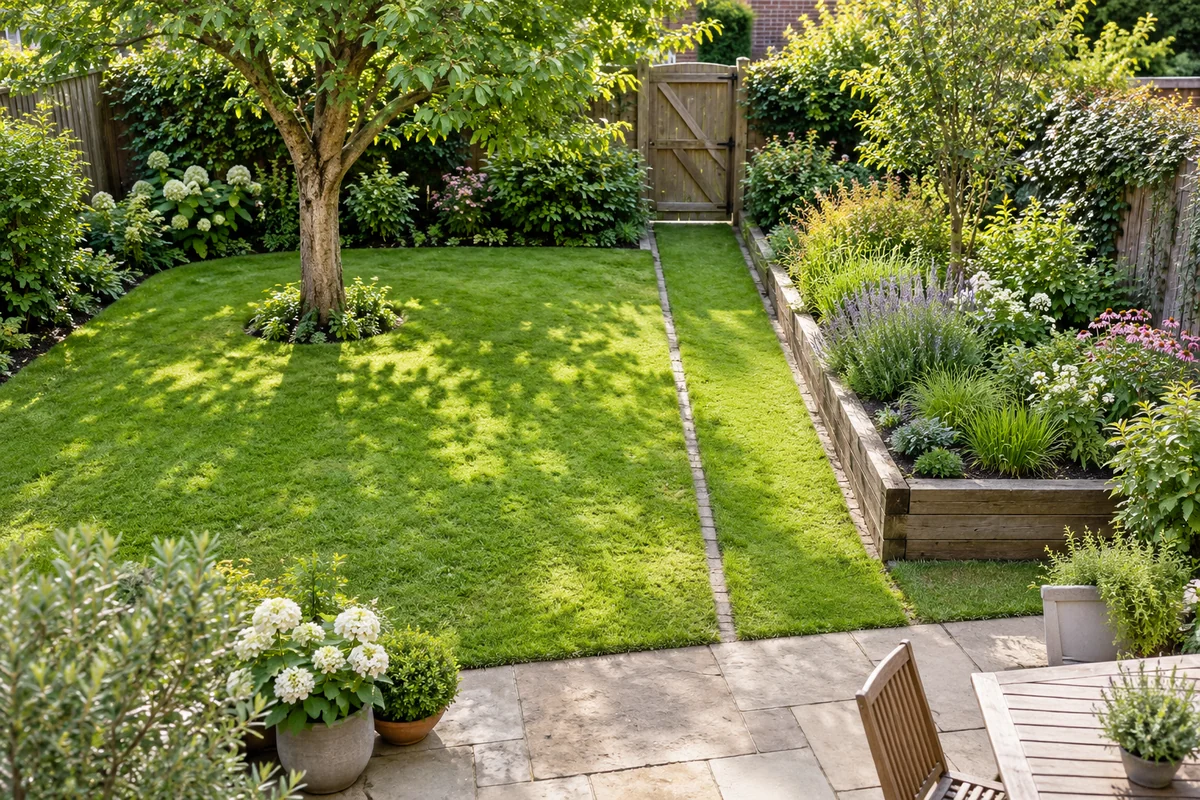
Check how the mower reaches each area and returns to its dock. A model can support several mapped zones while still needing a passable route between them. An enclosed front yard across a driveway or behind a closed gate can turn “automatic” mowing into a carrying routine.
| Yard condition | Why it matters | Evidence to request |
|---|---|---|
| Narrow passages or several zones | The mower must navigate and return reliably | Minimum passage requirements and a route demonstration |
| Steep ground or a slope beside the boundary | Working-area and edge limits may differ | Exact slope limits for the model and installation |
| Heavy tree cover or tall nearby buildings | Navigation may be obstructed | A site assessment for the chosen navigation system |
| Raised borders and irregular beds | Edge cutting may remain manual | Expected uncut strip at your actual border |
Read slope units carefully. A 30% slope is not a 30-degree slope. Percentage is rise divided by horizontal run, multiplied by 100. A rise of 30 inches over a horizontal 100 inches is 30%. Husqvarna's slope guidance also separates the maximum slope inside the work area from the limit at a boundary. Use the relevant limit, not the largest number in the brochure.
Choose navigation for the difficult part of the yard
Boundary-wire systems define the operating area physically. Installation requires a planned route, and later landscaping can mean repairing or relocating wire. The benefit is that the boundary does not depend on an unobstructed satellite view in the same way as an RTK-based installation.
Wire-free systems are not all alike. Satellite-based RTK, cameras, and LiDAR use different references, and some models combine them. Check the requirements at the least favorable spot, such as the corridor beside the house or grass under dense trees.
For instance, Husqvarna's EPOS support guidance discusses sky visibility and installation conditions for its satellite-based system. Some supported arrangements can use additional wire assistance in difficult areas. That is a model-specific option, not a promise that any wireless mower can solve poor reception with a short piece of wire.
Ask the dealer what happens when positioning is lost: does the mower stop, use another supported method, or require intervention? A demonstration on open showroom grass does not resolve the narrow shaded passage at your home.
Count the work that remains
A robot may cut the main lawn regularly while leaving trimming beside walls, around posts, or along a raised border. Edge-cutting features can reduce that work, but compare the mower's required clearance with the actual edge before assuming it replaces the string trimmer.
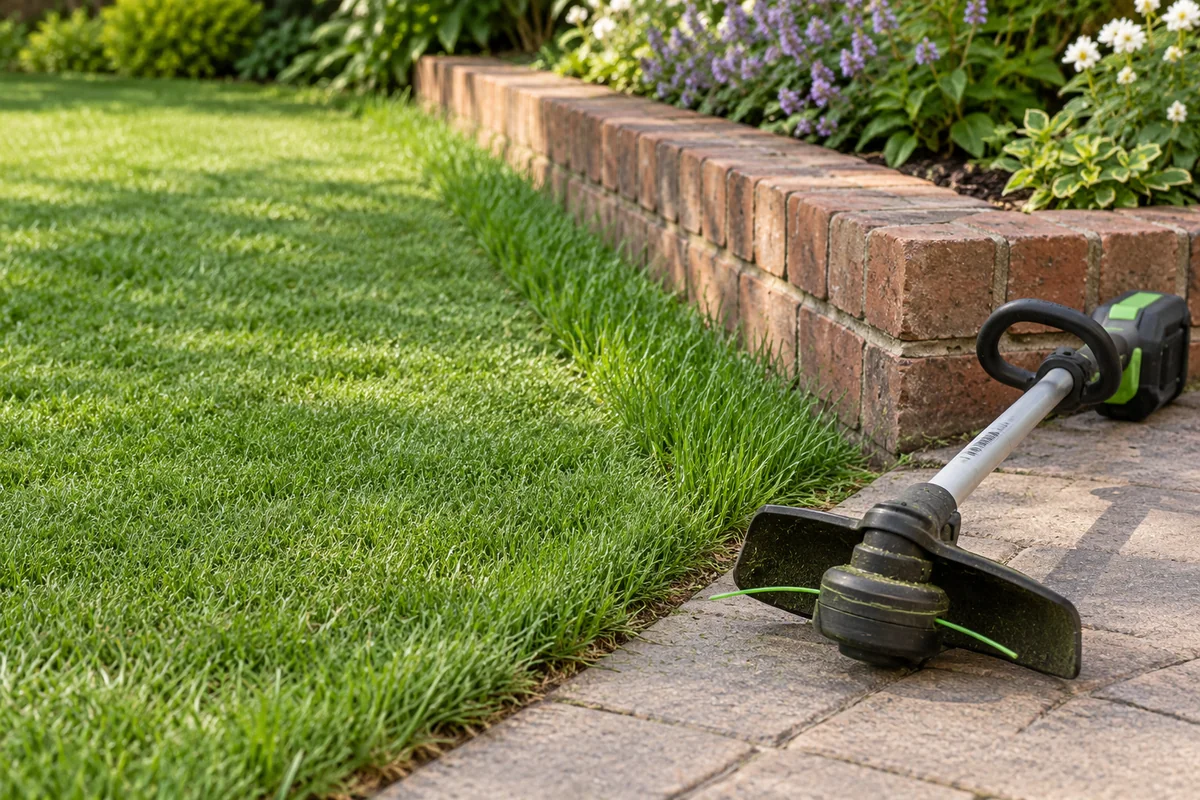
Owners also need to collect toys, branches, fallen fruit, and pet waste. In a Reddit discussion about choosing a wire-free mower, the buyer wanted a completely hands-off machine for a dog-used yard. Replies raised pet-waste cleanup and remaining border work. Those comments are not a product test, but the underlying tasks belong in a realistic ownership plan.
Do not assume object detection will identify every small object or animal. Husqvarna's radar and ultrasonic avoidance guidance explicitly says that this object-avoidance function is not a safety feature. Follow the selected mower's safety instructions, keep people and pets out of its operating area as required, and inspect the lawn before operation.
Maintenance includes blades, wheels, cleaning, storage, and eventually battery or other service work. Ask how to disable the mower safely before handling it and which cleaning methods are permitted. Do not assume a weather-resistant mower can be washed with any hose or pressure setting.
Buy enough capacity for your available mowing hours
Area ratings have operating assumptions. Check the schedule needed to maintain the rated lawn, not just the headline area. A machine that requires long operating hours may be unsuitable if the yard is reserved for children, pets, or other activities for much of the day.
Frequent light cutting is different from clearing tall, neglected grass. Check the model's maximum starting grass height and whether you need an initial conventional mow. Also consider the growth rate and the time lost to unsuitable weather or blocked access.
Discuss the charging station before purchasing. It needs the specified approach space, power arrangement, and placement conditions. A visually discreet corner is not a good dock location if the mower cannot navigate into it consistently.
Compare ownership cost with the mowing it actually replaces
Add the mower, installation, boundary or positioning equipment, required accessories, maintenance, and any connectivity services. Obtain local prices for the actual system. Neither an advertised entry price nor a dealer's largest premium model establishes what your yard will cost.
Compare that total with your current situation. If you already own a working mower, its original purchase price is not a new expense you avoid by buying a robot. If a lawn service also trims, clears debris, and maintains beds, the robot does not replace the entire invoice.
An illustrative time calculation can help: if mowing currently takes 60 minutes and the robot leaves 20 minutes of preparation, trimming, and care each week, the net time saved is 40 minutes. Over an assumed 30-week season, that is 20 hours. These are hypothetical inputs, not measured performance or a claim about your growing season. Substitute your own tasks and timings.
If you enjoy mowing, those hours may have little value to recover. If mowing is physically difficult or repeatedly postponed, dependable automation may be valuable even without a quick cash payback.
Conclusion
The strongest purchase case is a lawn the robot can reach and maintain reliably, paired with a household that values the mowing time recovered. Arrange a site assessment or a returnable trial where possible. If navigation, access, or daily preparation remains unresolved, solve that problem before paying for more automation.

Ethan Miller
Ethan Miller writes about home improvement, interior design, cleaning, and everyday living at Home & Living Daily. He shares practical tips and simple ideas to help readers create more comfortable and functional homes.