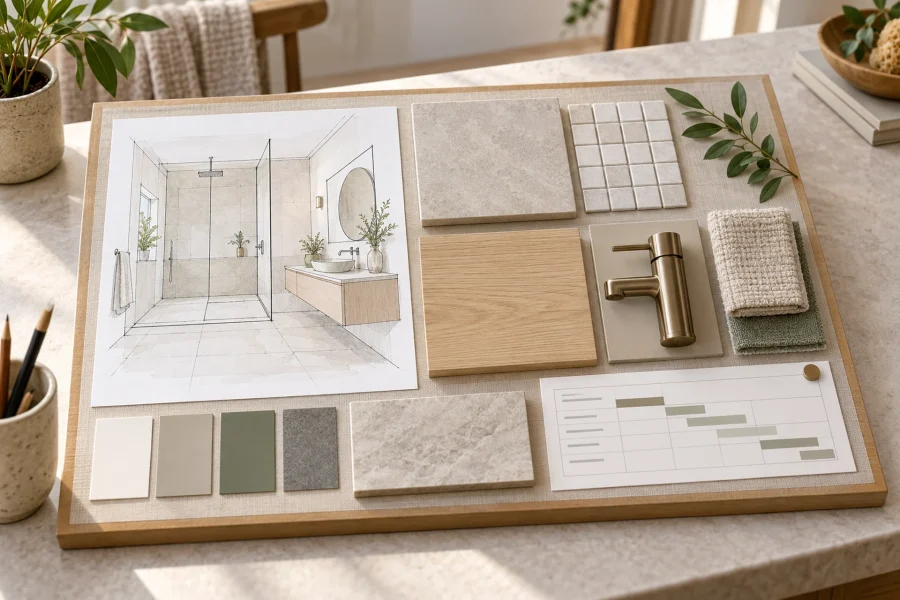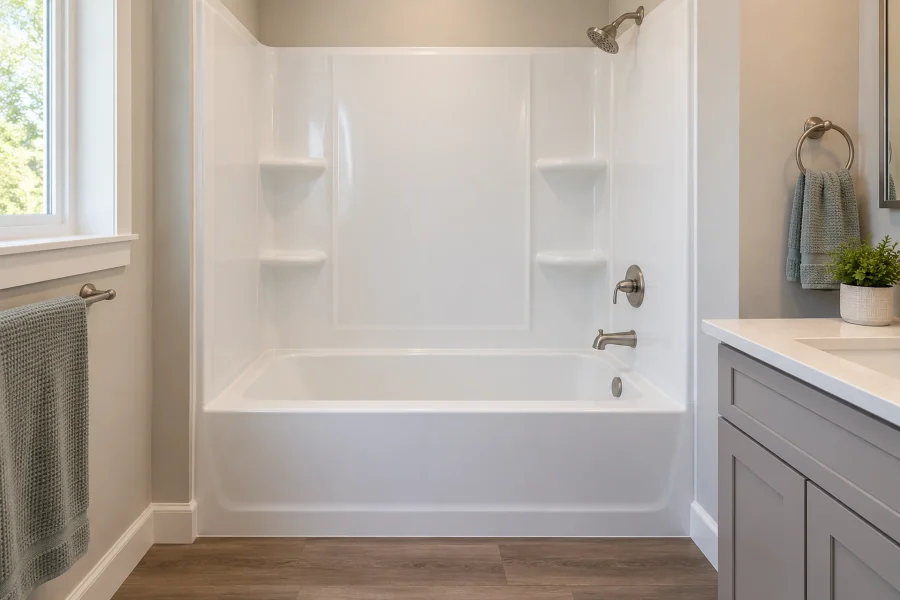
A bathroom remodel commonly needs several weeks of on-site work, plus time beforehand for decisions, ordering, approvals, and scheduling. As useful points of reference, Lamont Bros. describes a 3-to-8-week construction range, while Sweeten discusses roughly 20 to 30 working days of construction and a longer planning-to-completion period.
The answer for your home depends on what the contractor means by “start” and “finished.” A tub replacement that keeps the rest of the room is a different project from a gutted bathroom with moved plumbing, a custom tiled shower, and made-to-order glass. Ask for the full schedule and the period when the bathroom will actually be unusable.
There are three different clocks to plan around
The first is preparation time: confirming scope, selecting products, getting any required approvals, and securing the people who will do the work. The second is construction time, from opening up the room through installation. The third is the return-to-use date, when fixtures, finishes, inspections, and any required curing or testing allow normal use.
These clocks overlap only where the work allows it. Ordering a vanity during design can save site time. Templating custom glass generally depends on the finished shower geometry, so an early product decision does not necessarily eliminate the final measurement and fabrication stage.
Write down the milestones you care about: toilet unavailable, shower unavailable, daily access restricted, substantial completion, and final corrections. That is more useful for a household with one bathroom than a single “four weeks” promise.
How scope changes the timeline
| Project | What can keep it shorter | What can extend it |
|---|---|---|
| Cosmetic refresh | Keeping functioning fixtures, layout, and wet-area assemblies | Repairing damaged surfaces or discovering that planned work is more extensive |
| Replace-in-place remodel | Compatible products on hand and existing services remaining usable | Subfloor repair, updated connections, or an unsuitable existing shower base |
| Full gut renovation | Resolved design and coordinated trades | New plumbing routes, electrical changes, inspections, waterproofing, and more finish work |
| Layout change or custom bathroom | Detailed plans and confirmed product specifications | Structural work, approvals, custom pieces, and dependencies between trades |
A small room is not automatically a fast room. It can still need a plumber, electrician, inspection, waterproofing, tile work, and several return visits. A larger bathroom with a straightforward replace-in-place scope may have fewer complications than a compact room whose drain and doorway must move.
What happens between demolition and a usable bathroom?
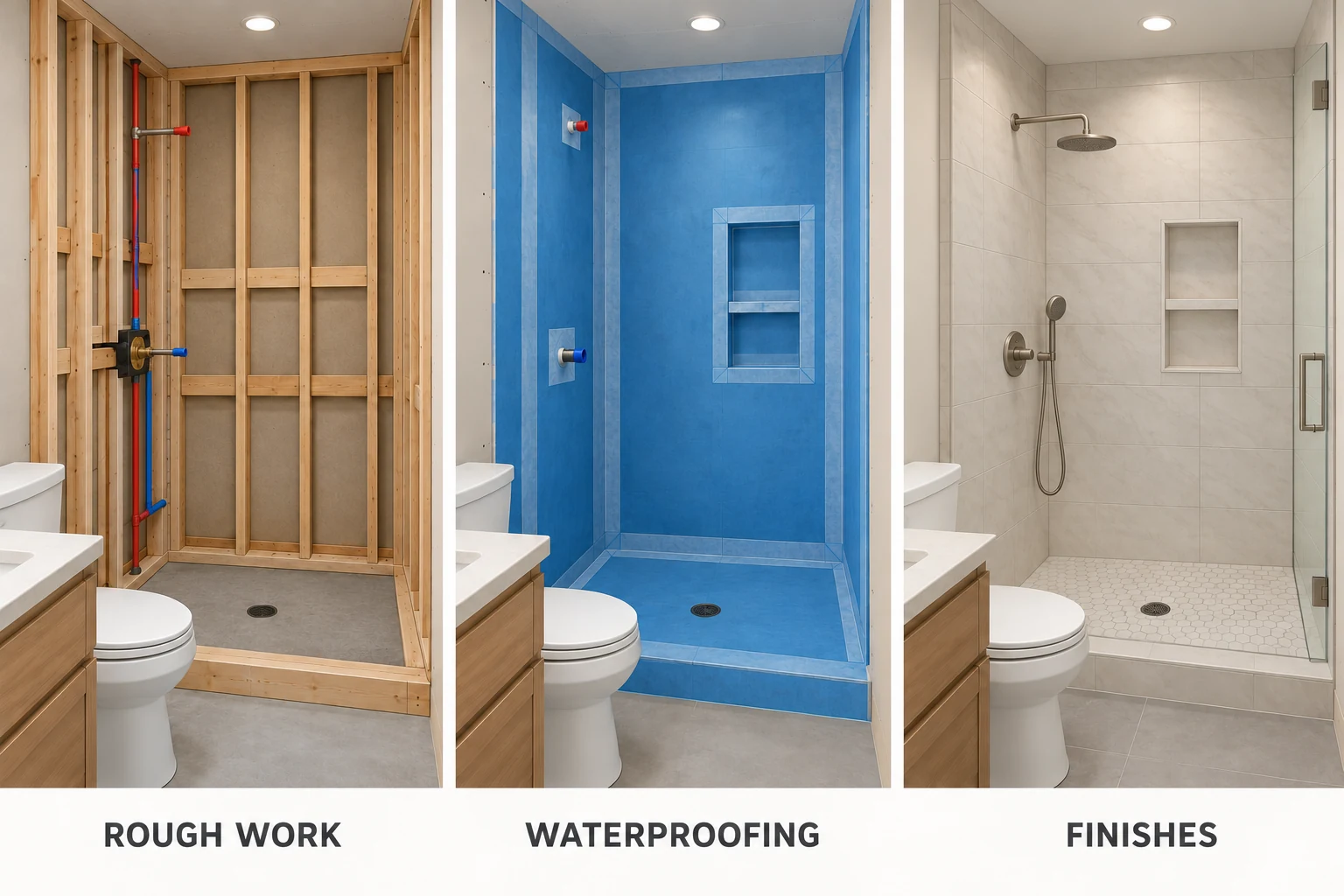
The sequence below explains the dependencies rather than promising that every stage fits into a fixed day count. Some activities can overlap; others need a completed and checked assembly before the next trade can proceed.
Opening the room and confirming hidden conditions
Demolition reveals the surfaces and services that the new work relies on. Damaged framing, unsuitable subflooring, or an unexpected plumbing arrangement can change the scope. A schedule should explain how findings will be assessed, priced, and approved, instead of assuming every wall is ready for immediate rebuilding.
Rough work and inspections
Plumbing, wiring, ventilation, framing, and other concealed work come before the finishes that cover them. Where inspection is required, the contractor needs to book it at the right stage and keep the relevant work accessible. Closing the wall to stay on a preferred date can create a larger delay if it must be opened again.
Substrates, waterproofing, tile, and finish readiness
Shower construction has product-specific waiting and testing requirements. For example, Schluter recommends waiting at least 24 hours after installing KERDI before water testing under the stated conditions. That is a specific system requirement, not a universal schedule for every membrane, mortar, grout, or sealant.
Ask the contractor which products are being used and how their requirements appear in the calendar. Tile installation, grouting, sealant, and first shower use are separate milestones. An empty room during a necessary wait is not evidence that the schedule has failed.
Fixtures, glass, and the final corrections
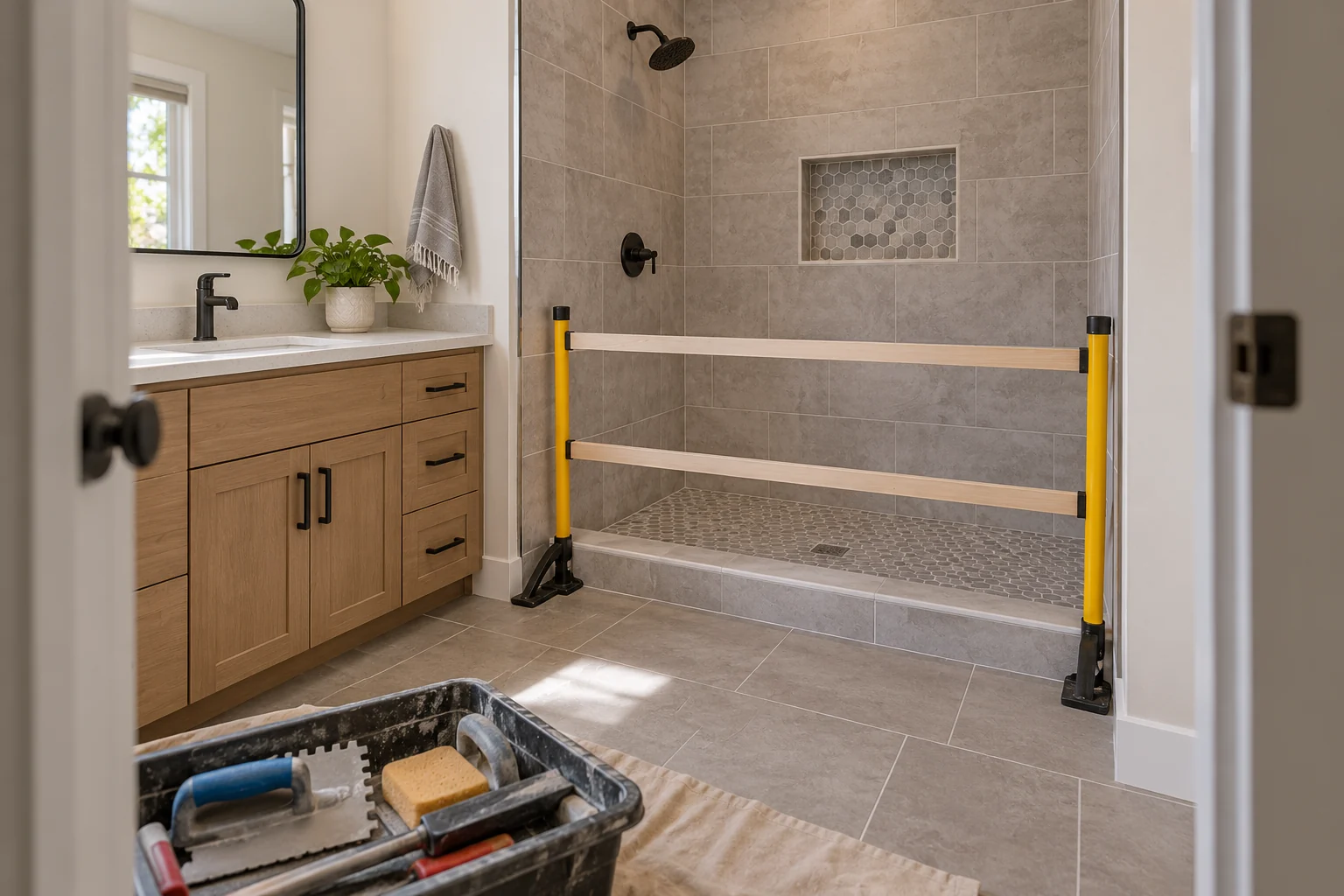
Vanity installation, plumbing trim, lighting, accessories, glass, and final checks bring the room together. Some items may be waiting for a finished dimension. A missing custom door or a return visit to correct a fitting can leave a bathroom looking nearly complete without making every part ready to use.
Protect the start date before demolition
A calendar is more reliable when the essential decisions and delivery dates are already settled. Confirm that the vanity, sink configuration, valve and trim, toilet rough-in, tile, and other critical items match the design. A product sitting in its box is not enough if the installer discovers it is the wrong size or missing a necessary part.
Keep a simple list of items that must be physically checked before work starts, items that can arrive during construction, and items that require a later site measurement. Ask who is responsible for each order and how damaged or incorrect deliveries will be handled.
Tile choices also affect the work itself. Our guide to choosing tile for shower walls discusses differences between materials and applications. Settle those choices with the installer before treating the finish phase as a fixed number of days.
Plan for the bathroom you will not have
If this is your only bathroom, establish a workable toilet and bathing plan before it is taken out of service. Ask whether any fixture can remain usable during a clearly defined phase, rather than assuming a toilet will be reconnected each evening.
Discuss access, dust separation, daily cleanup, pets, and the hours trades will be in the home. Temporary arrangements may be inconvenient even when the construction is progressing correctly. Choose them around the realistic outage period, with room for a delivery or inspection delay.
Does a one-day bathroom remodel mean the whole room?
Usually the important question is the advertised scope. A fast tub or shower-system replacement may cover a particular wet area with compatible products and an existing layout. It does not automatically include a full room demolition, relocated services, extensive substrate repairs, and custom finishes.
Before comparing a one-day offer with a multiweek proposal, compare the work, exclusions, preparation, and the date each fixture becomes usable. Ask what conditions would stop the short installation window from applying.
The most useful schedule names the dependencies and the decisions that can move them. Agree on the bathroom outage, the inspection and testing milestones, and who communicates changes. A slightly longer but well-explained calendar is easier to live with than an optimistic completion date that leaves those responsibilities unclear.

Ethan Miller
Ethan Miller writes about home improvement, interior design, cleaning, and everyday living at Home & Living Daily. He shares practical tips and simple ideas to help readers create more comfortable and functional homes.