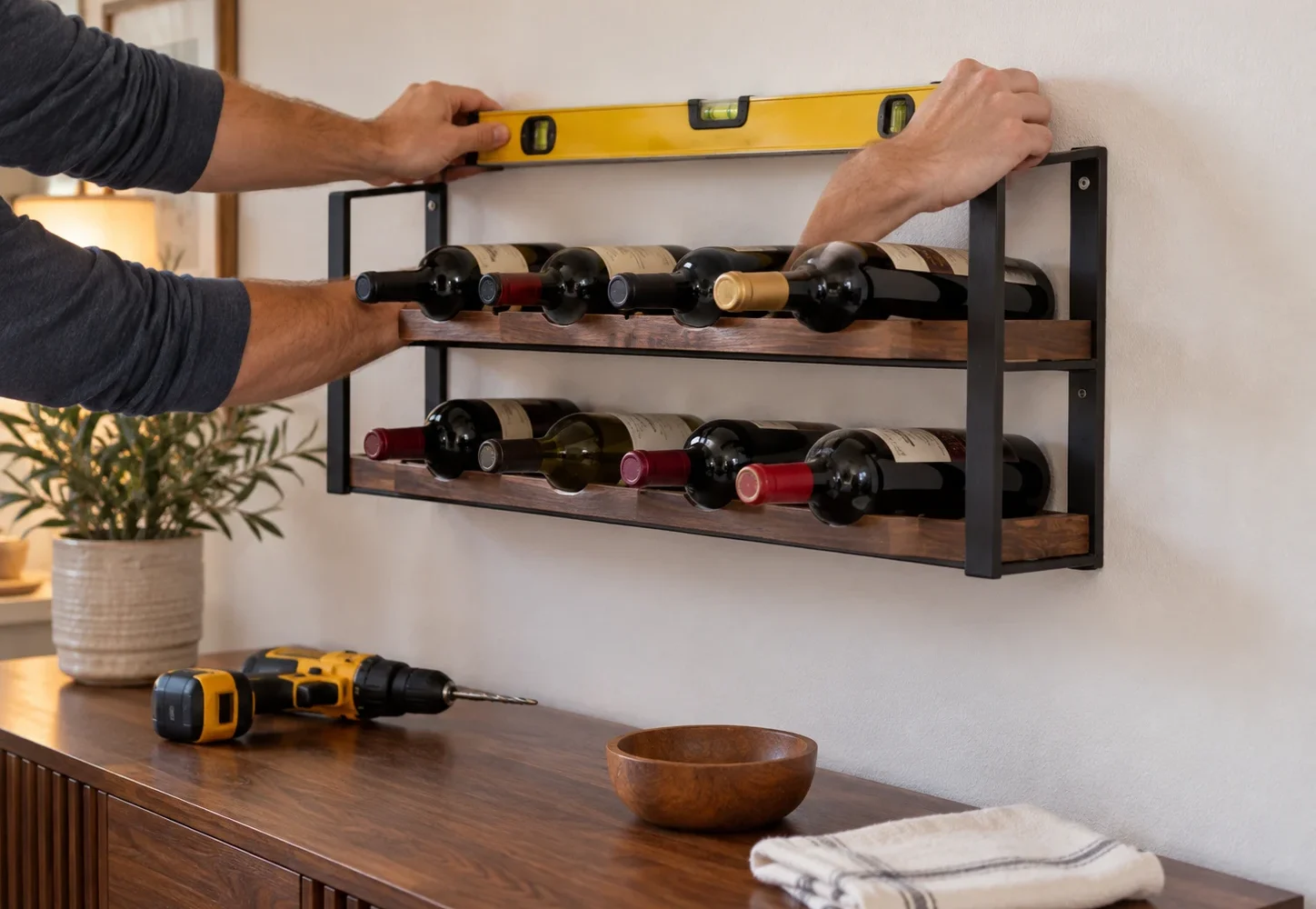
A wall wine rack can turn an overlooked stretch of wall into useful storage and a small design feature. The best setup balances bottle capacity, easy access, safe mounting, and the style of the room. Use the ideas below to choose a layout that fits your collection and your home.
1. Start with the wall and the way you use it
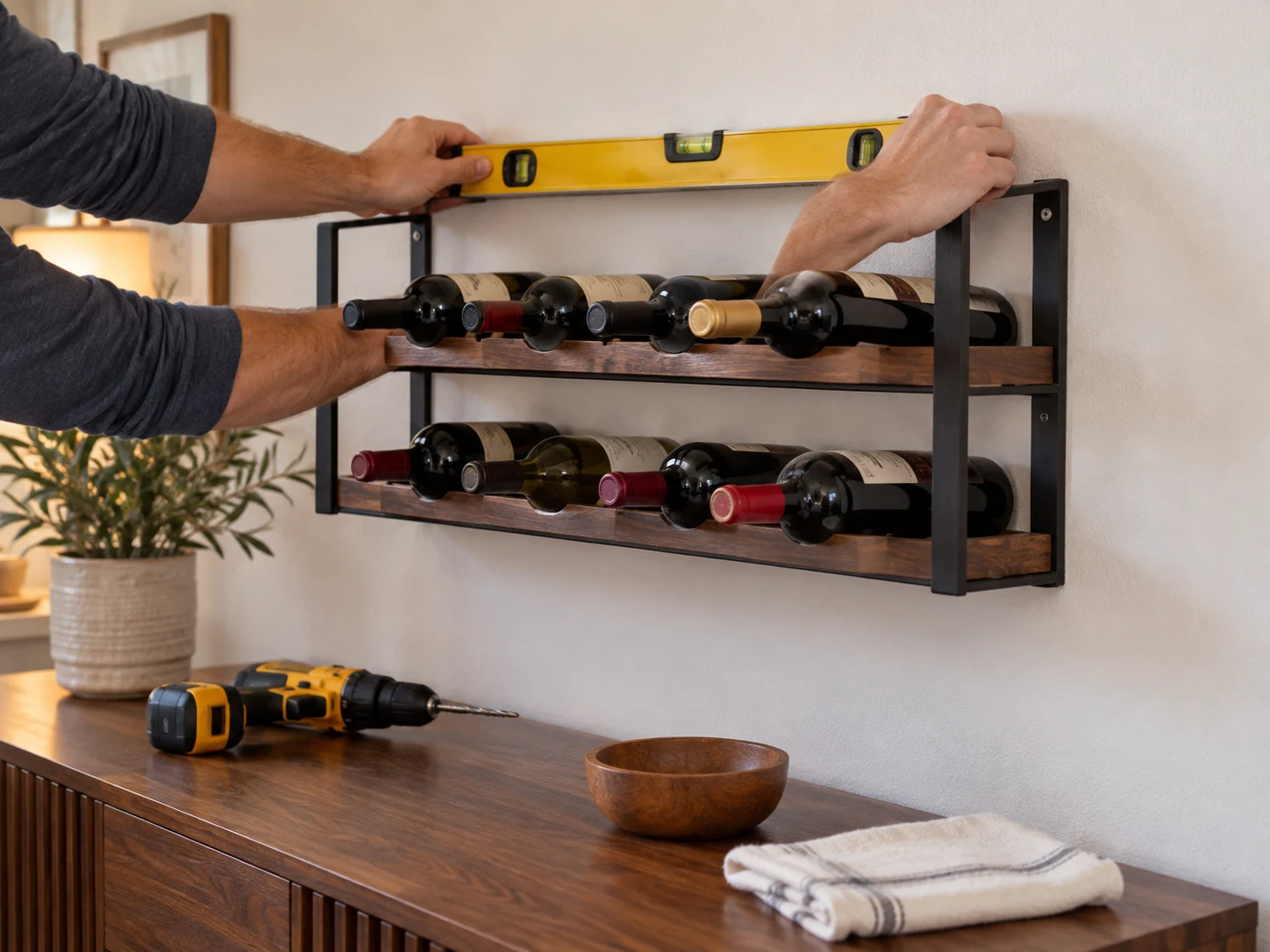
Before choosing a rack, measure the wall width, ceiling height, nearby doors, and the depth available above a counter or sideboard. Decide whether the rack is for a few bottles you open often or a larger display collection. A narrow vertical rack works in a tight kitchen, while a wider grid can anchor a dining room or home bar.
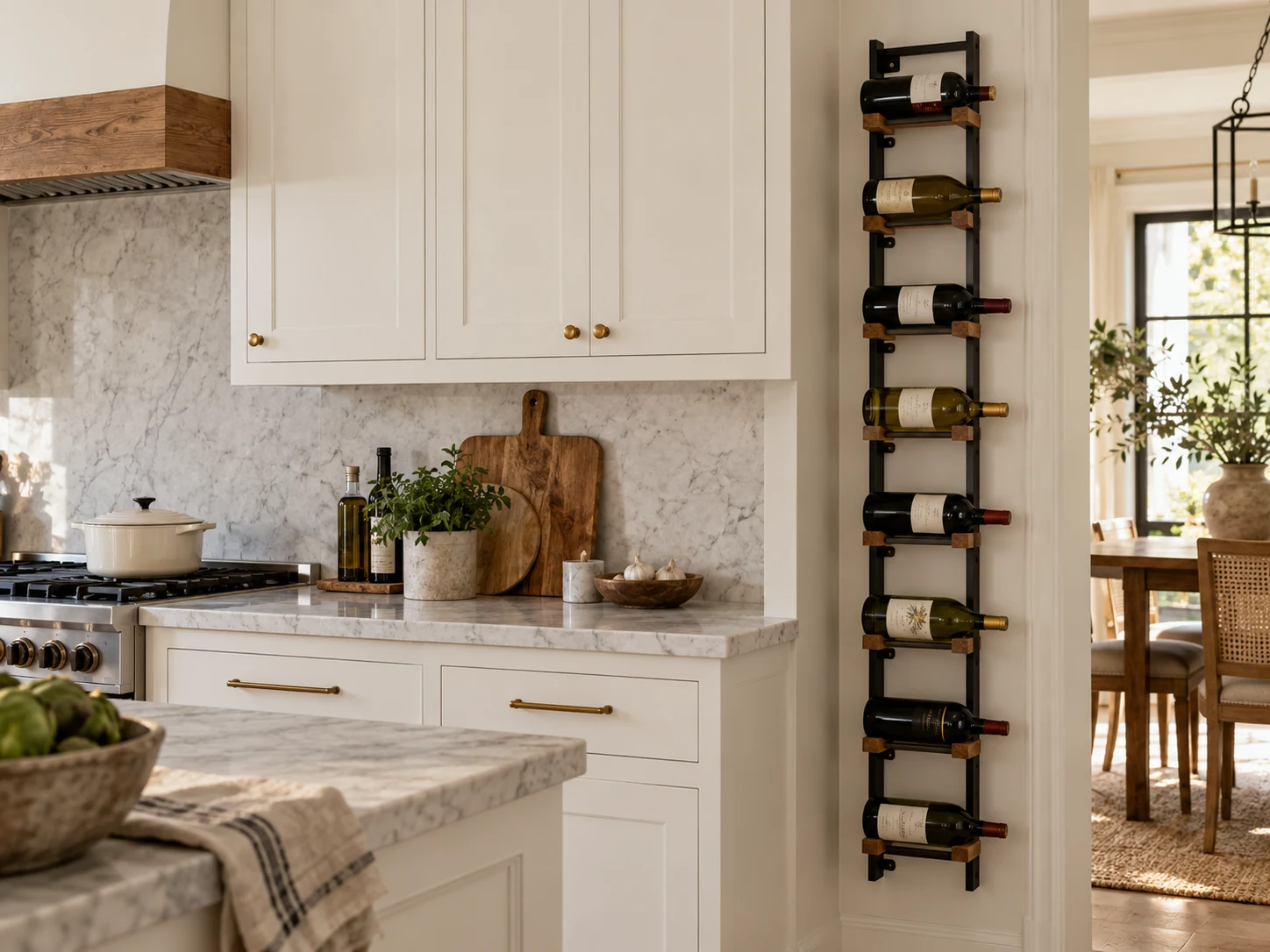
2. Try a slim vertical rack in a small kitchen
A tall, narrow rack uses vertical space without taking over a backsplash or walkway. Place it beside a pantry, at the end of a cabinet run, or on a short wall near the dining area. Leave enough clearance for labels and your hand to remove a bottle without hitting a cabinet door.
3. Build a warm wood display over a sideboard
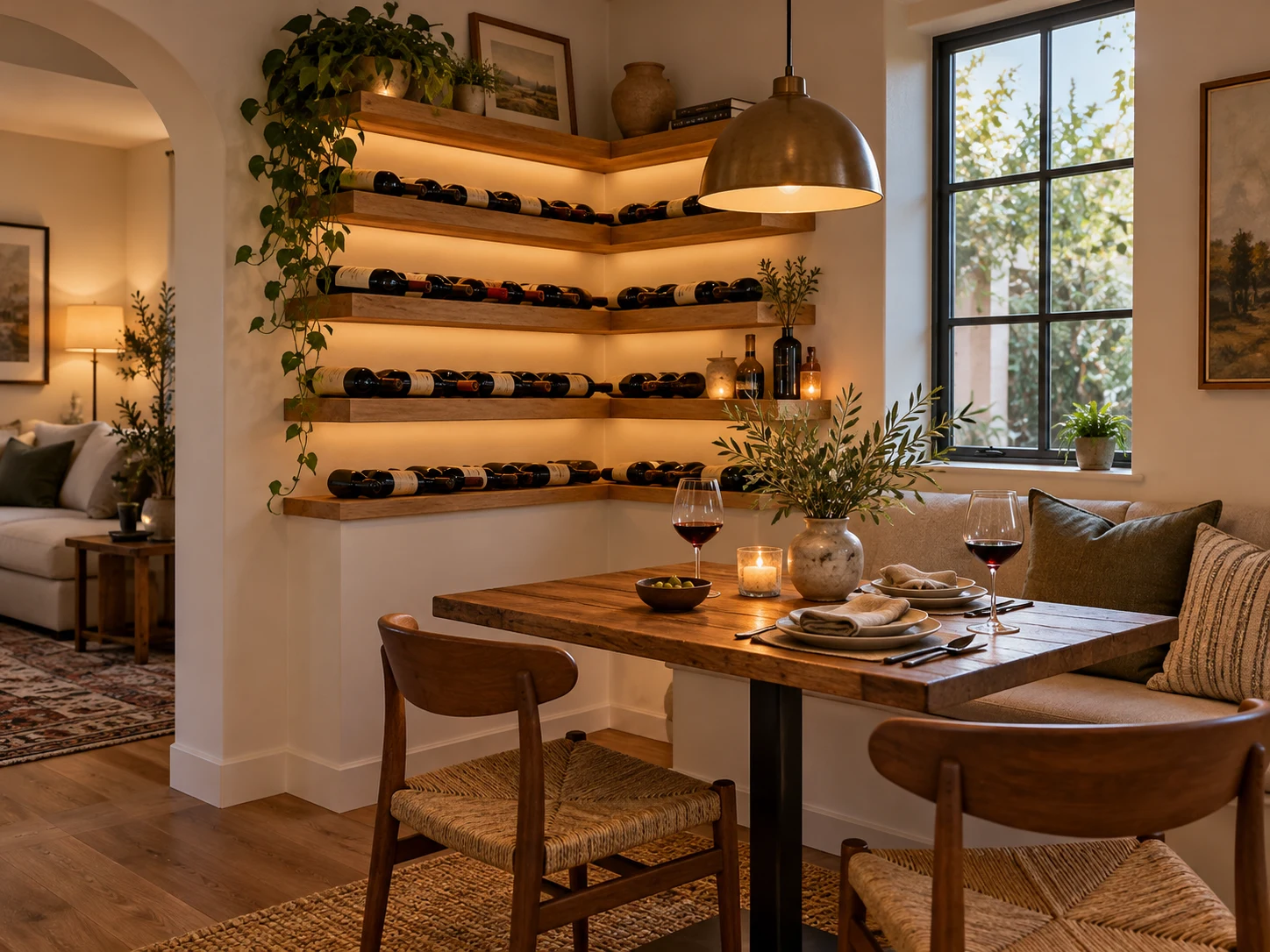
Wood shelves or a slatted rack soften a dining room and pair naturally with a sideboard. Keep the composition simple: align the rack with the furniture below, repeat one wood tone, and leave some open space around the bottles. This approach looks intentional without requiring a full built-in bar.
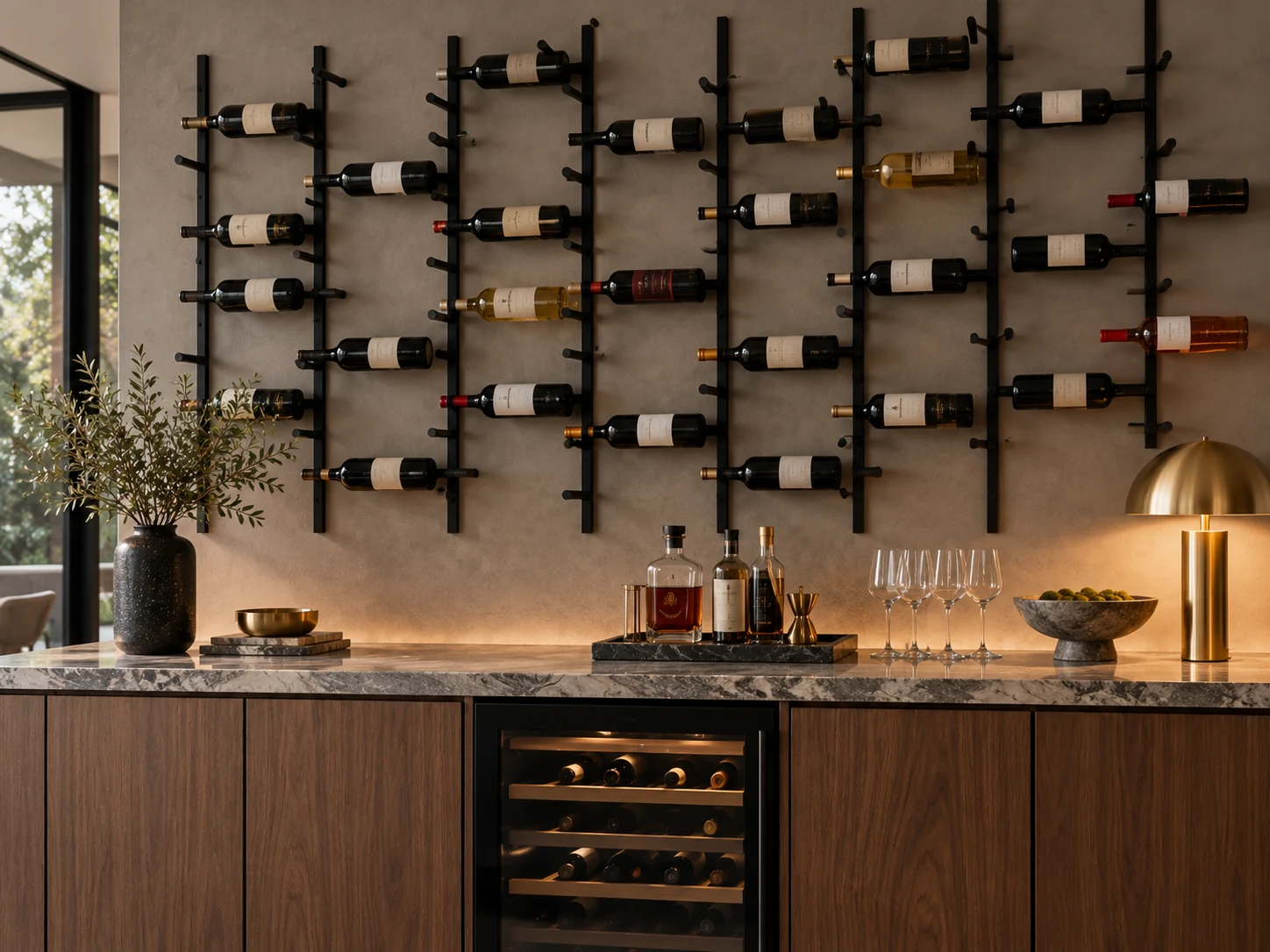
4. Use a modular wine wall for a growing collection
Rails, pegs, and panel systems let you start small and add capacity later. Rails create an orderly horizontal rhythm, individual pegs allow a more graphic arrangement, and panels give the wall a finished, furniture-like appearance. Sketch the final footprint with painter’s tape before drilling so the first section can grow without crowding artwork, outlets, or trim.
5. Pair bottle storage with hanging wine glasses
A rack with an integrated glass rail makes a compact serving station. Mount glasses beneath a shelf or below the bottle row, but keep the lowest glass safely above head height and away from a busy walkway. The combination works especially well over a bar cabinet or a shallow console.
6. Make a corner work harder
Corner shelves or an L-shaped rack can use awkward space that would otherwise collect clutter. Keep the deepest section on the least trafficked wall, and check that bottles do not project into a doorway. In a rental, a freestanding corner cabinet may provide the same visual effect without permanent holes.
7. Choose a style that supports the room
- Black metal: suits modern, industrial, and high-contrast rooms.
- Natural wood: adds warmth to farmhouse, Scandinavian, and relaxed dining spaces.
- Brass or gold: works best as a small accent around a curated collection.
- Painted shelves: can blend into the wall or echo cabinet color for a built-in look.
For broader decorating direction, compare the palette and material ideas in our coastal interior design guide and current home decor trends.
8. Mount it safely and protect the bottles
Use hardware suited to the wall type and the loaded weight of the rack. Fasten into studs when possible; otherwise use anchors rated for the combined rack and bottle weight. Keep wine away from direct sun, radiators, ovens, and strong temperature swings. Horizontal storage is useful for cork-sealed bottles, but a rack should still follow the manufacturer’s installation and capacity guidance.
How to choose your best wall wine rack idea
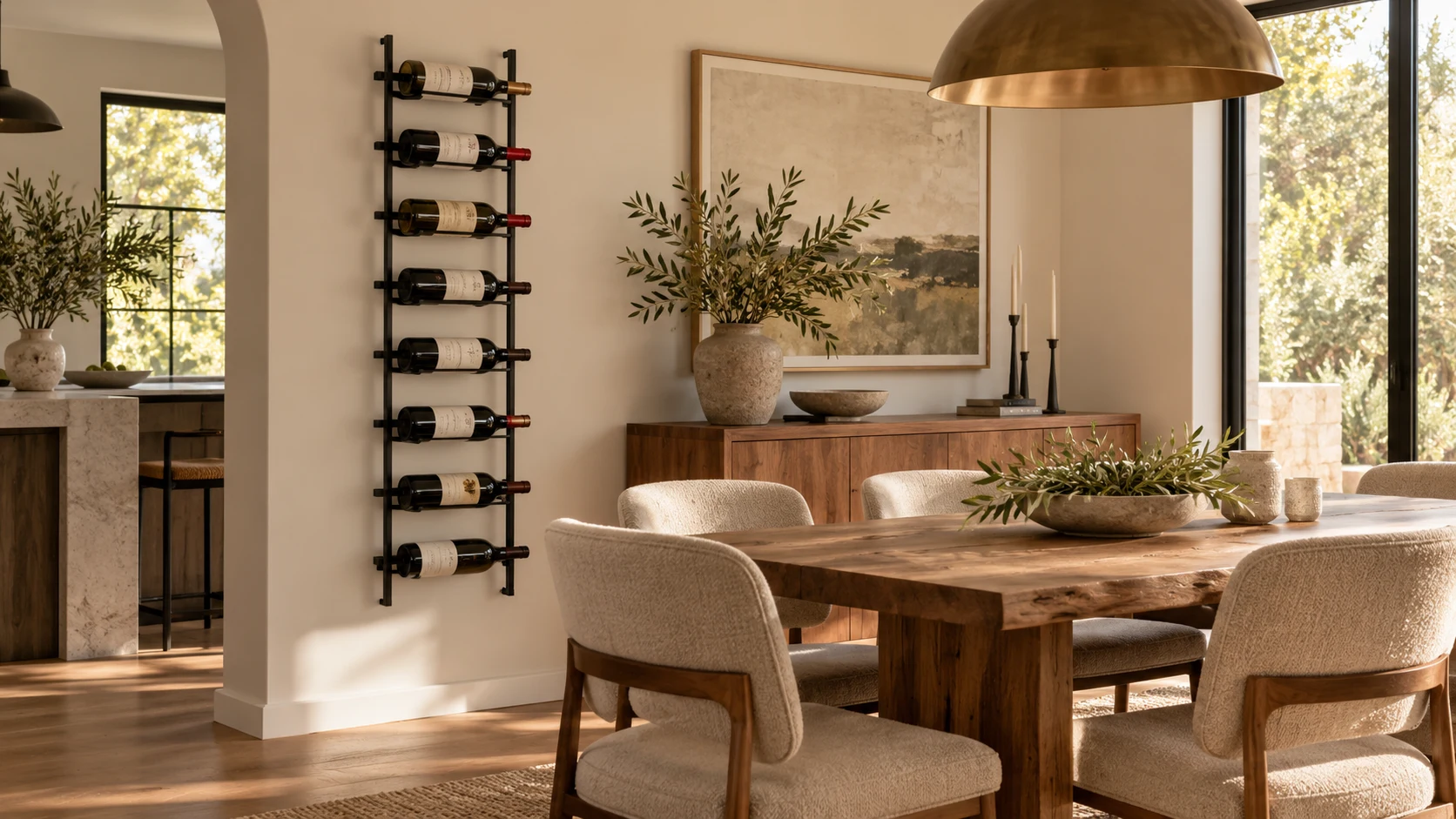
Choose the smallest layout that comfortably holds your current collection, then allow a little room for growth. Match the finish to nearby hardware, confirm the wall can carry the load, and place the rack where bottles are easy to reach but protected from heat and sunlight. A measured, well-mounted rack can function as storage, serving support, and a focal point at the same time.

Ethan Miller
Ethan Miller writes about home improvement, interior design, cleaning, and everyday living at Home & Living Daily. He shares practical tips and simple ideas to help readers create more comfortable and functional homes.