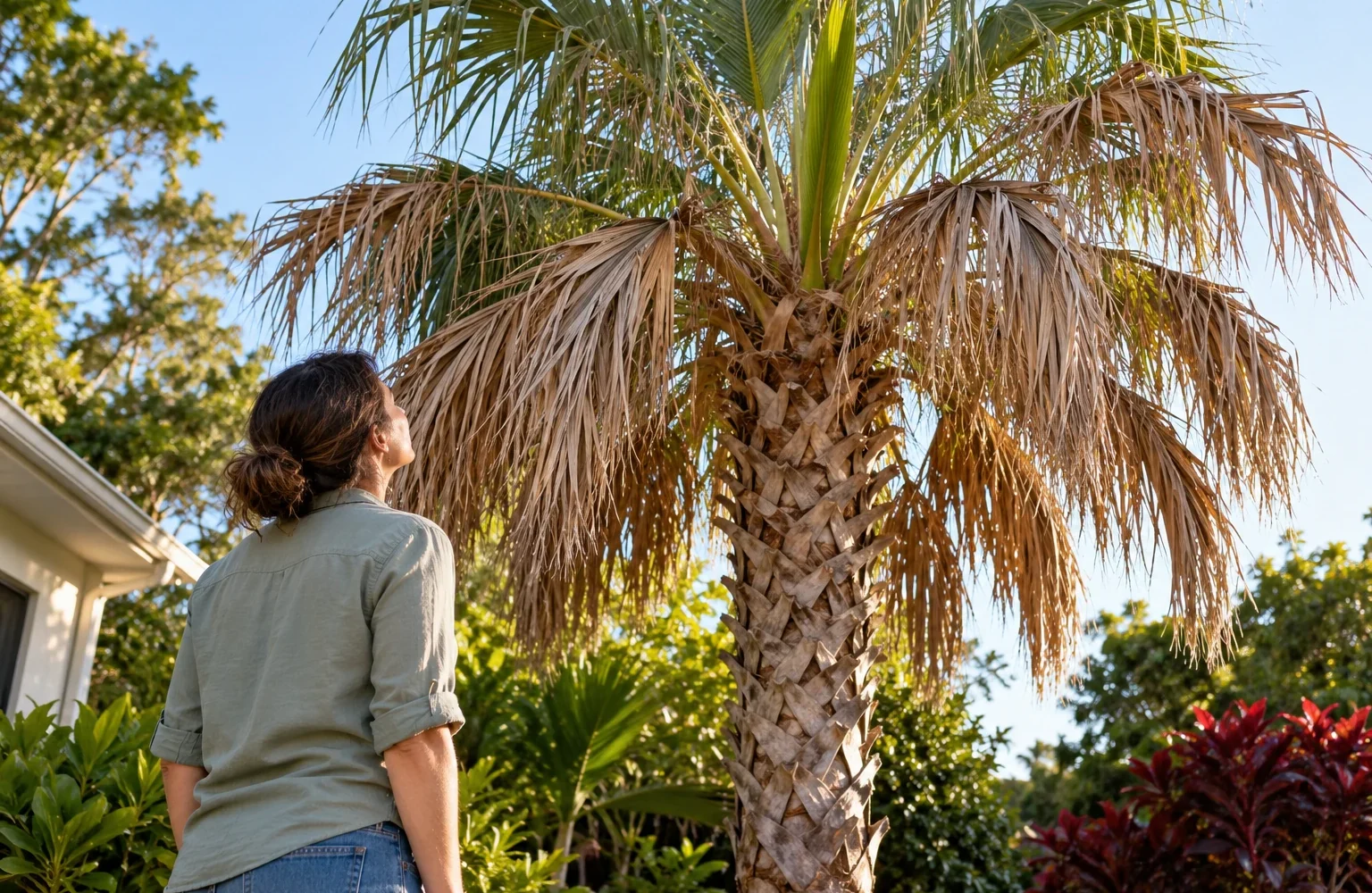
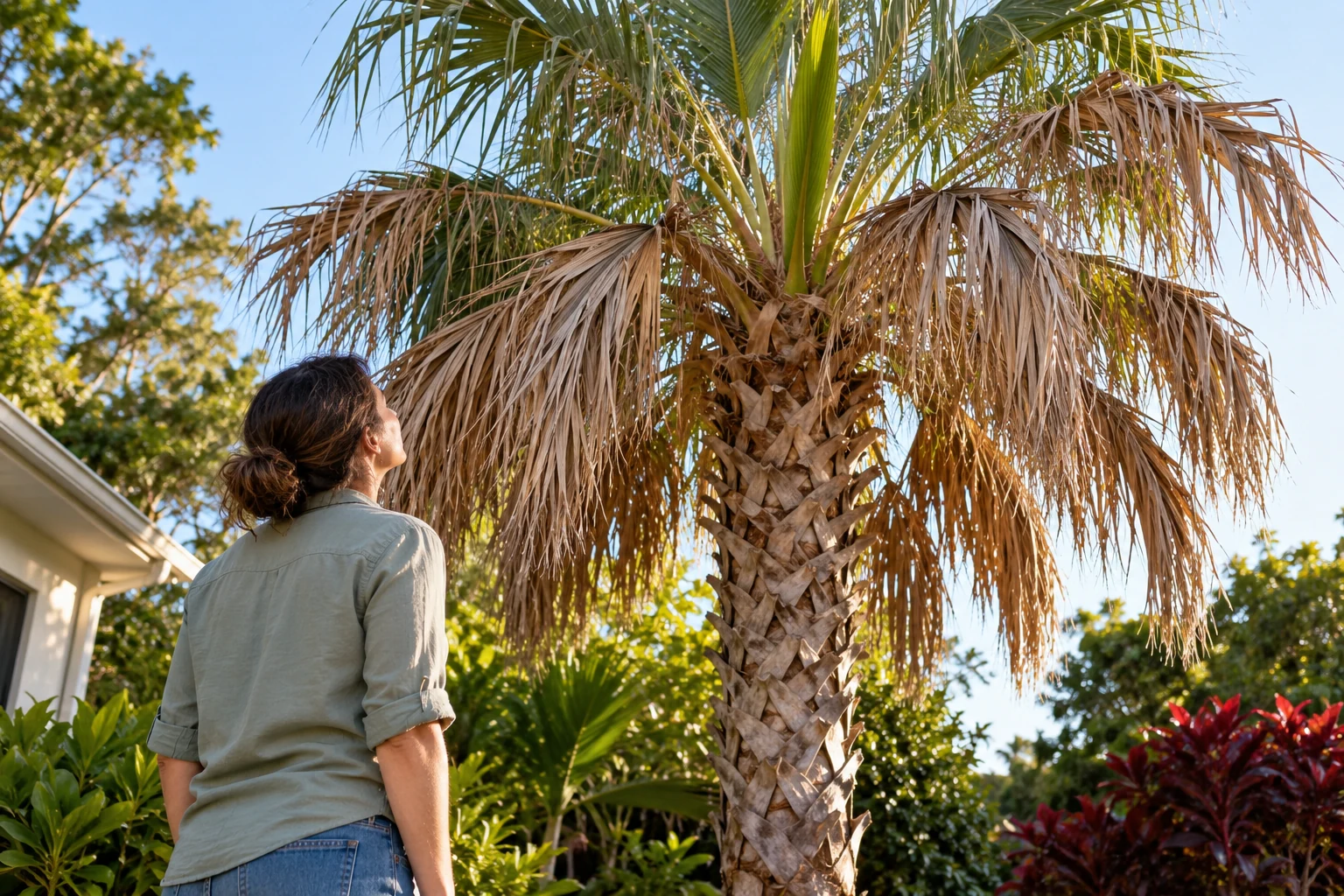
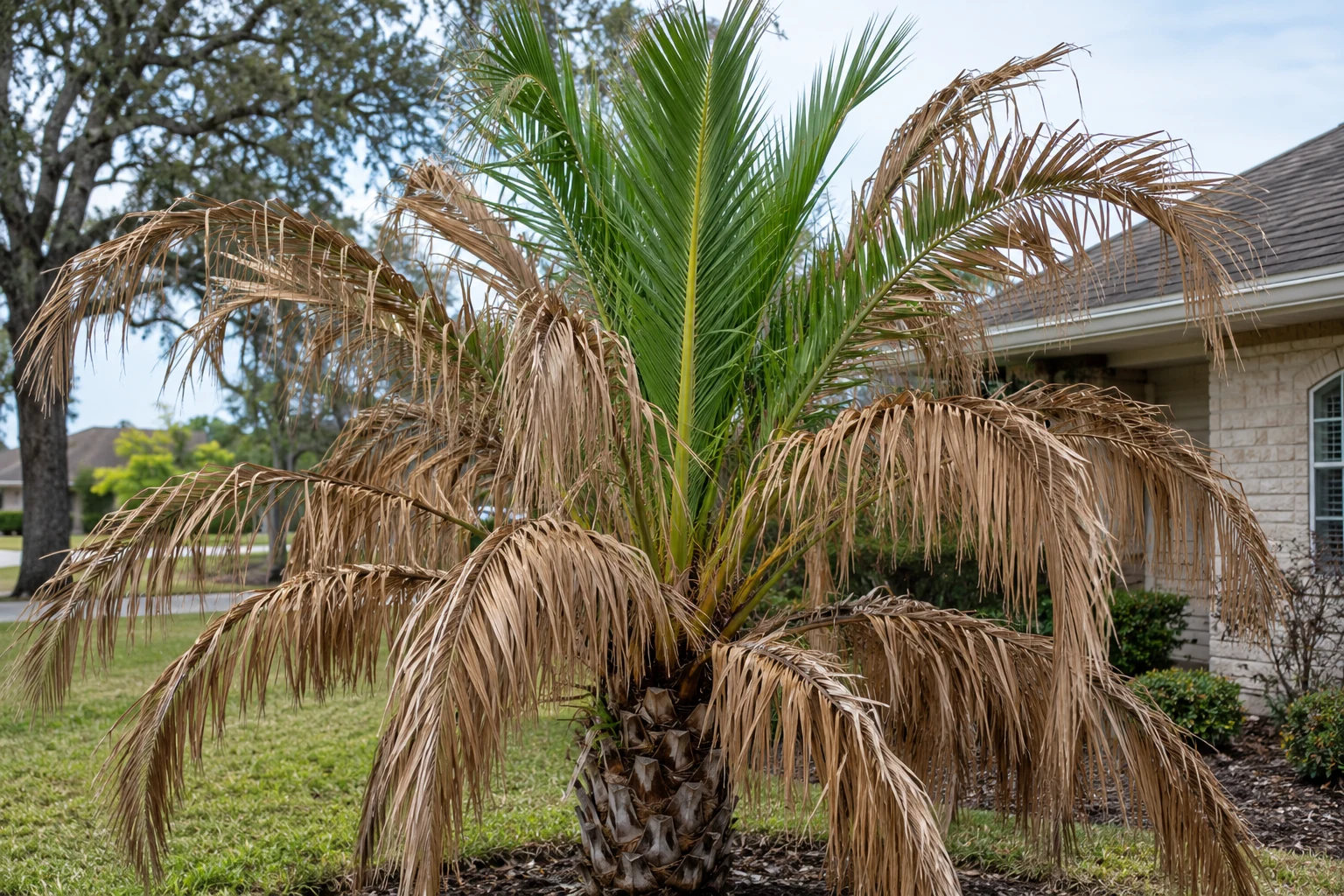
Brown palm fronds do not prove that a palm tree is dead. The most useful question is whether the center growing point is still producing a firm, healthy spear leaf. A palm can lose older leaves after a freeze, drought, transplant shock or nutrient problem and still recover. Death is much more likely when the spear collapses or pulls out easily, the trunk is soft or collapsing, or no new growth appears after a reasonable recovery period.
Use the checks below as a screening guide. If the palm is tall, leaning, near a house, or showing trunk decay, stay on the ground and call a qualified tree professional.
Start with the center spear, not the oldest leaves
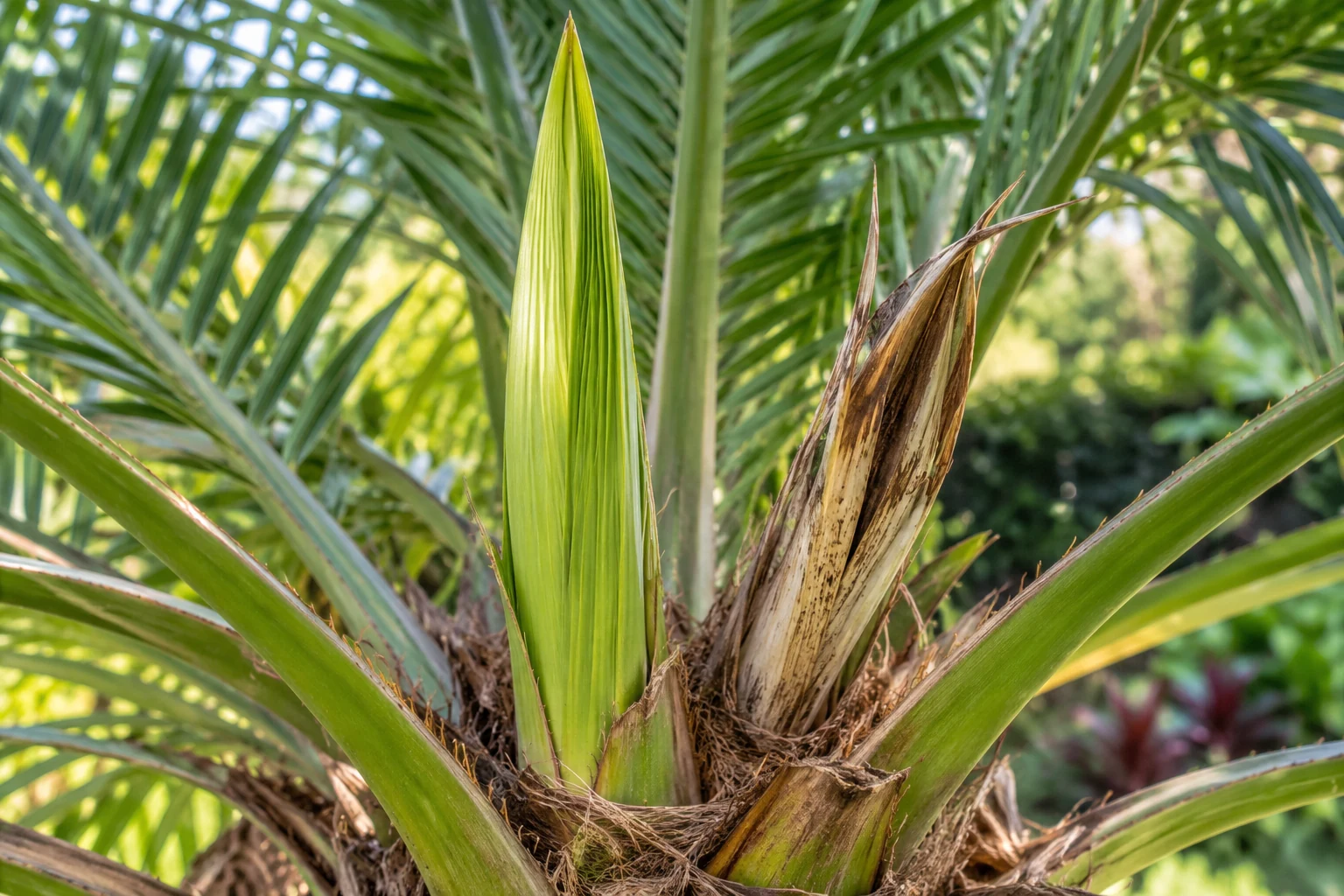
Palms grow from a single terminal bud, often called the heart or apical meristem. The newest leaf emerges from this point as a tightly rolled spear. If the spear is upright, has healthy color for the species and resists a gentle touch, the growing point may still be alive even when the outer canopy looks poor.
Look from the ground or from a safe window. Do not climb a damaged palm or use a ladder under a loose crown. Compare the newest spear with older fronds: the center spear matters more than the brown skirt around it.
Use the spear-pull test carefully
Only test a reachable spear, and use a gentle, steady upward pull. A healthy spear should stay anchored. If it slides out with little resistance, the base may have rotted and the growing point may be dead. A foul smell, slimy tissue or a hollow-feeling base makes that finding more concerning.
Do not yank repeatedly. A marginally injured palm can be damaged by rough handling, and a tall crown is not safe to reach. A collapsed spear is also a serious warning. UF/IFAS describes spear collapse as an indicator that the apical meristem has died in lethal-yellowing cases, although symptoms differ by species and disease.
Seven signs that help separate stress from death
| What you see | What it can mean | Best next step |
|---|---|---|
| Older lower fronds turn yellow or brown | Normal aging, drought, cold, nutrition or root stress; not proof of death | Check the center spear and recent growth |
| Entire canopy browns after a freeze | Cold injury may have killed leaves while the bud survives | Wait for cold risk to pass and watch for a new spear |
| Center spear is firm and upright | Growing point may still be alive | Monitor moisture and new growth |
| Spear pulls out easily or collapses | Bud rot or dead apical meristem is likely | Arrange an on-site diagnosis; avoid spreading disease |
| No new growth over the recovery window | Severe damage or a dead growing point becomes more likely | Have the species and site assessed before removal |
| Trunk is soft, hollow, leaning or splitting | Structural failure or trunk rot; a falling hazard | Keep people away and call a tree professional |
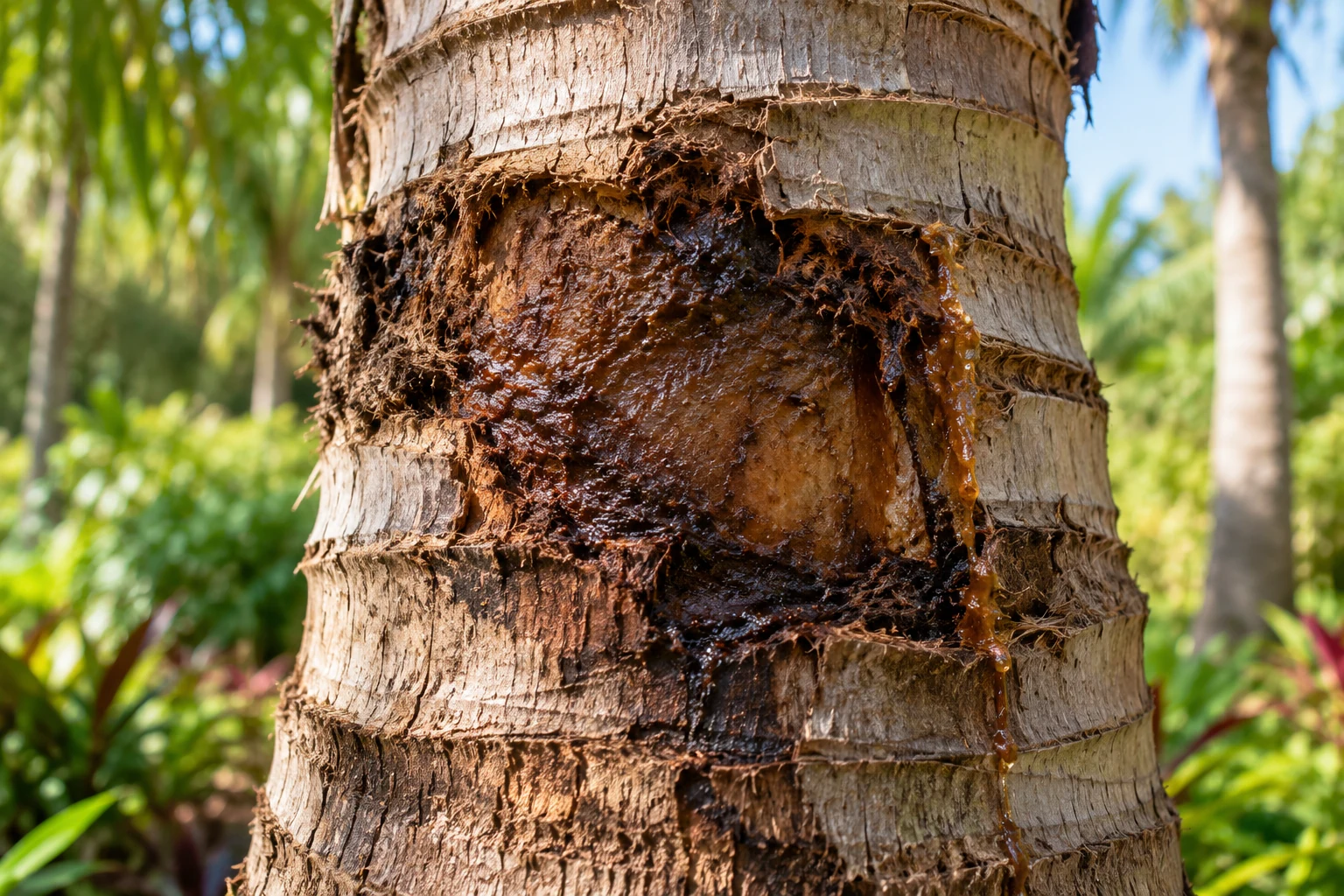
| Dark ooze, reddish soft tissue or a collapsed top | Advanced decay or fatal injury | Plan professional removal and sanitation |
Why a freeze can make a living palm look dead
After cold damage, fronds may turn brown and brittle before the palm’s fate is clear. Mississippi State Extension advises waiting until the risk of further cold has passed and the fronds are fully brown before removing them. A palm that survives may take six months or longer to show new growth after major storm or freeze damage, and it can take one to two years to look normal again.
Keep irrigation appropriate for the species and season, but do not flood a damaged crown. Avoid fertilizer “rescues” until you know the roots and growing point are functioning. If the center remains firm, patience is often safer than cutting the palm down immediately.
Trunk and crown warnings that need prompt action
A trunk that is soft, hollow, split, suddenly leaning or shedding the crown is a safety problem even if some fronds are green. Side ooze, reddish soft areas, a fermented odor or fungal shelves are also reasons to keep clear and get an assessment. A snapped trunk is dead; a standing trunk can still be dangerous when internal decay is present.
What to do if the palm may still be alive
- Photograph the whole palm and the center spear so you can compare changes.
- Identify the species if possible; cold tolerance and disease symptoms vary. Our guide to different types of palm trees can help with common landscape varieties.
- Keep the root zone evenly watered according to local conditions, avoiding constantly soggy soil.
- Remove only fully dead or broken fronds when it is safe. Do not make a severe “hurricane cut.”
- If disease is possible, clean and disinfect pruning tools before they touch another palm. UF/IFAS warns that Fusarium wilt can spread on contaminated tools.
If the issue is slow growth rather than obvious decline, compare the species, climate and care conditions before deciding that the palm is dead. For a palm planted close to paving or utilities, assess root risk before planting and seek a site-specific inspection if paving or pipes are already damaged.
When removal is the right decision
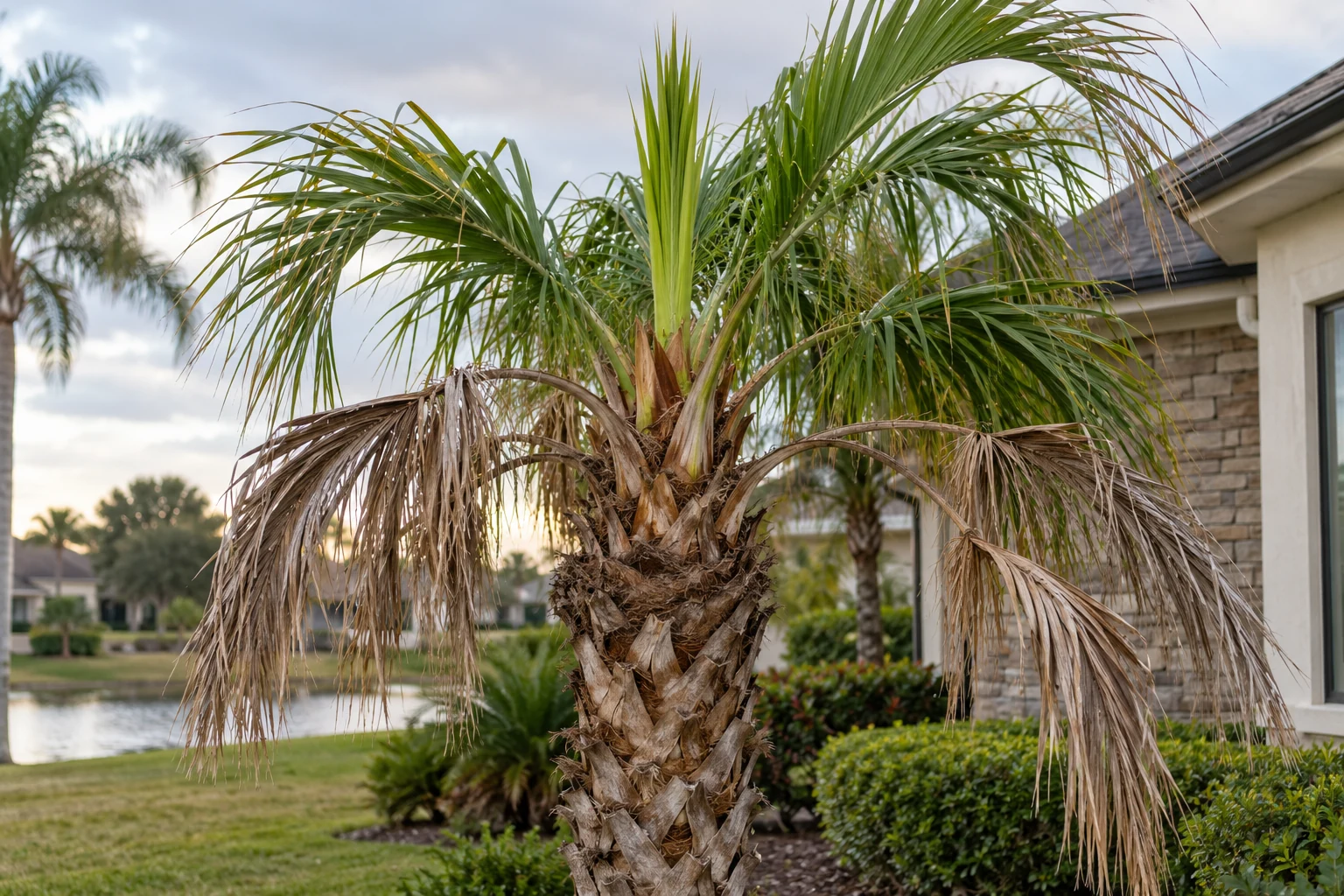
Removal is justified when the trunk has failed, the palm is unstable, the crown is collapsing, or an arborist confirms a dead growing point and a hazard to people or property. Do not cut a tall palm from the ground yourself. Ask the professional how the debris and tools will be handled if a contagious disease is suspected, and inspect nearby palms afterward.
Bottom line
The best first clue is the center spear: firm and advancing growth suggests life; a collapsed or easily pulled spear points to severe crown damage. Brown outer fronds can be temporary, especially after a freeze. Combine the crown check with trunk stability, odor, ooze and the appearance of new growth, then choose monitoring or professional removal based on the actual hazard.

Ethan Miller
Ethan Miller writes about home improvement, interior design, cleaning, and everyday living at Home & Living Daily. He shares practical tips and simple ideas to help readers create more comfortable and functional homes.