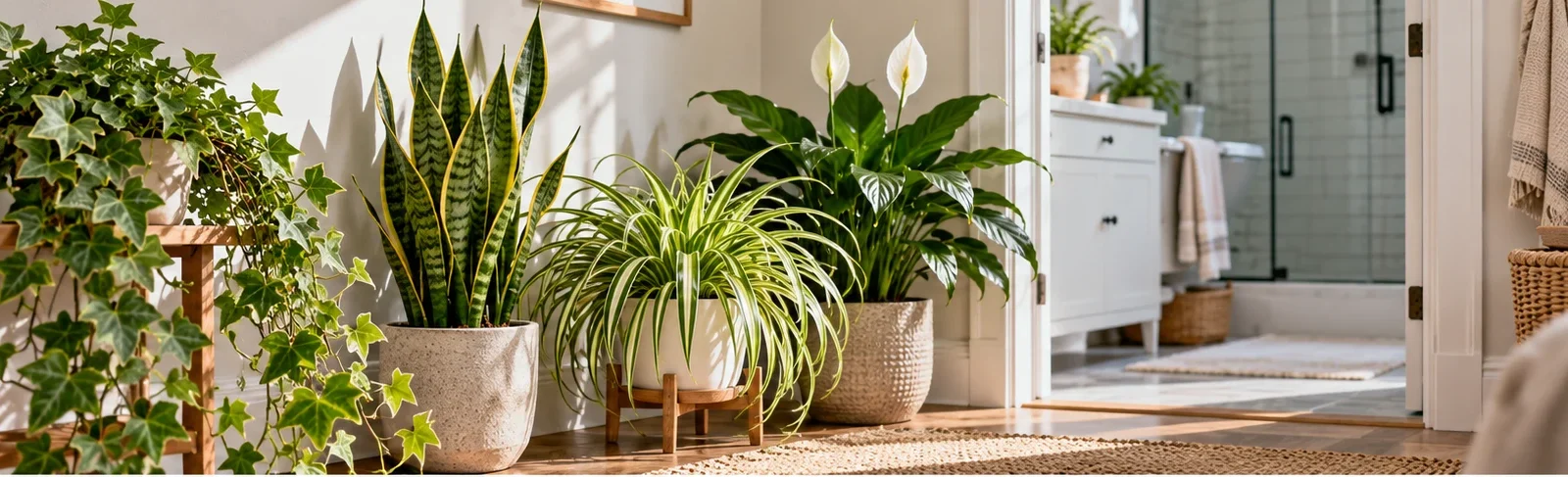
Some houseplants are often described as “mold-removing plants,” but the honest answer is more limited: plants may support cleaner-feeling indoor air, while moisture control, ventilation, and proper cleanup do the real mold prevention work. If you want greenery for a damp room, choose a plant that fits the light and your watering habits, then treat it as one small part of an indoor-air plan.
Can houseplants actually remove mold?
There is no reliable home-sized plant that removes established mold from walls, grout, drywall, or furnishings. The U.S. Environmental Protection Agency explains that moisture control is the key to mold control, and the CDC notes that mold grows where excess moisture collects. Plants also release water vapor through transpiration, and wet potting soil can become its own source of mold.
Some laboratory studies and popular air-cleaning guides suggest that foliage and root-zone microbes can interact with certain airborne pollutants. Those controlled results do not prove that a few pots will meaningfully lower mold spores in a normal home. Use plants for their visual and everyday-care benefits, not as an air purifier or a cure.
Plants that make sense for a damp room
English ivy
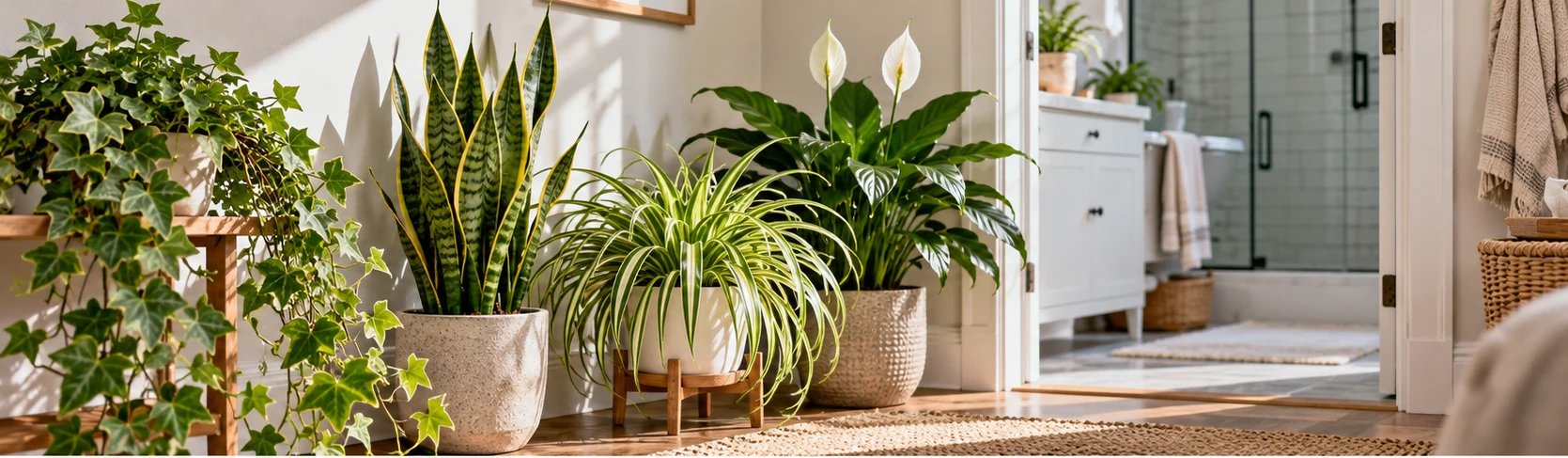
English ivy is commonly included in mold and air-quality lists because its dense foliage provides plenty of leaf surface. Give it bright, indirect light and good airflow. Let the surface of the mix dry before watering, and keep it away from consistently wet windowsills. It is toxic if eaten by pets, so place it where animals cannot chew it.
Peace lily
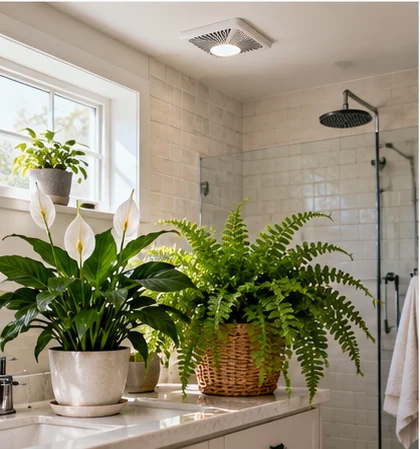
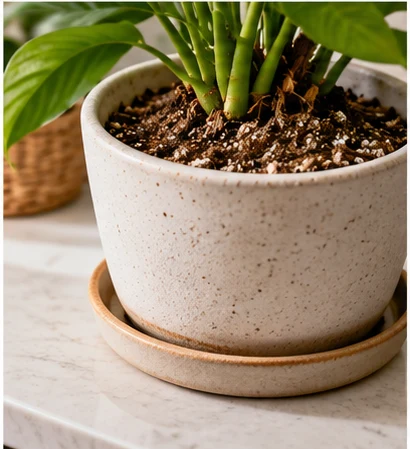
A peace lily suits a bright bathroom with filtered light and can signal thirst by drooping. That same sensitivity makes overwatering easy, so use a pot with drainage and empty the saucer after watering. Do not put it in a room with a persistent leak and assume the plant will solve the problem.
Boston fern
Boston ferns enjoy humidity, but they also need evenly moist soil and air movement. That combination can be difficult in a dark, stagnant bathroom. Choose one only if you can provide bright indirect light, regular care, and a pot that drains freely.
Snake plant
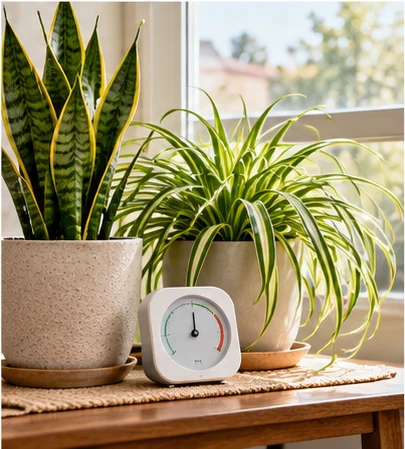
Snake plants are a practical low-water choice for bedrooms, hallways, and bathrooms with a window. Their thick leaves tolerate drying between waterings, which lowers the chance of constantly damp soil. They will not absorb enough moisture to dehumidify a room, however.
Spider plant
Spider plants are forgiving, fast-growing, and easy to place near a bright window. They are useful for beginners who want greenery without frequent watering. Check the pot and saucer regularly because a neglected, waterlogged container can encourage fungus gnats and surface mold.
How to keep the plants from creating more mold
- Use a container with a drainage hole and a saucer that can be emptied.
- Water by checking the mix, not by a fixed calendar.
- Give leaves space around them so air can move.
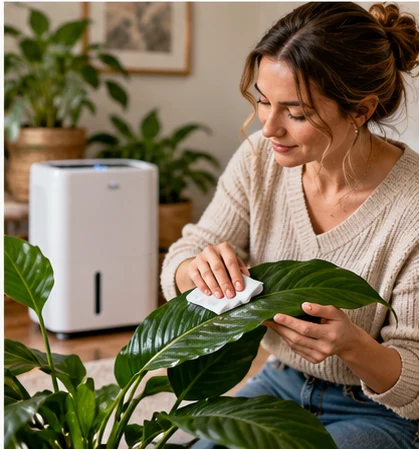
- Wipe dusty leaves gently so the plant can exchange gases efficiently.
- Remove fallen leaves and any visibly moldy potting mix.
What actually reduces indoor mold risk
Use the bathroom exhaust fan during showers and for a while afterward. Repair leaks, dry wet materials promptly, and use a dehumidifier when humidity stays high. A hygrometer can help you notice a pattern before condensation appears. For airborne particles, the EPA says a correctly sized portable air cleaner or HVAC filter can remove some particles, but source control still comes first.
When to skip plants and address the mold directly
If you can see recurring growth, smell a persistent musty odor, or have water-damaged drywall, focus on finding and fixing the moisture source. People with asthma, allergies, or other sensitivities should avoid disturbing mold and follow CDC or professional remediation guidance. Plants are a decorating choice; they are not a substitute for cleanup, repairs, or professional assessment.
Bottom line
English ivy, peace lily, Boston fern, snake plant, and spider plant can all be reasonable choices for the right room, but none removes established household mold. Pick the plant that you can keep healthy, keep its soil from staying soggy, and pair it with ventilation, leak repair, and humidity control.

Ethan Miller
Ethan Miller writes about home improvement, interior design, cleaning, and everyday living at Home & Living Daily. He shares practical tips and simple ideas to help readers create more comfortable and functional homes.