If nail polish has just spilled on a rug, lift away the polish sitting on top with a clean white cloth or a dull edge. Do not rub it. Before using any cleaner on what remains, check the rug’s care label and test that exact product in a hidden area. If the rug is silk, viscose, antique, valuable, or has unknown fibers, stop after lifting the excess and contact a rug-cleaning professional. For related fabric-care advice, see our guide to removing stains from upholstery.
For a rug whose care instructions allow spot cleaning, work in small rounds: apply a little of the approved cleaner to a white cloth, dab from the outside of the spot toward the center, then rinse and blot away residue. Nail-polish remover formulas vary, and even a product labeled “non-acetone” is not automatically safe for every rug.
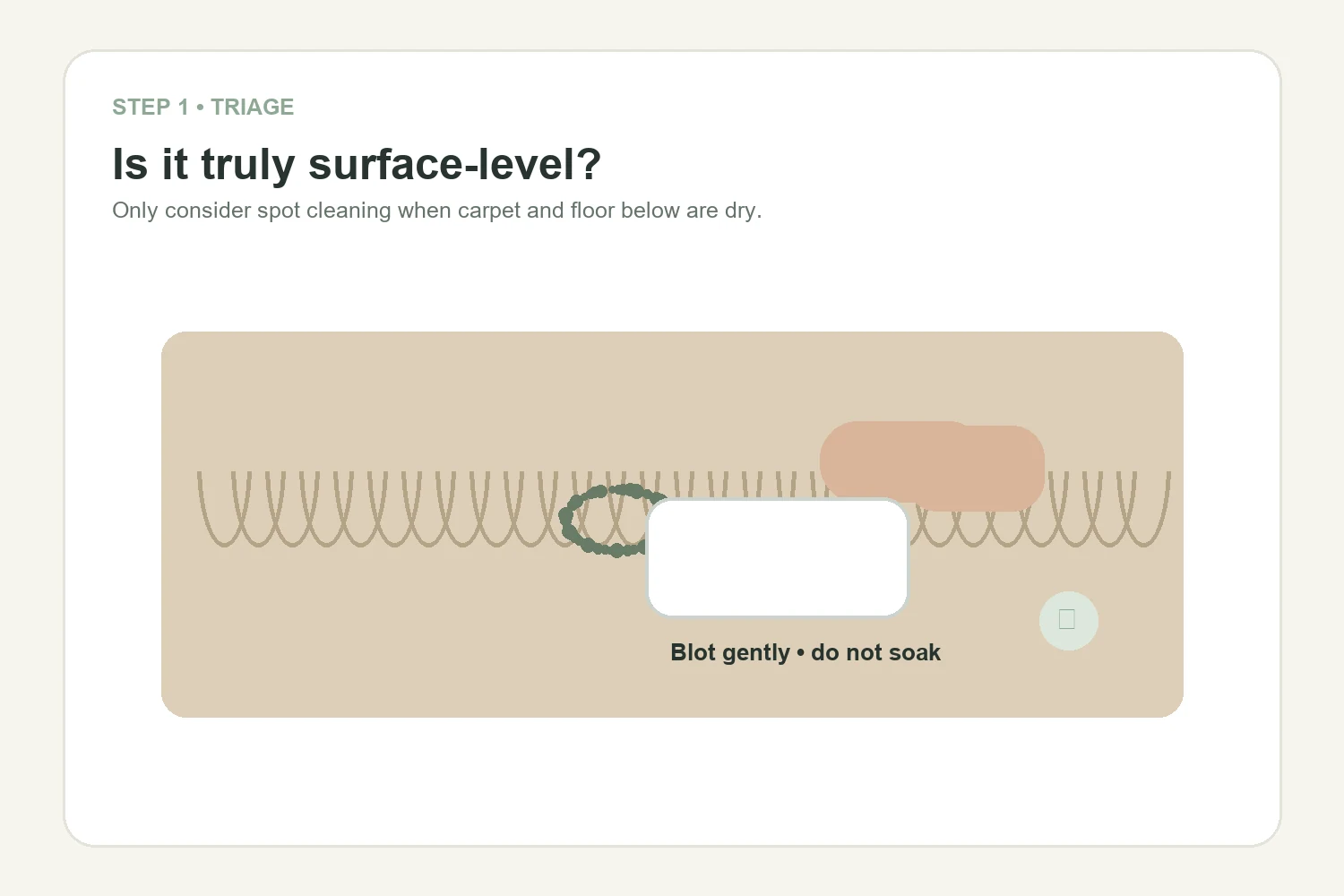
The images in this guide are instructional illustrations, not photographs of a tested stain-removal result.
Before You Start: Check the Rug and the Cleaner
Rugs can be made from wool, cotton, nylon, polyester, viscose, silk, or blends, and their dyes and backings vary too. Read the care label or manufacturer’s instructions first. The University of Georgia Cooperative Extension lists different carpet treatments by fiber and warns against acetone or lacquer thinner on acetate and triacetate. It also notes that the other ingredients in store-bought nail-polish remover can affect the stain.
When the care instructions allow a cleaner, test the exact product on a hidden part of the rug. Put a small amount on a white cloth and press it against the test area. Check the cloth for color transfer and the rug for a change in color, texture, or finish. If anything changes, do not use that cleaner on the spill.
- Choose professional help first for silk, viscose, antique, hand-knotted, valuable, or unlabeled rugs, and for spills that have soaked through to the backing.
- Do not assume acetone is safe because the rug looks synthetic, or that every acetone-free remover is safe. Product ingredients and rug construction differ.
- Ventilate the room and keep solvents away from flames, heat, children, and pets. Follow the product label.
How to Remove Fresh Nail Polish from a Rug
- Lift the excess. If a puddle is sitting on the pile, scoop it gently with the edge of a spoon or plastic card. Blot remaining wet polish by pressing a white cloth straight down and lifting it straight up. Move to a clean part of the cloth each time. Do not wipe sideways or scrub.
- Use only a tested cleaner that the rug care instructions allow. Dampen a clean white cloth with a small amount. Never pour remover directly onto the rug. Use light dabs from the outer edge toward the center, changing to a clean part of the cloth as polish transfers.
- Pause if the spot spreads or color transfers. More solvent can move dissolved polish and rug dye into a larger area. Stop if the rug’s color appears on the cloth, the pile changes, or the stain is reaching the backing.
- Remove cleaner residue. If the label permits water, dab with a separate cloth lightly dampened with clean water, then blot with a dry white towel. Follow the product label and rug instructions; do not soak the area.
How to Handle Dried Nail Polish
Do not pull dried polish from the rug fibers. The Carpet and Rug Institute says dry spills should be scraped gently with a blunt object and vacuumed; it also cautions that putting liquid onto a dry spill can create additional problems.
- Use a blunt plastic card or spoon edge to loosen only the brittle polish sitting above the pile. Work gently in short strokes and keep the tool nearly parallel to the rug.
- Pick up the loosened flakes or vacuum them with an upholstery tool, if available. Do not cut or tug at the yarn.
- If a mark remains, return to the care-label and spot-test checks. Treat it with an approved product on a cloth only if those checks pass. Use small dabs and stop if the residue moves deeper, the rug changes, or no progress occurs.
What to Do About a Colored Shadow
Sometimes the hard polish lifts but a colored mark remains. Treat that as a separate stain and follow the rug maker’s instructions. If water-based spot cleaning is allowed, use a small amount of clear, mild dishwashing solution on a cloth, then dab with clean water and blot dry. The CRI’s general spot guidance emphasizes small amounts on a white cloth, working inward, and drying the area.
Do not add bleach, hydrogen peroxide, hairspray, perfume, or a second solvent as a guess. A color remover can also remove the rug’s own dye, and layered cleaners can leave residue. A persistent tint, a large spill, or a high-value rug is a good point to call a professional cleaner.
Dry the Rug and Check the Backing
After cleaning, press a dry towel over the treated area to absorb moisture. Let the rug dry fully with gentle airflow. If it is a movable area rug, check the underside and the floor beneath it once the spot is dry. A wet backing, sticky residue, or a stain visible from the reverse side means the problem went beyond the surface.
When to Stop and Call a Rug Cleaner
- The rug’s fiber or dye is unknown, or its care label says not to spot-clean.
- The rug is silk, viscose, antique, hand-knotted, or otherwise valuable.
- The spill is large, has soaked through, or reaches a glued or latex backing.
- A test cloth picks up the rug’s color, the pile changes, or the stain spreads.
- The polish remains after a few careful passes or the mark has been set for a long time.
Tell the cleaner what spilled, whether it was regular or gel polish, what products you tried, and whether the rug’s color changed. That information helps them choose a treatment without repeating a step that already affected the rug.
Frequently Asked Questions
Can I use nail-polish remover on a rug?
Only if the rug’s care instructions allow it and the exact product passes a hidden-area test. The CRI recommends a non-acetone remover for fingernail polish on carpet, while UGA’s fiber-specific guidance warns that acetone can damage some fibers and that other remover ingredients can worsen a stain. Follow the rug maker’s directions first.
Should I use acetone?
Do not make acetone the default. UGA specifically warns not to use acetone or lacquer thinner on acetate or triacetate, and rug dyes or backing can also be affected. If the fiber is unknown, skip it and get professional advice.
What if the nail polish is already dry?
Gently loosen the brittle surface residue with a blunt edge and pick up the flakes. Then use only a cleaner permitted by the rug’s care instructions and confirmed by a hidden-area test. Avoid scraping down into the yarn.
Can I use rubbing alcohol instead?
Do not substitute it automatically. Alcohol may affect dyes, finishes, or fibers, and the result depends on the rug and product. Check the label, test the exact product, and use a professional for delicate or unknown rugs.
Will the stain come out completely?
There is no reliable guarantee. Results depend on the rug fiber, dyes, backing, polish formula, spill size, and how far the liquid traveled. Stop if the rug changes or the stain reaches the backing.
Sources and Further Guidance
- Carpet and Rug Institute: Simple Stain Removal Tips and Tricks
- Carpet and Rug Institute: Carpet and Rug Care Guide
- University of Georgia Cooperative Extension: Remove Stains From Fingernail Polish, Lacquer
- Carpet One Floor & Home: How to Get Nail Polish Out of Carpet

Ethan Miller
Ethan Miller writes about home improvement, interior design, cleaning, and everyday living at Home & Living Daily. He shares practical tips and simple ideas to help readers create more comfortable and functional homes.