Skip to content
Home & Living Daily
Cleaning & Organizing

How to Clean a Sofa: Stain Removal, Deep Cleaning, and Odor Removal for Fabric Sofas

By · Published October 2, 2026 · Updated October 2, 2026 · 5 min read
Sofas are among the most frequently used pieces of furniture in the home. Everyday sitting and lounging, food crumbs, drink spills, and pet activity can all cause stains and odors to build up in the fabric over time. Before cleaning, the first step is to determine what methods the upholstery can safely tolerate, then decide whether spot treatment or a full cleaning is more appropriate. This guide covers the main steps involved in checking care labels, vacuuming, removing stains, using an upholstery extractor, and drying the sofa properly. How Do You Clean a Sofa? Start by Checking the Care Label First, look for the cleaning code on the sofa’s care label. This article focuses on sofas marked W or W/S, which are generally suitable for water-based cleaning methods, while keeping in mind that some materials may still shrink, discolor, or develop water marks when exposed to moisture. If you cannot find a label, look up the manufacturer’s care instructions using the brand and model number. In the example shown, the sofa did not have a visible label, so the manufacturer’s cleaning guidance was checked instead. What Should You Do If You Spill a Drink on the Sofa? If food or a drink spills on the sofa, it is best to deal with it as soon as possible. Start by using a clean, dry towel to absorb as much liquid from the surface as you can. Avoid rubbing the area back and forth, as this can spread the stain and may damage the fabric. The basic approach is to blot and absorb the liquid first, then treat whatever stain remains. How Do You Remove a Spot Stain From a Fabric Sofa? One homemade cleaning solution uses one cup of 70% isopropyl alcohol, one cup of water, and about one teaspoon of dish soap. Spray the solution onto the stained area, let it sit for one to two minutes, then gently blot the area before wiping away any remaining residue with a damp towel. After spot cleaning, place a clean, dry towel over the treated area to help absorb excess moisture. This may also help reduce marks caused by dirt or residue inside the cushion migrating back toward the surface as the fabric dries. Why Should You Vacuum Before Deep-Cleaning a Sofa? If the sofa has multiple stains, visible dust buildup, or noticeable odors, it is a good idea to vacuum it thoroughly before using any wet-cleaning method. Food crumbs, dust, and pet hair often collect underneath cushions and inside seams. Removing this dry debris first reduces the amount of dirt that needs to be handled during the wet-cleaning stage. Homes with pets may require extra attention to hair and dander. If these remain trapped inside the sofa, cleaning only the visible surface may not fully address the problem. How Do You Deep-Clean a Fabric Sofa With an Upholstery Extractor? Clean One Cushion at a Time For a full cleaning, it is usually easier to work in sections and clean one cushion at a time. Apply the cleaning solution first, let it sit for about one to two minutes, and gently work over the surface with a towel if needed. Can You Use an Enzyme Cleaner for Pet Stains and Odors? If the main issue is pet-related staining or persistent odors, an enzyme cleaner that is suitable for the upholstery can be used instead of the alcohol-based solution described above. These are two different cleaning approaches and are not meant to be mixed together. Next, use a portable upholstery extractor to spray water onto the treated area and extract the dirty water back out. Since the cleaner has already been applied during the pretreatment stage, plain water can be used in the extractor to help rinse away dirt and cleaning residue. You can watch the water and foam moving through the clear extraction head to judge whether additional rinsing may be useful. However, this is only a practical indicator. Always follow the equipment instructions and avoid repeatedly soaking the cushions just to achieve completely clear water or no visible foam. Can Sofa Cushion Covers Go in the Washing Machine? Not necessarily. Do not assume that a removable cushion cover is machine-washable simply because it has a zipper. Cushion covers can shrink, become damaged, or lose their original fit after washing. The key point is that removable does not mean machine-washable. If the manufacturer specifically states that the cover can be machine-washed, follow those instructions. If no such guidance is provided, a zipper alone should not be treated as proof that the cover is safe to wash in a machine. How Should You Dry a Sofa After Cleaning? After cleaning, reposition the cushions so that more of their surface area is exposed to moving air. A fan can also help speed up the drying process. Do not put the sofa back together until every part is completely dry. Drying time will vary depending on how much water was used, the cushion filling, and the amount of ventilation in the room. How Do You Remove Stubborn Odors From a Sofa? For cushions that still have a noticeable odor, one method is to spray them lightly with white vinegar, place them inside a large garbage bag, use a vacuum cleaner to remove some of the air from the bag, and leave the cushion sealed overnight. The next day, remove the cushion and allow it to air out and dry thoroughly. This method may help reduce odors trapped deeper inside the cushion.

Sofas are among the most frequently used pieces of furniture in the home. Everyday sitting and lounging, food crumbs, drink spills, and pet activity can all cause stains and odors to build up in the fabric over time. Before cleaning, the first step is to determine what methods the upholstery can safely tolerate, then decide whether spot treatment or a full cleaning is more appropriate.

This guide covers the main steps involved in checking care labels, vacuuming, removing stains, using an upholstery extractor, and drying the sofa properly.
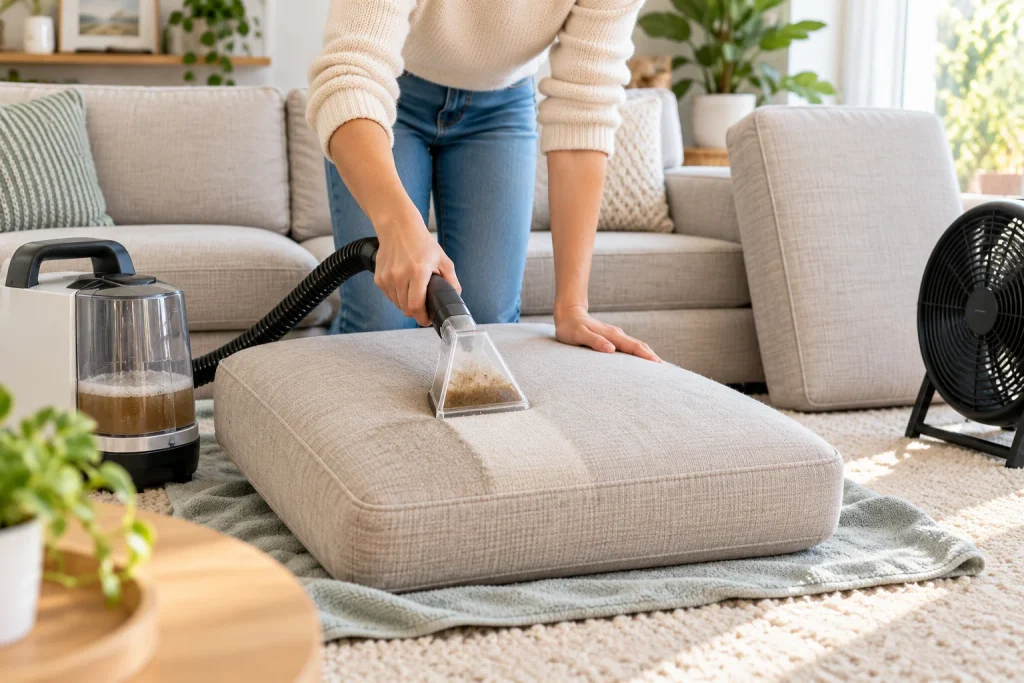
Deep cleaning a sofa cushion with an extractor

How Do You Clean a Sofa? Start by Checking the Care Label

First, look for the cleaning code on the sofa’s care label. This article focuses on sofas marked W or W/S, which are generally suitable for water-based cleaning methods, while keeping in mind that some materials may still shrink, discolor, or develop water marks when exposed to moisture.

If you cannot find a label, look up the manufacturer’s care instructions using the brand and model number. In the example shown, the sofa did not have a visible label, so the manufacturer’s cleaning guidance was checked instead.

What Should You Do If You Spill a Drink on the Sofa?

If food or a drink spills on the sofa, it is best to deal with it as soon as possible. Start by using a clean, dry towel to absorb as much liquid from the surface as you can.

Avoid rubbing the area back and forth, as this can spread the stain and may damage the fabric. The basic approach is to blot and absorb the liquid first, then treat whatever stain remains.

How Do You Remove a Spot Stain From a Fabric Sofa?

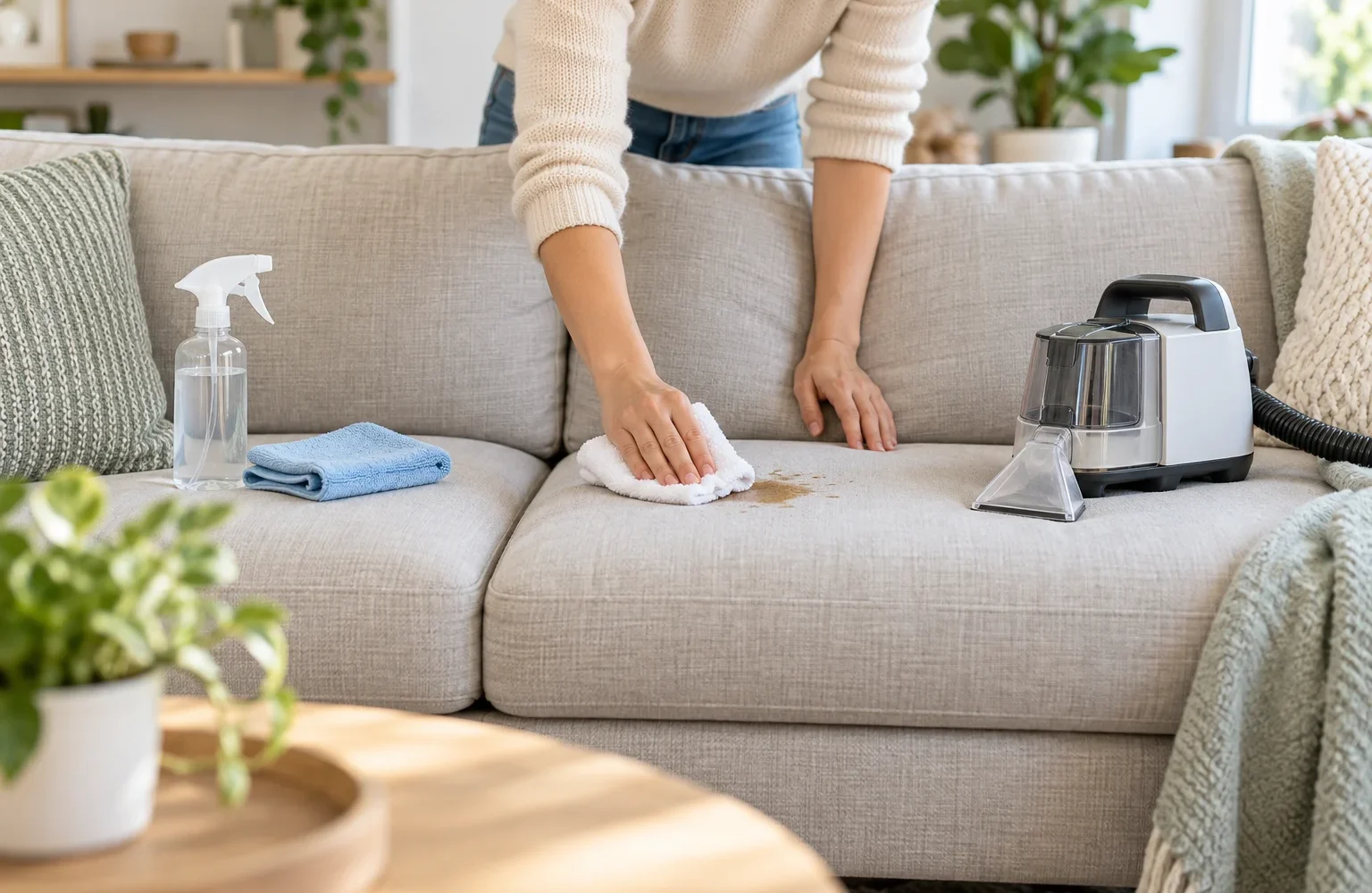
One homemade cleaning solution uses one cup of 70% isopropyl alcohol, one cup of water, and about one teaspoon of dish soap. Spray the solution onto the stained area, let it sit for one to two minutes, then gently blot the area before wiping away any remaining residue with a damp towel.

After spot cleaning, place a clean, dry towel over the treated area to help absorb excess moisture. This may also help reduce marks caused by dirt or residue inside the cushion migrating back toward the surface as the fabric dries.

Why Should You Vacuum Before Deep-Cleaning a Sofa?

If the sofa has multiple stains, visible dust buildup, or noticeable odors, it is a good idea to vacuum it thoroughly before using any wet-cleaning method.

Food crumbs, dust, and pet hair often collect underneath cushions and inside seams. Removing this dry debris first reduces the amount of dirt that needs to be handled during the wet-cleaning stage.

Homes with pets may require extra attention to hair and dander. If these remain trapped inside the sofa, cleaning only the visible surface may not fully address the problem.

How Do You Deep-Clean a Fabric Sofa With an Upholstery Extractor?

Clean One Cushion at a Time

For a full cleaning, it is usually easier to work in sections and clean one cushion at a time. Apply the cleaning solution first, let it sit for about one to two minutes, and gently work over the surface with a towel if needed.

Can You Use an Enzyme Cleaner for Pet Stains and Odors?

If the main issue is pet-related staining or persistent odors, an enzyme cleaner that is suitable for the upholstery can be used instead of the alcohol-based solution described above. These are two different cleaning approaches and are not meant to be mixed together.

Next, use a portable upholstery extractor to spray water onto the treated area and extract the dirty water back out. Since the cleaner has already been applied during the pretreatment stage, plain water can be used in the extractor to help rinse away dirt and cleaning residue.

You can watch the water and foam moving through the clear extraction head to judge whether additional rinsing may be useful. However, this is only a practical indicator. Always follow the equipment instructions and avoid repeatedly soaking the cushions just to achieve completely clear water or no visible foam.

Can Sofa Cushion Covers Go in the Washing Machine?

Not necessarily.

Do not assume that a removable cushion cover is machine-washable simply because it has a zipper. Cushion covers can shrink, become damaged, or lose their original fit after washing.

The key point is that removable does not mean machine-washable.

If the manufacturer specifically states that the cover can be machine-washed, follow those instructions. If no such guidance is provided, a zipper alone should not be treated as proof that the cover is safe to wash in a machine.

How Should You Dry a Sofa After Cleaning?

After cleaning, reposition the cushions so that more of their surface area is exposed to moving air. A fan can also help speed up the drying process.

Do not put the sofa back together until every part is completely dry. Drying time will vary depending on how much water was used, the cushion filling, and the amount of ventilation in the room.

How Do You Remove Stubborn Odors From a Sofa?

For cushions that still have a noticeable odor, one method is to spray them lightly with white vinegar, place them inside a large garbage bag, use a vacuum cleaner to remove some of the air from the bag, and leave the cushion sealed overnight.

The next day, remove the cushion and allow it to air out and dry thoroughly. This method may help reduce odors trapped deeper inside the cushion.

About the author

Ethan Miller writes about home improvement, interior design, cleaning, and everyday living at Home & Living Daily. He shares practical tips and simple ideas to help readers create more comfortable and functional homes.

More ideas for your home

Scroll to Top