An Art Deco room does not need a full period makeover. Start with one strong shape, such as a curved sofa or stepped mirror, then repeat its geometry quietly in a light fixture, rug, or cabinet detail. Balance that statement with comfortable furniture and surfaces you can maintain. The result can feel glamorous and still work for daily life.
What makes a room feel Art Deco?
Art Deco emerged in the decorative arts and architecture of the 1920s and 1930s. Its visual vocabulary includes geometric patterns, symmetry, streamlined curves, rich color, and polished materials. In a present-day home, you can use those cues without trying to recreate a historic interior. A single focal point, a limited palette, and useful lighting usually make a clearer impression than filling every surface with motifs.
Before buying anything, choose an anchor: the seating area, bed wall, dining table, or vanity. Photograph the room in daylight and evening light. Note the pieces you must keep, the surfaces that need to be easy to clean, and where a patterned finish would be visible. This keeps the design tied to the room you have.
Build a palette with one rich color and two supporting finishes
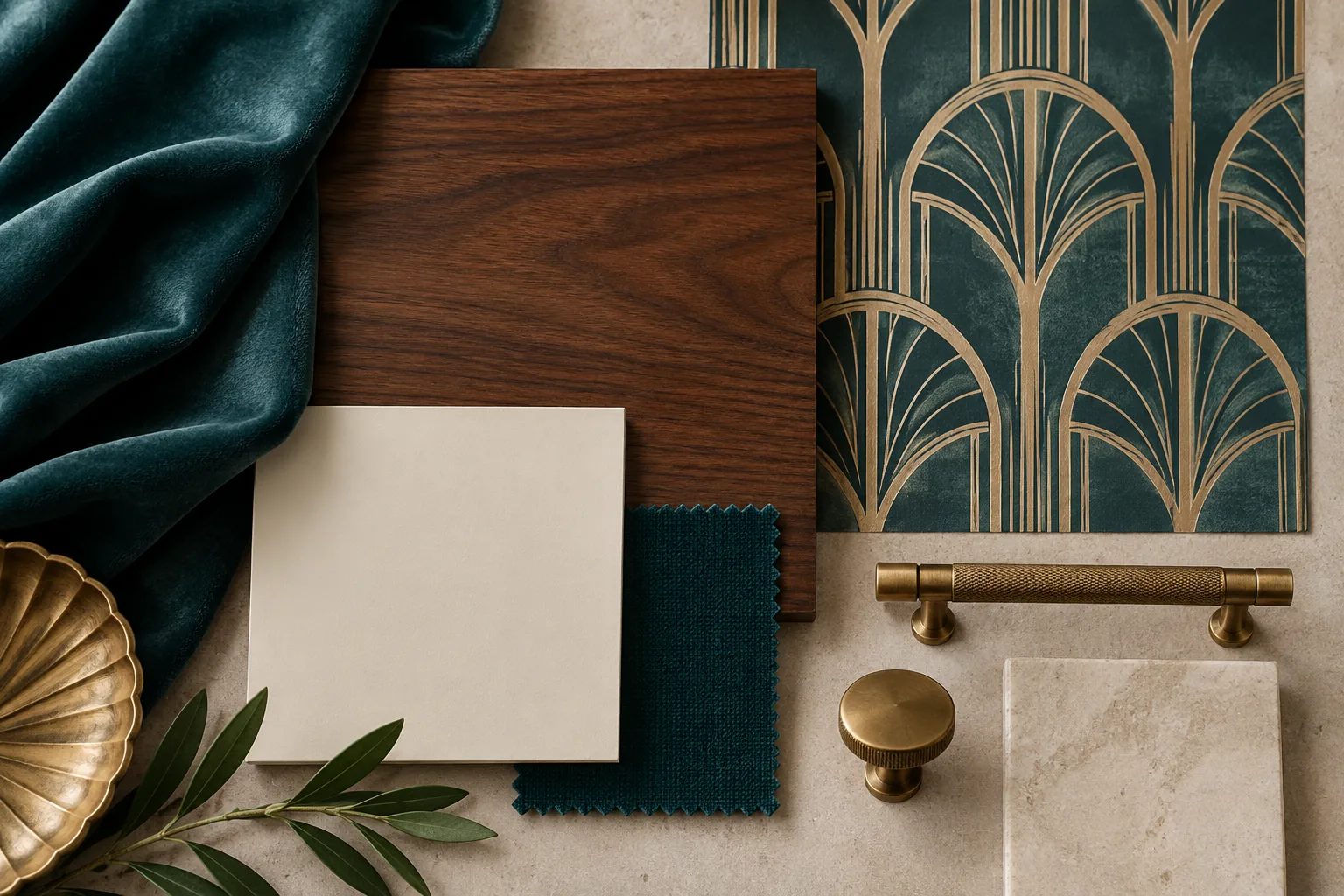
Deep teal, burgundy, forest green, or ink blue can give a room the drama associated with Deco. Use one as an accent if the room is small or receives little daylight. Then choose a calmer wall or upholstery color and one wood tone. Brass, chrome, or black metal can finish the scheme; repeating one metal looks more deliberate than mixing several shiny finishes at random.
Pattern works best where it can be read from across the room: a rug, a wallpapered niche, a tile floor, or an upholstered headboard. If you already have patterned flooring, let curtains and larger furniture stay relatively quiet. Samples are worth viewing in the actual room because color and sheen change under different bulbs and daylight.
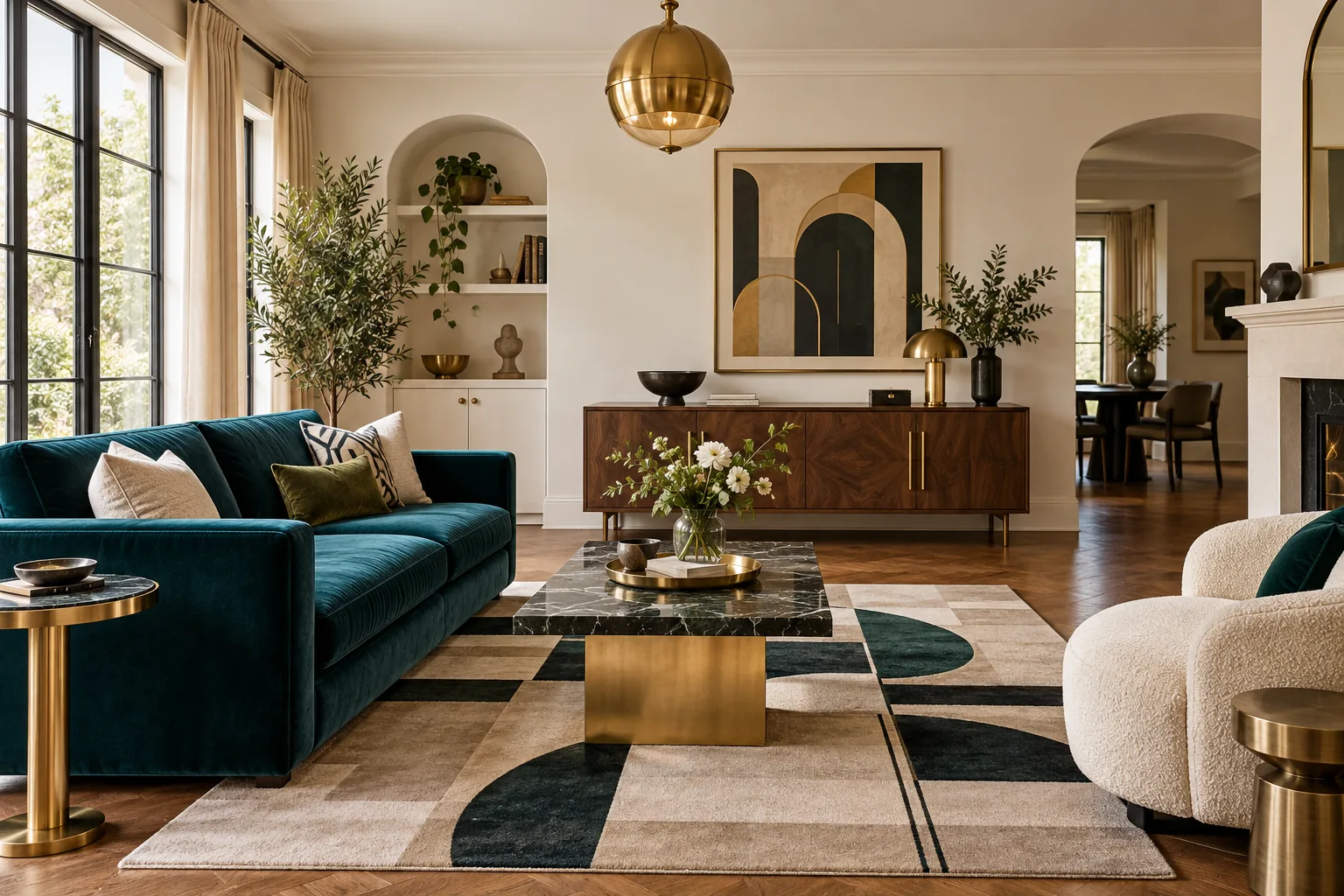
Art Deco living room: let one piece lead
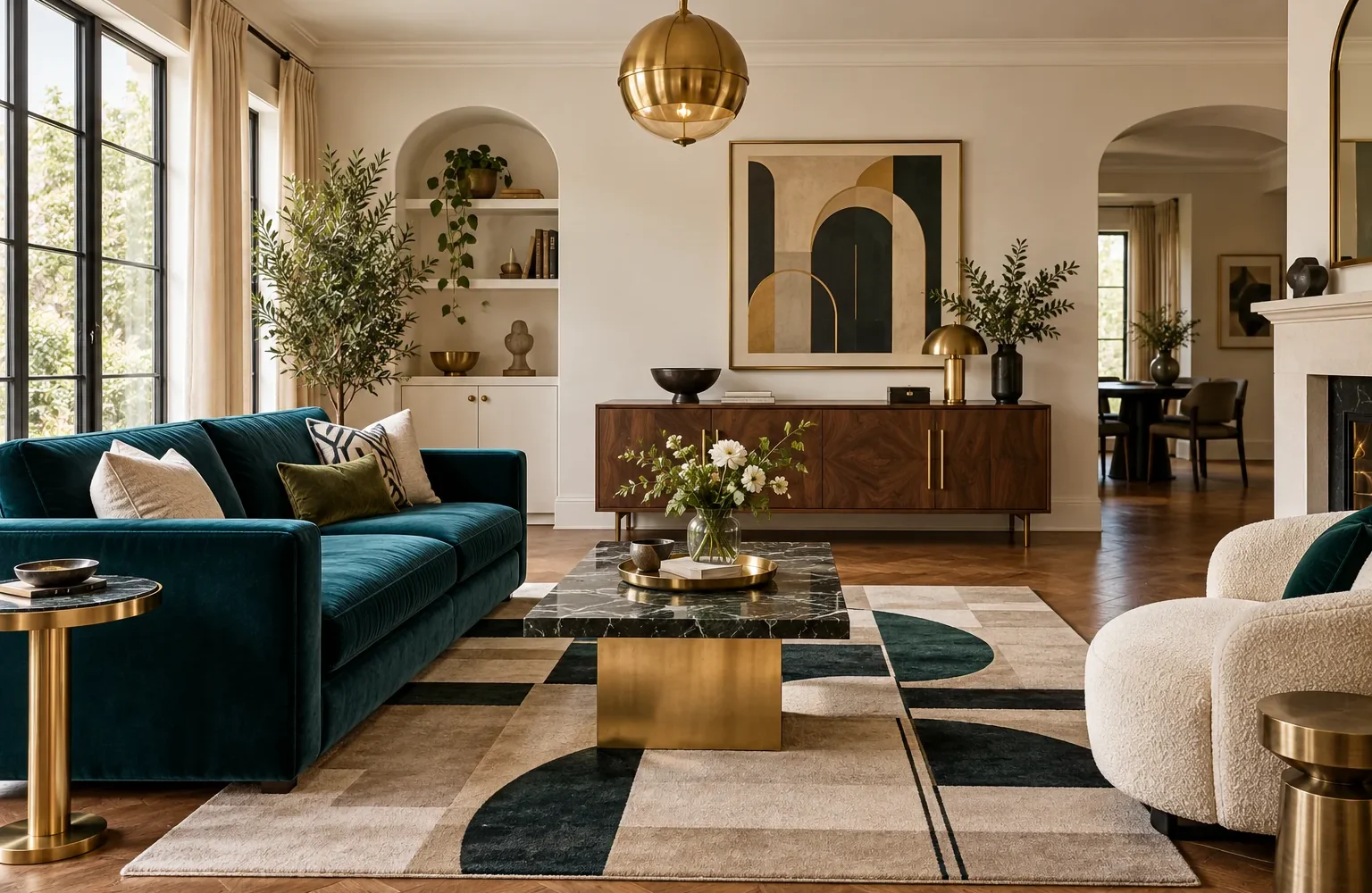
A curved or channel-tufted sofa, a bold geometric rug, or a striking pendant can be the lead element. You need only one. Arrange seating for conversation first, with a usable path through the room. Add a wood or stone-look coffee table with rounded edges, then a pair of lamps or sconces to give the arrangement a sense of balance. A mirror can amplify light, but place it where it reflects something appealing rather than clutter.
For a lower-commitment update, keep the sofa you own. Bring in a patterned rug, one sculptural lamp, and a pair of pillows in a saturated color. Repeat the color in a small artwork or vase. Stop there and live with the room before adding more.
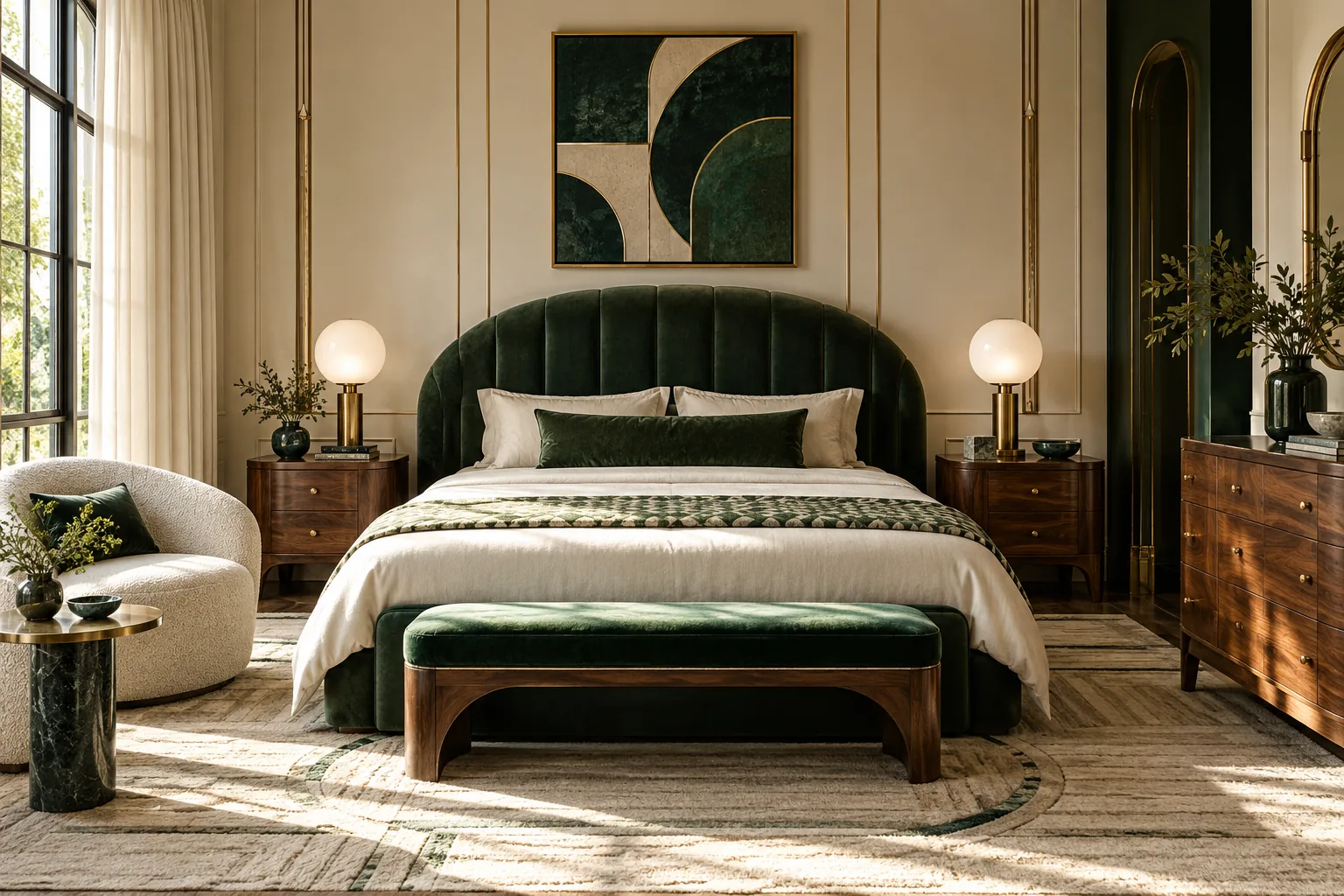
Art Deco bedroom: use symmetry where it helps
The bed wall is a natural place for Deco’s ordered lines. A rounded headboard and two similar bedside lights can make the room feel composed even if the rest of the furniture is simple. Keep nightstands large enough for the things you actually use. Choose soft bedding to offset polished or dark furniture, and use blackout window coverings if light control matters more than a decorative curtain treatment.
A bedroom does not have to be perfectly mirrored. Match the scale of bedside lamps, then allow different books, storage, or art on each side. For renters, a freestanding upholstered headboard and plug-in lamps can create the look without permanent wall work.
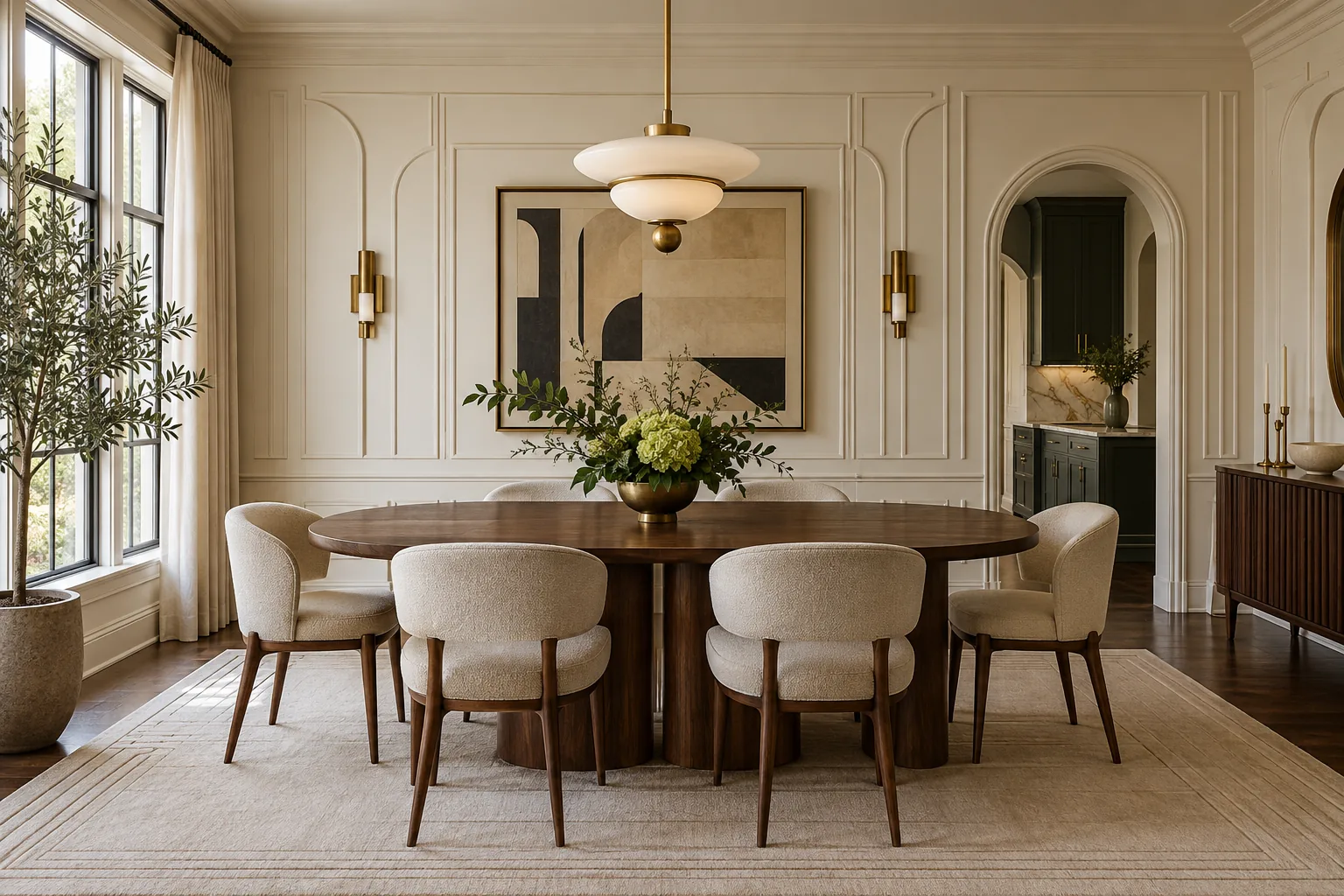
Art Deco dining room: focus on the table and light
An oval or rounded table creates a softer version of Deco geometry and can make circulation easier than a sharp-cornered table in some layouts. Measure the room with chairs pulled out before choosing size. A pendant centered over the table draws attention to the gathering area; dimming it gives more flexibility for meals and other uses. Upholstered chairs add softness, but choose fabric suited to your household’s cleaning needs.
If the existing table works, consider a new light fixture, a simple sideboard, or a framed geometric print. Make sure electrical work and fixture mounting follow local requirements and the manufacturer’s instructions.
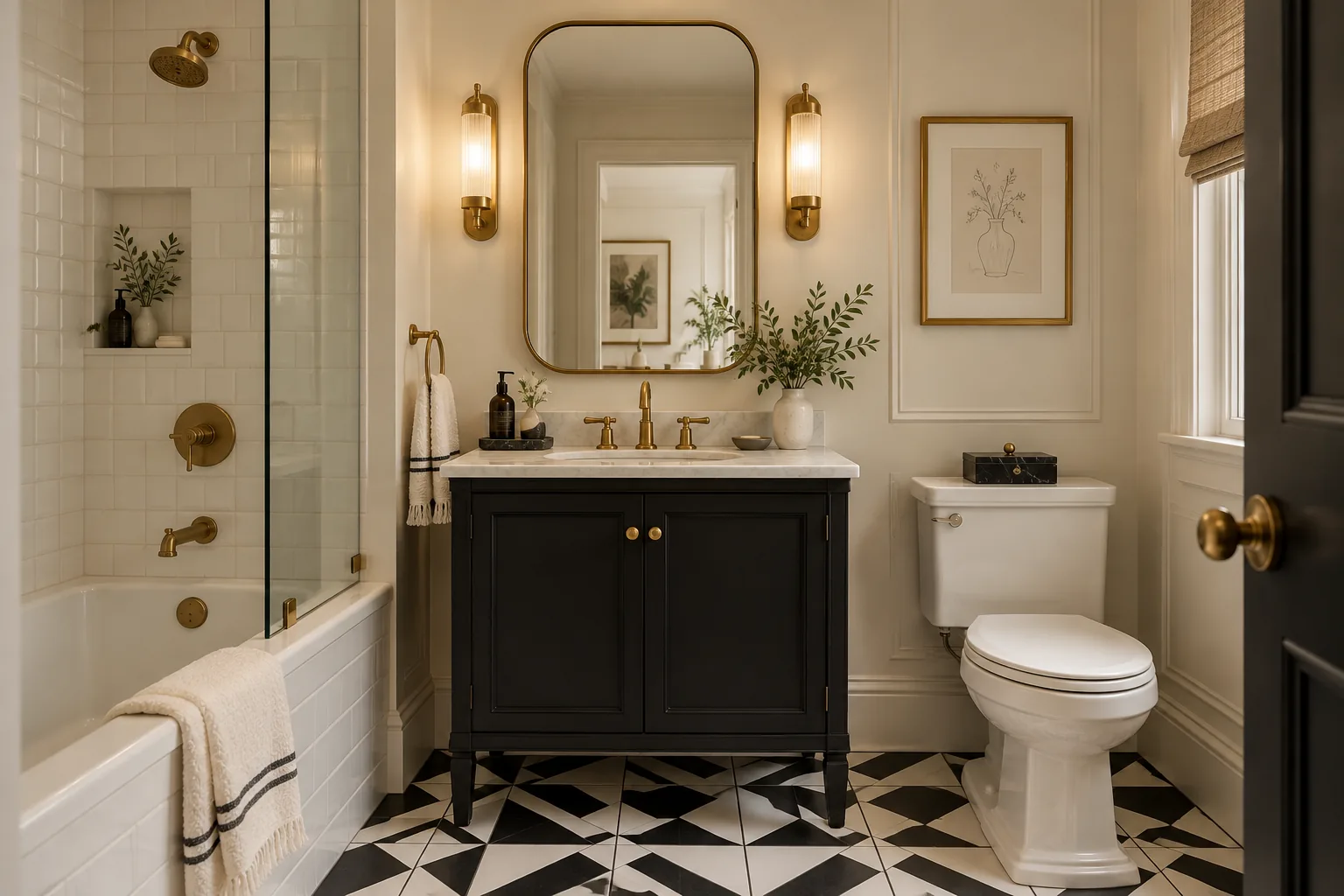
Art Deco bathroom: choose one durable statement
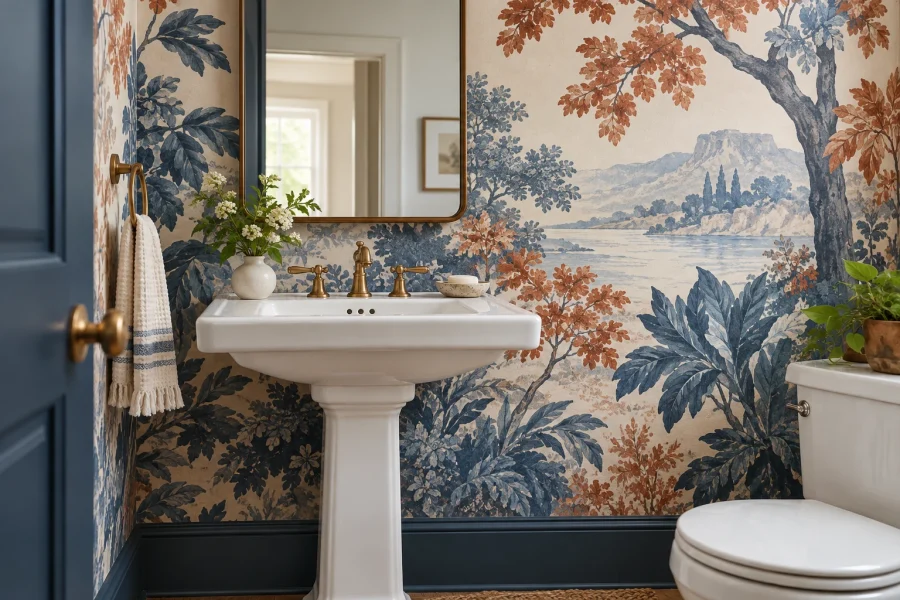
A small bathroom can carry a bold tile floor, rounded mirror, or pair of globe sconces. Pick one feature and let practical needs guide the rest. Floors need appropriate slip resistance, especially where they may get wet. Confirm that any tile, lighting, outlet, or ventilation product is rated for its location and installed to applicable code. In a powder room, where splashes are limited, wallpaper can offer pattern with less construction.
If a remodel is not planned, try a framed mirror and coordinated hardware first. Check existing hole spacing before buying replacement pulls or towel bars so the swap stays simple.
Keep the look livable and within budget
Spend on the item you see and use most, then repeat its color or shape in inexpensive details. Vintage stores can be useful for mirrors, lamps, and side tables, but inspect wiring, stability, and finish condition before buying. Avoid buying a full matching set merely to make the style obvious. Real rooms gain depth when older and newer pieces have a common palette or proportion.
A quick editing test helps: step into the doorway and identify the first thing you notice. If every surface shouts for attention, remove one pattern or reflective finish. If the room feels flat, add contrast through a lamp, fabric, or art before changing permanent surfaces.
Frequently asked questions
Can Art Deco work in a small room?
Yes. Use one motif at a readable scale, keep pathways open, and choose furniture that fits the room. A curved mirror or compact globe light can suggest the style without taking floor space.
Do I need gold accents?
No. Chrome, black metal, wood, glass, and contrasting color can carry the same geometric spirit. Choose the finish that suits existing hardware and maintenance preferences.
How is Art Deco different from modern decor?
Both can use clean lines, but Art Deco typically gives more weight to ornament, symmetry, rich color, and polished materials. A modern room may be much more restrained. You can combine them by using contemporary furniture with one or two Deco-inspired details.
Start with the room you use most and one change that solves a real need. A better lamp, a more comfortable seating layout, or a mirror in the right place can make the space work first; the Deco details then give it character.

Ethan Miller
Ethan Miller writes about home improvement, interior design, cleaning, and everyday living at Home & Living Daily. He shares practical tips and simple ideas to help readers create more comfortable and functional homes.