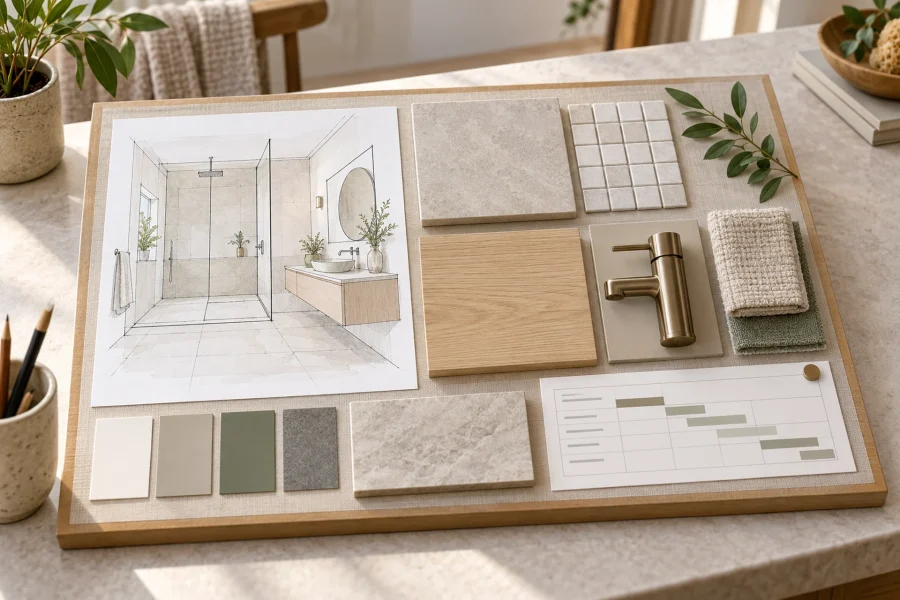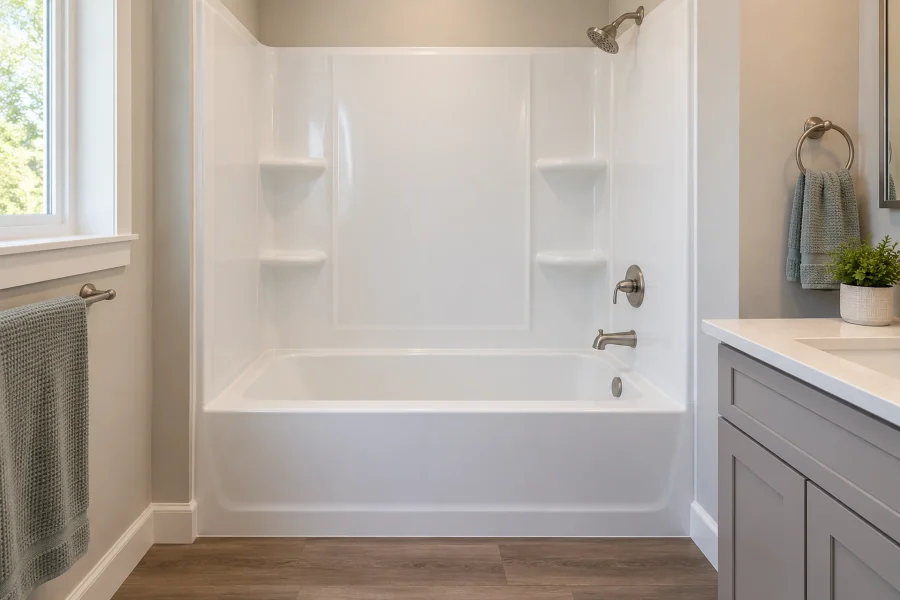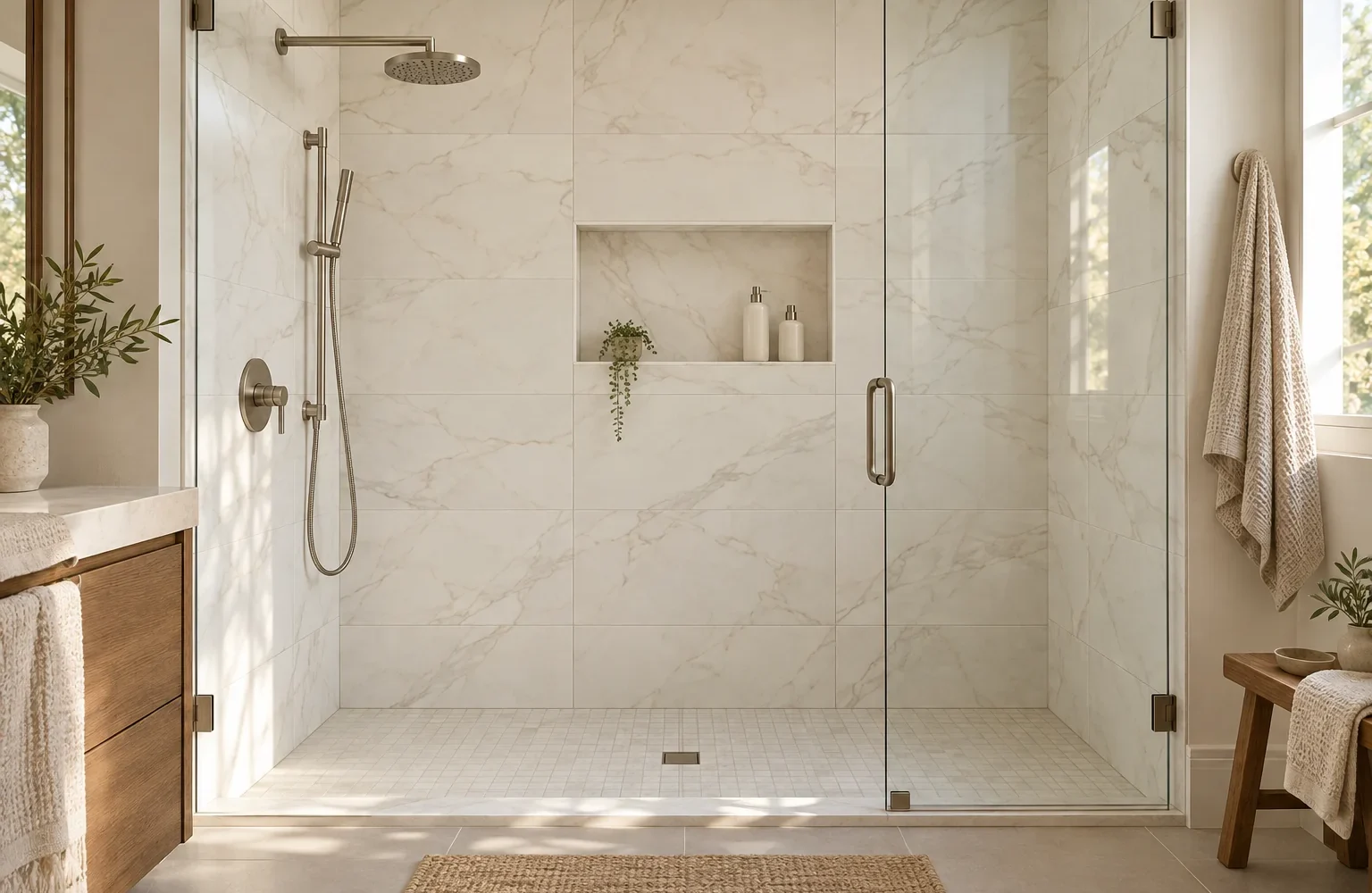
For most shower walls, glazed porcelain is the best all-around tile: it has very low water absorption, is straightforward to clean, and comes in styles from simple white to stone looks. Glazed ceramic is a sensible lower-cost choice when the product is rated for shower walls. Glass works well as an accent, while natural stone suits homeowners prepared for more care. Whichever tile you choose, the waterproofing belongs in the shower assembly behind it.
The right choice depends on more than the material name. Tile size affects grout cleaning and installation, while finish changes how light and water marks appear. Use this guide to compare five options, check a product before buying, and keep wall advice separate from shower-floor safety.
Best Shower Wall Tiles at a Glance
Glazed porcelain suits the widest range of showers, but it is not automatically the best fit for every budget or design. Compare the tradeoffs before you choose.
| Tile type | Best fit | Maintenance | What to consider |
|---|---|---|---|
| Glazed porcelain | Most homeowners and lower-maintenance showers | Low | Heavier and harder to cut; large formats need a flat wall and experienced setting |
| Glazed ceramic | Budget projects and classic wall patterns | Low | Confirm the exact product is approved for shower-wall use |
| Glass | Accents, niches, or a bright feature area | Low on the face; grout still needs care | Transparency can reveal setting defects; follow glass-specific installation instructions |
| Natural stone | Distinctive natural variation and a premium look | Higher | Stone type determines sealing, cleaner choice, and sensitivity to stains or acids |
| Mosaic | Niches, borders, curves, and small feature areas | Medium to high | Many joints mean more grout to clean; mesh backing and setting method matter |
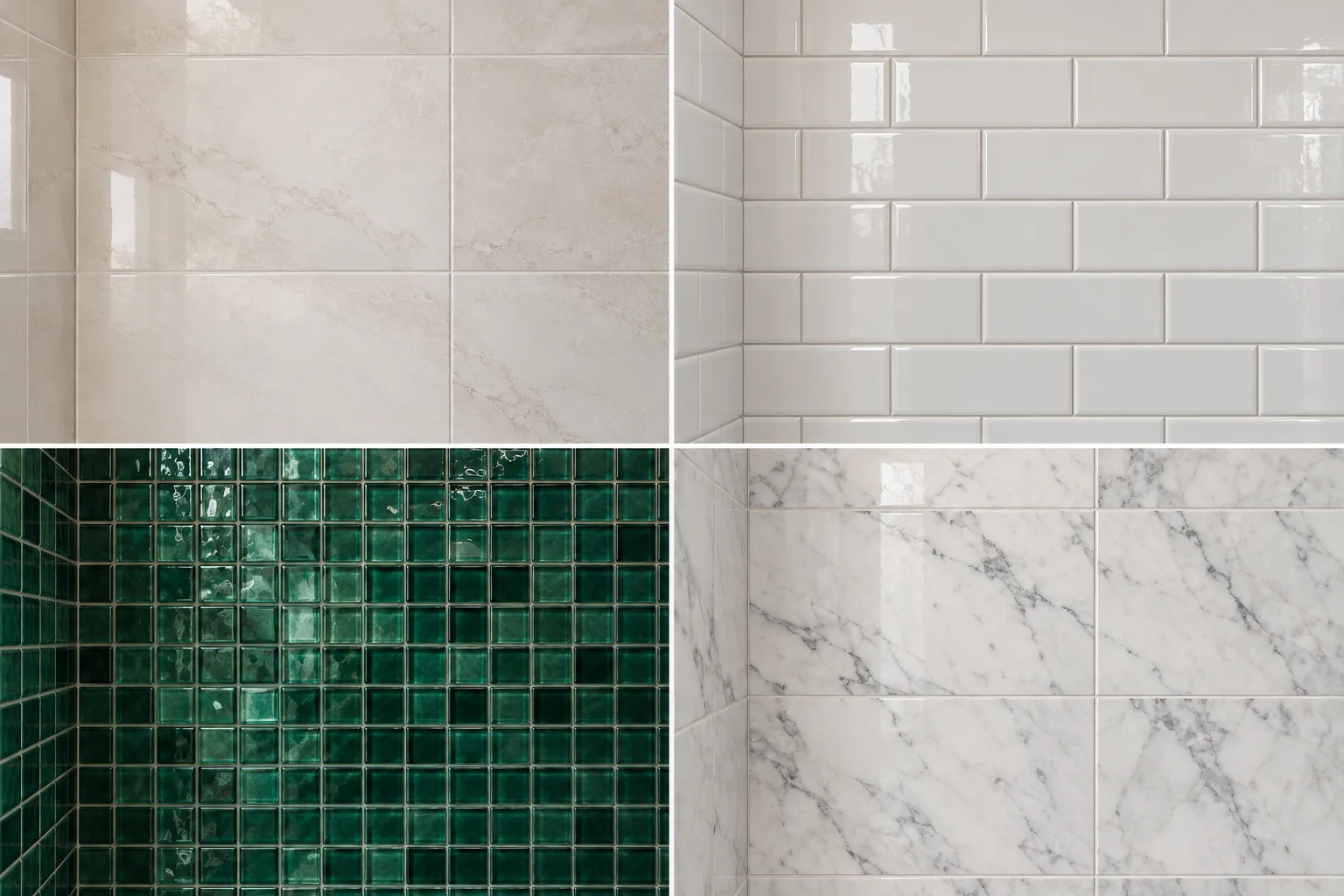
Why Porcelain Is the Best All-Around Tile for Shower Walls
Glazed porcelain is the strongest default when you want a durable surface with modest upkeep and broad design choice. TCNA defines porcelain tile as having water absorption of 0.5% or less under the applicable test method; this describes the tile body, not the waterproof performance of the whole shower.
A glazed face is generally easier to wipe than an unglazed, more textured surface. Fewer grout joints can also reduce routine scrubbing, which is why many homeowners pair porcelain with a larger format. But the grout and movement joints still need appropriate materials and care.
Porcelain has installation tradeoffs. It is typically harder to cut than non-porcelain tile, and a large, rigid tile makes uneven walls more visible. Ask the installer to confirm that the substrate is flat enough for the chosen size and that the mortar and troweling method match the tile manufacturer’s instructions.
Also compare the finished layout, not only a single loose tile. A veined pattern may repeat more visibly across a full wall than it does on a small sample. Ask to see several pieces dry-laid in the intended direction, especially when the tile has a strong printed pattern or directional grain. This helps you decide where cuts will land around the niche and whether the pattern will look balanced at the shower entrance.
When Another Tile Is the Better Choice
Glazed ceramic for a budget-friendly wall
Glazed ceramic can be an excellent shower-wall choice. It is often lighter and easier to cut than porcelain and is sold in familiar shapes such as subway tile. Check the packaging or technical sheet for an explicit shower-wall or wet-area use. A tile designed only for a dry backsplash should not be assumed suitable because it looks similar.
Glass for color and reflected light
Glass tile can add color or a reflective accent in a niche or on one feature wall. It is less forgiving to install: translucent pieces can show adhesive ridges, inconsistent coverage, or substrate variation. Use the specified mortar, trowel, and grout, and ask the installer to make a small sample board when the setting method is unfamiliar.
Natural stone for variation and character
Marble, travertine, slate, and other stones bring natural variation that printed surfaces cannot fully reproduce. They also have material-specific care needs. Some stones can stain or react to acidic cleaners, and sealing may be recommended depending on the stone and product. Before committing, ask the stone supplier which sealer and cleaner are suitable and how often the surface should be checked.
Mosaic tile for detail
Mosaics are useful in niches, borders, and curved details where smaller pieces fit the shape. They are not automatically easier to maintain: more grout joints create more surface to clean. Confirm how the sheet is backed and whether that backing is compatible with the shower assembly and installation method.
For a niche, check that the selected mosaic thickness works with the field tile and trim. A mismatch can leave an awkward ledge or edge. The installer can plan the transition with a compatible profile or stone sill, but the detail should be decided before materials are ordered.
Choose Tile by Budget and Maintenance
- Lowest routine upkeep: choose a smooth glazed porcelain or ceramic with a simple shape and fewer joints. Follow the grout and cleaner instructions for the complete installation.
- Lower material budget: compare glazed ceramic and porcelain that are both approved for the intended wall use. Include trim pieces, shipping, cuts, waste, mortar, grout, and labor in the project comparison.
- Natural, one-of-a-kind appearance: view stone samples together under bathroom lighting and ask about sealing and cleaner compatibility before purchase.
- Small or dim shower: consider a lighter color or a modestly reflective finish, then check a full-size sample in the room. Lighting and grout color can affect the result as much as tile size.
- Hard-water deposits: favor a surface that is easy to wipe and a pattern that will not make residue hard to see. No tile eliminates mineral buildup; ventilation and regular rinsing or drying can help manage it.
Ask for a quote that identifies the tile, trim, setting materials, grout, surface preparation, and waterproofing work separately. Two tile prices are difficult to compare when one includes edge pieces or delivery and the other does not. A complex pattern, many small cuts, a niche, or a large-format tile can change labor needs even when the tile itself is inexpensive.
For a fair comparison, give each installer the same tile choice, layout, niche dimensions, and project scope. Ask whether removal, disposal, wall repairs, protection, and final cleanup are included. That makes it easier to spot when a lower quote leaves out work that another installer has included.
Think about the cleaning routine you will actually follow. If you prefer a quick wipe after showering, choose a surface that does not have deep ridges and avoid spreading small mosaics across every wall. If you prefer natural stone, make the care requirements part of the choice rather than an afterthought. Ask for the stone and sealer instructions in writing so anyone cleaning the bathroom knows which products to avoid.
For a full renovation budget, include demolition and wall preparation as well as tile. Our shower retiling cost guide explains the other project costs to plan for. If you are estimating quantities, see how to calculate tile for a shower.
Choose a Tile Size and Finish for the Wall
There is no single best size for every shower. A larger tile can create a calmer surface with fewer grout joints, but it needs a flatter substrate, careful layout, and cuts that work around valves, corners, and niches. A small or medium tile offers more layout flexibility and can be easier to replace later, though more joints take additional cleaning.
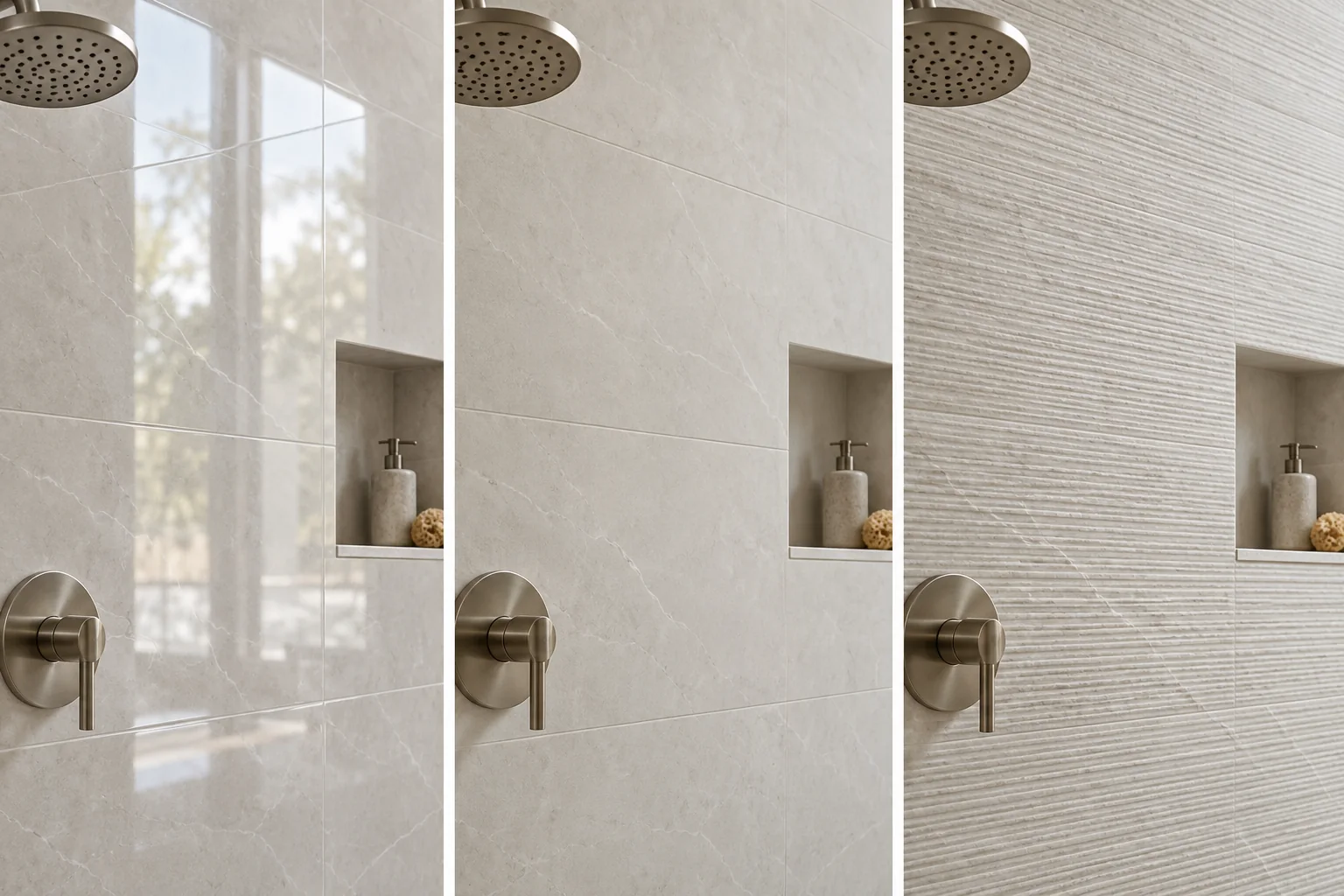
Glossy, matte, and lightly textured surfaces are all possible on walls when the product is approved for that use. Gloss can brighten a dim room but may show water spots. Matte surfaces can soften reflections but are not necessarily easier to clean; deep texture may hold soap residue. Bring home a sample and view it dry and wet in the actual light.
Do not apply shower-floor rules automatically to the walls. Floors support body weight and need appropriate slip resistance and a layout that works with the slope to the drain. Walls are vertical surfaces, so cleanability, weight, product approval, and installation requirements take priority.
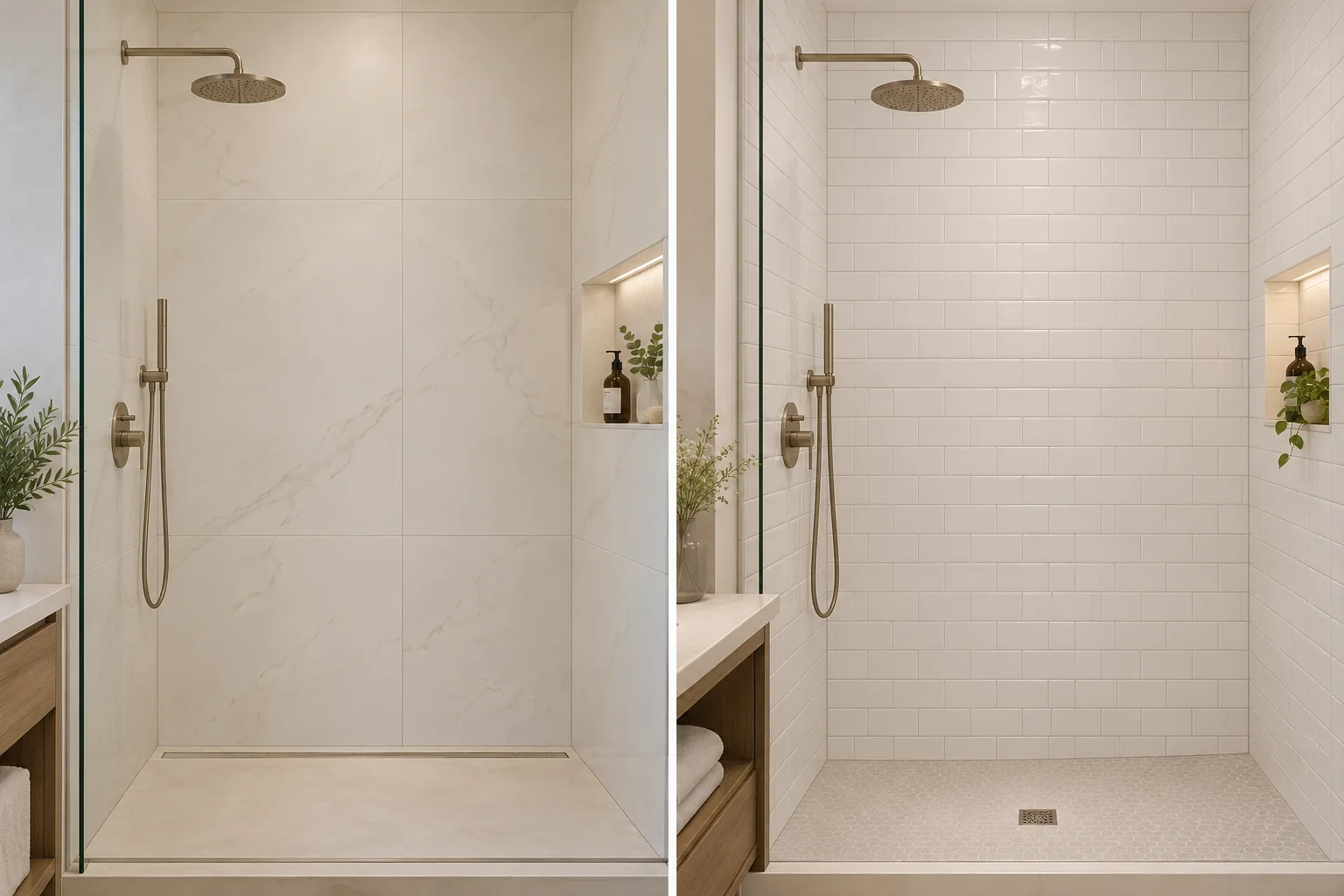
Layout is another way to change the look without switching materials. A straight stack can make a wall feel orderly, while an offset pattern gives a familiar subway tile more movement. Herringbone and other detailed patterns add visual interest but need more planning and cuts around plumbing and corners. Ask the installer to mark a starting line and show where narrow cuts would fall before the first tile is set. The best pattern is one that fits the wall dimensions and keeps the edges intentional.
Grout color affects both appearance and upkeep. A close match makes joints recede, while a contrasting color emphasizes the pattern and the grout lines. Very light grout may show soil sooner in a heavily used shower; darker grout can still develop residue or color changes. Check the grout manufacturer’s cleaning and sealing guidance, and view a sample board with the tile instead of deciding from a small color chip alone.
Tile Is Not the Shower Waterproofing System
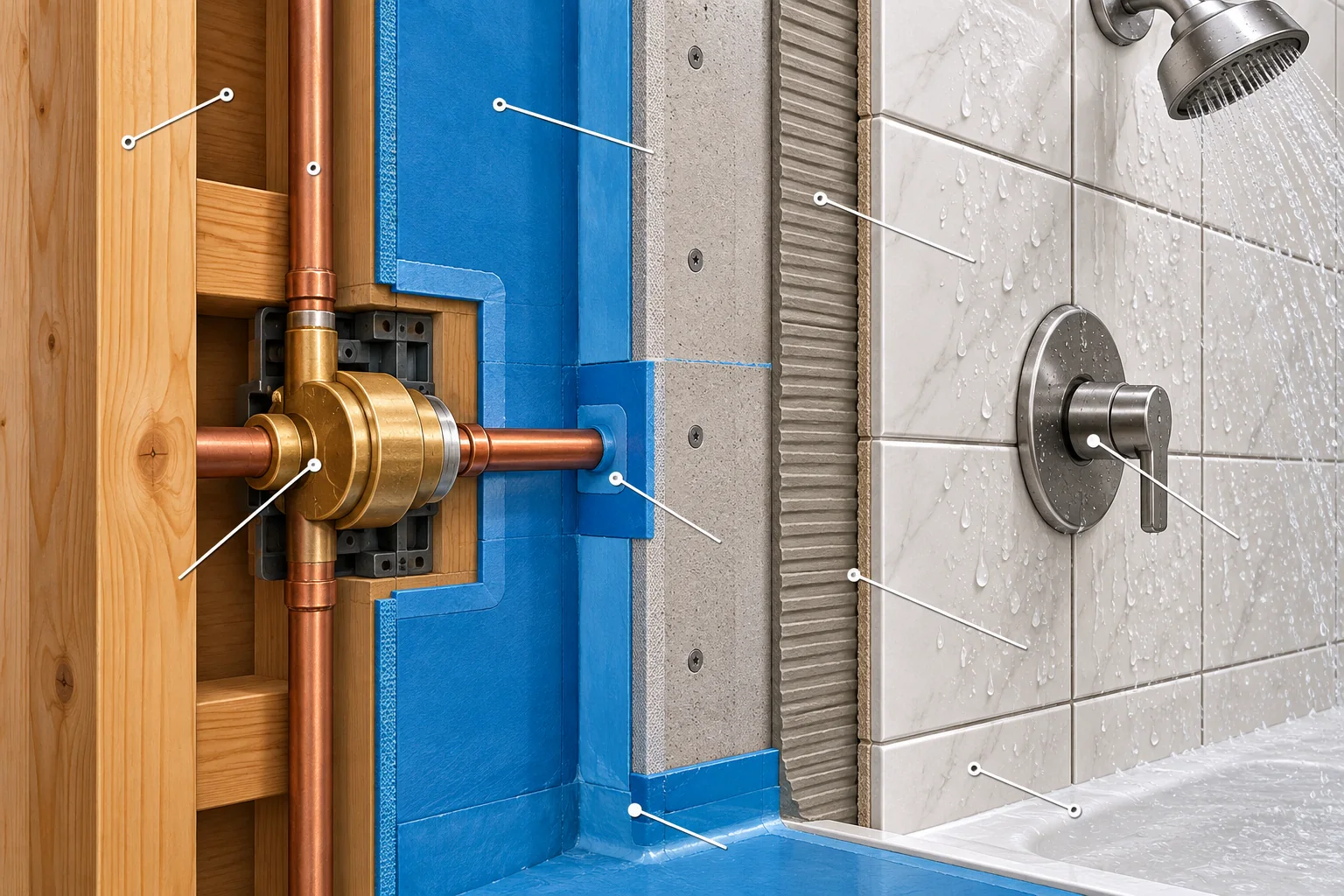
Tile and grout form the visible finish, but water management depends on the complete shower assembly. The substrate, waterproofing layer, seams, corners, penetrations, drain or tub connection, and compatible setting materials all matter. Low-absorption porcelain does not make a poorly built shower watertight.
Before work begins, ask the installer which waterproofing system is being used, how corners and plumbing penetrations will be handled, and how the work will follow that system’s instructions. The Tile Council of North America explains porcelain’s absorption classification, while system manufacturers such as Schluter describe waterproofed shower assemblies. Follow the selected system’s current details and local requirements rather than combining components by guesswork.
If a shower is leaking or the wall is damaged, selecting a new tile is not enough to diagnose it. Have the assembly assessed before covering the problem.
What to Check Before You Buy Shower Wall Tile
- Approved use: confirm the exact product is suitable for shower walls or the specified wet area.
- Installation sheet: check substrate, mortar, grout-joint width, movement joints, and any limits on size or pattern.
- Finish and cleaning: find the manufacturer’s approved cleaner and any sealing guidance, especially for stone.
- Weight and format: make sure the wall assembly and installer can accommodate the selected tile or panel.
- Trim and edges: plan outside corners, niche edges, transitions, and how cut edges will be finished.
- Samples: inspect several pieces together under the bathroom’s lighting, including the intended grout color.
- Quantity and batch: order enough for cuts and future repair, and check that boxes come from compatible production lots.
Keep the product sheet, dye-lot information, and a few spare tiles with your home records after installation. If a tile is damaged later, the same series may have changed or been discontinued. A labeled spare can make a small repair much easier to match.
When estimating quantity, measure each wall separately and subtract large openings only if your installer recommends doing so. Niches, benches, patterns, and angled cuts can increase waste, and cartons may be sold in set coverage amounts. Get the final quantity and extra-tile allowance from the person laying the pattern before placing the order.
Frequently Asked Questions
Is porcelain or ceramic better for shower walls?
Porcelain is the stronger all-around pick because its water absorption is very low and it comes in many durable finishes. Glazed ceramic is a good lower-cost wall option when the specific product is approved for shower use.
What shower wall tile is easiest to clean?
A smooth glazed tile with a straightforward layout is generally easiest to wipe. Fewer grout joints can reduce scrubbing, but grout still needs appropriate cleaning and maintenance.
Does shower wall tile need to be waterproof?
The tile surface should be suitable for the wet-area application, but the waterproofing function comes from the correctly built shower assembly behind and around it. Tile alone is not the waterproof layer.
Can I use floor tile on shower walls?
Sometimes. Check the manufacturer’s instructions for wall use, weight, size, and installation requirements. A floor-use label by itself does not confirm every wall installation detail.
Should I use natural stone in a shower?
You can, if you are comfortable following the care requirements for that exact stone. Confirm sealing, cleaning, and stain or etching risks with the supplier before installation.
Make the Choice That Fits Your Shower
If you want a straightforward recommendation, start with glazed porcelain and check that the exact product is approved for shower walls. Choose glazed ceramic when the budget matters more and the product instructions support the application. Reserve glass and mosaics for deliberate accents, and choose natural stone when its appearance is worth the added care. Then make sure the installer treats waterproofing as a complete system behind the finish.
Sources and Further Reading
- Tile Council of North America: Porcelain vs. Non-Porcelain
- Daltile: Selecting the Perfect Wall Tile
- Schluter Systems: Waterproof Shower
- The Tile Shop: Best Tile for Shower Walls and Floors

Ethan Miller
Ethan Miller writes about home improvement, interior design, cleaning, and everyday living at Home & Living Daily. He shares practical tips and simple ideas to help readers create more comfortable and functional homes.