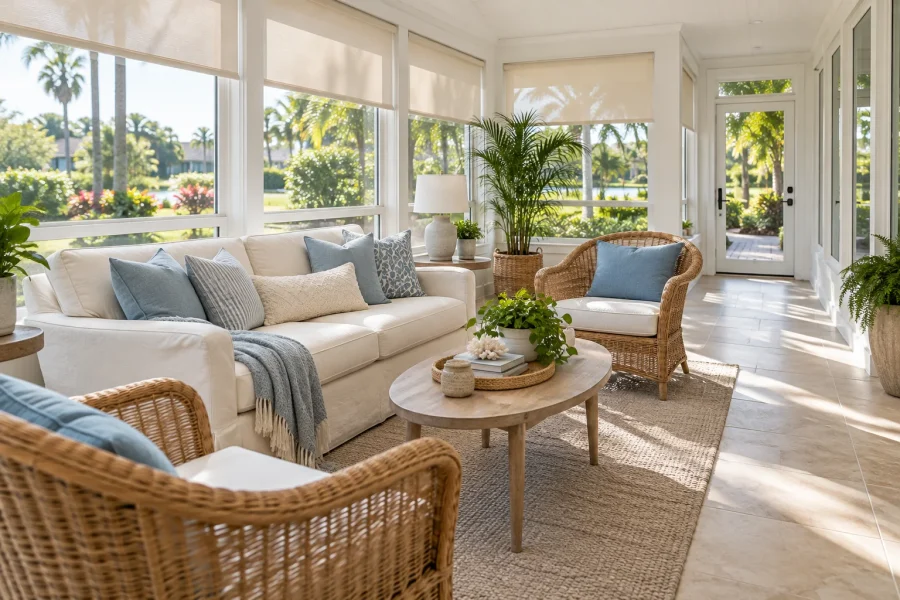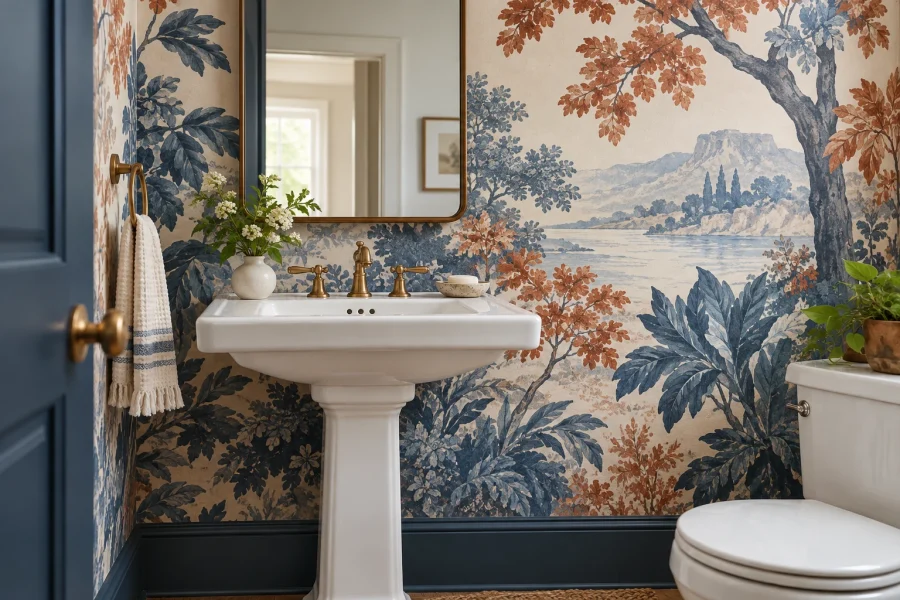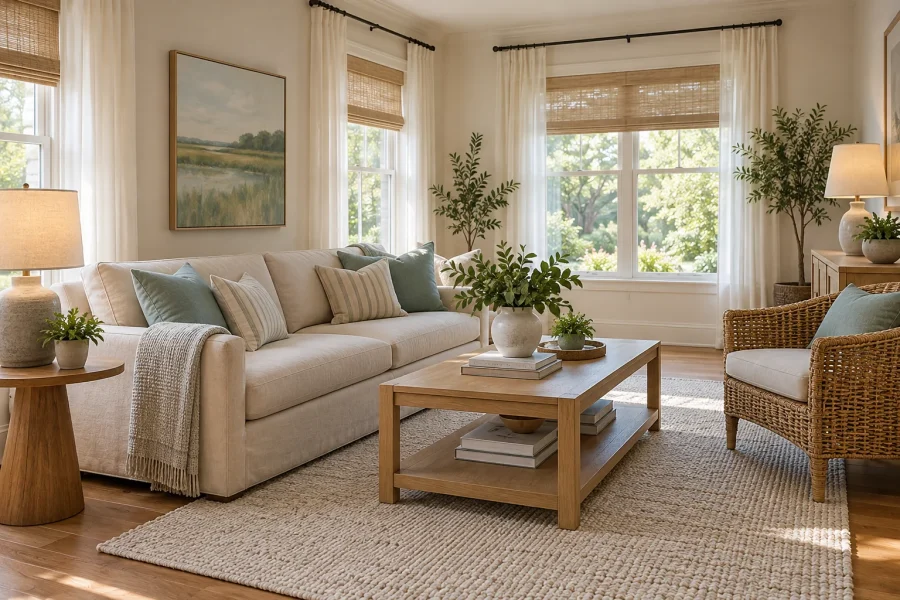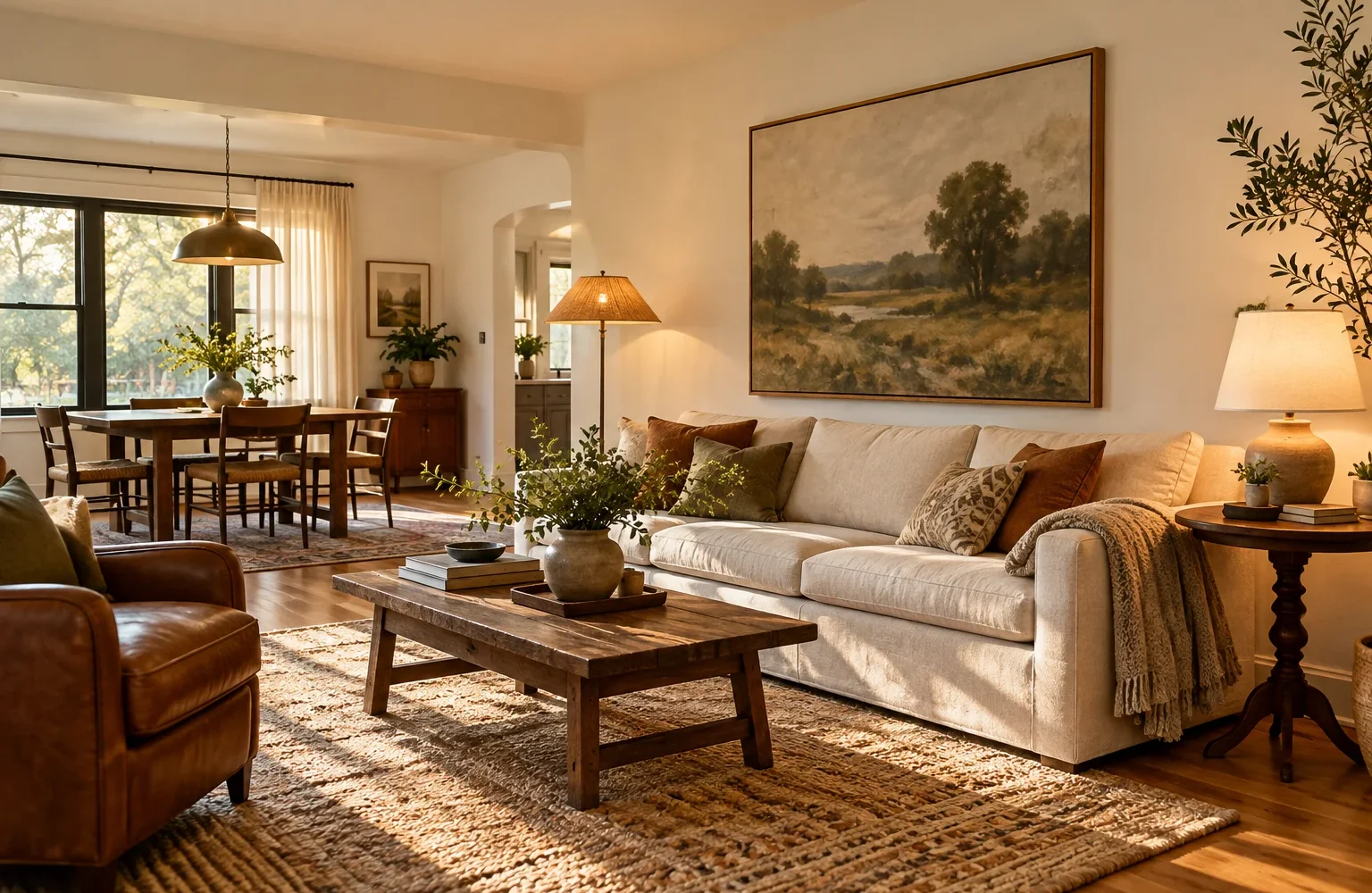
Pick one room and name the one thing that is not working. Maybe the seating feels scattered, the room looks flat after dark, or every surface attracts clutter. The best home decor ideas solve that problem first and add personality second.
This guide gives you ten practical updates for four rooms, then shows you how to choose a style from what you own, rank changes by cost, and adapt the plan for a small or rented home. You do not need to use every idea. One to three well-chosen changes will usually do more than a cart full of unrelated accessories.
Start With What the Room Needs
Before buying anything, spend ten minutes looking. Stand in the doorway, take a photo, and study the room from that new viewpoint. Then ask:
- Does the room feel empty or crowded? If it feels empty, check whether the furniture forms a useful group and whether the middle of the room has a clear purpose. If it feels crowded, check both the furniture footprint and the number of objects on visible surfaces.
- Does it change after dark? If the room feels less inviting at night, check the placement, brightness, color, and glare of the lights before adding more decor.
- What looks most out of place? Choose one issue: a rug that does not connect the seating, a small artwork lost above a sofa, a chair that blocks the path, or items that have no landing spot.
Write down one problem and one constraint. A constraint might be a tight walkway, a pet that sheds, a landlord who limits wall holes, or a budget that rules out new furniture. Those two notes will tell you which ideas are worth trying and which ones you can skip.
Home Decor Ideas by Room
Living Room
1. Make the seating area read as one group
If the furniture seems to float, test the layout before replacing anything. Turn chairs toward the sofa, move the coffee table into comfortable reach, and make sure people can enter and cross the room without weaving around furniture.
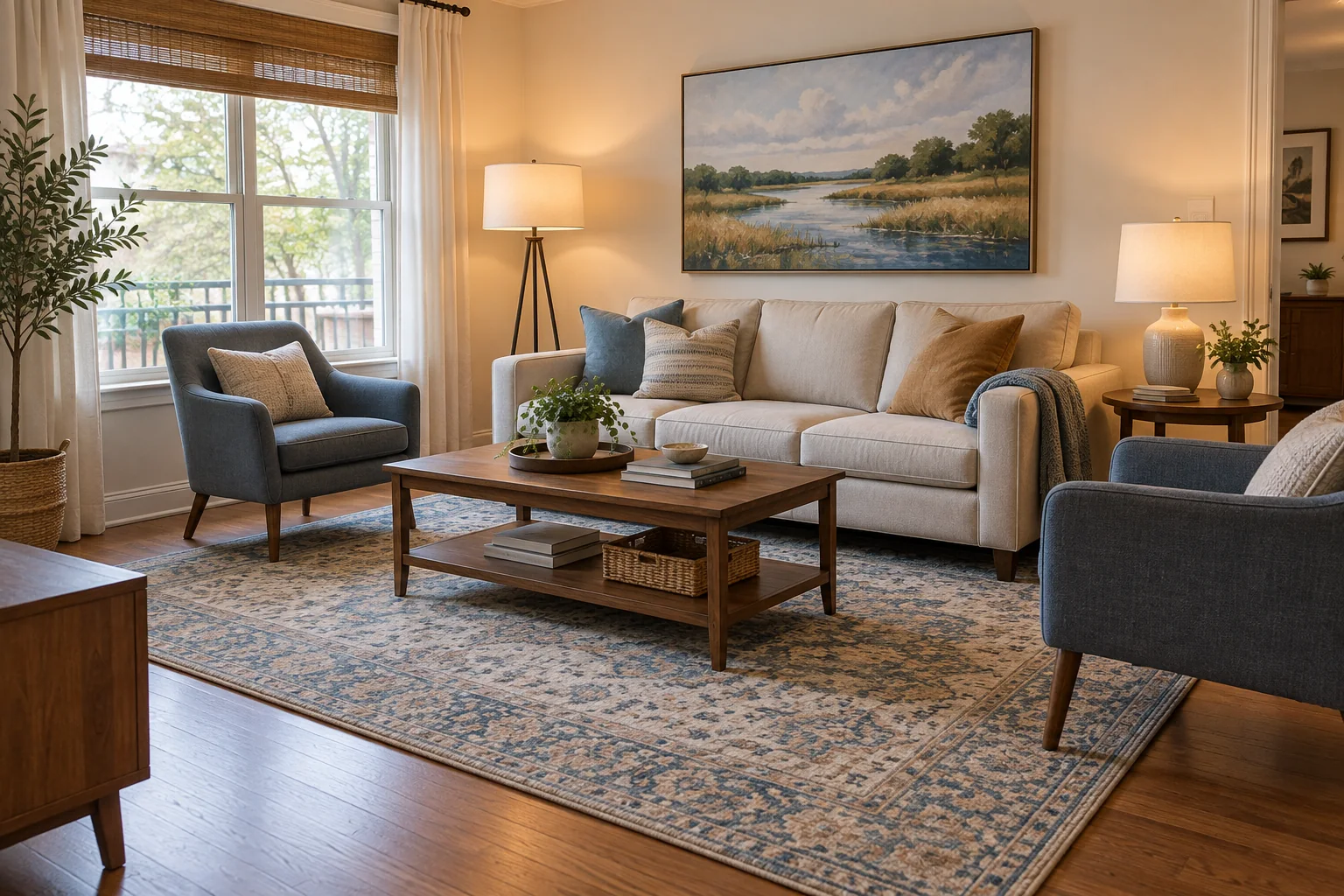
A rug can define the group, but it needs a visual relationship with the seating. A useful starting point is to place at least the front legs of the main seats on the rug. Houzz describes this as one common way to connect furniture while keeping a room open. Tape the proposed rug outline on the floor and live with it for a day before ordering. If moving the sofa slightly away from the wall improves the conversation area without narrowing the path, try it; otherwise, leave it where it works.
If you are choosing a new surface as well as a rug, compare cleaning, moisture, and traffic needs in our guide to choosing flooring for every room.
2. Add light where an activity happens
One ceiling fixture can illuminate a room without making reading, conversation, or television viewing comfortable. Start by moving an existing lamp beside the place where you read or relax. Sit down and check whether the light reaches the page, creates screen glare, or shines into anyone’s eyes.
If that area is still too dim, add one suitable task or ambient light rather than automatically buying a matching pair. Keep cords against walls or behind furniture, never across a walkway. When using dimmers or smart bulbs, confirm that the bulb and control are compatible.
3. Size wall art to what sits below it
Cut kraft paper to the size of the artwork or proposed group and tape it to the wall. On an open wall, a center point around 57 to 60 inches from the floor is a practical starting point. Above furniture, the relationship to the sofa, console, or headboard matters more than applying that number rigidly. Apartment Therapy suggests roughly 6 to 8 inches between furniture and the bottom of the art, and 3 to 6 inches between frames, while noting that the rules may conflict and should be balanced.
Example: If a sofa back is 33 inches high and a picture is 30 inches tall, leaving a 6- to 8-inch gap puts the picture center at 54 to 56 inches. That is lower than the open-wall starting point, but it may look more connected to the sofa. Treat a gallery wall as one large shape and judge its visual center, outer edges, and frame spacing together.
Bedroom
4. Put useful light within reach of the bed
A bedside lamp should work from the position where you use it. Check whether you can reach the switch while lying down and whether the shade keeps the bulb out of the other sleeper’s line of sight. A plug-in wall light or clip-on reading light can free a narrow nightstand, but secure the cord and follow the manufacturer’s mounting instructions.
5. Edit the bedding around a repeat color
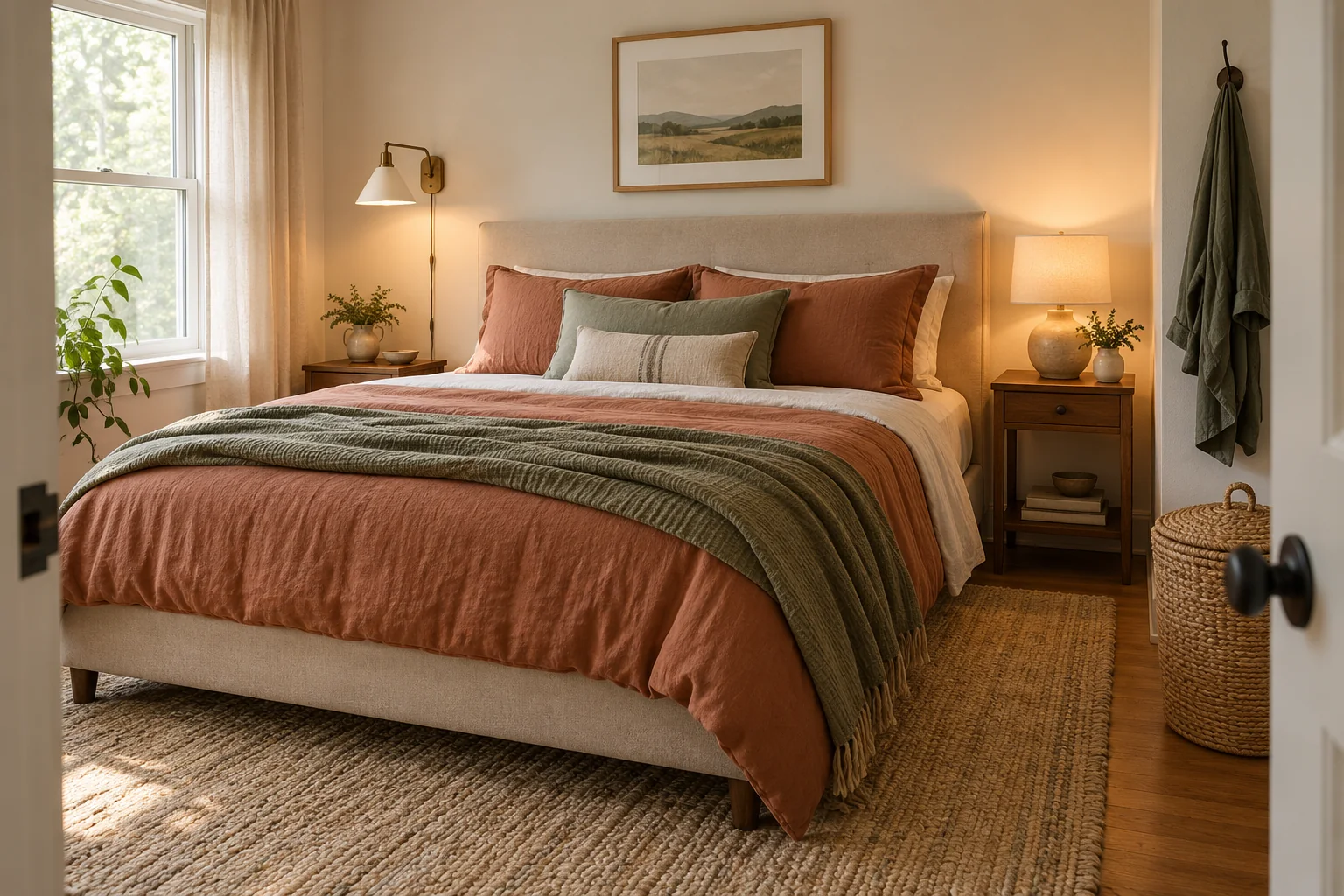
Choose a base you already like, then pull one or two colors from the room into a throw, quilt, or pillow. This is a simplification method, not a rule against pattern or color. A floral quilt can still be the starting point; repeat one of its quieter colors in a pillow or lampshade so the bed relates to the rest of the room.
Extra layers add texture, but they also add daily tidying and periodic washing. Stop at the amount you will comfortably maintain. The goal is a bed that feels intentional from the doorway and still suits your routine.
6. Give worn clothes and small items a landing spot
If a chair becomes a clothes pile, put a hook or lidded basket close to the closet. If the dresser fills with small items, use a shallow tray for only the few things you reach for daily and move the rest into a drawer. Choose a basket or tray whose material repeats something already in the room, such as woven fiber, warm wood, or dark metal. Storage then contributes to the decor instead of looking like an afterthought.
Entryway
7. Create a landing zone without blocking the path
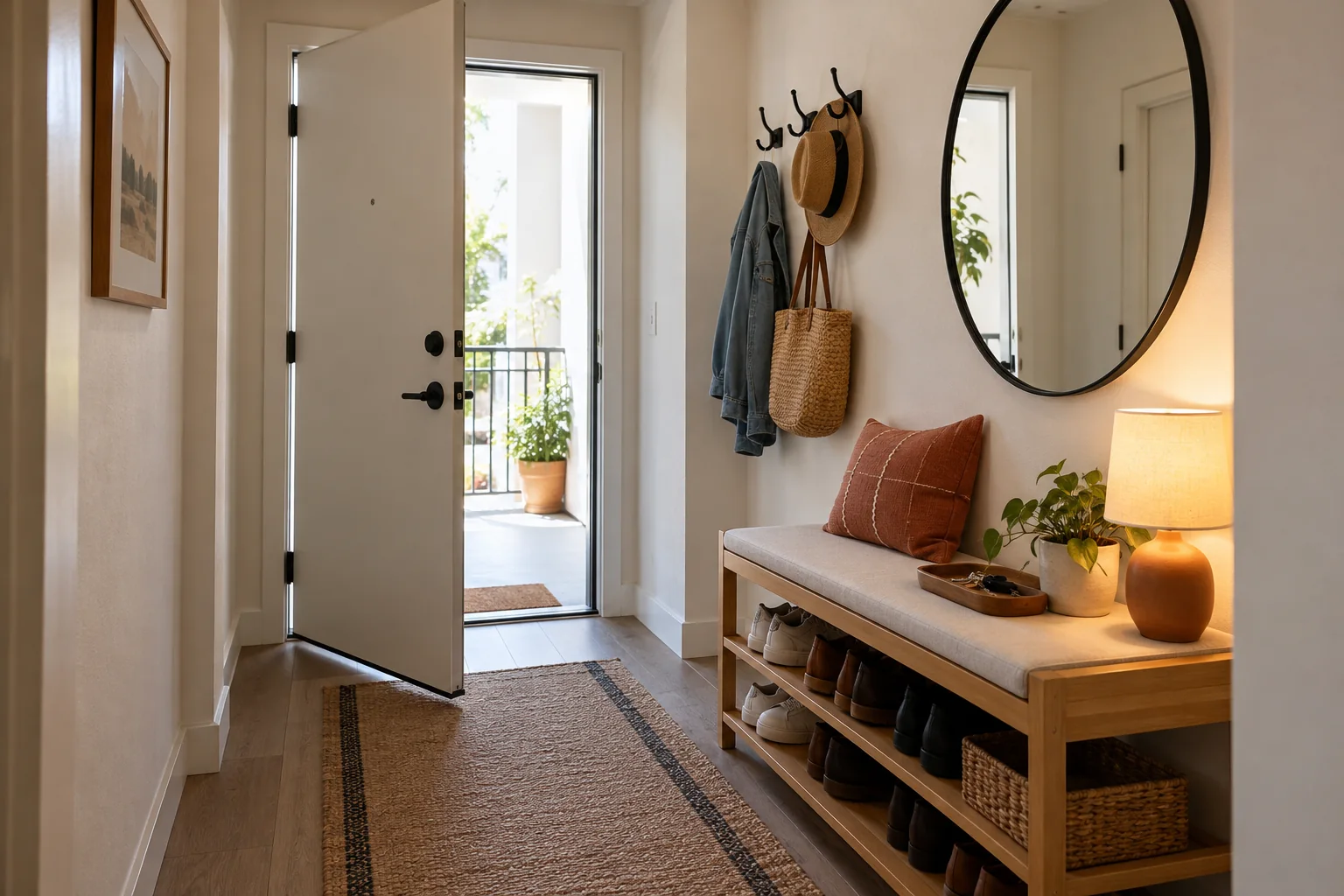
List what actually arrives through the door: keys, mail, shoes, dog leads, school bags, or umbrellas. Give the most frequent items one reachable home. That might be a key tray, a row of hooks, and a shoe tray; a shallow bench is useful only if the hall remains comfortable when the door is open and someone is putting on shoes.
Measure the furniture depth and mark it on the floor with tape. Open the door fully, walk past the outline, and carry a bag through the space. This simple test prevents a tidy-looking entry from becoming a daily obstacle.
8. Finish one focal spot
Choose either the wall or the top of a small table, not every available surface. A lightweight mirror or art, a lamp, and one useful or personal object can be enough. Before hanging a mirror, hold a paper template at different heights and check what it reflects, whether it catches glare, and whether the people using it can see the area they need. Install it with hardware appropriate for its weight and the wall construction.
Kitchen and Dining Area
9. Clear the work zone before styling the counter
Decide which appliances and tools earn permanent counter space because you use them daily. Store the rest, then group a few non-electrical items on a washable tray or board. A fruit bowl, plant, or cutting board can add color and height, but decoration should stay outside the stove’s heat zone and the sink splash zone. Follow each appliance’s clearance and ventilation instructions rather than placing it on a decorative tray for appearance.
10. Add softer light beside the dining area
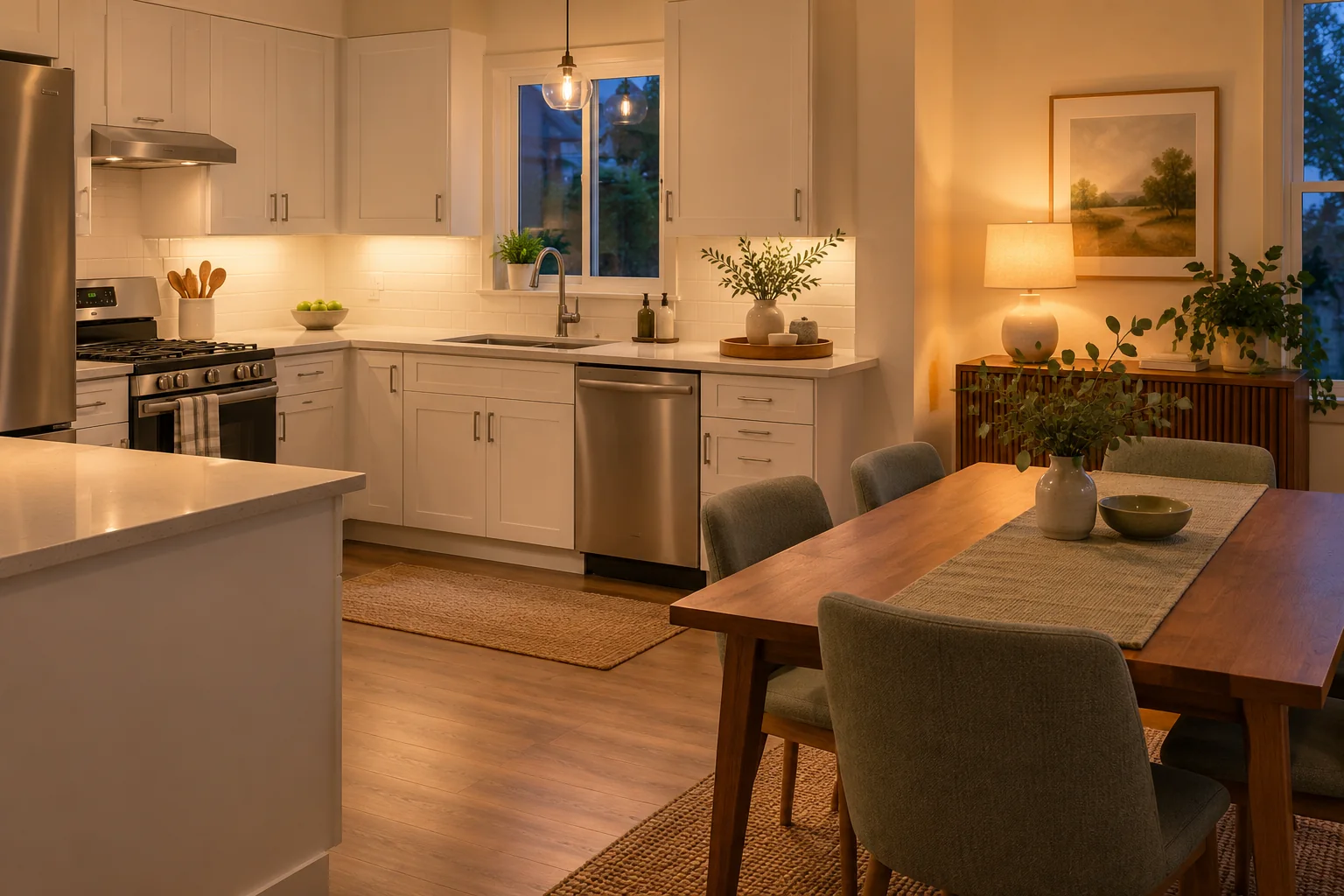
A lamp on an existing sideboard or shelf can make dinner feel warmer without replacing the main fixture. Treat it as supplementary light, not a substitute for enough illumination to eat and clean safely. If you use a dining rug, test whether every chair remains stable and moves freely when pulled out; skip the rug if it creates a snag or a cleaning burden.
Choose a Style That Works With What You Own
You do not need to identify one perfect decorating label before starting. Choose one item that must stay, such as a sofa, dining table, rug, or favorite artwork. Write down three visible qualities: its main color, material, and line. A gray sofa might be cool or warm, tailored or soft, and paired with chrome or wood. Those details are more useful than the word “modern.”
Next, look for two elements already repeated in the room. Repetition creates connection: the same wood tone in a frame and table, a muted blue in a rug and pillow, or a curved line in a lamp and mirror. Add one contrasting texture so the room does not feel flat.
Example: Imagine a small living room with a medium-gray sofa, warm oak floor, white walls, and a black floor lamp. One direction could repeat black in thin picture frames, add rust or clay textiles for warmth, and use oak or woven fiber in a tray. Another could keep the palette quieter with denim blue, off-white, and walnut. If the budget allows only one purchase, choose the item that fixes the room’s main problem: a better-sized rug if the seating feels scattered, a lamp if the room fails at night, or larger art if the sofa wall feels unfinished.
This page stays style-neutral on purpose. Modern, farmhouse, vintage, DIY, and luxury decor each deserve a focused guide rather than being compressed into a few generic sentences here.
Decide What to Change for Your Budget
Work through the room in cost order. Stop when the original problem is solved.
- Use what you have. Remove objects from one surface, swap lamps between rooms, turn chairs toward each other, move art on paper templates, or rotate textiles seasonally.
- Buy a small functional item. Add a tray, cord solution, pillow cover, hook, lamp shade, or storage basket only when it serves the diagnosed need.
- Choose one visual anchor. A correctly sized rug, substantial artwork, window treatment, or better main light can change how the whole room reads. Measure and test before buying.
- Replace furniture last. Confirm that scale, comfort, traffic, and storage cannot be improved with a layout change. Then measure the room, doorways, and delivery path before shopping.
A larger price does not guarantee a larger improvement. A zero-cost layout change can matter more than a new accessory, while one well-sized anchor can matter more than ten small objects.
Adapt the Ideas for Small Spaces and Rentals
In a small room, decorate the path as carefully as the walls. Tape out the depth of benches, side tables, and floor lamps, then open doors and drawers and walk the route you use every day. Favor fewer pieces with a clear role over miniature versions of everything in a larger-room photo.
For a rental, read the lease before drilling or painting. Use removable methods only within their stated weight and surface limits, and test them in a hidden spot where appropriate. Plug-in lights, tension rods, freestanding mirrors, leaning art on secured furniture, washable covers, and rugs can add color and function without permanent work. Heavy mirrors, shelves, overhead fixtures, and anything that could fall need a secure installation approved for the wall and item; removable adhesive is not a universal substitute.
Keep outlets, vents, radiators, controls, and appliance clearances unobstructed. If a decor idea creates a trip hazard, blocks airflow, or makes cleaning much harder, it is not the right idea for that room.
Pick Your First Three Updates
Return to the problem you wrote down at the start. Choose one area, one need, and no more than three actions:
- Try a reversible change. Rearrange, remove, regroup, or borrow an item from another room.
- Check the result twice. Look in daylight and after dark, then use the room normally for a few days.
- Buy only for the remaining gap. Measure first and choose the item that solves that specific need.
Stop shopping if the room feels more crowded, the path gets tighter, or you cannot explain what the next object will improve. A room is finished enough when it supports your routine, feels connected, and contains things you genuinely want to see and use.
Sources and Further Reading
- Houzz: Interior Design Basics to Help You Create a Better Space
- Apartment Therapy: Three Measurements to Know When Hanging Artwork
- Livingetc: How High Should You Hang Art?

Ethan Miller
Ethan Miller writes about home improvement, interior design, cleaning, and everyday living at Home & Living Daily. He shares practical tips and simple ideas to help readers create more comfortable and functional homes.